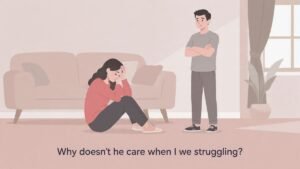
Sis, I need to talk to you about the pattern I see destroying you from the inside out.
Many people struggle with people pleasing even when it hurts, yet feel unable to stop the pattern.
You people-please. You say yes when you mean no. You overextend yourself to make others happy. You suppress your own needs to meet everyone else’s. You bend yourself into uncomfortable shapes to avoid disappointing anyone.
And it’s hurting you.
You’re exhausted. Resentful. Depleted. You’ve lost yourself trying to be everything for everyone. You’re running on empty while everyone around you is satisfied because you keep giving them what they want.
The worst part? You KNOW it’s hurting you.
You’re not oblivious to the damage. You feel it every day. You recognize the pattern. You see how you’re sacrificing yourself. You understand intellectually that you need to stop.
But you can’t.
Even knowing it hurts you, even recognizing the pattern, even wanting desperately to stop—you keep doing it.
You keep saying yes. You keep overextending. You keep people-pleasing. Even though it’s destroying you.
I see how confusing this is. How frustrating it is to know you’re hurting yourself but feel powerless to stop. How do you wonder what’s wrong with you that you keep choosing everyone else over yourself?
And I see you asking: “Why do I keep doing this even when I know it hurts me? Why can’t I just stop? What’s wrong with me?”
Nothing is wrong with you, sis. But you’re operating from deeply ingrained programming that makes people-pleasing feel like survival—and that’s why you can’t stop even when it hurts.
Let me help you understand the deeper forces driving this pattern and how to finally break free.
Why People Pleasing Even When It Hurts Happens
What’s Really Happening: The Self-Destructive People-Pleasing Loop
Let me be honest with you: Knowing something hurts you isn’t enough to stop doing it.
If it were, nobody would:
- Stay in toxic relationships (knowing they’re harmful)
- Self-sabotage (knowing it’s destructive)
- Repeat harmful patterns (knowing they don’t work)
Behavior isn’t driven by logic. It’s driven by deeper psychological needs and fears.
According to psychology research on people-pleasing behavior, fear of rejection and childhood conditioning often drive this pattern.
You people-please even when it hurts because the pain of NOT people-pleasing feels more dangerous than the pain of continuing.
Here’s what’s really going on:
People-Pleasing Feels Like Survival
This is key to understanding why you can’t stop:
Your brain doesn’t experience people-pleasing as a choice. It experiences it as survival.
Somewhere in your history, you learned:
- Pleasing others = safety
- Prioritizing yourself = danger
- Making others happy = staying loved
- Saying no = risk of abandonment
So when you’re faced with a choice between people-pleasing (hurts you) vs. setting a boundary (might upset someone):
Your brain chooses people-pleasing because it feels safer.
Even though rationally you know it hurts you, your nervous system believes people-pleasing keeps you safe.
You’re not choosing to hurt yourself. You’re choosing what your brain perceives as survival.
The Immediate Pain of Disappointing Others Feels Worse
Think about the two types of pain:
Pain of people-pleasing:
- Slow burn
- Accumulates over time
- Exhaustion, resentment, depletion
- Damage is gradual
Pain of disappointing someone:
- Immediate
- Acute
- Anxiety, guilt, fear of rejection
- Feels intolerable in the moment
In the moment of decision, the immediate acute pain of potentially disappointing someone feels worse than the slow-burning pain of people-pleasing.
So you choose to avoid the immediate pain, even though the cumulative pain is greater.
You’re choosing the pain you can tolerate (slow exhaustion) over the pain that feels unbearable (immediate rejection).
You’re Addicted to the Relief
People-pleasing creates a powerful psychological loop:
- Someone makes a request
- Anxiety spikes at the thought of saying no
- You say yes (people-please)
- Immediate relief from anxiety
- They’re happy, you avoided conflict
- Your brain: “See? People-pleasing = relief from pain.”
That immediate relief is powerfully reinforcing.
Even though later you feel exhausted and resentful, in the moment, people-pleasing gives you relief from anxiety.
You’re addicted to that relief—even though the overall pattern hurts you.
Your Identity Is Built on Being Helpful
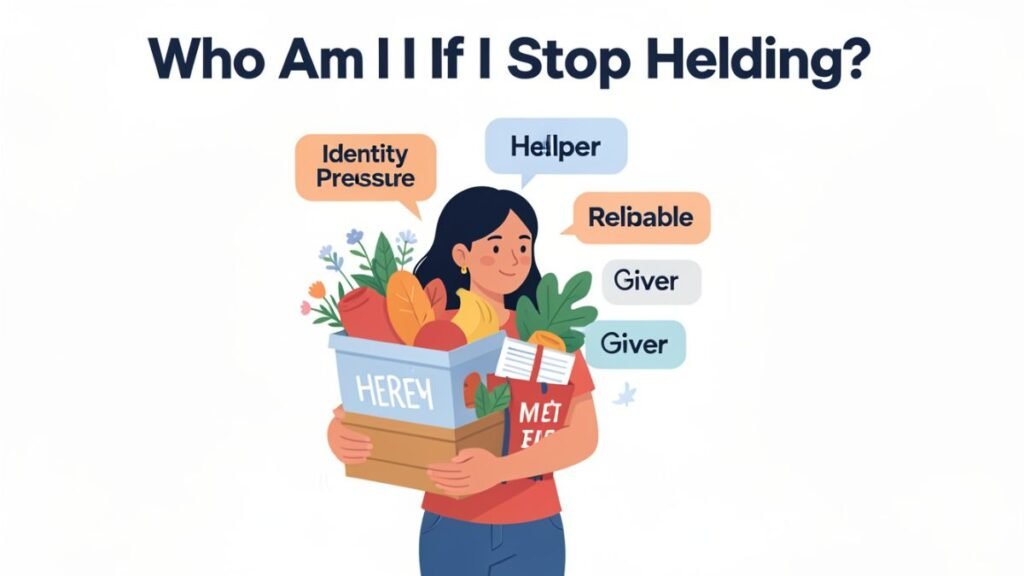
Think about how you see yourself:
“I’m the person who’s always there for people.”
“I’m the helper.”
“I’m the reliable one.”
“I’m the giver.”
Your identity is wrapped up in people-pleasing.
If you stopped:
- Who would you be?
- What would your value be?
- Would people still want you?
Stopping people-pleasing feels like losing yourself because your sense of self is built on it.
So even though it hurts, you keep doing it—because it’s who you are.
You Don’t Believe You Deserve Better
Deep down, you might believe:
- This is what I deserve
- I’m not worth more than this
- My needs don’t matter anyway
- I deserve to be exhausted if others are happy
If you don’t believe you deserve to be treated better, you won’t stop people-pleasing—even when it hurts.
Self-worth is the foundation of boundary-setting.
Without it, you’ll keep sacrificing yourself because you don’t believe you’re worth protecting.
You’re Afraid of Who You’ll Lose
If you stopped people-pleasing:
You’re terrified:
- People would leave
- Relationships would end
- You’d be alone
- You’d discover who only loved you for what you do
That last one is the scariest:
What if the only reason people are in your life is that you people-please?
You’d rather keep hurting yourself than test that fear.
So you keep people-pleasing to maintain relationships—even though you suspect some people only stay because of what you give.
You Don’t Know How to Stop
Even if you wanted to stop:
You don’t know:
- How to say no
- How to set boundaries
- How to prioritize yourself
- What it looks like to not people-please
People-pleasing is your default programming.
Stopping requires skills you’ve never developed.
So you keep doing what you know, even though it hurts, because you don’t know what else to do.
The Secondary Gains Keep You Stuck
People-pleasing hurts you, but it also gives you things:
You get:
- Feeling needed
- Avoiding conflict
- Being liked (or so you think)
- Sense of control (if I keep everyone happy, I’m safe)
- Validation for being helpful
These secondary gains make it hard to stop—even when the primary cost is destroying you.
Part of you doesn’t want to give up what people-pleasing provides, even though you know it’s hurting you.
Why This Pattern Is Destroying You
You’re living a life that’s not yours. You’re living according to everyone else’s needs and wants, not your own.
You’re completely depleted. There’s nothing left of you because you’ve given everything away.
You resent everyone. Even though you’re the one saying yes, you’re angry at everyone for taking.
You’ve lost yourself. You don’t know who you are outside of what you do for others.
You’re teaching people how to treat you. By continuing to people-please, you show others that your needs don’t matter.
You’re stuck in relationships that aren’t reciprocal. The people who benefit from your people-pleasing aren’t going anywhere—why would they?
You’re preventing authentic relationships. Real connection requires both people to be real. You can’t be real when you’re people-pleasing.
You’re slowly dying inside. The real you—with needs, wants, boundaries—is suffocating.
You know it’s wrong, but feel powerless. That helplessness is perhaps the most painful part.
What You Need to Do
Step 1: Understand It’s Not About Logic
Stop beating yourself up for “knowing better” but not stopping.
This isn’t a logical problem with a logical solution.
This is a deep psychological pattern driven by survival fears.
Healing requires addressing the deeper fears, not just willpower.
Step 2: Identify the Core Fear
Ask yourself:
“What am I most afraid will happen if I stop people-pleasing?”
- Abandonment?
- Rejection?
- Being seen as selfish?
- Being alone?
- Discovering people don’t really love me?
Name the core fear driving the pattern.
Step 3: Challenge the Fear
Once you know the fear, test it:
“Is this fear based on current reality or old wounds?”
“What evidence do I have that this fear is true?”
“What evidence do I have that it’s not true?”
Separate childhood fears from adult reality.
Step 4: Start Microscopic
Don’t try to stop all people-pleasing at once.
Start impossibly small:
- Say no to one tiny thing this week
- Prioritize yourself in one small way
- Set one tiny boundary
Build evidence that you can survive not people-pleasing.
Step 5: Tolerate the Discomfort
When you start to stop people-pleasing:
You will feel:
- Intense anxiety
- Overwhelming guilt
- Fear of rejection
- Urge to take it back
Feel it. Don’t fix it by reverting to people-pleasing.
The discomfort is your nervous system adjusting. It will pass.
Step 6: Get Professional Help
This pattern is deep and complex.
Work with a therapist who specializes in:
- Codependency
- People-pleasing
- Boundary-setting
- Trauma (if applicable)
You likely can’t heal this alone. Get support.
Step 7: Build Self-Worth
Work on believing:
- I deserve to have my needs met
- I matter
- I’m valuable beyond what I do for others
- I’m worthy of rest, care, and boundaries
Self-worth is the foundation of stopping people-pleasing.
Step 8: Prepare to Lose Some People
When you stop people-pleasing:
Some people will:
- Get upset
- Try to guilt you back into the pattern
- Leave
Let them.
People who only valued your people-pleasing aren’t your people.
Make room for people who value the real you.
What You Need to Understand
You’re Not Weak for Struggling to Stop
People-pleasing is a trauma response, a survival strategy, a deeply ingrained pattern.
Stopping is hard. Not because you’re weak, but because the pattern runs deep.
Be compassionate with yourself.
Stopping Will Feel Wrong at First
People-pleasing feels right because it’s familiar.
Not people-pleasing will feel wrong, selfish, scary—even when it’s healthy.
Trust that the discomfort is growth, not evidence that you’re doing something wrong.
It Gets Easier
The first boundary is terrifying. The hundredth is natural.
Each time you prioritize yourself despite the discomfort, you’re rewiring your brain.
It won’t always be this hard.
You’ll Discover Who Really Loves You
When you stop people-pleasing, you’ll lose people who only valued your service.
But you’ll discover who loves the real you—the one with needs, boundaries, limits.
That discovery is worth the loss.
What You Deserve
You deserve to stop hurting yourself to please others.
You deserve relationships where you can be yourself, not a perpetual giver.
You deserve to matter as much as everyone; you’re people-pleasing.
You deserve to break free from this exhausting pattern.
That freedom is possible. But it requires facing the fears that keep you people-pleasing.
The Bottom Line
Sis, you people-please even when it hurts because:
- People-pleasing feels like survival
- The immediate pain of disappointing others feels worse than slow self-destruction
- You’re addicted to the relief it provides
- Your identity is built on being helpful
- You’re afraid of who you’ll lose if you stop
Many people who struggle with people-pleasing also feel anxious about saying no, even when they are overwhelmed.
But you can’t keep sacrificing yourself.
Get help. Start small. Face the fears. Build self-worth.
Choose yourself, sis. You’re worth protecting—even from your own people-pleasing.
FAQ
Q: How do I know if my helping is healthy vs. people-pleasing?
Healthy helping: From a full cup, freely chosen, no resentment, reciprocal relationships. People-pleasing: From an empty cup, driven by fear/guilt, breeds resentment, one-sided relationships.
Q: What if I genuinely enjoy helping people?
That’s beautiful! But ask: Can you say no when you need to? Do you help from choice or compulsion? Is it reciprocal? If you can’t say no, it’s people-pleasing, not healthy helping.
Q: Will I lose everyone if I stop people-pleasing?
You’ll lose people who only valued your service. You’ll keep (and attract) people who value you. Quality over quantity. Better to have a few real relationships than many using ones.
Q: How long does it take to stop people-pleasing?
This is deep work—months to years with consistent effort and likely therapy. But you’ll feel incremental relief along the way as you practice setting boundaries.
Q: What if I stop people-pleasing and discover no one really loves me?
That would be painful—but also liberating information. Better to know and build authentic relationships than live in exhausting uncertainty while people-pleasing keeps you trapped.