
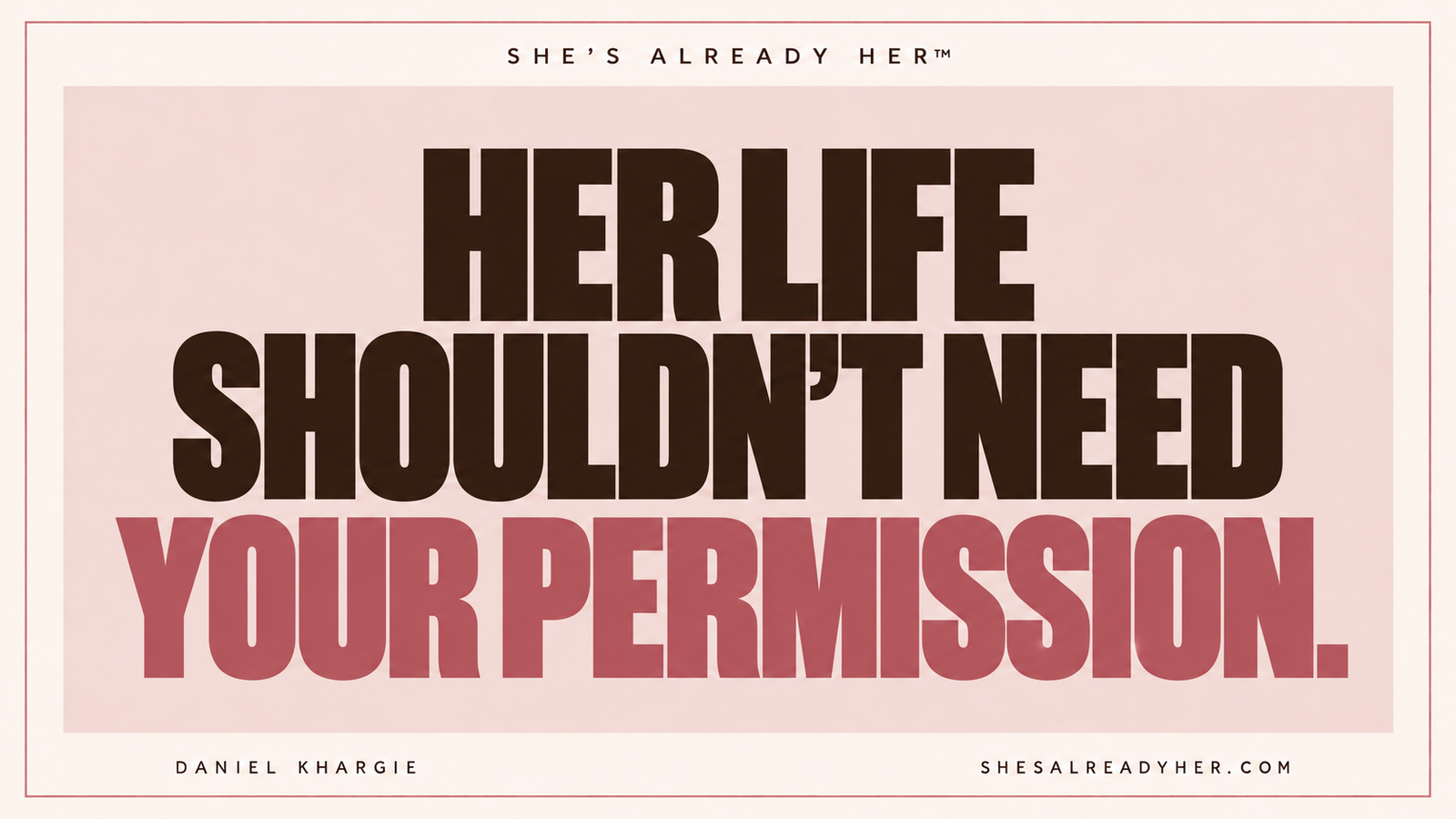
Being with that man shouldn’t mean asking permission to live your own life.
You can care about him, hear what he has to say, and still have a mind of your own. You can love him and still choose something he wouldn’t have chosen for you. That shouldn’t turn into a problem every time.
But when his opinion keeps becoming the answer you’re expected to give, you start making choices differently. You’re thinking about whether he’ll be upset before you’ve even worked out what you want. You’re explaining things that shouldn’t need a whole defense. And sometimes you change your mind before you’ve said anything because you already know how much explaining is coming.
If you’re wondering whether this is a controlling relationship, pay attention to how much freedom you actually have to choose differently from him. Does he have a preference, or does being with him mean you’re expected to follow it?
Because there’s a difference between including your man in your life and needing his approval to have one.
You’re thinking about his reaction before your own choice
That’s a tiring place to be. You’re not just deciding what works for you anymore. You’re working out what decision will be easiest to get past him.
Your time. Your friendships. Your work. The things you want to do for yourself. Before you can even consider them properly, you’re thinking about what he’s going to say, whether he’ll make it difficult, and whether you have the energy for another conversation about it.
And after a while, you might stop bringing some things up. You put the idea aside. You change the plan. You tell yourself it isn’t important enough to deal with all that.
But it matters that this keeps happening. It matters that choices which should include what you want keep getting reduced to what he’ll accept.
You’re allowed to be tired of that. You shouldn’t have to make your life smaller just so a conversation with your man is easier to get through.
Read this quote as text
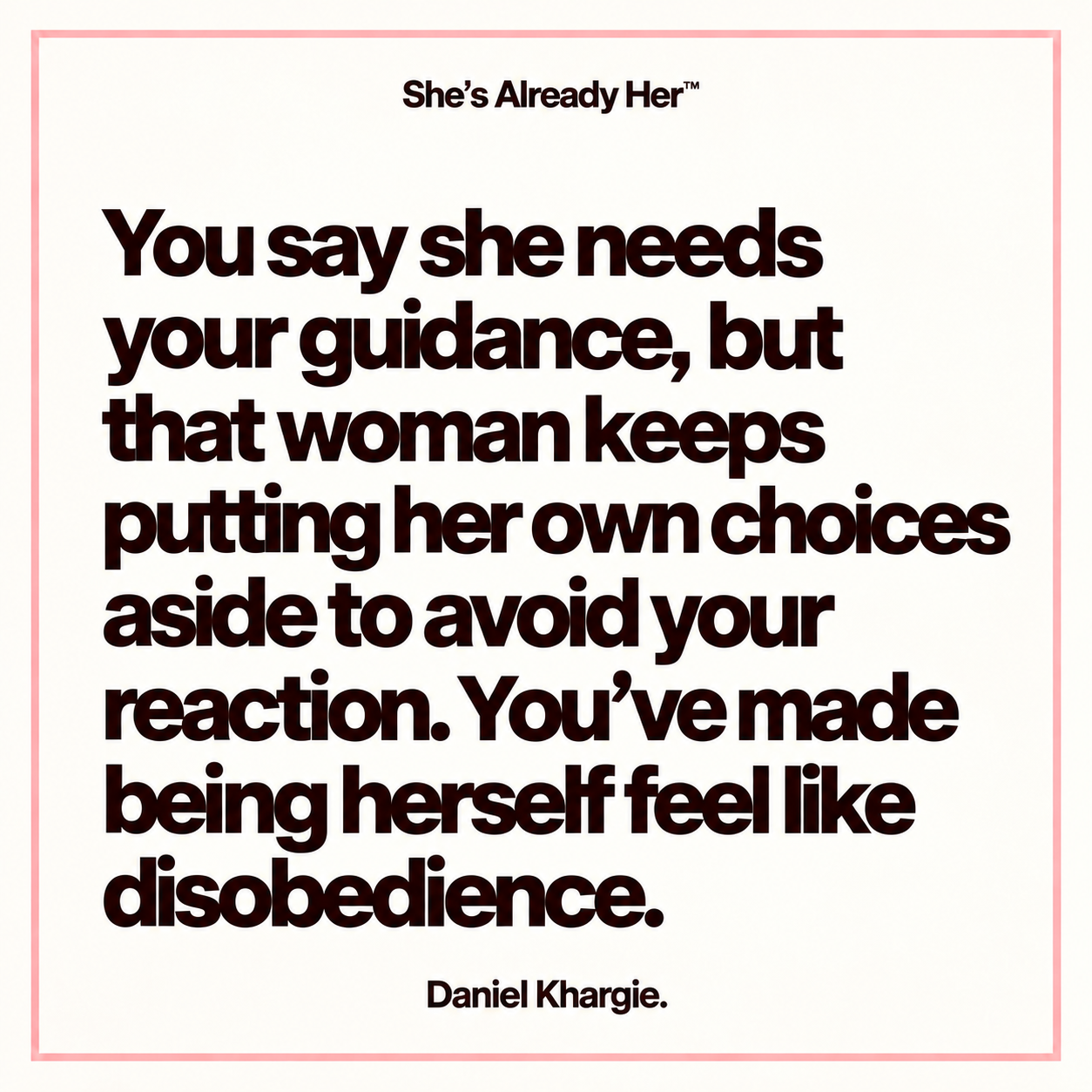
You say she needs your guidance, but that woman keeps putting her own choices aside to avoid your reaction. You’ve made being herself feel like disobedience.
His opinion shouldn’t become a rule for your life
A controlling partner doesn’t have to announce that he’s in charge. Look at what his opinions have become in your relationship.
Can you listen, consider what he says, and still decide differently? Or does he keep pushing until your answer becomes his answer?
Because if there’s only one response he’ll accept, he isn’t leaving much room for a choice. You may be the one saying the final yes, but how much room did you have to say no without pressure, threats, or restrictions?
You don’t have to pretend you freely agreed to something just because you eventually stopped arguing about it.
The National Domestic Violence Hotline describes relationship abuse as a pattern used to maintain power and control over a partner. The concern isn’t simply that he disagrees with you. It’s the repeated pressure or restrictions that take away your ability to choose.
His preference can be heard without becoming a rule you have to follow. He doesn’t get automatic authority over your personal decisions because he’s confident about what he thinks.
Caring about you doesn’t give him ownership of you
He may say he’s looking out for you. He may explain that he worries, that he knows how people are, or that he only wants what’s best for you.
But where do you fit into his idea of what’s best for you?
Can he care about your wellbeing and still respect that you have your own judgment? Can he explain a concern without treating you like you’ve done something wrong for choosing differently?
You don’t have to reject every bit of advice to keep your own life. You can appreciate a useful point. You can change your mind because something makes sense to you. That’s different from changing it because you’re trying to avoid what happens if you don’t.
A controlling man can call his behavior concern, but the name he gives it doesn’t settle what it’s doing to you. Look at whether his concern leaves room for your voice or keeps taking your choices away.
And no, you don’t have to figure out exactly why he does it before you’re allowed to notice that it keeps happening. You’re the one living with the restrictions. That deserves attention too.
Your own choices are different from choices you make together
Being in a relationship means some decisions affect both of you. Shared bills, shared commitments, and plans you’ve made together deserve a conversation. Having your own life doesn’t mean the other person never gets considered.
But considering him is different from accepting that he gets the final say over everything about you.
Independence in a relationship means you’re still a person with your own preferences, interests, friendships, and judgment. You can be committed to somebody without handing over all of those things.
If something affects both of you, you can discuss what each of you needs and what you’ve agreed to. That doesn’t turn every personal choice into a decision he gets to approve or deny.
And if he keeps stretching the idea of a shared decision until it covers your whole life, pay attention to that. Being your partner doesn’t make him the person who gets to decide what kind of life you’re allowed to have.
Read this quote as text
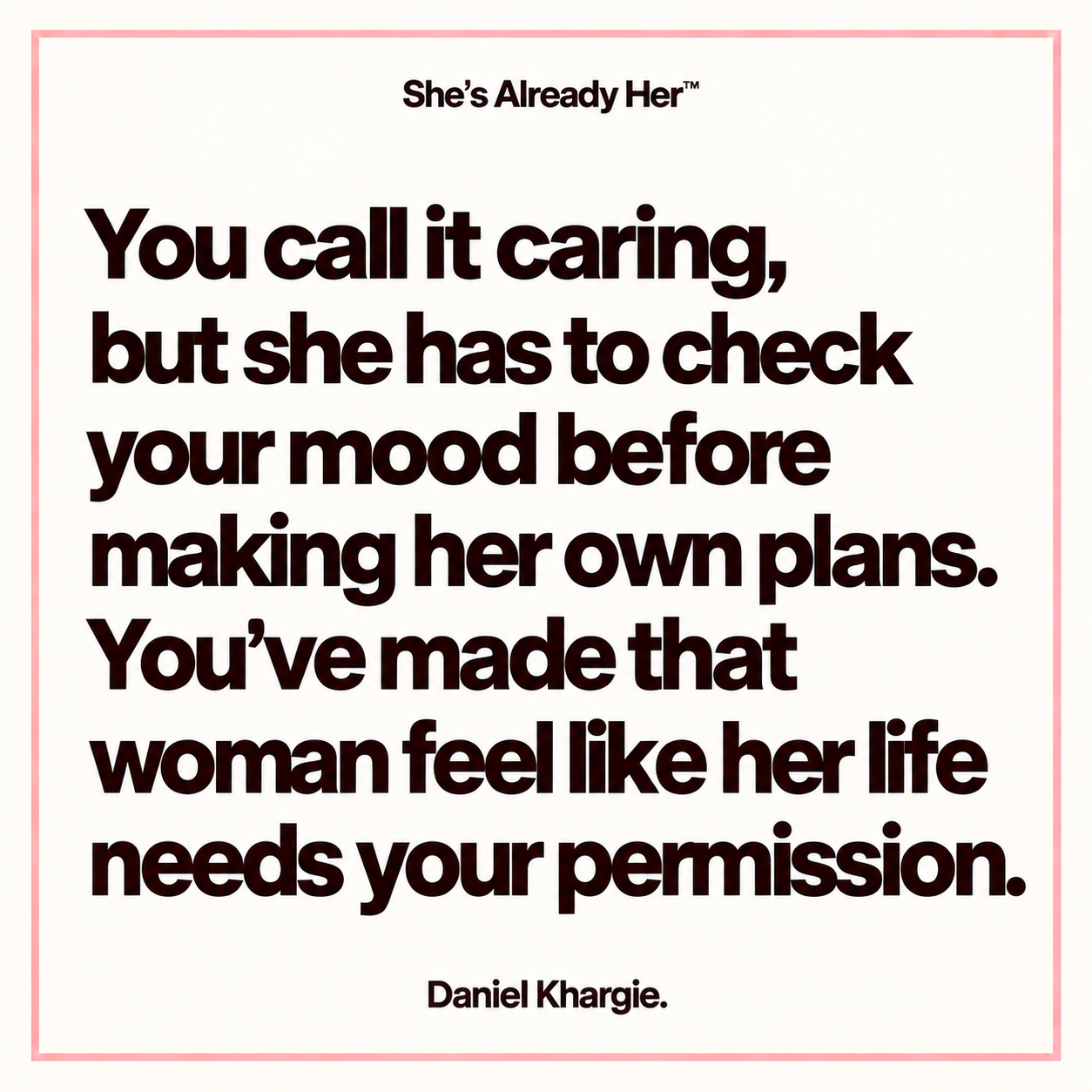
You call it caring, but she has to check your mood before making her own plans. You’ve made that woman feel like her life needs your permission.
Going along with it doesn’t mean you wanted this
I want to be clear about this part, because you may already be telling yourself you should have handled it differently.
Maybe you’ve agreed when you didn’t want to. Maybe you’ve changed plans because you didn’t want another argument. Maybe you’ve got so used to checking with him that you do it before you even think about whether you need to.
That doesn’t make his behavior your fault. Trying to get through a difficult situation doesn’t mean you chose to be controlled. You were responding to what you were dealing with.
He’s still responsible for how he treats you when your choice is different from his. Your agreement under pressure doesn’t give him permission to keep applying that pressure.
You don’t have to turn this into another reason to be hard on yourself. You can look at what has happened without making yourself responsible for his decision to restrict you.
And you don’t have to prove you’re independent by doing something that could put you at risk. This isn’t a challenge to stand up to him and see what happens. Your safety matters more than proving a point.
Look at what happens when your answer is different
You may already have plenty to think about from choices you’ve made before. You don’t need to create a new disagreement just to find out whether the pattern is there.
Think about what has happened when you’ve wanted something different. Was there room to talk about it? Could he disagree without insulting you, threatening you, restricting your access to money, or trying to cut you off from people who support you?
Someone being disappointed isn’t automatically control. A different opinion isn’t automatically control either. But repeated punishment, pressure, or restrictions are more than him simply having feelings about your choice.
You’re allowed to look at what you’ve actually been dealing with. You don’t have to keep stopping at his explanation that he cares.
If you want help thinking it through, you can talk privately with someone you trust or an advocate who understands controlling relationships. If there are threats, monitoring, restricted access to money, or fear about what he’ll do when you disagree, seek support that considers your circumstances before confronting him or changing something he monitors.
The Hotline has information and support options for relationship abuse. You don’t have to buy a guide, have the perfect explanation, or decide your whole future before asking for help.
Read this quote as text
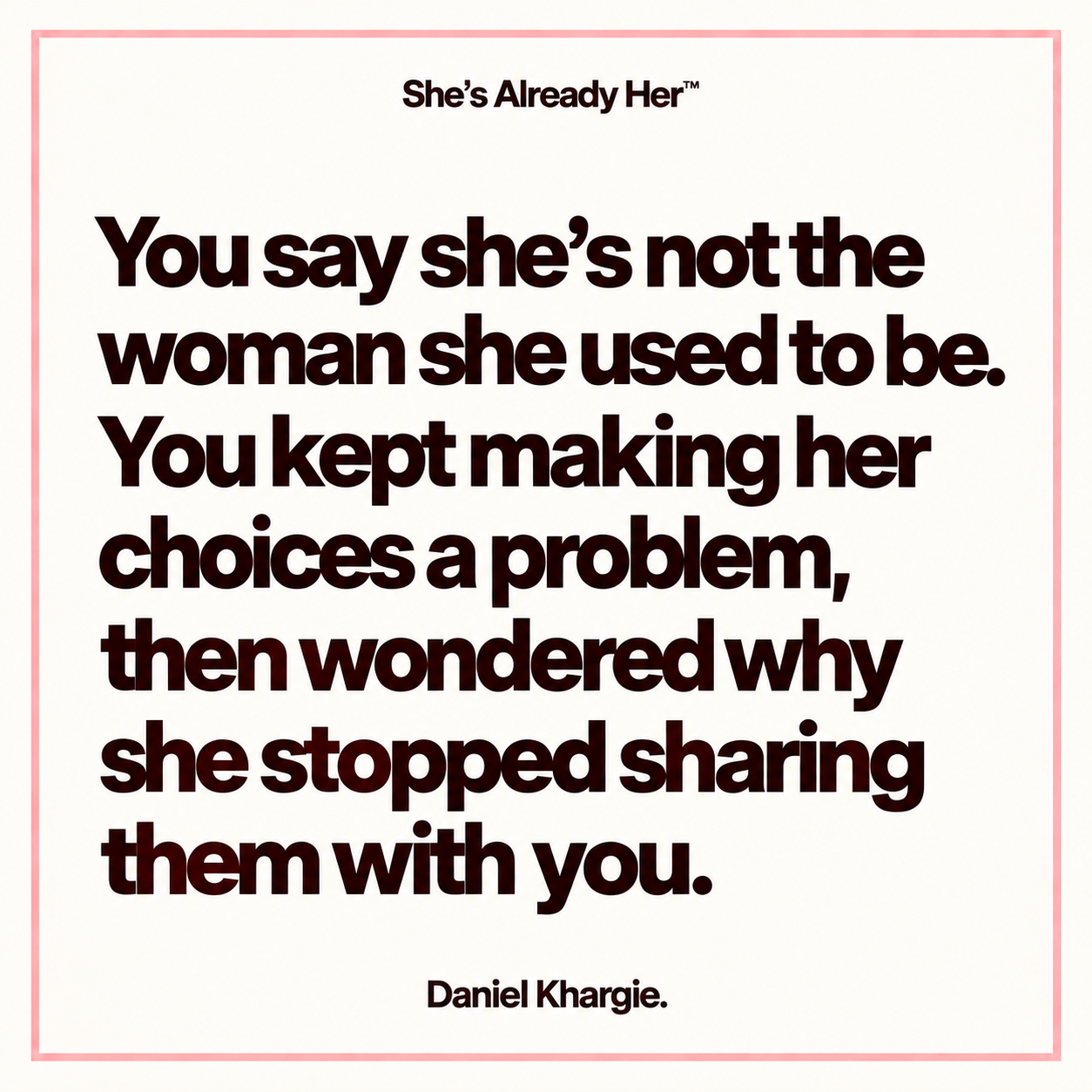
You say she’s not the woman she used to be. You kept making her choices a problem, then wondered why she stopped sharing them with you.
You can love that man without handing over your life
That’s what I want you to remember. Caring about him doesn’t mean your own judgment stops counting. Being committed doesn’t mean every part of you now needs his permission.
You’re allowed to want a relationship where you can hear each other without being pressured into the same answer. Where a personal choice can still belong to you. Where you don’t have to give up something important to yourself just to avoid being treated badly over it.
Look at whether there’s room for you to be your own person with him. Look at whether he respects the choices that aren’t his to make. Look at what keeps happening after you’ve made it clear that something matters to you.
You don’t have to work out every next step right now. But you can stop treating your wish to have your own life as something you need to apologize for.
Loving him shouldn’t require you to disappear into whatever he prefers.
Questions you may still have
What is controlling behavior when he says he is only giving advice?
Advice leaves room for you to consider it and decide. Controlling behavior involves pressure or restrictions meant to direct what you do. Look at the pattern when you choose differently: can he respect your decision, or does he use threats, monitoring, punishment, or restrictions to get his way? You don’t need to dismiss helpful advice to recognize when your personal choices aren’t being respected.
What are the signs of a controlling man when he never directly orders me around?
Signs can include repeatedly making your choices subject to his approval, restricting who you see, monitoring your movements, or pressuring you to give up decisions about your own life. He doesn’t have to phrase it as an order for a pattern to be controlling. At the same time, one disagreement or a partner feeling disappointed isn’t enough on its own to establish that pattern.
How to deal with a controlling partner when saying no has consequences?
Start with your circumstances and safety, rather than a script you’re expected to use. Consider private support from someone you trust or a relationship-abuse advocate. If he monitors you, threatens you, or restricts your money or movements, don’t assume a direct confrontation will be safe. You don’t have to test his reaction or announce a plan before getting help to consider your options.
Why are people controlling, and does worry or caring excuse it?
There isn’t one reason you can assign to every person, and you can’t know his motives just from a disagreement. In abusive relationships, controlling conduct is part of maintaining power over a partner. Worry or a claim that he cares doesn’t excuse threats or restrictions. You can take the repeated behavior seriously without diagnosing him or becoming responsible for managing the reasons he gives for it.
How to be independent in a relationship when I have been asking for his approval?
Independence doesn’t require you to stop considering your partner. It means your own choices and preferences still have a place. You can begin by noticing which decisions are personal, which affect both of you, and where you feel pressured to seek permission. If choosing differently could put you at risk, seek private support before making changes. His controlling conduct isn’t something you caused by asking for approval.