
Sis, I need to talk to you about why you assume other women are better than you and the ranking system you’ve created in your mind.
You meet a new woman, and you automatically assume other women are better than you.

Not sometimes. Not occasionally. Every single time.
Before you know anything about her, before she’s said a word, before any evidence exists—you’ve already decided:
- She’s prettier than me
- She’s smarter than me
- She’s more interesting than me
- She’s more confident than me
- She’s more successful than me
- She’s more everything than me
Your default assumption is: She’s better. I’m less.
And this happens with every woman you encounter:
- At work
- At social events
- On social media
- In your partner’s life
- Walking down the street
You’re constantly ranking yourself—and you always rank yourself at the bottom.
So you’re living in a world where every other woman is superior to you. Where you’re perpetually last place. Where you’re surrounded by people who are “better than” and you’re definitively “less than.”
And here’s the devastating part: This isn’t based on evidence. It’s your automatic assumption before you have any information. You’re not comparing and finding yourself wanting—you’re assuming you’re wanting before the comparison even begins.
I see how exhausting this is. How you’re carrying the weight of assumed inferiority everywhere you go. How you can’t meet a woman without immediately establishing her superiority. How you’ve created a hierarchy where you’re always at the bottom.
And I see you wondering: “Why do I automatically assume everyone is better? Where does this come from? Is it true? Will I ever believe I measure up?”
It’s not true, sis. You’re not objectively worse than everyone else. You’re operating from a core belief about your inadequacy—and you’re using every woman you meet as evidence. But assumptions aren’t facts. And you can learn to question the automatic ranking.
Let me help you understand why you assume other women are better than you—and how to finally stop.
What’s Really Happening: Why You Feel Inferior to Other Women
Let me be direct with you: Assuming other women are better isn’t perception—it’s projection. You’re not seeing reality. You’re projecting your core belief about your inadequacy onto every interaction. The ranking isn’t real—the belief creating it is.
And that belief can be challenged.
Here’s what’s really going on:
You Have a Core Belief of Inadequacy
Deep in your psyche, you hold a belief:
- I’m not enough
- I’m fundamentally flawed
- I’m less than others
- There’s something wrong with me
- I’m inferior
This isn’t conscious most of the time—but it’s operating in the background.
When you meet other women:
- The core belief activates automatically
- You assume they’re better because you believe you’re worse
- The assumption confirms the belief
- The cycle reinforces itself
You assume other women are better than you because you have a deep core belief about your own inadequacy—and that belief interprets every woman as evidence of your inferiority.
You Learned You’re “Less Than” Early
Think about what you absorbed growing up:
Maybe:
- You were compared unfavorably to siblings or peers
- Your achievements were minimized
- Others were held up as examples you couldn’t meet
- You were criticized more than praised
- You learned your value was in comparison—and you always came up short
You learned: I’m less than others. Other people are better.
Now as an adult:
- That learned belief is your default
- You automatically rank yourself below others
- The assumption feels like truth because you learned it so early
You assume other women are better than you because you were taught you’re inferior—and that early programming runs automatically, creating the assumption before conscious thought.
You’re Seeking Evidence for What You Already Believe
Psychologically, humans seek confirmation for existing beliefs.
You believe you’re inadequate → You look for evidence → Other women become that evidence
You’re not objectively assessing:
- Who’s better at what
- Where you actually rank
- What the reality is
You’re confirming a pre-existing belief by assuming everyone is better.
You assume other women are better than you because your brain is seeking evidence for your belief in your inadequacy—and assuming others are better provides that evidence.
You’re Filling in Blanks With Insecurity
When you meet someone new, you don’t know:
- How they really feel about themselves
- What they struggle with
- What insecurities they have
- What their internal experience is
But you fill in those blanks:
- You assume they’re confident (they might not be)
- You assume they have it together (they might not)
- You assume they feel superior (they probably don’t)
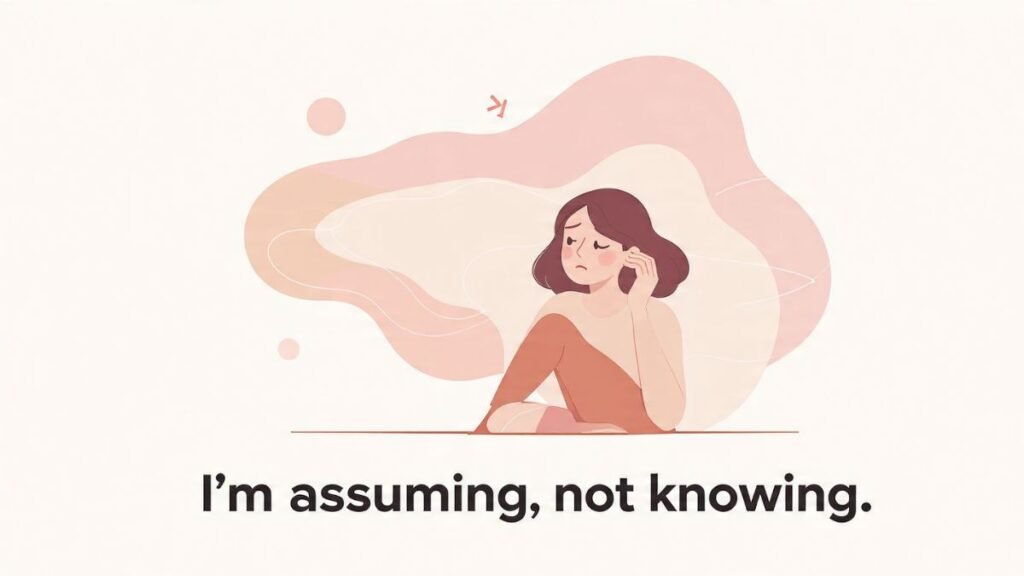
You’re filling in missing information with your insecurity.
You assume other women are better than you because you don’t have complete information—so you fill in the gaps with assumptions based on your own insecurity rather than reality.
You’re Comparing Your Insides to Their Outsides
What you know about yourself:
- Every insecurity
- Every flaw
- Every failure
- Every doubt
- Your complete internal experience
What you know about other women:
- Their external presentation
- Their surface appearance
- Their public persona
- Their curated image
You’re comparing:
- Your messy inside to their polished outside
- Your full reality to their partial presentation
- Your complete picture to their highlight reel
Of course they seem better—you’re comparing different types of information.
You assume other women are better than you because you’re comparing asymmetrical information—your complete internal mess to their curated external presentation.
Your Self-Worth Is Entirely External
If your worth is based on:
- How you compare to others
- Where you rank
- Being “better than”
Then you’re constantly ranking:
- Every interaction becomes a comparison
- Every woman becomes a measuring stick
- Your worth fluctuates based on who’s around
And if your default belief is inadequacy:
- You’ll always rank yourself lower
- Everyone will seem better
- You’ll never win the comparison
You assume other women are better than you because your worth is entirely comparative—and when worth is comparative and your default is inadequacy, everyone automatically ranks higher than you.
You’re Protecting Yourself From Disappointment
If you assume everyone is better:
- You won’t be disappointed when they are
- You won’t risk thinking you’re good enough and being proven wrong
- You can’t be hurt by comparison if you’ve already declared yourself inferior
The assumption is a defense mechanism:
- It protects you from hope
- It prevents disappointment
- It keeps you safe from the risk of believing you’re enough and being wrong
You assume other women are better than you because assuming inferiority protects you from the pain of hoping you measure up and discovering you don’t.
Society Reinforced the Ranking (supported by research on social comparison)
Cultural messages taught you:
- Women are in competition
- There’s a hierarchy of value
- Some women are “better” than others
- Your worth is determined by where you rank
Media showed you:
- Pretty girls vs. ugly girls
- Popular vs. unpopular
- Winners vs. losers
- A clear ranking system
You internalized the ranking—and placed yourself at the bottom.
You assume other women are better than you because society taught you to rank women hierarchically—and your insecurity places you at the bottom of that hierarchy automatically.
Sis, if you’re exhausted from assuming everyone is better—if you’re ready to question the automatic ranking—you need support.
💜 You’re Not Objectively Worse
I know how automatic the assumption is. How you can’t meet a woman without immediately ranking yourself below her. How it feels like truth because it happens so fast, so consistently. How you’re convinced everyone is genuinely better than you.
The assumption isn’t reality. It’s a belief pattern that runs automatically.
She’s Already Hers Sisterhood is a community where women are learning to stop assuming they’re inferior, to challenge automatic ranking, and to build worth that doesn’t depend on comparison.
Inside the Sisterhood, you’ll find:
💜 Women who’ve assumed they’re worse—now questioning the automatic ranking
💜 Tools to challenge the assumption—how to catch and redirect the automatic inferiority belief
💜 An 8-season transformational guide that addresses where the core inadequacy belief came from and how to replace it
💜 Support when you need it—women who understand the ranking trap and are building inherent worth
You’re not objectively inferior. You’re operating from a false belief.
Your first month is just $1. Learn to stop assuming you’re worse, challenge the automatic ranking, and find women who are building worth beyond comparison. See if it’s aligned with where you are.
The assumption isn’t truth, sis. Question it.
Why This Pattern Is Hurting You
You’re reinforcing your inadequacy and falling into toxic relationship patterns without realizing it. Every assumption confirms you’re not enough.
You’re creating a false reality. You’re living as if everyone is better when that’s not objectively true.
You can’t connect authentically. When you assume someone is better, you can’t relate as equals.
You’re exhausted. Constant ranking and comparison is mentally draining.
You’re isolating yourself. Assumed inferiority creates distance between you and others.
You’re missing opportunities. You don’t pursue things because you assume others are more qualified.
You can’t receive compliments. If you assume you’re worse, praise doesn’t land—you think they’re wrong or lying.
You’re stuck in the belief. The assumption prevents you from gathering evidence that contradicts it.
What You Need to Do When You Feel Inferior
Step 1: Catch the Automatic Assumption
Notice when you make the assumption:
“There it is—I just assumed she’s better than me. Before knowing anything about her, I ranked myself below her.”
Just notice. Don’t judge yourself for it—just become aware of the pattern.
Step 2: Challenge the Assumption
When you catch yourself assuming:
Ask:
- “What evidence do I have that she’s better?”
- “Am I comparing fairly or asymmetrically?”
- “Is this reality or my insecurity talking?”
- “Would an objective observer agree with this ranking?”
Treat it as an assumption to question, not a fact to accept.
Step 3: Replace With Neutral Thought
Instead of: “She’s better than me”
Try: “She’s a person I don’t know yet. We both have strengths and struggles. There’s no objective ‘better.'”
Or: “I notice I’m assuming she’s better. I’m choosing to see us as equals instead.”
You don’t have to rank at all.
Step 4: Identify the Core Belief
Work on uncovering the deep belief:
What do you believe about yourself at the core?
- I’m not good enough
- I’m fundamentally flawed
- I’m less than others
- I don’t measure up
Name the belief. Write it down. Recognize it’s a belief, not a fact.
Step 5: Gather Counter-Evidence
Your brain seeks evidence for your beliefs—so intentionally gather counter-evidence:
Ask:
- What am I good at?
- When have I succeeded?
- What do people value about me?
- Where do I measure up or exceed?
Build a file of evidence that contradicts the core belief.
Step 6: Practice Equal-Footing Thinking
When you meet someone:
Practice thinking: “We’re both humans with strengths and weaknesses. Neither of us is objectively better. We’re equals in worth even if we’re different in traits.”
This takes practice—but it rewires the automatic ranking.
Step 7: Stop Filling Blanks With Insecurity
When you don’t know something about someone:
Instead of assuming the best about them and worst about you:
Think: “I don’t know. I can’t assume. I’ll learn more before drawing conclusions.”
Leave blanks empty instead of filling them with your insecurity.
Step 8: Get Professional Help
If the assumption is:
- Constant and pervasive
- Rooted in trauma or deep shame
- Interfering with your life
- Not improving with self-work
Consider therapy focused on:
- Core belief work
- Healing shame
- Building self-worth
- Challenging cognitive distortions
Sometimes the core belief needs professional help to shift.
What You Need to Understand
Assumptions Aren’t Facts
Your assumption that everyone is better:
- Is not based on evidence
- Is not objective reality
- Is not how others see you
It’s a belief pattern, not truth.
The Ranking System Is False
Human worth isn’t:
- Hierarchical
- Comparative
- Based on ranking
You can’t objectively be “better” or “worse” than someone else.
You have different traits, strengths, struggles—but not different worth.
They Probably Aren’t Thinking About You
When you assume someone thinks they’re better than you:
Reality:
- They’re probably not thinking about you at all
- They might be assuming YOU’RE better
- They’re likely focused on their own insecurities
Your assumption of their superiority exists in your head, not necessarily in reality.
You Can’t Know What’s Happening Inside Others
You don’t know:
- How they feel about themselves
- What they struggle with
- What insecurities they hide
Assuming they feel superior is projection—not perception.
What You Deserve
You deserve to meet people without automatically ranking yourself below them.
You deserve to question assumptions instead of accepting them as truth.
You deserve to believe you’re equal in worth to others.
You deserve freedom from constant comparison and ranking.
You’re not objectively worse than everyone. That’s a belief, not a fact.
The Bottom Line: Stop Feeling Inferior to Other Women
Sis, you assume other women are better than you because:
- You have a core belief of inadequacy
- You learned you’re “less than” early in life
- You’re seeking evidence for what you already believe
- You’re filling in blanks with insecurity
- You’re comparing your insides to their outsides
- Your worth is entirely external and comparative
- The assumption protects you from disappointment
The assumption isn’t reality. It’s a belief pattern running automatically.
Catch it. Challenge it. Replace it. Build evidence that contradicts it.
Choose yourself, sis. You’re not worse than everyone else.
FAQ
Q: What if they objectively ARE better in specific areas?
Someone can excel in areas you don’t without being “better than you” overall. Humans aren’t hierarchical. She might be better at X, you might be better at Y—neither makes one of you superior as a person.
Q: How do I stop the assumption when it’s so automatic?
You can’t stop the initial thought (it’s habit), but you can catch and challenge it. Notice → Question → Redirect. With consistent practice over time, the automatic pattern weakens.
Q: What if I’ve spent my whole life believing I’m inferior?
The belief can still change, but it takes time and often professional help. Beliefs formed early and reinforced for years don’t shift overnight—but they can shift with consistent work.
Q: Won’t I become arrogant if I stop assuming I’m worse?
No. Arrogant people don’t worry about becoming arrogant. Believing you’re equal in worth to others isn’t arrogance—it’s accurate. You can acknowledge others’ strengths without declaring yourself inferior.
Q: How do I know if the assumption is true or false?
If it’s automatic (happening before you have information) and applies to everyone (every woman is better), it’s not based on reality—it’s based on a core belief. Reality is nuanced; core beliefs are absolute.