Different doesn’t mean better if you’re still being treated like you don’t matter.
You gave this relationship a chance because you thought something better was possible. You were allowed to want that. You were allowed to believe a man who said he wanted to show up for you.
But now something feels familiar. You’re waiting again. Moving what you need to the side again. Giving another explanation for why a promise mattered. And then you turn the whole thing on yourself: “How am I going through this again?”
When you look at toxic relationship patterns across your past and present, give yourself room to be honest without turning that honesty into another attack on yourself. What kept happening? What did being with him keep requiring from you? What do you want to carry forward differently?
You can learn something from those answers. His choice to hurt you still belongs to him.
A different kind of man can still leave your needs waiting
Two men can behave very differently and still leave you doing too much to keep the relationship going. That does not mean their behavior was identical. It means you are allowed to notice what the arrangement kept costing you.
Look at how much room there was for your time, your opinion, your plans. Did your life stay part of the relationship, or did everything keep getting worked around what suited him?
You do not have to decide every man you have loved fits one label. You can say the situations were different and still recognize that your needs kept ending up last.
That is where looking at unhealthy relationship patterns can help. You are looking at what repeated, including what you kept waiting for and what never seemed to have room to happen.
For help recognizing harmful conduct in one current relationship, read the article on signs of a toxic relationship. Here, I want you to look at what feels familiar across different relationships.
Compare what you kept waiting for
Start with one question: what did you keep hoping would change?
Give that an actual answer. More reliable time together. Room to disagree. A promise followed by action. Your needs getting considered before another decision was already made.
Then ask what the waiting required from you. Did you keep putting a decision off? Giving time you needed for yourself? Saying something was fine because you were tired of explaining why it wasn’t?
Looking at relationship patterns means including the part you were living through after the hopeful beginning. The beginning matters. So does everything that came after it.
You can compare those things without calling yourself foolish for caring. You were hoping for a relationship you could actually be part of. Wanting that was never something you needed to be ashamed of.
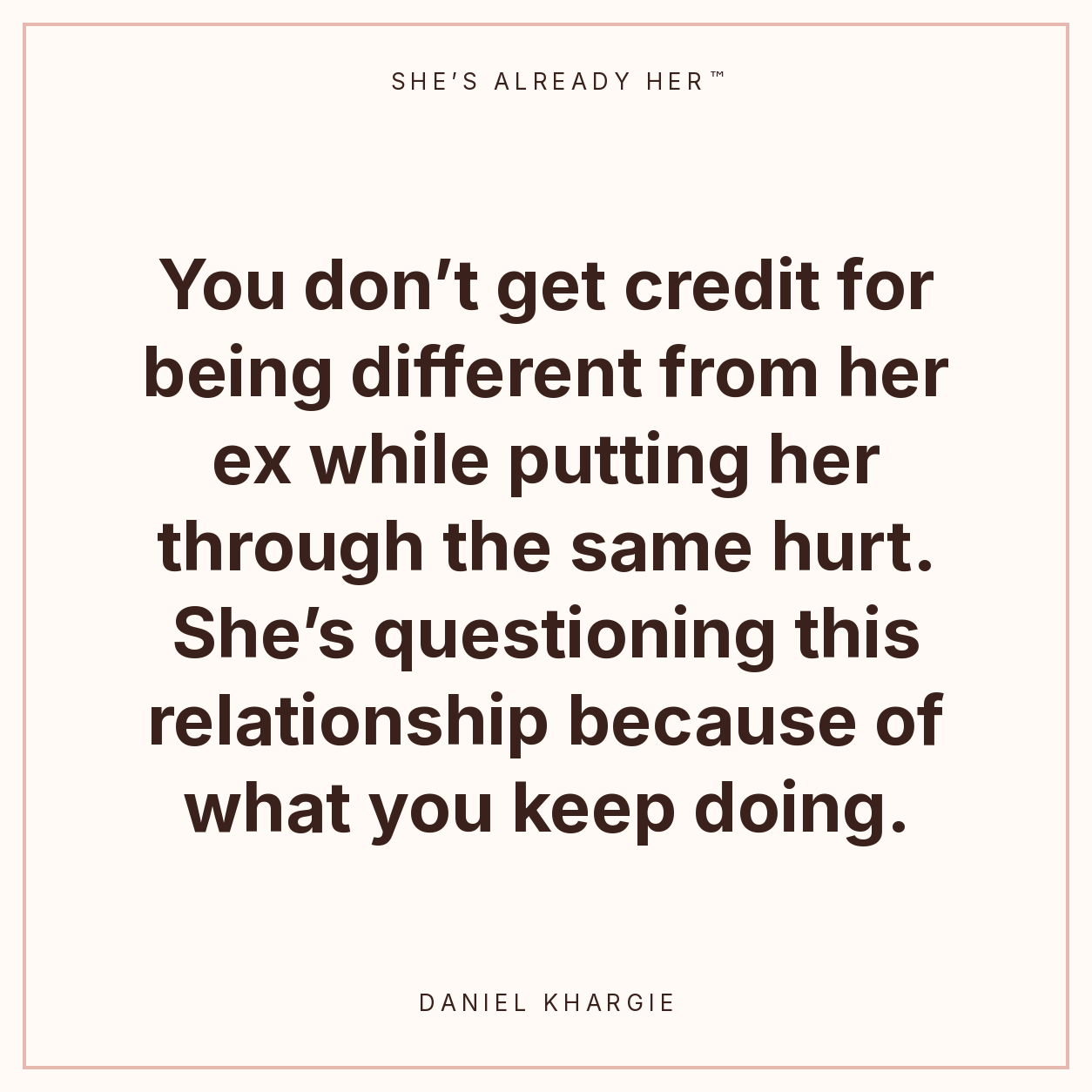
Read this quote as text
You don’t get credit for being different from her ex while putting her through the same hurt. She’s questioning this relationship because of what you keep doing.
Your past does not answer for what he is doing now
Your man does not have to answer for your ex. He does have to answer for himself.
If you assumed something unfairly because you were expecting an old hurt, you can own that. You can get help with the fear you are carrying. That still leaves room to look at his actual choices.
What has he promised? What has he followed through on? When you ask about something he did, does the conversation stay there long enough to address it?
I want you to be careful about accepting your past as the answer to every present concern. Having been hurt before does not make you incapable of noticing what is happening now.
You can work on trusting your judgment while still checking it against what you can describe. You do not need to know his hidden intentions to consider his words and actions.
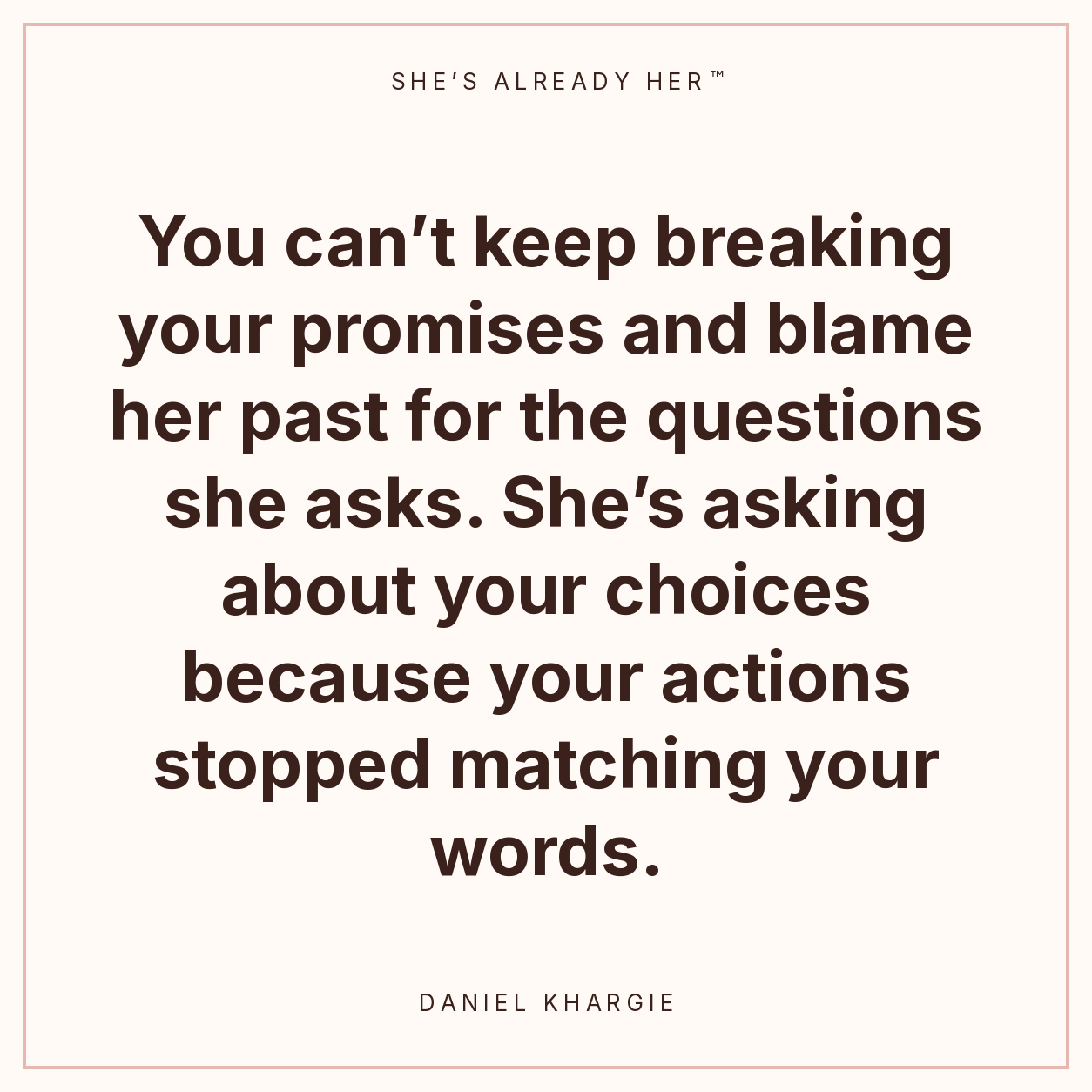
Read this quote as text
You can’t keep breaking your promises and blame her past for the questions she asks. She’s asking about your choices because your actions stopped matching your words.
Give what you want an answer too
You probably know some things you do not want to go through again. Give yourself room to say what you do want.
Time together that you can reasonably count on. An opinion you can share without being insulted. Plans that include both of your lives. You can name what matters to you in everyday words.
That does not give you a guarantee about a new man. It gives you something clearer to consider while you get to know him.
And you do not have to decide that one good thing makes every difficult thing acceptable. Appreciate what he does well. Include what is still hurting you when you look at the relationship.
Love is respect’s resource on boundaries and expectations explains why expectations deserve discussion. What worked with a previous partner does not automatically tell either of you what has been agreed to here.
Let one lesson change one earlier decision
You do not need to figure out every relationship you have ever had before you can do one thing differently.
You can take more time over a commitment. Keep a plan you already made. Ask a question before building your week around an answer you have not received. Get support before making a decision you feel pressured to rush.
Choose something that belongs to you and that fits your circumstances. You are allowed to learn gradually.
And when you think about relationship mistakes, keep responsibility where it belongs. You can wish you had taken more time without deciding that taking more time would have made him honest. You can regret accepting another excuse without becoming responsible for the behavior behind it.
Your next decision can be more thoughtful. His behavior is still his responsibility.
If you need help with a specific limit after repeated hurt, the article on setting boundaries after being hurt goes deeper into that. You do not have to turn this reflection into another set of instructions for managing him.
You do not have to become perfect before love can treat you well
Having things to work on does not make you available to be mistreated.
You can still be learning how to speak up. You can still find it hard to disappoint him. You can still be sorting through what happened before. None of that gives him permission to lie to you, put you down, or keep crossing a line you have made clear.
Maybe the same question has followed you into more than one relationship. That deserves support and honest attention. It does not prove you wanted the hurt.
If you keep replacing what you really want to say with whatever keeps him happy, this article focuses on letting your own answer count. That is one habit you can work on without turning it into an explanation for everything he has done.
You do not need a perfect version of yourself before you are allowed to expect respect from him.
Give yourself time to get to know the relationship
You can like him and still take your time. You can enjoy being wanted without giving up plans you already made for your own life.
Let yourself learn how the relationship works over time. Is there room for different opinions? Is the effort mutual? Can you keep your friendships, your routines, and your say in decisions that affect you?
Those are things you get to consider as the relationship develops. You do not need to create a confrontation, inspect his phone, or set up a secret test.
Love is respect’s guidance on dating after abuse emphasizes choosing a pace that works for you and respecting boundaries. A new partner’s readiness does not mean you owe him faster access or commitment.
Taking your time is a choice you can make for yourself. It cannot guarantee you will never be hurt, and you do not deserve blame if somebody hides how he will behave.
Let support help you look at what keeps repeating
You do not have to explain your whole history perfectly before you can talk to somebody.
You can start with what you have noticed: you keep leaving your needs out, you keep waiting on the same kind of change, or you are unsure what is different this time. A trusted person or qualified professional can help you think it through without making the decision for you.
Your feelings matter. So do the actual circumstances. Leave room to consider both without deciding every familiar feeling proves this relationship will end like the last one.
If you fear threats, intimidation, or retaliation, private support comes before another conversation with him. The article on feeling unsafe in a relationship covers support and practical considerations. Use a safer device if your activity may be monitored; private browsing does not guarantee privacy.

Read this quote as text
You don’t get to call her difficult for refusing what hurt her before. She didn’t stop wanting love. She stopped making excuses for what you keep doing.
Your life can move forward before there is another man in it
You may want to date again. You may want some time when your life is not built around a relationship. You get to consider what you want without turning either choice into a test of how healed you are.
Keeping a promise to yourself matters. Letting somebody support you matters. Giving your own plans room to happen matters.
If the difficult part is rebuilding your life after an ending, this article looks at finding yourself again after a breakup. You do not need another relationship to prove your life is moving.
You can give love another chance when you want to. You can also take what you have learned seriously enough to stop calling an arrangement enough just because you have had worse.
A different man still has to treat you well. Your past does not lower what you are allowed to expect from him.
Questions about toxic relationship patterns across relationships
Why do I attract toxic people?
Being mistreated more than once does not establish that you attract it or cause it. Start with what you can actually compare: what happened, what you hoped would change, and which decisions you want more support making. This question also comes up in friendships and other relationships; one explanation will not fit everybody. His choice to mistreat you remains his.
Why do I attract emotionally unavailable men?
An article cannot identify a single cause from your dating history. Look at what emotional participation actually looked like across those relationships and when you realized your needs were not being met. That can help you consider what you want to notice or decide earlier. For the current partner’s conduct, read the article about an emotionally unavailable man. You do not need a diagnosis to examine whether the effort is mutual.
Which self reflection questions help me compare past relationships?
Ask: What did I keep hoping would change? What did the arrangement keep costing me? What do I want one earlier decision to look like next time? Include differences as well as similarities. Reflect in writing only where it is safe and private; talking it through is another option. The purpose is to understand what happened without turning his conduct into your fault.
How do I set relationship expectations without comparing him unfairly to my ex?
Separate what happened before from what this man has actually done, then consider what the two of you have discussed and agreed to. You can ask for reliable time together without assuming he will break every plan. If he has repeatedly broken an agreement, your history does not erase that. Discuss what matters when it is safe, and look at follow-through over time.
How to start dating again at my own pace?
Consider whether you want to date, the commitments you feel ready to make, and the support you want to keep around you. You can get to know somebody while keeping your routines and independent choices. You do not owe quicker commitment to prove you are ready. There is no pace that guarantees an outcome, and you can pause or reconsider what works for you.