
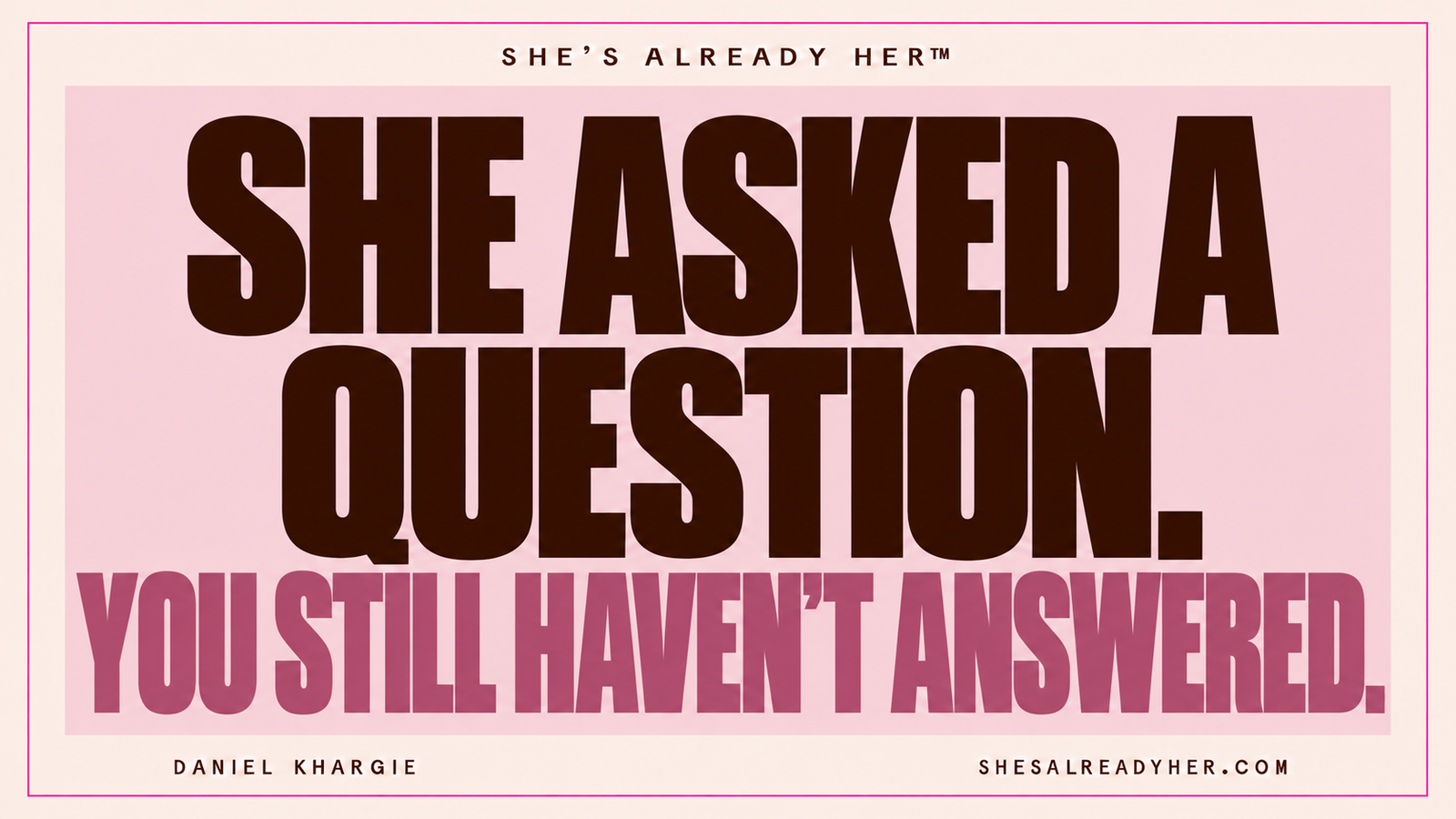
Calling you an overthinker doesn’t make his answer any clearer.
You asked what he meant. Somehow, you’re now talking about how much you think, how many questions you ask, and why you can’t just leave things alone.
But you still don’t know what “later” means. You still don’t know whether “we’ll see” means he wants you to wait or whether he hasn’t decided at all.
And there’s something you need to do with that answer. Make your own plans. Decide whether to wait. Understand what he’s actually offering.
Asking for clarification can be that ordinary. You aren’t asking him to explain his whole mind. You’re asking him to finish the part of the answer you can’t reasonably fill in for him.
You can look honestly at whether you’re reading too much into something. His answer still needs to be considered for what it actually says.
What did he actually tell you?
Start with the words he gave you, before you spend another hour trying to work out what he secretly meant.
“Maybe” leaves something undecided. “Later” tells you something about timing, but it may not tell you enough. “We’ll see” doesn’t say what either of you should count on.
Those answers aren’t automatically dishonest. People can be unsure. They can need information they don’t have yet. They can answer too quickly without realizing the other person understood something different.
But you don’t have to turn an uncertain answer into a definite one just because the definite version would make your day easier.
If he says he might be available, that isn’t the same as agreeing to be available. If he says he’ll think about something, he hasn’t yet told you what he has decided.
You can want a yes. You can feel disappointed that he hasn’t given you one. What matters here is knowing which answer you actually have.
That gives you somewhere to start besides guessing. You can ask what is still undecided, what he expects to know later, or whether he wants you to plan without relying on his participation.
He may clear it up in one sentence. You shouldn’t have to put yourself down for needing that sentence.
Find the missing detail that affects your next choice
Not every unclear word needs a long conversation. Sometimes there’s one detail you need before you can move on.
Take “later” as a simple example.
If you asked when you could talk about something, you might need to know whether he means after dinner or another day. You aren’t asking him to account for every minute between now and then.
“Do you mean tonight, or should I make time another day?” gives him something specific to answer.
If he still doesn’t know, he can say that. Now you know you don’t have an agreed time, even if you were hoping to have one.
Maybe what you need is different. Does his answer mean he is considering your suggestion, or that he has agreed to it? Does “do what you want” mean he has no preference, or is there something he wants to discuss before a shared decision is made?
You don’t have to assume there’s a hidden message. You can ask instead of supplying one.
If you’re wondering how to ask for clarification, stay with the part that changes what you’ll do. “Are you agreeing to this, or are you still deciding?” can be enough.
Sis, you shouldn’t have to make a whole speech proving you’re a reasonable woman before you can understand an answer that affects you.

Read this quote as text
You keep saying she’s overthinking while leaving your answer unclear. That woman is tired of guessing what you mean just to decide what she can do.
“I don’t know yet” gives you something different from a promise
Sometimes the clearest answer he can honestly give is that he hasn’t decided.
That may be frustrating. It may leave you without something you wanted. But an honest “I don’t know yet” is something you can consider without pretending it means yes.
You can ask whether there’s a sensible time to return to it. You can also decide you aren’t able to keep your own plans open while he thinks.
“I need to decide today, so I’m going to plan without counting on you this time.”
That can be an ordinary decision about what is available. It doesn’t have to be a punishment designed to make him hurry up.
If you both want to revisit the question later, be clear about what that means. Are you simply talking again, or has either person made a commitment in the meantime?
Don’t give yourself an agreement he hasn’t made. And don’t let an agreement appear afterward as something you were supposedly meant to understand from “maybe.”
You can acknowledge a misunderstanding and be clearer next time. Neither person needs to be treated as foolish for having understood an unclear answer differently.
If the bigger issue is waiting on a promised future for the relationship, this article looks at what he is actually willing to commit to. Here, stay with the answer available for the decision in front of you.
Listen when the answer is clear, even when it isn’t the answer you wanted
There’s a difference between not understanding his answer and hoping another question will change it.
If he says he doesn’t want to do something, you can understand that without being happy about it. Asking the same question in different words doesn’t turn a clear no into an unclear maybe.
You can discuss how a decision affects you. You can decide what it means for your own participation. You don’t get to make him agree by calling every refusal a failure to explain.
The same applies to privacy. Wanting clarity doesn’t mean either person owes the other every private thought, message, or detail about somebody else.
He can tell you what he is willing to discuss. You can consider whether the information available is enough for a choice you need to make. Neither of you has to pretend that pressure creates a freely given answer.
And sometimes you did miss what he said. Maybe he gave a clear time, and you didn’t hear it. You can say, “I missed that part. Thanks for clearing it up.”
Being mistaken about a detail doesn’t mean you deserve to be mocked. Being allowed to ask doesn’t mean your first understanding will always be right.
Respectful communication leaves room for a question, an honest answer, and a correction. It also leaves room for either person to say no.
Don’t spend the rest of the conversation defending the fact that you asked
He says, “You’re overanalyzing everything.”
Now you want to explain why you aren’t. You start describing how little you asked, how carefully you said it, and how easy this could have been if he had just answered.
You may have a point. But notice whether that whole discussion has left the original detail untouched.
Where it feels safe, you can return to it without delivering another defense of yourself.
“I’m asking whether you mean today or another day. That’s the part I need to understand.”
He may realize he was unclear. He may tell you he doesn’t know. He may explain that he understood your question differently.
Or he may keep discussing what he thinks is wrong with you while refusing to say what he meant.
You don’t need to know his private reason to notice that you still haven’t received the information. You can stop treating another round of explaining as the price of being allowed to make your own decision.
A dismissive sentence doesn’t, by itself, prove gaslighting or deception. If repeated attacks on your judgment are the larger concern, this article looks at those exchanges more closely.
Here, keep clear about what you have and haven’t learned. You asked for a detail. An opinion about your personality doesn’t supply it.

Read this quote as text
You tell her maybe, then act like she should have known what you meant. She shouldn’t have to build her whole day around an answer you won’t explain.
You can make a choice while part of his answer remains uncertain
You may not get the clarification you wanted.
That doesn’t mean you have to keep your whole day open until he feels like being clearer.
You can say what you’re going to do with the answer available. “Since this isn’t confirmed, I won’t count on it.” Or, “I’m going to make my own plans. We can talk about another time if you decide you want to.”
Keep that connected to what you can actually choose. If a decision affects both of you, your options may need a fuller discussion. You don’t get to commit his time for him, and he doesn’t get to commit yours by leaving his meaning unstated.
You can also decide that a question can wait. Not everything needs to be settled this minute. What matters is whether waiting works for you, rather than becoming something you do automatically because you’re afraid to ask again.
If trying to clarify or make your own choice brings threats or fear, you don’t owe another attempt with firmer wording. Seek private support that takes your situation seriously.
Clearer language can help people who want to understand each other. It cannot make another person willing to participate.
You don’t have to turn “maybe” into something you can depend on
Overthinking in relationships can include going over words repeatedly, looking for an answer the words themselves don’t contain.
You can notice when you’re doing that without deciding every question you have is unreasonable.
Come back to what he actually said. If something specific is missing, you can ask about it. If he has clearly answered, consider the answer. If he remains unsure, you can recognize that uncertainty without inventing a promise to make it feel better.
More thinking can’t decide for him.
If the same worry keeps returning after an answer you understood, this article focuses on recurring reassurance. That’s a different need from finding out what “later” means for something you need to arrange.
What I want you to stop doing is carrying both sides of the answer. Your question, his possible meaning, the explanation he might have given, and the plan you hope he intended.
Let his answer be as definite or as uncertain as it actually is. Then consider what you can honestly do with it.
You can be open to learning you misunderstood. You can give someone reasonable time to think. You can want an answer and still accept that you can’t force one.
You don’t have to call yourself difficult just because guessing has stopped working for you.
Read this quote as text
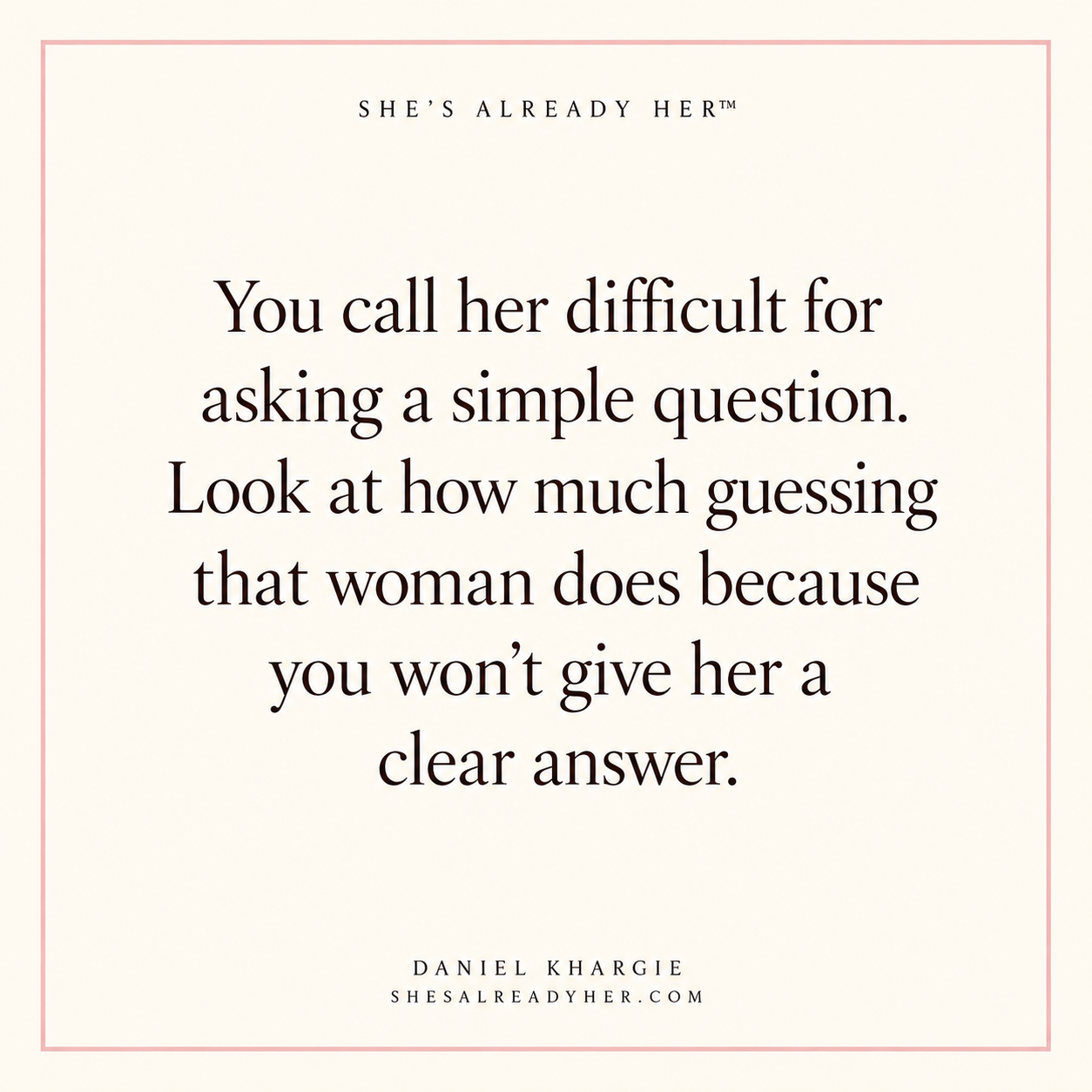
You call her difficult for asking a simple question. Look at how much guessing that woman does because you won’t give her a clear answer.
Frequently asked questions
What is overthinking when his answer still isn’t clear?
In everyday language, it means repeatedly thinking something over without getting useful new understanding. That isn’t a diagnosis, and it doesn’t establish whether his answer was clear. You may have a real missing detail and still find yourself going over it unhelpfully. Identify what you need to know for your next choice, rather than trying to settle every possible meaning.
How to ask for clarification when he says you’re overthinking?
Where it feels safe, name the unclear part and ask the specific question it leaves you with: “When you say later, do you mean tonight or another day?” Consider his answer, including an honest no or “I don’t know.” You can speak clearly without being responsible for his willingness to explain. If asking brings threats or fear, seek private support instead of another confrontation.
What is deflection, and does a vague answer prove he’s doing it?
In a conversation, deflection means moving attention away from the issue being raised. The word has other meanings in other contexts. Discussing your supposed overthinking instead of the detail you asked about can move attention away from your question. A vague answer, pause, or request for privacy alone doesn’t prove deliberate avoidance, deception, or gaslighting. Look at what happens when clarification is offered or requested.
How to stop overthinking in a relationship when “maybe” is all I get?
Recognize that maybe leaves something uncertain. Ask for the detail that matters if you want to, then make choices from what is actually available rather than treating it as an implied yes. Repeatedly analyzing the same word won’t make his decision for him. If recurring worry is disrupting everyday life, qualified support can help you understand it; an article cannot assess its cause.
How to respond to invalidation without defending my whole personality?
You can briefly return to the missing detail or decide you aren’t continuing that conversation, where safe. You don’t need to prove that every question you have ever asked was reasonable. Acknowledging your own misunderstanding doesn’t require accepting ridicule. For the broader pattern of having your feelings dismissed, read this fuller discussion. Your wording cannot guarantee his cooperation.