
Sis, I need to talk to you about something you’ve probably just noticed.
You’ve been chasing him. Initiating conversations. Making plans. Putting in effort. Reaching out. Pursuing connection. Doing all the emotional labor in the relationship.
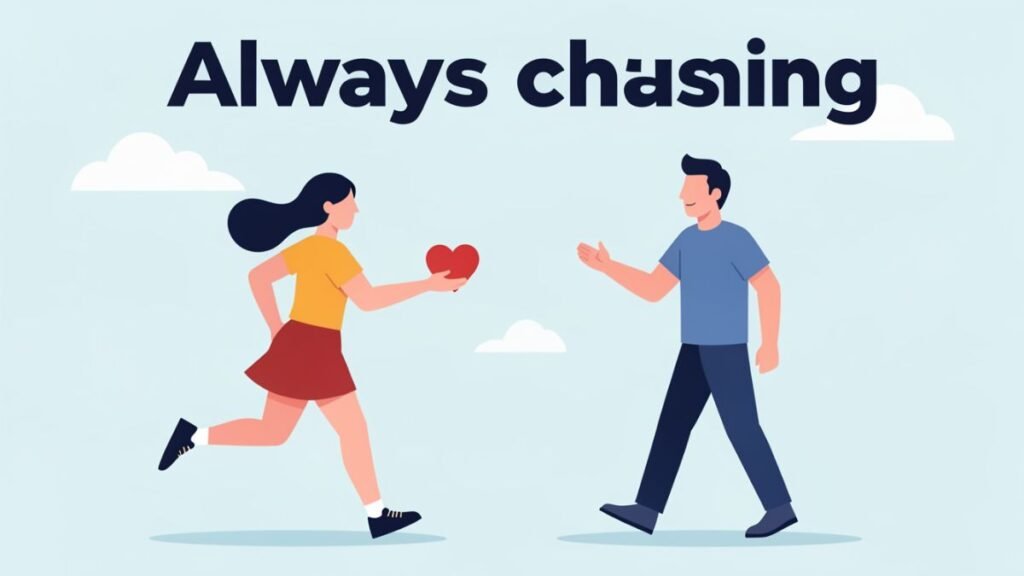
You got tired of it. Exhausted from always being the one to try. So you stopped.
You stopped texting first. You stopped making all the plans. You stopped pursuing. You pulled back to see if he’d step up.
And instead of him stepping up—he became distant.
He didn’t start initiating more to compensate for you initiating less. He didn’t notice the shift and course-correct. He didn’t step into the space you created.
He just… matched your withdrawal with more distance.
Or worse—he disappeared almost entirely, like your relationship only existed when you were actively maintaining it.
The relationship is dying now that you’re not single-handedly keeping it alive.
I see your confusion. If he cared, wouldn’t he notice when you pull back and try harder? If he valued the relationship, wouldn’t he step up when you step back?
And I see you wondering: “Why does he get distant when I stop chasing? Does this mean he doesn’t care? Should I go back to chasing?”
No, sis. Don’t go back to chasing. His distance when you stop is telling you everything you need to know—he only wanted the relationship when it required nothing from him.
Let me explain what’s really happening and why you need to let this relationship die.
What’s Really Happening: The Chase-Dependent Dynamic
As a man who understands healthy relationships, let me be clear: Real relationships involve mutual effort. Both people initiate, pursue, maintain connection.
In a healthy relationship:
- Both people reach out
- Both people make plans
- Both people invest energy
- The effort is relatively balanced
- If one person pulls back, the other notices and addresses it
Your relationship doesn’t work this way. It only functions when you’re chasing, pursuing, initiating, maintaining.
The moment you stop—it collapses.
Here’s what’s really going on:
He Only Wanted the Relationship on Easy Mode
Think about what he’s been getting:
With you chasing:
- All the benefits of a relationship (companionship, sex, emotional support, affection)
- Zero effort required on his part
- No emotional labor
- No planning or pursuing
- No risk of rejection
You were doing 100% of the work. He was enjoying 100% of the benefits.
When you stopped chasing:
- Suddenly the relationship requires effort from him
- He’d have to initiate and risk rejection
- He’d have to do emotional labor
- He’d have to plan and pursue
And he’s choosing not to do that.
His distance when you stop chasing reveals: He only wanted the relationship when it was completely effortless for him.
He Was Comfortable With the Imbalance
The dynamic you created:
- You pursue → He receives
- You initiate → He responds (sometimes)
- You invest → He benefits
- You maintain → He coasts
This imbalance worked perfectly for him. He was getting everything he wanted with minimal effort.
When you stopped pursuing, you disrupted the comfortable imbalance.
Instead of recognizing the problem and adjusting to create balance, he’s becoming distant because he doesn’t want to do his share of the work.
He preferred the imbalance. Without it, he’s not interested.
He Enjoyed Being Chased More Than He Enjoyed You
Here’s a painful truth: Some people are more interested in being pursued than in the actual person pursuing them.
What he enjoyed:
- The validation of being wanted
- The ego boost of being chased
- The attention you gave him
- The feeling of being desired
What he didn’t enjoy enough:
- You specifically
- The actual relationship
- Building something mutual
- Doing the work to maintain connection
When you stopped chasing, you removed the thing he actually valued: the pursuit.
Without the chase, he’s not interested—because he was never that interested in YOU, just in being wanted.
He Has Avoidant Attachment
Avoidant attachment pattern:
- Wants closeness from a distance
- Comfortable when partner pursues
- Uncomfortable when partner pulls back (creates pressure to pursue)
- Creates distance when relationship requires reciprocal effort
Your chasing created the perfect dynamic for an avoidant:
- He got connection without vulnerability
- He got intimacy without real investment
- He got relationship benefits without emotional risk
When you stopped chasing:
- He’d have to be vulnerable to pursue you
- He’d have to invest emotionally
- He’d have to risk rejection
So he creates distance instead—because pursuing you feels too vulnerable for his avoidant attachment style.
He Doesn’t Value You Enough to Pursue
Here’s the brutal truth: If he valued you and the relationship, he would pursue you when you pulled back.
When someone genuinely wants you:
- They notice when you become distant
- They reach out to reconnect
- They step up when you step back
- They don’t let the relationship die from lack of effort
His distance when you stop chasing means: You’re not valuable enough to him to warrant effort.
He’ll accept the relationship when it’s handed to him effortlessly, but he won’t work to maintain it.
He’s Calling Your Bluff
Some men view your withdrawal as a manipulation tactic or test.
In his mind:
- You’re pulling back to make him chase
- You’re playing games to get attention
- You’re testing to see if he’ll pursue
- You’ll eventually come back and resume chasing
So he becomes distant to:
- Call your bluff
- Show he won’t be manipulated
- Prove he won’t dance to your tune
- Wait for you to resume pursuing
He’s in a power struggle, viewing your legitimate need for reciprocal effort as a game.
The Relationship Only Existed Because You Maintained It
Here’s what his distance is revealing:
There is no “relationship” in the absence of your effort.
The connection, the communication, the plans, the intimacy—all of it only existed because you created and maintained it.
He was a passive participant enjoying what you built.
When you stopped building and maintaining, everything collapsed—because there was never anything he was contributing to hold up.
You’re Finally Seeing the Truth
Your chasing was hiding the reality:
- That he’s not that invested
- That the effort is completely one-sided
- That he doesn’t value you enough to pursue
- That the relationship is unsustainable without your constant work
By stopping your pursuit, you’ve removed the curtain and exposed the truth: Without your effort, there’s nothing there.
His distance isn’t a new problem. It’s the existing problem finally becoming visible.
Why This Pattern Is Destroying You
You’re exhausted from one-sided effort. Maintaining an entire relationship by yourself is emotionally and mentally draining.
Your self-worth is eroding. Being the only one who tries makes you feel unwanted, unvalued, like you have to work hard to deserve basic relationship effort.
You’re stuck in a relationship that doesn’t really exist. It’s not a mutual partnership—it’s you pursuing someone who passively accepts your pursuit.
You can’t relax or be yourself. You’re constantly managing the relationship, afraid that if you stop, it will end (and you’re right).
You’re learning unhealthy patterns. You’re being trained that love means chasing, pursuing, doing all the work.
You’re missing out on reciprocal love. While you’re exhausting yourself chasing someone who won’t chase back, you’re unavailable for someone who would pursue you equally.
You’re losing yourself. The real you isn’t someone who begs for basic reciprocal effort. You’re becoming someone you don’t recognize.
What You Need to Do
Step 1: Recognize What His Distance Means
His distance when you stop chasing is not:
- Him being busy
- Him needing space
- Him testing if you care
His distance when you stop chasing is:
- Him showing he won’t do his share
- Him revealing he only wanted easy relationship benefits
- Him demonstrating you’re not valuable enough to pursue
See it clearly.
Step 2: Don’t Resume Chasing
When you see him becoming distant, you’ll be tempted to:
- Start initiating again
- Resume pursuing
- Go back to doing all the work
Don’t.
If you resume chasing, you’re teaching him:
- The imbalance is acceptable
- You’ll always do all the work
- He never has to step up
- Your needs don’t matter
Stay pulled back.
Step 3: Let the Relationship Die
This is hard, but necessary:
If he won’t step up when you step back, let the relationship end.
Don’t fight to save something he’s not fighting for.
Don’t single-handedly keep alive what should be a mutual effort.
Step 4: Observe Without Intervening
Give it a specific timeline:
“I’m going to see what happens if I don’t initiate for [2 weeks/1 month]. I’ll observe his effort level without resuming pursuit.”
Then observe:
- Does he reach out?
- Does he make plans?
- Does he notice the distance and address it?
Let his behavior (or lack thereof) tell you everything.
Step 5: Have One Clear Conversation
If you want to give him one chance to understand:
“I’ve been doing all the initiating and pursuing in this relationship. I pulled back to see if you’d step up, and instead you became more distant. I need mutual effort. If you’re not willing to pursue this relationship too, I’m done.”
Say it once, clearly. Then watch his actions, not his words.
Step 6: Walk Away If Nothing Changes
If after the conversation:
- He doesn’t increase effort
- He makes promises but doesn’t follow through
- He briefly steps up then reverts to passivity
- He becomes defensive instead of accountable
Walk away.
This is who he is. He’s shown you he won’t do his share.
Step 7: Don’t Accept Breadcrumbs
He might:
- Occasionally text to keep you on the hook
- Make minimal effort to prevent you from leaving
- Give just enough to keep you hoping
Don’t accept breadcrumbs.
Either he steps up with consistent, sustained effort—or you’re done.
Step 8: Block and Move On
Once you decide you’re done:
Block him. Don’t leave the door open for him to breadcrumb or resurface.
Move on completely.
You’ve wasted enough energy on someone who won’t reciprocate.
What You Need to Understand
Mutual Effort Is Non-Negotiable
Healthy relationships require:
- Both people initiating
- Both people pursuing
- Both people investing
- Relatively balanced effort
If you’re doing 90% and he’s doing 10%, that’s not a relationship—it’s you chasing someone who’s barely participating.
You Can’t Make Someone Value You
No amount of pursuing, chasing, or effort will make him value you enough to reciprocate.
If he valued you, he’d pursue you. His lack of pursuit reveals his lack of value for you.
His Distance Is a Gift
His distance when you stopped chasing is actually a gift:
It’s showing you the truth you needed to see—that without your effort, there’s nothing there.
Better to see it now than waste more years chasing someone who’ll never chase back.
You Deserve Reciprocal Pursuit
The right person:
- Pursues you as much as you pursue them
- Initiates as much as you do
- Invests as much energy as you invest
- Steps up when you need them to
That person exists. But it’s not someone who gets distant when you stop chasing.
What You Deserve
You deserve someone who pursues you as enthusiastically as you pursue them.
Someone who notices when you pull back and steps up, not someone who matches your distance with more distance.
Someone who wants the relationship enough to do their share of the work.
Someone who values you enough that they won’t let the relationship die from lack of effort.
That person exists. But it’s not him.
The Bottom Line
Sis, he becomes distant when you stop chasing because:
- He only wanted the relationship when it required zero effort from him
- He enjoyed being chased more than he enjoys you
- He doesn’t value you enough to pursue
- He’s calling your bluff or has avoidant attachment
- The relationship only existed because you maintained it
His distance is showing you the truth.
Don’t resume chasing. Let the relationship die. Walk away.
Choose yourself, sis. You deserve someone who chases back.
FAQ
Q: Should I tell him why I stopped chasing?
You can have one clear conversation about needing reciprocal effort. But don’t repeatedly explain—if he cared, he’d notice without being told.
Q: What if he steps up after I pull back but then goes back to being passive?
Temporary increases in effort to prevent you from leaving are common. Watch for sustained change over at least 2-3 months. If he reverts to passivity, leave.
Q: How do I know if I was doing too much vs. him doing too little?
Ask trusted friends to assess honestly. But if you’re doing 80%+ of initiating, planning, and maintaining—that’s too much regardless of whether it’s “too much” in absolute terms.
Q: What if he has a valid reason for not pursuing (depression, stress, etc.)?
Mental health struggles are real, but they don’t exempt someone from basic relationship effort. If he can’t reciprocate due to circumstances, he should communicate that—not just become distant.
Q: Should I give him time to notice I’ve pulled back?
Give it 2-4 weeks max. If he hasn’t noticed and stepped up by then, he’s not going to. Don’t wait months hoping he’ll eventually pursue.