
Sis, let me describe the moment that breaks you every time.
You’re not asking for much. You’re not demanding grand gestures or constant declarations. You just need to hear it. A simple confirmation that you’re okay. That the relationship is okay. That what you’re feeling the quiet worry, the creeping doubt, the low hum of insecurity that’s been building is unfounded. That he’s still here. That he still wants this.
So you ask. Gently. Maybe directly: “Are we okay?” Maybe indirectly: reaching for him, seeking closeness, initiating a conversation that’s really just an invitation for him to say the words that would settle everything.
And he pulls away.
Not toward you. Away. Like your need for reassurance is a hand reaching for him that he needs to dodge. Like your vulnerability is a weight he doesn’t want placed on his shoulders. Like the most natural thing a woman can do in a relationship seek comfort from the man she loves is an imposition he didn’t agree to.
He sighs. Gets irritated. Goes quiet. Says “I’ve already told you how I feel” with a tone that communicates “and I shouldn’t have to tell you again.” Or he distances, physically shifts away, picks up his phone, creates space where closeness should be. The message is clear even though the words are vague: your need for relationship reassurance is a problem. Not his distance. Not his inconsistency. Not whatever behavior triggered your insecurity in the first place. Your asking is the problem.
And now you’re in the worst position possible. You needed comfort and received rejection. You reached for connection and got distance. You asked for the most basic form of emotional security a partner can provide, and were made to feel like asking was the offense.

What Happens When Reassurance Is Punished
When a man pulls away every time you seek relationship reassurance, a specific kind of damage accumulates quietly, consistently, and deep enough that you might not recognize it until it’s reshaped who you are.
You stop asking. Not because the need disappeared. Because asking became more painful than not knowing. The rejection that follows your vulnerability trains you to swallow the need instead of expressing it. You carry the anxiety alone. You sit with the doubt in silence. You manage your own insecurity without support because the one person who should be helping you manage it treats your request for help like a burden.
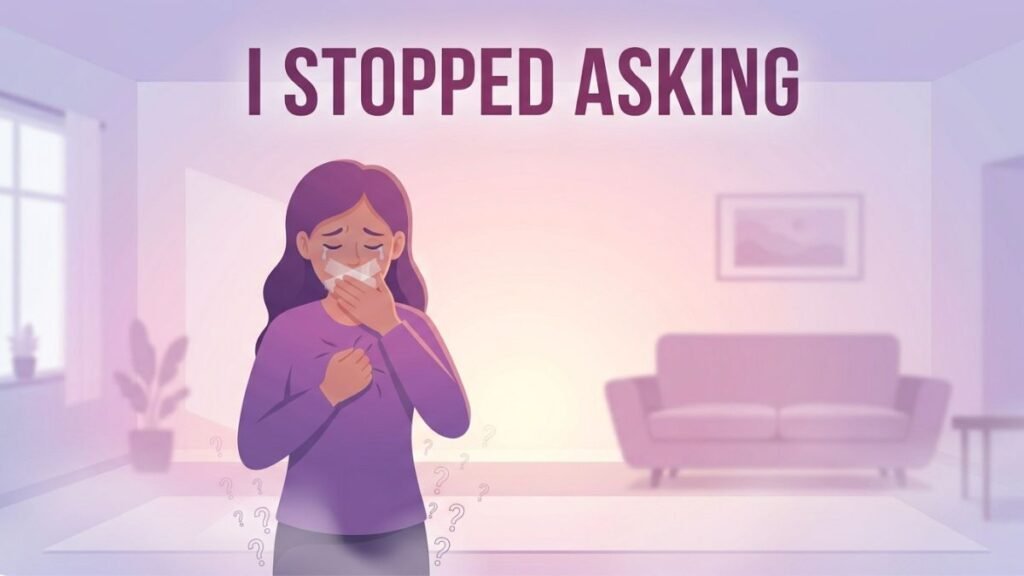
You start performing security that you don’t feel. You smile when you’re worried. You say “everything’s fine” when everything isn’t. You project confidence in the relationship while internally scanning for signs that confirm your fear. You’ve learned to fake stability because showing instability — showing the real, human need for comfort — gets punished. And the performance is exhausting in a way that nobody who hasn’t lived it can understand.
You blame yourself for needing what you need. His response has taught you that needing reassurance is a character flaw. That secure women don’t ask. Confident women don’t need to hear it. That wanting comfort from your partner is evidence of weakness rather than evidence of love. You’ve internalized his rejection of your need as proof that the need itself is broken when the only thing broken is his willingness to meet it.
Why He Pulls Away When You Ask for Reassurance
Your need for reassurance feels like an accusation he didn’t earn. When you ask “are we okay?” he doesn’t hear a woman seeking comfort. He hears a woman questioning his commitment. And that question whether he intended it that way or not feels like being told he’s not doing enough. Not showing up adequately. Not making his feelings clear through his behavior. Relationship reassurance requests, to a man with this pattern, don’t feel like invitations to connect. They feel like report cards he’s failing. So instead of leaning in and providing the comfort that would resolve everything, he pulls back. Defensive. Irritated. As if the asking itself is an indictment.
Reassurance requires emotional availability he doesn’t have. Providing genuine reassurance means being present. Emotionally open. Willing to sit with your vulnerability and meet it with warmth. For a man who operates with limited emotional bandwidth who’s spent his life avoiding emotional engagement, who treats feelings as problems to solve rather than experiences to share your request for relationship reassurance isn’t simple. It’s overwhelming. You’re asking him to do something his emotional system isn’t equipped for. Not because the request is excessive. Because his capacity is insufficient. And instead of acknowledging his limitation, he frames your need as the problem because admitting he can’t provide something basic is more threatening to his ego than making you feel bad for wanting it.
He interprets your insecurity as distrust. In his mind, asking for reassurance means you don’t trust him. And not being trusted feels like an attack on his character. “I’m here, aren’t I? Isn’t that enough? Do I really have to say it every time you feel insecure?” He’s collapsed two separate things into one your emotional need and a judgment about his reliability. They’re not the same thing. You can trust someone and still need to hear them say it. You can believe in the relationship and still crave confirmation. Relationship reassurance isn’t about distrust. It’s about human need for connection and verbal affirmation. But he’s decided it’s a commentary on his adequacy and his ego won’t tolerate that commentary.
Emotional vulnerability in you triggers avoidance in him. When you ask for reassurance, you’re being vulnerable. You’re showing him the part of you that’s afraid. The part that worries. The part that needs him in a way that’s raw and unguarded. And for a man with avoidant patterns, your vulnerability doesn’t inspire tenderness. It activates his escape reflex. Your openness feels like a demand his system can’t meet. Your need feels like pressure his walls can’t absorb. So he pulls away not because he doesn’t care, but because your vulnerability enters a room his emotional architecture wasn’t built to hold. Relationship reassurance requires him to meet you in emotional space. And emotional space is exactly where he refuses to live.
He believes actions should be enough and words are unnecessary. “I’m here. I come home every night. I pay the bills. I haven’t left.” In his framework, presence equals love. Proximity equals commitment. Physical reliability equals emotional security. He genuinely doesn’t understand why you’d need words on top of actions because his emotional model doesn’t include verbal affirmation as a necessary component of partnership. He sees your request for reassurance as redundant. Unnecessary. Evidence that his actions aren’t being valued. And that perceived lack of appreciation triggers his withdrawal instead of his engagement. He’s not wrong that actions matter. He’s wrong that actions alone are sufficient. And the gap between what he offers and what you need is the gap his unwillingness to provide relationship reassurance keeps wide open.
Providing reassurance consistently feels like surrendering power. For some men, meeting emotional needs on request feels like submission. Like being told what to do. Like operating on someone else’s terms rather than his own. Relationship reassurance, in this distorted framework, isn’t an act of love. It’s an act of compliance. And a man who equates emotional responsiveness with weakness won’t provide something that makes him feel controlled even when that “something” is a thirty-second sentence that would resolve hours of anxiety. His refusal isn’t about the reassurance being hard. It’s about the reassurance feeling like he’s giving you power over his emotional behavior. And he guards that power like his life depends on it.
He’s punishing you for having needs he doesn’t want to meet. Strip everything else away and sometimes this is what remains. Your need exists. He doesn’t want to meet it. And instead of being honest about that unwillingness instead of saying “I struggle with this and I need to work on it” he makes you feel bad for having the need in the first place. His withdrawal after your request isn’t confusion. It’s consequence. You asked for something. He punished you for asking. And the punishment teaches you to stop asking which is exactly the outcome his withdrawal produces every time.
What His Withdrawal Is Doing to You
You’ve developed a relationship with anxiety that shouldn’t exist. Before him or before his pattern established itself you might have felt secure asking for comfort. Now the prospect of asking triggers a cascade of fear. Will he pull away? Will he get irritated? Will this become a fight? The anxiety around seeking relationship reassurance has become its own problem layered on top of the original insecurity his behavior created. You’re anxious about being anxious. Afraid of being afraid. And the man whose comfort would resolve everything is the man whose response makes everything worse.
You feel needy for wanting something basic. His consistent withdrawal has rewritten your self-perception. You genuinely believe that wanting reassurance makes you clingy. Dependent. Too much. You compare yourself to imaginary women who never need to hear it — women who are secure enough to never ask, confident enough to never wonder, strong enough to never reach. Those women don’t exist. But his pattern has made you believe they do — and that you should be one of them instead of the human being you actually are.
You’ve stopped reaching for him emotionally. The connection that relationship reassurance is supposed to maintain has been severed by his refusal to provide it. You don’t reach anymore. Not because you don’t want to. Because reaching produces pain. And your nervous system has learned to avoid the pain by avoiding the reaching. You’re emotionally self-sufficient now — not by choice but by force. And the self-sufficiency he probably admires in you isn’t strength. It’s scar tissue from his repeated rejection of your need.
Your attachment system has become hyperactivated. When reassurance is consistently withheld, the part of your brain responsible for attachment goes into overdrive. You monitor more. Analyze more. Read into silences more. Track his behavior for signs of what you can’t get from his words. Your “neediness” — if it even is neediness — wasn’t there before his withdrawal created it. His refusal to reassure you didn’t make you more secure. It made you more anxious. And then he punishes the anxiety his behavior produced. The cruelty of that loop is staggering once you see it clearly.
What You Need to Do
Stop apologizing for needing reassurance. Wanting to hear that you’re loved, that the relationship is solid, that you matter — that’s not a flaw. That’s a human need. Every attachment researcher on the planet will tell you that the need for reassurance is hardwired into healthy bonding. Stop letting a man who can’t meet that need convince you that having it is the problem.
Name the pattern directly. “When I ask for reassurance, you pull away. That withdrawal makes my insecurity worse, not better. I need you to understand that reassurance isn’t criticism — it’s a request for connection. And your response to it is damaging us.” Say it during a calm moment. Not during the withdrawal. Not while you’re anxious. When your feet are steady and your voice is clear.
Stop chasing reassurance from someone who punishes you for seeking it. This is the hardest shift but the most important one. If he consistently withdraws when you reach for comfort, stop reaching in his direction. Not as a game. As self-preservation. Build reassurance from other sources — friends who affirm you, a therapist who validates you, your own developing self-worth that doesn’t depend on his verbal confirmation. You need relationship reassurance. You just can’t keep getting it from a man who treats your need like a problem.
Examine whether his behavior created the insecurity he resents. Before you accept the “too needy” label, trace the insecurity backward. Were you this anxious before his inconsistency? Before his emotional unavailability? Before his hot and cold pattern? Often the woman seeking constant reassurance is a woman whose partner’s behavior created the very insecurity he now punishes her for expressing. You’re not anxious because you’re broken. You’re anxious because the relationship is unreliable. And asking for reassurance inside an unreliable dynamic is the most rational response possible.
Develop internal reassurance as a practice. Not because his external reassurance doesn’t matter. Because your ability to self-soothe when he won’t soothe you is essential for your survival inside this dynamic. Journal affirmations that are specific and evidence-based. Remind yourself of your worth through your own words when his words aren’t available. Build a relationship with yourself that provides the steadiness his withdrawal keeps disrupting.
Decide whether you can sustain a relationship where comfort is withheld. Can you spend decades with a man who treats your need for emotional confirmation like an inconvenience? Can you grow old beside someone who pulls away every time you reach? Can you build a life with a man whose response to “are we okay?” is silence, irritation, or distance? Answer honestly. And then honor the answer.
What You Need to Understand
Relationship reassurance isn’t weakness. It’s one of the most fundamental components of secure attachment. Every healthy relationship includes regular, organic moments of reassurance — verbal affirmation, physical comfort, emotional confirmation that the bond is intact. Your need for it isn’t excessive. His refusal to provide it is deficient.
His withdrawal when you ask for comfort says nothing about your worth and everything about his emotional capacity. A man who can’t say “we’re good, I love you, I’m not going anywhere” when the woman he loves is anxious isn’t a man who’s overwhelmed by unreasonable demands. He’s a man whose emotional toolkit is missing one of its most basic instruments. That’s his deficit. Not your excess.
A man who wants you to feel secure makes you feel secure. He doesn’t wait for you to ask. He doesn’t punish you for needing. He provides reassurance because he understands that security is something you build together — not something you demand the other person manufacture alone. He says it because he means it. He shows it because he wants to. And he never — not once — makes you feel broken for wanting to hear that everything is okay.
That man exists. But he’s not the one who pulls away when you reach for him.
What You Deserve
You deserve a man who says “we’re okay” before you have to ask. Who can feel your anxiety rising and moves toward you instead of away. Who doesn’t treat your need for comfort as an invasion of his emotional space but as an invitation he’s grateful to receive.
You deserve relationship reassurance that flows freely. Not extracted through begging. Not punished through withdrawal. Not treated like a transaction where your need is the price and his irritation is the cost. Freely given. Because love that’s secure doesn’t need to be asked for. It announces itself.
You deserve to feel safe, sis. In the asking. In the receiving. In the simple, human, completely normal act of turning to the person you love and hearing “I’m here. I’m not going anywhere. We’re okay.”
That’s the minimum. And you’ve been accepting less than the minimum for too long.
The Bottom Line
He pulls away when you ask for relationship reassurance because your need feels like accusation to his ego, because emotional availability exceeds his capacity, because he interprets your vulnerability as pressure instead of invitation, and because withdrawing from your need is easier than meeting it.
Stop apologizing for wanting comfort. Stop performing security you don’t feel. Stop accepting a dynamic where the most basic emotional need in a relationship is treated as an imposition.
Your need for reassurance isn’t the problem, sis. His refusal to provide it is. And a man who makes you feel broken for reaching toward him was never the man you should have been reaching for.
FAQ
Q: Is it normal to need reassurance in a relationship?
Completely. The need for reassurance is a core component of human attachment. It exists in every healthy relationship. Occasionally needing to hear “we’re okay” isn’t insecurity — it’s connection-seeking. His framing of it as abnormal is the distortion, not your need.
Q: What if I feel like I need reassurance too often?
Examine whether the frequency matches the instability. If you’re seeking reassurance constantly because his behavior is constantly inconsistent, the frequency is proportional to the environment. You’re not asking too often. The relationship is failing to provide security often enough that you have to keep checking.
Q: How do I stop feeling needy for wanting comfort?
Recognize that the “needy” label was installed by a man who benefits from you not asking. Needing things from your partner is the entire point of partnership. Reframe the need as healthy attachment behavior rather than a character flaw. And surround yourself with people who validate your need instead of punishing it.
Q: What if he says he shows love through actions, not words?
Actions matter. But if his “actions” include pulling away when you’re vulnerable, creating distance when you need closeness, and punishing your emotional needs — those actions aren’t love either. A man who truly shows love through actions wouldn’t have a partner who’s this starved for reassurance. The deficit exists because both his words and his actions are failing to provide security.
Q: Can a man who withdraws from reassurance learn to provide it?
With self-awareness and therapeutic work — particularly around attachment and emotional availability — yes. But he has to see his withdrawal as a problem rather than your need as the problem. If he continues framing your reassurance-seeking as dysfunction while ignoring his inability to meet it, the pattern won’t change. Change requires him to recognize his role, not just manage yours.