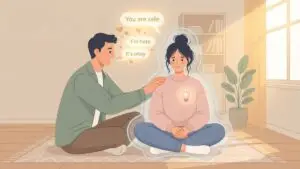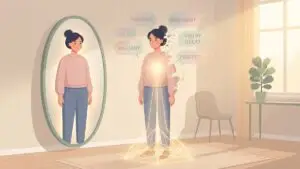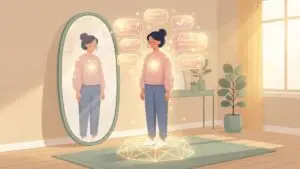
Sis, let me say the thing you’ve been swallowing for as long as you can remember.
You never feel like the first choice.
Not the backup. Not the afterthought. Not the woman someone settles for when the woman they actually wanted didn’t work out. But the first choice. The one someone looked at out of every option, every possibility, every person they could have pursued and said “her. Before anyone else. Without hesitation. Without comparison. Her.”
You’ve never felt that. Or if you have, it didn’t last long enough to settle into belief. It arrived as a moment a flash of being chosen that felt so foreign your system couldn’t absorb it and then disappeared back into the familiar ache of being the woman who comes second. The one who gets picked after the preferred option falls through. The one who gets attention when the attention isn’t needed elsewhere. The one who gets loved, sort of, but never with the urgency of someone who was the destination only with the convenience of someone who was on the way.
And you’ve carried that position so long it’s become your posture. The way you enter rooms. The way you enter relationships. The way you enter your own life slightly behind. Slightly hesitant. Slightly braced for the moment when someone looks past you at the woman standing behind you and reaches for her instead.
Low self esteem in relationships doesn’t always look like obvious insecurity. Sometimes it looks like a woman who’s perfectly functional, perfectly composed, perfectly fine carrying a quiet devastation underneath that nobody sees because she’s learned to carry it gracefully. The devastation of never being first. Of always being enough to keep but never enough to choose.
What Never Being Chosen First Feels Like
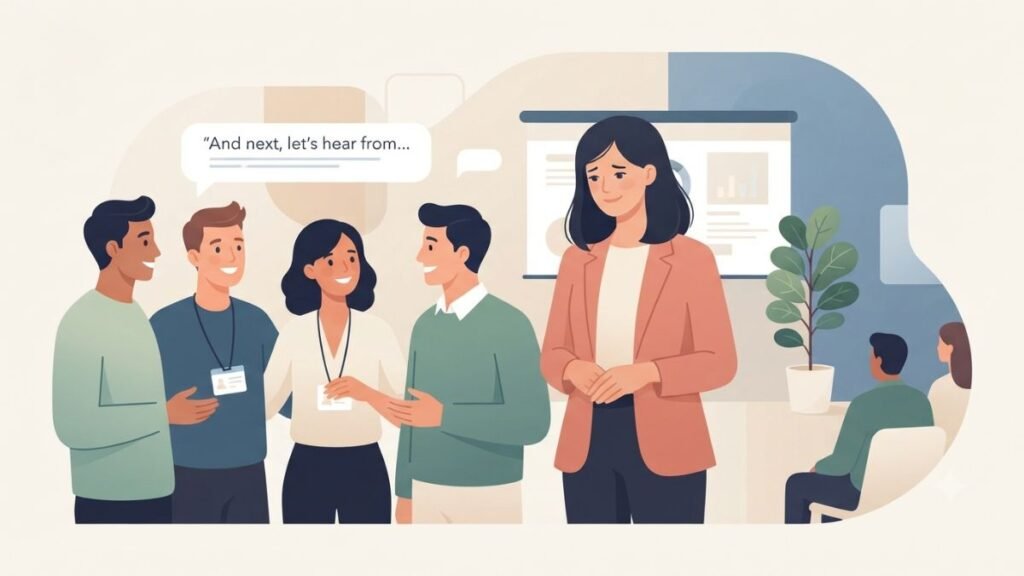
It doesn’t always announce itself as pain. Sometimes it disguises itself as acceptance a resignation so deep it looks like peace from the outside.
You assume you’re the option, not the priority. When someone shows interest, your first thought isn’t “they chose me.” It’s “they’ll choose someone else eventually.” Low self esteem in relationships pre-writes the ending before the story begins. You enter every dynamic already positioned as the person who’s going to be deprioritized not because evidence supports it, but because your internal narrative has decided it’s inevitable.
You settle for being chosen eventually instead of chosen immediately. He came to you after someone else didn’t work out. He chose you once his other options narrowed. He picked you but the picking felt like a consolation rather than a declaration. And instead of recognizing that as insufficient, you accepted it. Because being chosen eventually felt better than not being chosen at all. Low self esteem in relationships doesn’t just lower your expectations. It makes being someone’s fallback feel like a promotion.
You work harder than everyone else to earn a position that should be given. In friendships, you’re the one who initiates. In relationships, you’re the one who invests more. In family dynamics, you’re the one who bends furthest. Not because you’re naturally more generous because you believe that without extraordinary effort, your ordinary presence isn’t enough to hold your position. Low self esteem in relationships turns love into a labor competition where you’re always doing more, trying more, giving more hoping the output compensates for whatever deficit you believe exists in your being.
You interpret neutral situations as evidence of your secondary status. He didn’t text back quickly he must be talking to someone more interesting. She didn’t invite you first you must not have been the one she wanted. They didn’t seem excited to see you you must not matter as much as you thought. Low self esteem in relationships runs a constant interpretation loop that converts ambiguous signals into confirmation of your position at the bottom of everyone’s priority list.
Why You Never Feel Chosen First
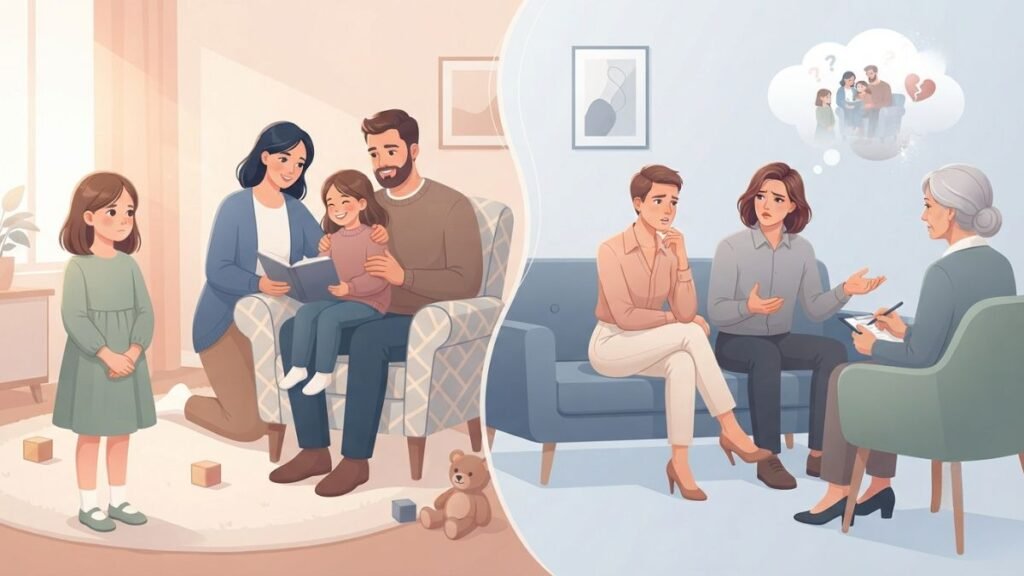
Someone who should have chosen you first didn’t. This is where the wound lives not in your romantic history, but before it. In the place where your worth was supposed to be established before you ever entered a relationship. A parent who prioritized a sibling. A caregiver who was present for everything except you. A household where your needs came last not because resources were scarce, but because your position in the hierarchy was low. Low self esteem in relationships almost always traces back to a childhood where being first wasn’t your experience. Where someone else got the attention, the responsiveness, the prioritization that your developing brain needed in order to conclude “I matter. I’m important. I come first to someone.” Without that conclusion, your brain wrote a different one “I come second.” And that conclusion has been running your relational life ever since.
Early relationships reinforced the position instead of correcting it. The wound from childhood needed healing. Instead, it got confirmation. A first boyfriend who kept you around while pursuing someone else. A friend group where you were included but never central. A dynamic where your presence was tolerated rather than sought. Low self esteem in relationships doesn’t maintain itself in a vacuum. It’s maintained by a series of experiences that keep pressing the same bruise each one confirming what the original wound suggested. That you’re not first-choice material. That the position you occupy in people’s lives is secondary by default. The confirmations feel like evidence. They’re not. They’re a pattern of gravitating toward dynamics that match the template not because the template is accurate, but because it’s familiar.
You’ve been selecting people who can’t put you first. This is the part that stings because it involves your own choices. The men you’ve been drawn to the emotionally unavailable ones, the ones with other priorities, the ones whose capacity for prioritizing a partner was limited before you arrived weren’t random selections. They were familiar selections. Your wounded attachment system identified them as recognizable. Not safe. Recognizable. Because a man who makes you feel second mirrors the position you’ve been occupying since childhood. Low self esteem in relationships doesn’t just affect how you feel. It affects who you choose. And who you choose often confirms what you already believe that you’re not the kind of woman who gets chosen first.
You’ve interpreted being second as evidence about your value rather than theirs. Every time someone didn’t choose you first every time a man prioritized something else, every time a friend treated you as secondary, every time you were the afterthought you filed it under your worth. Not their capacity. Your worth. “I wasn’t chosen because I’m not enough to be chosen.” That interpretation felt logical. It was devastating. And it was wrong. Low self esteem in relationships is built on a fundamental misattribution assigning other people’s prioritization failures to your personal value. Their inability to choose you first was a statement about what they could see. Not a statement about what was there.
You’ve never witnessed yourself being someone’s undeniable first choice. You’ve been told you matter. You’ve heard the words. But have you experienced it? Have you lived inside a dynamic where someone’s behavior not their words, their sustained behavior communicated “you are my first priority and nothing competes with you”? If not, you’re operating without a reference point. And without a reference point, the concept of being first stays abstract something you understand intellectually but can’t feel in your body. Low self esteem in relationships persists partly because the corrective experience being chosen first, consistently, unmistakably hasn’t arrived yet. And without that experience, the wound stays open.
You’ve defined “first choice” by standards that exclude you. In your framework, the woman who gets chosen first looks a certain way. Carries herself a certain way. Has a certain kind of ease, a certain kind of beauty, a certain kind of magnetic quality that you’ve decided you don’t possess. The definition wasn’t formed from reality. It was formed from the distortion your wound produces a distortion that highlights everything you perceive as lacking and renders everything you actually offer invisible. Low self esteem in relationships creates a definition of “choosable” that’s designed to exclude you. Not because you don’t qualify. Because the definition was built by a wound whose purpose is to keep you feeling insufficient.
You’ve been waiting to be chosen instead of choosing yourself. Your entire relational orientation has been organized around being selected. Waiting for someone to see your value. Hoping to be noticed. Performing worthiness in hopes that someone will validate it by choosing you. And the waiting has become so central to your identity that you’ve never considered the alternative that the most powerful choice available to you isn’t being chosen by someone else. It’s choosing yourself. Low self esteem in relationships keeps you oriented outward scanning the world for someone whose selection would finally prove you’re enough. But the proof doesn’t live out there. It never did.
What Never Being Chosen First Is Doing to You
You accept positions in people’s lives that are beneath what you deserve. You tolerate being the situationship when you want the relationship. The convenience when you want the commitment. The backup plan when you want the first call. Low self esteem in relationships has recalibrated your expectations so far downward that secondary positions feel proportional to your worth. You don’t demand more because you don’t believe you qualify for more. And the acceptance of less becomes the pattern that ensures less is what you keep receiving.
You’ve developed a specific kind of hypervigilance. You monitor everyone’s behavior for signs of your ranking. Where do I fall in his priorities? Am I the friend she calls first or last? Am I the partner he’s proud of or the partner he’s settling for? The monitoring is constant and exhausting a background process that never turns off because your sense of safety depends on knowing your position at all times. Low self esteem in relationships doesn’t just affect your self-concept. It rewires your attention toward permanent threat detection for the one threat that terrifies you most being replaced by someone who ranks higher.
You can’t fully receive love because you’re always waiting for the demotion. When someone does choose you genuinely, clearly, without ambiguity you can’t absorb it. You wait for the correction. The moment they realize their mistake. The inevitable arrival of the woman who’s actually first-choice material. Low self esteem in relationships prevents you from receiving the very thing that would heal it the experience of being chosen and trusting that the choosing is real.
You perform instead of exist. You can’t just be in a relationship. You have to be exceptional in it. Exceptional enough that the man who chose you doesn’t regret the choice. Exceptional enough that the comparison you’re running in your head you versus every other woman he could have picked keeps coming out in your favor. The performance is exhausting. And the exhaustion is compounded by the knowledge that no amount of performing ever settles the question permanently. Low self esteem in relationships keeps the performance running indefinitely because the performer never believes she’s given enough to secure her position.
You grieve a position you’ve never held. There’s a specific sadness in never having been first. Not anger sadness. The sadness of a woman who’s watched other people get the thing she wanted and concluded that the wanting itself was the problem. That she wanted something she wasn’t built to receive. That being first was for other women the ones whose worth was obvious, whose value was undeniable, whose presence in a room commanded the prioritization she’s been craving her entire life. Low self esteem in relationships produces this specific grief the mourning of a position you believe was never available to you.
What You Need to Do
Stop accepting secondary positions in people’s lives. This is the behavioral shift that begins rewiring the belief. When someone treats you as an option as the backup, the convenience, the whenever-it’s-easy choice stop tolerating it. Not because rejection is comfortable. Because your tolerance of secondary status is the strongest confirmation your wound receives. Every time you accept being second, the wound says “see? That’s where you belong.” Every time you refuse it, the wound gets challenged. Low self esteem in relationships weakens when the positions you accept stop matching the belief.
Stop auditioning and start existing. Drop the performance. Not gradually. Decisively. Stop being extraordinary to justify your presence and start being ordinary present, real, unpolished, human and see what happens. The people who stay when the performance stops are the people who chose you, not your output. Low self esteem in relationships keeps you performing because the performance keeps people around. But the people the performance keeps aren’t the people whose choice means anything. The real test of being chosen isn’t what happens when you’re exceptional. It’s what happens when you’re just yourself.
Name the wound instead of living inside it. “I feel like I’m never chosen first. That belief started in my childhood and has been running my relationships ever since. It’s a wound, not a fact.” Naming it externalizes it takes it from something you are and makes it something that happened to you. That distinction is everything. Low self esteem in relationships loses power when it gets named as a wound rather than accepted as identity. You’re not a woman who’s unchosen. You’re a woman whose wound keeps telling her she is.
Start choosing yourself with the urgency you’ve been waiting for from others. What would it look like to be your own first choice? To prioritize your needs before everyone else’s. To invest in your growth before investing in someone else’s comfort. To treat yourself as the person who matters most not in a narcissistic way, but in a foundational way. The way a woman treats herself when she genuinely believes she deserves first position. Low self esteem in relationships keeps you waiting for external validation of your worth. Start generating it internally. Not as a substitute for being chosen by others. As the foundation that makes being chosen by others meaningful instead of desperate.
Stop interpreting other people’s behavior as your ranking. His slow reply isn’t your demotion. Her forgetting to invite you isn’t your position. Their distraction isn’t your irrelevance. Other people’s behavior is about their lives, their bandwidth, their capacity not about your rank in their hierarchy. Low self esteem in relationships assigns meaning to neutral events that the events themselves don’t carry. Start catching the interpretation before it completes its loop. “That’s the wound talking. Not the truth.”
Get professional support. Low self esteem in relationships at this depth the kind that predates your romantic history and traces back to childhood requires therapeutic intervention. A therapist can help you trace the wound to its origin, separate installed beliefs from actual identity, process the grief of never having been first, and build a self-concept that reflects your actual worth rather than the distorted version the wound has been projecting.
What You Need to Understand
Low self esteem in relationships isn’t about your actual value. It’s about a wound that distorted your perception of your value before you were old enough to form an accurate assessment. The feeling of being unchosen, of being second, of being the backup none of that is a measurement of who you are. It’s a measurement of what you experienced. And what you experienced the deprioritization, the conditional love, the secondary status was about the people around you. Not about the person inside you.
You’ve been ranking yourself at the bottom of every list. And the ranking felt accurate because the wound made it feel that way. But the wound is a lens, not a mirror. It shows you a distorted image and tells you it’s the truth. The truth is different. The truth is that a woman who loves as deeply as you do, who shows up as consistently as you do, who gives as generously as you do that woman isn’t second-choice material. She’s the kind of woman someone builds a life around. She just hasn’t been shown that yet by anyone whose behavior was clear enough to penetrate the wound’s distortion.
The right man doesn’t make you feel chosen. He makes you feel first. Not through grand gestures through the quiet, daily, sustained prioritization that communicates without words: you’re not an option in my life. You’re the foundation. Before anything else. Before anyone else. First. And the first isn’t something you earn. It’s something you are.
What You Deserve
You deserve to be first. Not eventually. Not after someone’s other options fall through. Not as a consolation prize for a man whose first draft didn’t work out. First. Chosen with the urgency of a man who knows exactly what he’s looking at and can’t believe she’s available.
You deserve to stop wondering where you rank. To stop scanning for your position in people’s priority lists. To stop calculating whether your output is sufficient to maintain a ranking that should never have been conditional in the first place.
You deserve to walk into a relationship knowing not hoping, knowing that the man across from you chose you first. Before anyone else. Without hesitation. Without the comparison your wound keeps running. Without the secondary positioning your history taught you to expect.
You were always first-choice material, sis. The people who didn’t choose you first didn’t have the vision to see what they were looking at. That was their limitation. Not your position.
The Bottom Line
You feel like you’re never chosen first because low self esteem in relationships was installed by experiences where your prioritization was missing, because early relationships confirmed the wound instead of correcting it, because you’ve been selecting people whose capacity to choose you first was limited before you arrived, and because you’ve interpreted being second as evidence of your value rather than evidence of their blindness.
Stop accepting secondary positions. Stop performing to justify your presence. Stop waiting for someone else’s choice to validate a worth that was always there.
You were never second, sis. You were first standing in a room full of people who couldn’t count that high.
FAQ
Q: How do I stop accepting being someone’s second choice?
Start by recognizing the pattern in real time. When a dynamic positions you as secondary backup plans, after-the-fact inclusion, convenience-based attention name it internally: “This is the wound being confirmed, not my worth being measured.” Then decide whether you’re willing to stay in a position that confirms a belief you’re trying to dismantle. Every time you walk away from a secondary position, you challenge the belief that secondary is where you belong.
Q: What if I’ve been someone’s first choice but couldn’t believe it?
That’s the wound’s most devastating function it prevents you from absorbing the corrective experience. When the wound is active, being chosen first doesn’t feel real. It feels like a mistake. Like something that will be corrected once they see you clearly. Therapy can help you develop the capacity to receive what the wound has been blocking so that the next time someone chooses you first, your system can absorb it instead of deflecting it.
Q: Can low self esteem in relationships change?
Absolutely. Self-esteem isn’t fixed. It’s built through experiences, through therapeutic work, through relationships that model consistent prioritization, through the daily practice of treating yourself as someone who deserves first position. The wound was installed. It can be uninstalled. Not overnight. But with sustained effort, professional support, and corrective experiences that update the programming your childhood wrote.
Q: Why do I keep choosing people who don’t choose me first?
Because your attachment system is drawn to what’s familiar, not what’s healthy. Being second feels like home not because it’s comfortable, but because it matches the template. Therapy focused on attachment can help you rewire what “home” feels like so that being chosen first becomes recognizable instead of suspicious. The selection isn’t conscious. But once you see the pattern, the selection can be redirected.
Q: What if being chosen first feels uncomfortable or scary?
That discomfort is the wound encountering something it doesn’t recognize. Being first doesn’t match your internal template so it triggers suspicion rather than safety. The discomfort isn’t evidence that being first is wrong for you. It’s evidence that it’s unfamiliar. And unfamiliar becomes familiar through repeated exposure. Stay in the discomfort. Let being first become the new normal. Your system will adjust not immediately, but inevitably.