
Why does he dismiss my feelings? If your partner ignores your emotions but expects you to manage his, you’re experiencing emotional invalidation in the relationship.
Sis, I need to talk to you about the unfair emotional labor you’re doing.
When you’re upset, he dismisses it. He tells you you’re being too sensitive. He says you’re overreacting. He minimizes what you’re feeling. He gets annoyed that you’re emotional.
Your feelings feel like an inconvenience to him.
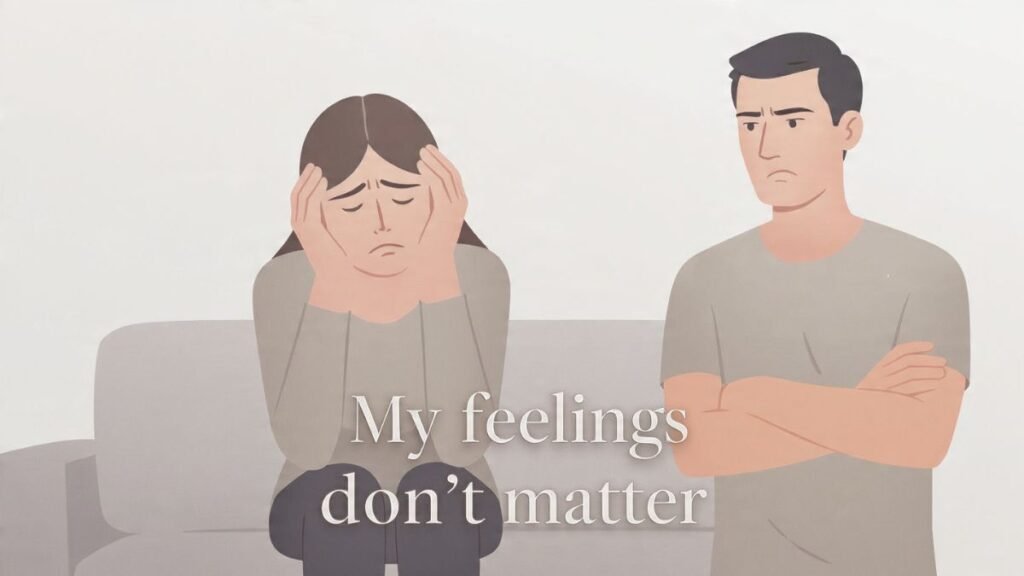
But when he’s upset, everything changes.
Suddenly, emotions matter.
When he’s angry, you have to manage it, walk on eggshells, fix whatever upset him.
When he’s stressed, you have to accommodate, support, and make it better.
When he’s feeling anything, you’re expected to drop everything and take care of his emotional needs.
There’s a double standard here.
Your emotions don’t matter.
His emotions become your responsibility.
You’re expected to suppress your feelings to avoid burdening him, while at the same time managing and soothing all of his.
And this puts you in an impossible position.
You can’t express how you feel because it gets dismissed.
You can’t ignore his emotions because there are consequences.
You’re carrying all the emotional weight while getting nothing in return.
why does my partner lack empathy
Sis, I see how exhausting this is.
You’ve learned to stay quiet to avoid being dismissed.
You’re constantly managing his moods while your own feelings go unacknowledged.
It feels unfair, but you can’t always explain why.
And deep down, you’re asking yourself:
Why does he get to have feelings but I don’t?
Why do I have to manage his emotions while mine don’t matter?
Is this normal?
It’s not normal.
This is emotional inequality, and it is a form of emotional abuse.
You deserve to have your feelings respected without being responsible for his.
Emotional Double Standards in Relationships (Explained)
Let me be clear with you.
In a healthy relationship, both people’s emotions matter.
Both people are responsible for their own feelings.
Both people support each other.
That’s not what’s happening here.
Your relationship is built on emotional imbalance.
Here’s what’s really going on.
He Sees Your Emotions as a Burden
When you express your feelings, he experiences them as:
- Pressure
- Inconvenience
- Problems he doesn’t want to deal with
So instead of supporting you, he shuts you down.
Your emotions become something he wants to avoid.
But his emotions?
Those are important. Those deserve attention.
That’s the double standard.
He Believes His Feelings Matter More
At a deeper level, he believes:
- His emotions are valid, yours are not
- His needs are important, yours are too much
- He deserves support, but you don’t
This mindset creates emotional inequality.
Your Emotions Threaten His Control
When your feelings are acknowledged, things change.
You start setting boundaries.
You ask for respect.
You expect better.
He doesn’t want that.
So he dismisses your emotions to keep control.
He Can’t Handle Emotions
Sometimes, it’s not just control.
Some people genuinely cannot handle emotions.
When you’re upset, he gets overwhelmed.
He doesn’t know what to do.
So he shuts you down.
But when he’s upset, he expects you to do what he cannot do for himself.
You’ve Become His Emotional Dumping Ground
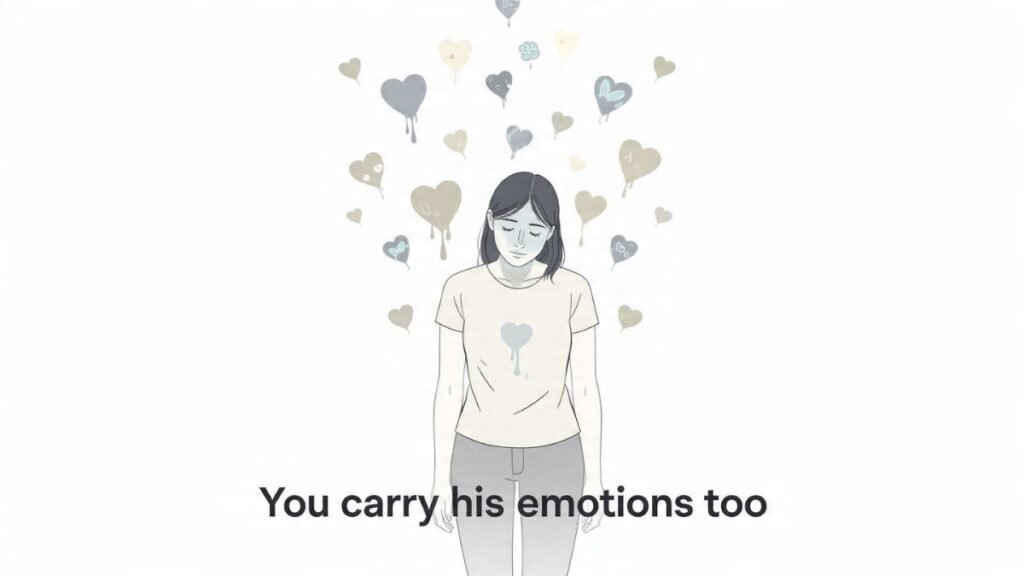
He doesn’t manage his own emotions. He puts them on you.
His anger, stress, and insecurity become your responsibility.
But your emotions?
They get labeled as:
- “Too much”
- “Too dramatic”
- “Too needy”
This is one-sided emotional labor.
Why This Is Destroying You
Sis, this kind of relationship slowly breaks you down.
You stop expressing yourself.
You start doubting your feelings.
You carry everything alone.
Over time:
- You feel emotionally exhausted
- You lose confidence
- You lose your voice
- You lose yourself
This is what emotional abuse does.
What You Need to Do
You can’t keep living like this.
Step 1: Name the Problem
Say it clearly:
“When I express my emotions, you dismiss them. But when you’re upset, I’m expected to manage your feelings. That’s not okay.”
Step 2: Stop Managing His Emotions
You are not responsible for fixing him.
You can support, but you are not responsible for his emotional state.
Step 3: Stand for Your Feelings
Your emotions are valid.
You are not too sensitive.
You are not overreacting.
You are expressing what you feel.
Step 4: Set Boundaries
You need emotional balance.
- Your emotions must be respected
- He must manage his own feelings
- Support must go both ways
Step 5: Watch His Response
Does he listen?
Does he change?
Or does he continue the same behavior?
That answer tells you everything.
Step 6: Leave If Nothing Changes
If he continues to dismiss you and expects you to carry everything, this is not a healthy relationship.
You cannot build a real connection on emotional inequality.
What You Need to Understand
Emotional support must go both ways.
Your emotions are not a burden.
You are not responsible for his feelings.
And this kind of double standard is not love.
It’s emotional abuse.
The Bottom Line
Sis, he dismisses your emotions but expects you to manage his because it benefits him.
He avoids responsibility while you carry everything.
But you don’t have to accept that.
Your feelings matter.
Your voice matters.
You matter.
Choose yourself.