
Sis, I need to talk to you about why you’re so hard on yourself after mistakes and how to be kind to yourself when you mess up.
You make a mistake. A human mistake. Something everyone does. Something small, or even something bigger—but still fixable, still forgivable.
And you’re brutal to yourself, constantly being hard on yourself after mistakes.
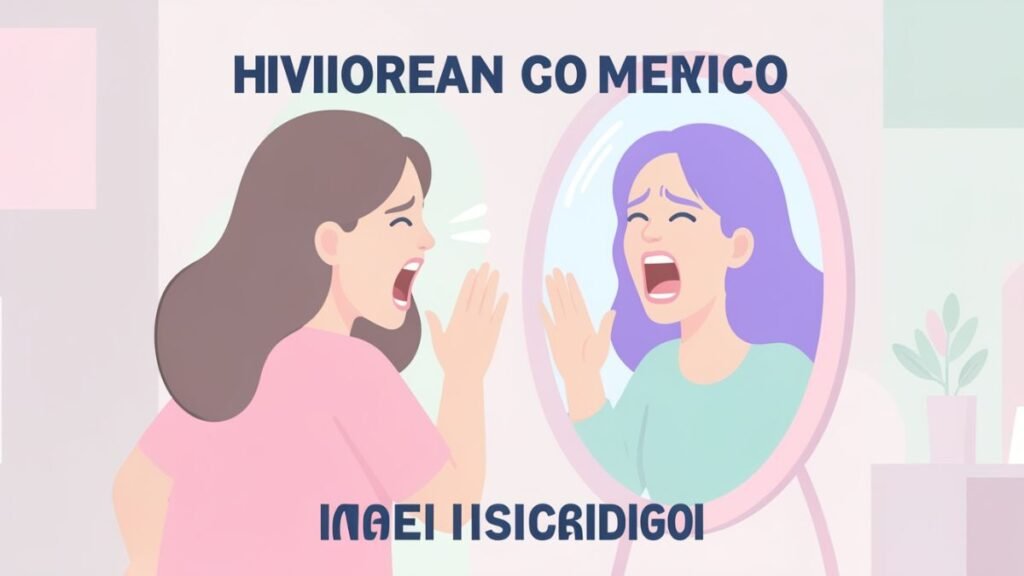
The voice in your head says things you would never say to a friend:
“You’re so stupid.”
“You always mess everything up.”
“You’re a failure.”
“You can’t do anything right.”
“Everyone else can handle this. What’s wrong with you?”
“You don’t deserve good things.”
You replay the mistake over and over. You punish yourself with shame. You beat yourself up relentlessly.
And the self-criticism doesn’t stop when the mistake is fixed. It continues. Days, weeks, sometimes years later—you’re still punishing yourself for something that happened once.
Meanwhile, when others make mistakes, you’re compassionate. Understanding. Forgiving. You extend grace to everyone except yourself.
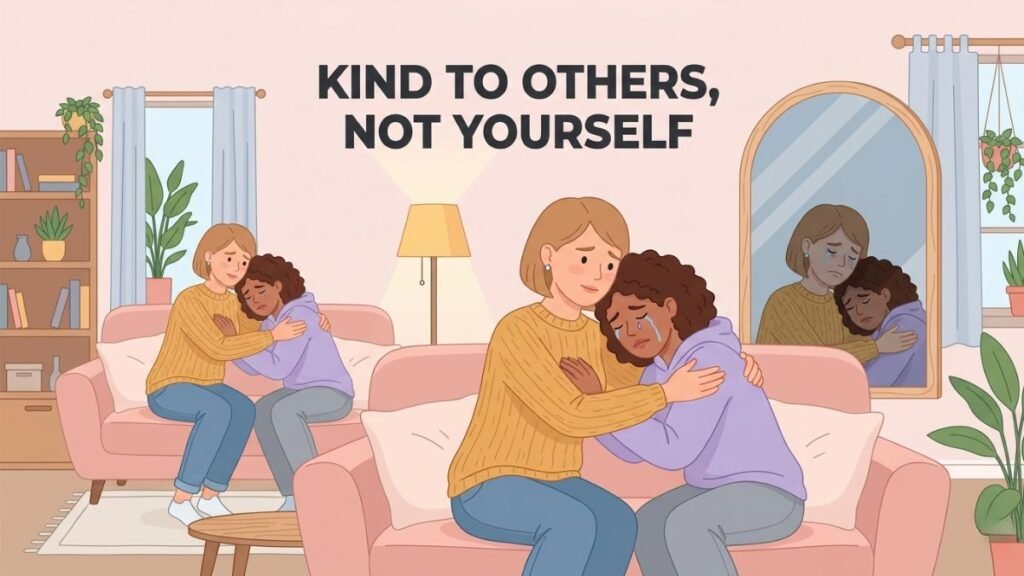
I see how exhausting this is. How do you live in constant fear of making mistakes because the internal punishment is so brutal? How you’re your own worst critic and cruelest judge. How you’ve internalized an inner critic psychology that shows you no mercy.
And I see you wondering: “Why am I so hard on myself? Why can’t I show myself the same kindness I show others? Is this just how I’m wired? Will I ever be able to forgive myself for mistakes?”
You can learn self-compassion after mistakes, sis. But first you need to understand where this self-cruelty came from—and why your mistakes don’t deserve the punishment you’re inflicting. You deserve the same compassion you give others.
Let me help you understand why you struggle with overcoming self-criticism after mistakes—and how to finally develop self-compassion.
What’s Really Happening: Self-Criticism After Mistakes
Let me be direct with you: Being harsh with yourself after mistakes isn’t about high standards or accountability. It’s learned self-criticism vs self-compassion—and it’s destroying you.
You didn’t come into the world treating yourself this way. You learned it.
You Learned Mistakes Mean You’re Bad
Think about how mistakes were treated when you were young:
Maybe:
Mistakes led to criticism or punishment
Love felt conditional on being perfect
Your worth was tied to your performance
Errors meant you were “bad,” not that you made a mistake
You learned: Mistakes = I’m fundamentally flawed
Now, when you make mistakes:
You don’t think “I did something wrong.”
You think “I AM wrong.”
Self-Punishment Feels Like Prevention
In your mind, if you punish yourself enough:
You won’t make the mistake again
But it doesn’t work:
Self-punishment doesn’t prevent mistakes
It just makes you afraid, anxious, and ashamed
You’re Trying to Earn Worth Through Perfection
Somewhere you learned:
Your worth is conditional
Self-Compassion Feels Weak or Self-Indulgent
You might believe:
Being kind to yourself = making excuses
You’re Repeating What Was Done to You
If you were criticized harshly for mistakes:
You internalized that critical voice
Mistakes Trigger Deep Shame
For some people, mistakes don’t just feel bad—they trigger core shame
You’re Afraid of Being Seen as Arrogant
If you’re kind to yourself, you fear:
People will think you’re arrogant
Perfectionism Demands Punishment for Failure
If you have perfectionist tendencies:
Anything less than perfect = failure
Why This Pattern Is Hurting You
You’re living in constant fear and falling into toxic relationship patterns with yourself.
Fear of making mistakes keeps you anxious and prevents you from trying new things.
You’re reinforcing shame. Self-punishment deepens shame instead of healing it.
You’re exhausted.
You’re stuck in a loop of overcoming self-criticism but not progressing.
What You Need to Do When You’re Hard on Yourself
Step 1: Notice the Harsh Voice
Start paying attention to your inner dialogue
Step 2: Ask: Would I Say This to Someone I Love?
Would you say this to a friend?
Step 3: Separate the Mistake From Your Worth
“I made a mistake. That doesn’t mean I am a mistake.”
Step 4: Respond to Mistakes With Self-Compassion
Practice self-compassion after mistakes
Step 5: Challenge the Harsh Belief
Challenge your inner critic psychology
Step 6: Practice Self-Forgiveness
Say: How to forgive yourself for past mistakes
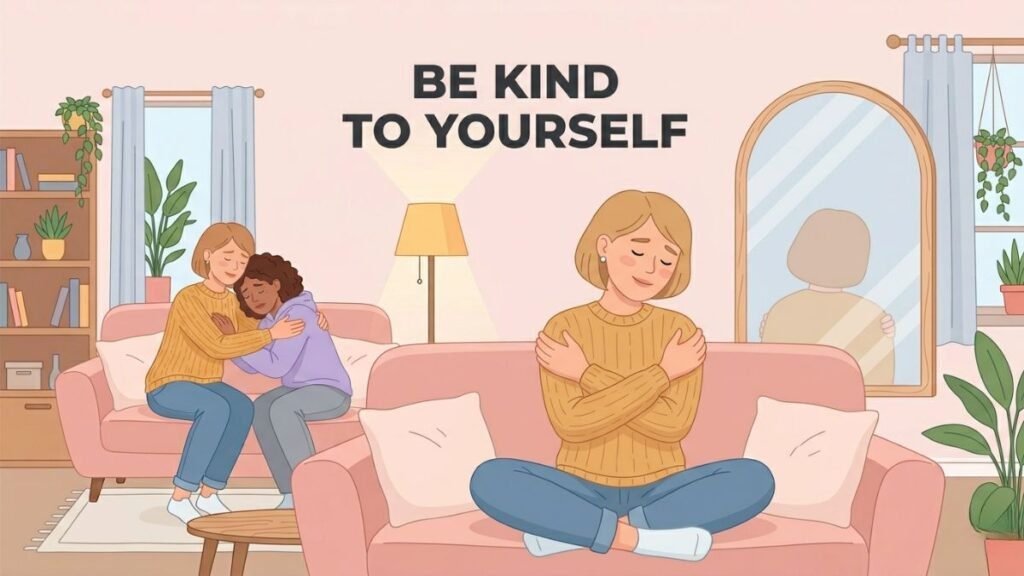
Step 7: Treat Yourself Like You’d Treat a Friend
Give yourself the same kindness
Step 8: Get Professional Help if Needed
If needed, take support
What You Need to Understand
Self-Compassion Isn’t Self-Indulgence (supported by research on self-compassion)
Self-compassion is accountability without cruelty
You Don’t Have to Earn Kindness
You deserve kindness simply because you’re human
Self-Punishment Doesn’t Prevent Future Mistakes
Research shows self-compassion leads to better growth
You Can Unlearn the Harsh Voice
What was learned can be unlearned
What You Deserve
You deserve to stop being hard on yourself
You deserve growth without shame
The Bottom Line
Sis, you struggle because:
You believe mistakes define you
You think punishment leads to growth
But real growth comes from self-compassion after mistakes
FAQ
Q: Isn’t being hard on myself what pushes me to improve?
No. The best way is to stop self-criticism permanently
Q: What if I made a really bad mistake?
You can still learn and grow
Q: How do I be kind to myself without excuses?
Balance accountability with compassion
Q: What if the harsh voice is right?
It’s not. That’s your inner critic
Q: How long does it take?
With consistency, change is possible