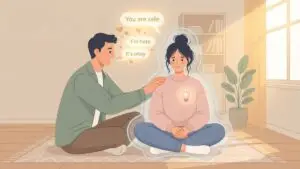
Sis, let me name the ache you carry that sits underneath everything else.
You love hard. You always have. When you’re in, you’re all the way in with your whole heart, your full attention, your complete devotion. You choose people deliberately. Fiercely. With the kind of intention that says “I see you, I value you, and I’m showing up for you with everything I have.”
And then you look around and realize nobody’s choosing you back the same way.
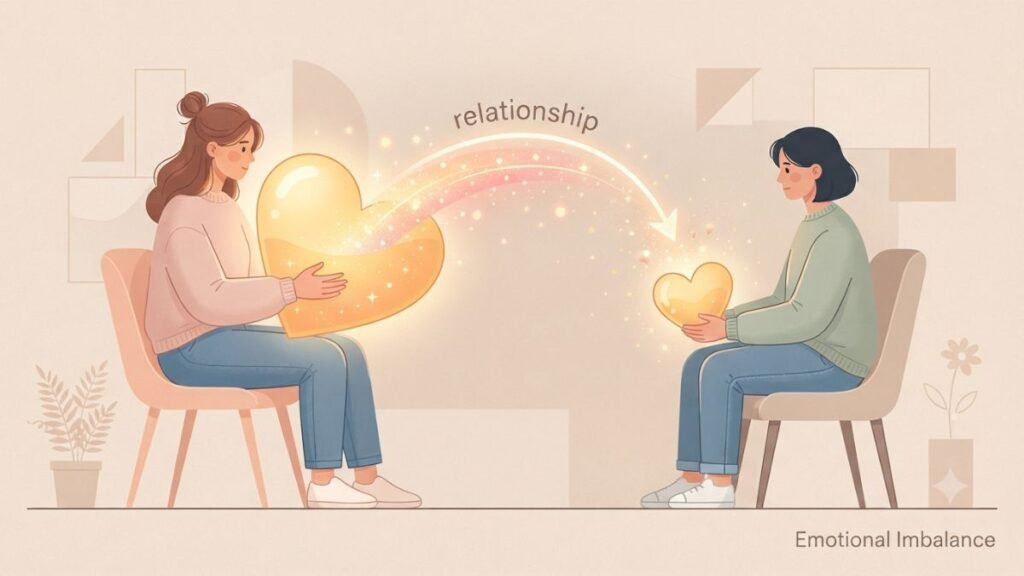
Not with the same urgency. Not with the same depth. Not with the same all-the-way-in energy you bring to every connection you enter. You give the kind of love that rearranges priorities. You receive the kind that fits you in when convenient. You choose people the way they deserve to be chosen. They choose you the way leftovers get chosen appreciated in the moment, but never the thing someone was really hungry for.
And the gap between how you love and how you’re loved has been eating at you for longer than you want to admit. Because the gap doesn’t just hurt. It speaks. It says something about you or at least, that’s what your wound has convinced you it says. That you’re the common denominator. That the imbalance keeps appearing because something about you doesn’t inspire the kind of love you keep giving. That maybe and this is the thought you try not to think but can’t stop thinking you’re fundamentally unlovable at the depth where it matters most.
Feeling unlovable isn’t about your capacity to love. That capacity is extraordinary. It’s about the devastating conclusion your heart draws when that capacity is never matched. When the love you pour out never comes back at the same temperature. When the choosing you do with your whole chest is never returned with the same force.
And the conclusion is wrong, sis. But it feels so right that you’ve stopped questioning it.
What the Imbalance Between Giving and Receiving Love Looks Like
It doesn’t always look like dramatic heartbreak. Sometimes it looks like a woman who’s functioning perfectly while slowly starving inside every relationship she enters.
You’re the one who loves harder and you know it. You don’t just suspect the imbalance. You feel it daily. In the texts you send that carry more warmth than the ones you receive. In the effort you invest that’s never quite matched. In the way you think about them when they’re gone while sensing they don’t think about you with the same frequency or intensity. Feeling unlovable isn’t about not being loved at all. It’s about being loved less than you love consistently, across relationships, with a regularity that starts to feel like a personal verdict rather than a pattern of choosing the wrong people.
You adjust your love downward to match what you receive. You’ve tried matching energy. Pulling back. Giving less so the gap doesn’t feel as wide. But the pulling back feels wrong like wearing clothes that don’t fit. Because your natural state is full investment. And reducing your love to match someone else’s limited offering doesn’t protect you. It just adds self-betrayal to the existing pain. Feeling unlovable creates a specific double bind loving fully gets you hurt because it’s unmatched. Loving partially gets you hurt because it’s not who you are.
You interpret the imbalance as evidence about your lovability rather than their capacity. He doesn’t show up the way you show up and your brain says “something about me doesn’t inspire full love” rather than “something about him prevents full love.” She doesn’t invest the way you invest and your brain says “I must not matter enough” rather than “she might not have the depth to invest at my level.” Every imbalanced dynamic gets processed through the same filter one that assigns the deficit to your worth instead of their limitation.
You’ve started believing that the way you love is the problem. Too much. Too intense. Too all-in. Too fast. Too deep. You’ve been told directly or through the energy of unmatched love that the way your heart operates is excessive. And you’ve started believing it. Editing your love before it leaves your body. Measuring your care before it reaches someone else. Treating your natural capacity for devotion as a dysfunction rather than the gift it actually is. Feeling unlovable has corrupted your relationship not just with other people but with your own love making you distrust the very thing about you that’s most valuable.
Why You Feel Like You’re Never Chosen the Way You Choose Others
You learned early that your love would always exceed what was returned. Before any romantic relationship existed, the imbalance was already established. A child who loved a parent with full devotion and received partial attention. A daughter who poured herself into earning affection that was given sporadically or conditionally. A young girl who chose her family with her whole heart and felt chosen back with a fraction of theirs. Feeling unlovable in adulthood almost always traces back to a childhood where the exchange rate was set your love is worth more than what you receive for it. And that exchange rate became the template. The one you carry into every relationship. The one that keeps producing the same imbalance because the template attracts dynamics that match it.
You’ve been choosing people whose capacity for love is smaller than yours. This isn’t a criticism it’s a pattern worth examining. The men you’ve loved. The friends you’ve invested in. The people you’ve poured yourself into. Many of them had a love capacity that was genuinely smaller than yours not because they were bad people, but because their emotional range, their attachment style, their developmental history produced a ceiling that your love kept hitting. Feeling unlovable in those dynamics wasn’t about being unworthy of their love. It was about your love exceeding their maximum output. You were pouring into containers that were too small to hold what you were offering. And the overflow wasn’t evidence of your excess. It was evidence of their limitation.
Your attachment style draws you toward people who can’t fully reciprocate. If you developed anxious attachment through inconsistent caregiving, through love that was unpredictable, through the experience of reaching for someone who was sometimes there and sometimes not your attachment system is wired to seek the familiar. And the familiar is the imbalance. The person who loves you partially while you love them fully. The dynamic where you pursue and they withdraw. The arrangement where the gap between your love and theirs creates the specific anxiety your attachment system runs on. Feeling unlovable isn’t always about the people you choose. It’s about the wiring that makes certain people feel like love while healthier options feel like nothing.
You’ve confused being unmatched with being unlovable. These are fundamentally different things. Being unmatched means the person across from you doesn’t have the capacity to meet your love at its depth. Being unlovable means something about you prevents love from landing. The first is about fit. The second is about your worth. Feeling unlovable collapses the distinction converting every experience of unmatched love into evidence of personal unworthiness. But the collapse is the wound’s distortion, not reality’s truth. You’ve been unmatched. You’ve never been unlovable. The difference is everything.
The people who could match your love don’t register on your radar. There are people in this world who love the way you do deeply, fully, all the way in. People whose capacity matches yours. People who would choose you with the same urgency you bring to every choice you make. But those people don’t trigger the familiar. They don’t activate the attachment system that runs on the gap between what you give and what you get. So they feel boring. Too easy. Too available. Too present. Feeling unlovable persists partly because the people who would disprove it don’t produce the emotional activation your system associates with love. And the people who do produce that activation are the ones whose limited love keeps the wound fed.
You’ve never separated your worth from the love you receive. In your framework, your lovability is measured by the love others offer you. If they love you deeply, you’re lovable. If they love you partially, you’re partially lovable. If they don’t love you at all, you’re not lovable. Your worth fluctuates entirely based on external input like a stock price determined by market sentiment rather than intrinsic value. Feeling unlovable is the inevitable consequence of a valuation system that gives other people full authority over your worth. Because some people will love you less than you deserve. Not because your value is low. Because their capacity is limited. And a valuation system that doesn’t distinguish between low value and limited capacity will always produce the wrong assessment.
You’ve been told in words or through behavior that your love is too much. “You’re too intense.” “You care too much.” “You fall too fast.” “You love too hard.” Those words whether spoken by a partner, implied by a parent, or communicated through the repeated experience of your love being unmatched have installed a specific belief. That your natural way of loving is a problem. That the intensity of your devotion is a flaw rather than a strength. That something about how your heart operates needs correction rather than celebration. Feeling unlovable is the conclusion you draw when the way you love is consistently treated as excess when the most generous, devoted, full-hearted version of yourself keeps being told she’s too much by people who offer too little.
What Feeling Unlovable Is Doing to You
You’ve started withholding your love to protect yourself. The full version of your heart the one that loves without reservation, that chooses without hesitation, that shows up without holding back has been placed behind glass. You still love. But you love carefully now. Measured. Monitored. With a governor installed on the engine to make sure you never exceed the speed limit that past experience taught you was safe. Feeling unlovable has made you a conservative investor in your own love life giving less to lose less. And the woman who used to love like it was oxygen now loves like it’s a finite resource she can’t afford to waste.
You’ve started believing the imbalance is your destiny. After enough repetitions enough relationships where you loved more, enough friendships where you gave more, enough dynamics where the gap between your investment and theirs was a canyon you’ve stopped expecting it to change. “This is just how it is for me.” “I’m the one who loves more. That’s my role.” The acceptance sounds like peace. It’s actually resignation the decision to stop hoping for reciprocity because hoping hurts more than accepting the imbalance as permanent.
You feel lonely in a specific way that being alone doesn’t produce. You’re not lonely because nobody’s around. You’re lonely because the people who are around can’t reach you at the depth you exist. You love at a depth that most people don’t access and the gap between where you live emotionally and where they visit creates a loneliness that no amount of surface-level connection can touch. Feeling unlovable isn’t about the absence of people. It’s about the absence of people who match the depth you bring.
You’ve started questioning whether depth itself is the flaw. Maybe loving deeply is the mistake. Maybe the women who seem happier are the ones who love lightly who don’t invest so heavily, who don’t choose so fiercely, who keep love at a distance where rejection can’t reach the bone. Maybe the answer isn’t finding someone who matches you. Maybe the answer is becoming someone who loves less. Feeling unlovable, at its most corrosive, attacks not just your self-worth but your most beautiful quality your capacity for deep love. It makes you wonder if the thing that makes you extraordinary is actually the thing that makes you damaged.
It’s not. Your depth isn’t the flaw. It’s the treasure. But the wound has been so loud for so long that the treasure looks like a liability from the inside.
What You Need to Do
Stop reducing your love to match other people’s capacity. Your love at full expression isn’t the problem. Their capacity to receive it is. Stop downsizing the most valuable thing about you to fit inside someone else’s limited container. Love fully. Love with your whole chest. And let the people who can’t match it reveal themselves through the gap so you can make decisions about them rather than decisions about yourself.
Start distinguishing between unmatched and unlovable. Every time the feeling surfaces — “I’m unlovable because they didn’t love me the way I loved them” — catch it. Redirect: “I wasn’t unlovable. I was unmatched. Their capacity was smaller than mine. That’s information about them, not a verdict on me.” The distinction doesn’t come naturally when the wound has been collapsing the two for your entire life. Practice it deliberately. Write it down. Say it out loud. Until the separation becomes automatic.
Examine who you’ve been choosing and why. Not to blame yourself. To understand the pattern. Have the people you’ve loved most deeply been capable of the depth you were offering? Did their history, their attachment style, their emotional availability suggest they could meet you where you live? Or did you choose them because the imbalance felt familiar — because the gap between your love and theirs produced the anxiety your attachment system recognizes as connection? Feeling unlovable can’t be addressed without examining the selection process that keeps producing the same result.
Recognize that people who match your depth exist. They do. They’re not mythical. They’re not reserved for other women. They exist — people who love the way you love. Who choose with the same fierceness. Who show up with the same fullness. You haven’t found them yet — or you have, and they didn’t register because their consistent presence didn’t produce the activation your wound associates with love. Start paying attention to the people whose love is steady rather than dramatic. Present rather than intermittent. Full rather than partial. They might not trigger the same intensity. But they’ll fill the gap the wound has been keeping open.
Start choosing yourself with the same devotion you give others. The love you’ve been pouring outward — the fierce, full, unwavering devotion you offer everyone you care about — turn some of it inward. Not as a consolation prize. As the primary investment. Choose yourself first. Prioritize yourself first. Show up for yourself with the same energy you bring to every relationship you enter. Feeling unlovable begins to dissolve when the most reliable source of love in your life is you — because self-love that’s consistent can’t be revoked by someone else’s limited capacity.
Get professional support. Feeling unlovable at this depth — where the wound predates your adult relationships, where the pattern spans your entire relational history, where the imbalance feels like destiny rather than coincidence — requires therapeutic intervention. A therapist can help you trace the wound, understand the attachment patterns driving the selection process, separate the experience of being unmatched from the belief of being unlovable, and rebuild a self-concept where your worth isn’t determined by the love others offer you.
What You Need to Understand
Feeling unlovable is a wound’s conclusion, not a fact’s confirmation. The evidence it cites — every unmatched love, every partial choosing, every gap between what you gave and what you received — isn’t evidence of your unworthiness. It’s evidence of the people you chose and their limitations. The imbalance was real. The conclusion your wound drew from it was not.
Your capacity for deep love is not a flaw. It’s one of the rarest and most valuable things a human being can possess. The world is full of people who love cautiously, who give partially, who show up halfway. You’re not one of them. You love at a depth that most people never access — and that depth isn’t the thing that’s broken about you. It’s the thing that’s extraordinary about you. Feeling unlovable has been telling you that your greatest gift is your biggest problem. It’s been lying. Your depth is the thing the right person will be most grateful for. It’s just been offered to people who couldn’t reach it.
The right person matches you. Not perfectly — nobody’s perfect. But proportionally. They love at a depth that doesn’t leave you wondering. They choose with an urgency that doesn’t leave you questioning. They show up with a fullness that doesn’t leave you starving. And when you find that match — when someone finally loves you the way you’ve been loving everyone else — the feeling of unlovable dissolves. Not because they healed you. Because the match proved what the wound spent your entire life denying — that you were always lovable. You were just loving people who couldn’t love you back at scale.
What You Deserve
You deserve to be chosen the way you choose. With fullness. With urgency. With the kind of deliberate, unwavering devotion that says “I’m not here by default — I’m here because there’s nowhere else I’d rather be.”
You deserve to stop being the one who loves more in every dynamic. To experience — maybe for the first time — what it feels like when the love flowing toward you matches the love flowing out of you. When the gap closes. When the imbalance disappears. When you’re finally with someone whose depth meets yours and neither person is reaching across a canyon the other person created.
You deserve reciprocity, sis. Not as a luxury. As the standard. The minimum. The baseline for any relationship that deserves your extraordinary heart.
You were never unlovable. You were just loving people who couldn’t love you back at the depth you deserve. And that’s their poverty. Not yours.
The Bottom Line
You feel like you’re never chosen the way you choose others because feeling unlovable was installed by early experiences where your love exceeded what was returned, because your attachment system draws you toward people whose capacity is smaller than yours, because you’ve been interpreting unmatched love as evidence of unworthiness rather than evidence of limited capacity, and because nobody has yet matched you at the depth you operate — which your wound has converted from a selection problem into an identity crisis.
Stop dimming your love. Stop questioning your depth. Stop accepting the imbalance as your destiny. Stop believing that the most generous thing about your heart is the thing that makes you unlovable.
Your love isn’t the problem, sis. It’s the answer. You’ve just been giving the answer to people who weren’t asking the right question.
The right person will ask. And when they do, the answer you’ve been carrying your whole life will finally find the place it was always meant to land.
FAQ
Q: How do I stop loving people more than they love me?
You don’t stop loving deeply — that’s who you are. You start choosing differently. Pay attention to reciprocity early. Does this person’s investment match yours in the first few months? If not, the gap will only widen. Stop investing at maximum in people who are investing at minimum. Not because you should love less. Because you should choose people who love more.
Q: What if I’m afraid that no one will ever match my depth?
That fear is the wound talking. People who love deeply exist. The fear that they don’t is generated by a history of choosing people who couldn’t — which creates the illusion that nobody can. Expand your selection criteria. Pay attention to the people whose love is consistent rather than dramatic. The match you’re looking for might not arrive with intensity. It might arrive with steadiness. And steadiness at depth is the thing you’ve been missing.
Q: Is loving deeply really a strength or am I just codependent?
There’s a distinction. Deep love says “I choose to invest in you because I value connection.” Codependency says “I need to invest in you because I can’t function without your validation.” One is generative. The other is compulsive. If your love flows from desire rather than desperation — if you want to love deeply rather than need to — it’s a strength. A therapist can help you distinguish between the two if the line feels blurry.
Q: Why do I feel suspicious when someone actually matches my love?
Because it doesn’t match your template. Your system is calibrated for the gap — for being the one who loves more. When someone meets you at your depth, it triggers unfamiliarity that your nervous system processes as suspicion. The match feels wrong because it’s never happened before. Let the unfamiliarity exist without acting on it. Sit in the discomfort of being fully met. Your system will recalibrate — but only if you stay long enough for it to update.
Q: Can feeling unlovable ever fully go away?
The wound can heal to the point where it no longer drives your choices or defines your identity. You might still feel echoes — moments where old patterns surface briefly during vulnerable times. But the echoes get quieter. The wound’s voice gets smaller than your own. And eventually, feeling unlovable becomes something you remember experiencing rather than something you’re currently living inside. That healing is real. It’s available. And it starts the moment you stop agreeing with the wound’s verdict.