
Sis, I need to talk to you about the measuring stick you keep failing to meet.
Many people feel like they are always falling short in relationships, no matter how hard they try.
No matter what you do in your relationship, it never feels like enough.
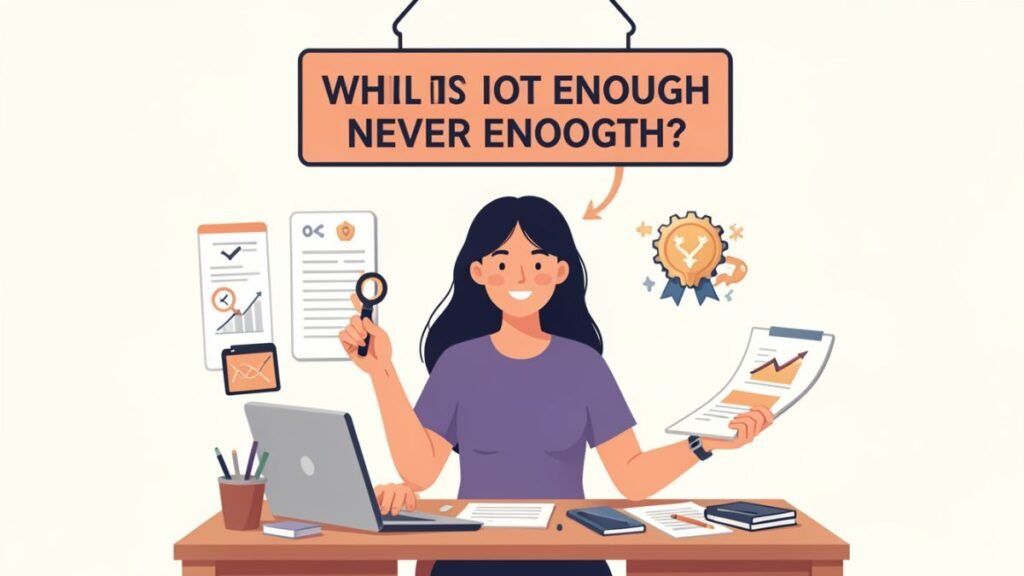
You try harder. You give more. You work on yourself. You meet his needs. You adjust your behavior. You strive to be better. You’re constantly trying to be enough, finally.
But the finish line keeps moving.
You reach one standard, and suddenly there’s another. You fix one thing, and something else becomes the problem. You give everything you have, and somehow it’s still not sufficient.
You feel like you’re perpetually falling short. Like you’re always one improvement away from being good enough. Like if you could just do a little more, be a little better, finally fix what’s wrong with you—then you’d be enough.
But that moment never comes. You’re stuck in an endless cycle of falling short, trying harder, and still not measuring up.
I see how exhausting this is. How are you running on a treadmill of self-improvement that never gets you to “enough”? How you believe the problem is you—that if you were just better, you’d finally feel like you measure up.
And I see you wondering: “Why do I always feel like I’m falling short? What’s wrong with me that I can never be enough? How much more do I have to improve before I’m finally good enough?”
Sis, you’re not falling short. The standards you’re measuring yourself against are impossible, constantly shifting, or not even real. You’ve been set up to fail—and that’s not about your inadequacy.
Let me help you understand why you feel like you’re always falling short and how to finally believe you’re already enough.
What’s Really Happening: The Never-Enough Trap
Let me be direct with you: The problem isn’t that you’re not enough. The problem is you’re measuring yourself against impossible or moving standards that ensure you’ll always fall short.
You’re in a rigged game where “enough” is always just out of reach.
Here’s what’s really going on:
You’re Chasing Moving Goalposts
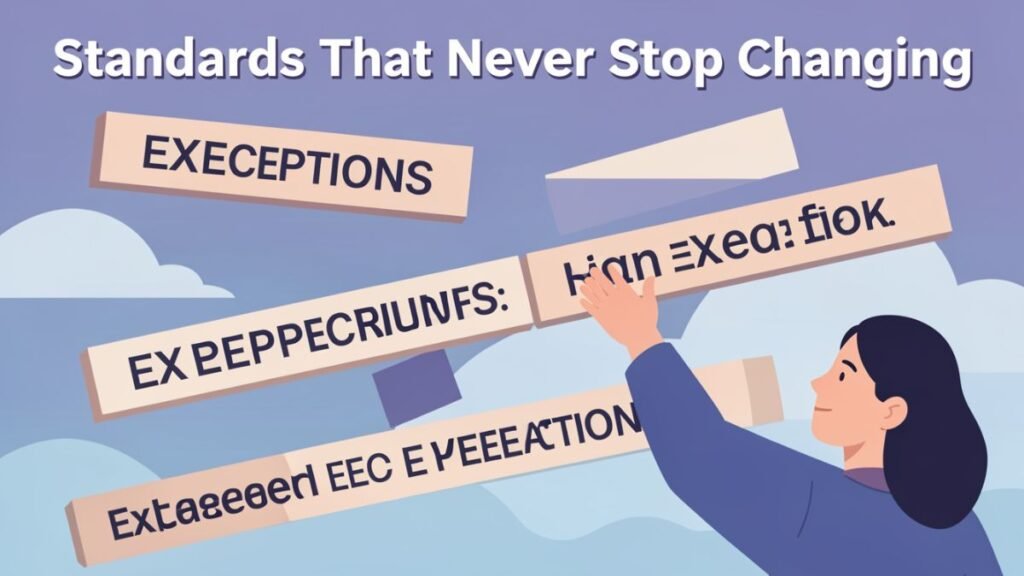
Watch the pattern:
You: Work to meet a standard
You: Finally achieve it
New standard: Appears immediately
You: Feel like you’re still not enough
You: Work toward a new standard
Repeat
The goalposts keep moving.
Maybe he moves them:
- “I need you to be more X.”
- You become more X
- “Great, but now you need to be more Y.”
Maybe you move them:
- “If I just fix this one thing, I’ll be enough.”
- You fix it
- “Actually, I need to fix this other thing too.”
Either way, “enough” is always just beyond reach.
You’re not falling short. You’re chasing a moving target designed to keep you running.
You Learned Love Is Conditional on Perfection
Think about your childhood:
Maybe:
- Love came when you met expectations
- Approval was withheld when you failed
- You were criticized more than praised
- Your best was never quite good enough
- Standards were impossibly high
You learned: I have to be perfect to be loved. Anything less than perfect = not enough.
Now in relationships:
- You’re constantly trying to be perfect
- Any imperfection feels like failure
- You believe you’re falling short when you’re just being human
You’re measuring yourself against a standard of perfection that’s impossible to reach.
You’re in a Relationship With Someone Who Makes You Feel Inadequate
Consider this possibility:
Maybe you feel like you’re falling short because he makes you feel that way.
Does he:
- Criticize you constantly?
- Point out what you’re not doing enough of?
- Compare yourself to others?
- Make you feel like you’re never enough?
- Move the goalposts when you meet expectations?
You might not be falling short—you might be with someone who keeps you feeling inadequate to control you.
Abusive or narcissistic partners deliberately create a sense of inadequacy so you’ll keep trying to please them.
You Have Impossibly High Standards for Yourself
You might be measuring yourself against standards that are:
- Perfectionistic
- Unrealistic
- Inhuman
- Based on other people (who you don’t actually know)
- Impossible to maintain
Examples:
- “I should never make mistakes.”
- “I should always be [attractive/helpful/happy/sexy/interesting].”
- “I should be like [insert person who seems perfect].”
These standards guarantee you’ll always fall short—because they’re impossible.
You’re Comparing Your Inside to Others’ Outside
You feel inadequate because:
You compare:
- Your messy interior (all your struggles, doubts, failures)
- To others’ curated exterior (what they show the world)
This creates an unfair comparison:
- You know all your flaws
- You only see others’ highlights
Of course, you feel like you’re falling short when you’re comparing your full reality to others’ highlight reel.
You Don’t Acknowledge What You’re Already Doing
You’re hyper-focused on what you’re NOT doing:
- What you haven’t achieved
- Where you’re falling short
- What still needs improvement
You ignore what you ARE doing:
- All the ways you show up
- Everything you give
- How much you’ve already improved
- What you do well
When you only count shortcomings, you’ll always feel inadequate—even when you’re doing enough.
You’re Trying to Earn Worth Instead of Knowing It’s Inherent
You believe:
- My worth must be earned through being good enough
- I’m only valuable if I meet standards
- I’m only lovable if I’m sufficient
So you’re constantly trying to prove worth through achievement/performance/being enough.
But worth is inherent—it doesn’t have to be earned.
You can’t achieve your way to enough-ness because enough-ness isn’t about achievement.
You’re Afraid of Rejection
If you’re “enough,” you’re safe from rejection.
If you’re “not enough,” you’ll be rejected/abandoned.
So you’re constantly trying to be enough to avoid rejection.
But this creates:
- Chronic anxiety about falling short
- Desperate striving to measure up
- Inability to relax or just be
You’re trying to control rejection through perfection—but it doesn’t work because you can never actually achieve perfect/enough.
Why This Pattern Is Destroying You
You’re exhausted. Constantly striving to be enough is physically, mentally, and emotionally draining.
You can never enjoy the relationship. You’re too busy measuring yourself and coming up short to actually experience connection.
You’ve lost yourself. You’re so focused on being what you think you should be that you’ve forgotten who you actually are.
You’re never satisfied. Even when you achieve something, you immediately focus on the next inadequacy.
You’re vulnerable to manipulation. People who want to control you can keep you off-balance by constantly moving the standards.
You attract people who reinforce your inadequacy. Partners who make you feel “not enough” are drawn to your willingness to keep trying to measure up.
You can’t receive love. If you don’t believe you’re enough, you can’t believe someone could genuinely love you—so you can’t receive love.
You’re living in constant anxiety. The fear of not being enough creates perpetual stress.
You’re denying yourself basic humanity. Humans are imperfect, make mistakes, and have limitations. You’re holding yourself to inhuman standards.
What You Need to Do
Step 1: Identify the Standards
Get specific about what you think “enough” means:
Write down:
- What do I think I need to be/do to be enough?
- Where did these standards come from?
- Are these standards realistic or reasonable?
- Whose voice am I hearing when I say I’m not enough?
Make the invisible measuring stick visible.
Step 2: Recognize Moving Goalposts
Notice the pattern:
Ask yourself:
- Do I ever arrive at “enough” or does the target keep moving?
- When I meet one standard, does another appear?
- Am I in a relationship where I’m deliberately kept feeling inadequate?
If goalposts move, you’re not falling short—you’re being set up to fail.
Step 3: Challenge Impossibly High Standards
For each standard you identified:
Ask:
- Is this realistic for a human being?
- Would I judge someone else by this standard?
- Is this perfection or sufficiency?
Replace impossible standards with human standards:
- Instead of “never make mistakes” → “learn from mistakes.”
- Instead of “always be perfect, → “do my reasonable best.
Step 4: Acknowledge What You’re Already Doing
Daily, write down:
- Three things you did well today
- Three ways you showed up in the relationship
- Three things you’re already good at
Train your brain to notice adequacy, not just inadequacy.
Step 5: Separate Your Worth From Your Performance
Practice believing:
“I am enough because I exist. My worth is inherent, not earned. I don’t have to be perfect to be valuable.”
This feels untrue. Say it anyway.
Your worth doesn’t come from measuring up—it’s inherent.
Step 6: Evaluate the Relationship
If you consistently feel inadequate in this relationship:
Ask:
- Does he make me feel this way?
- Does he criticize more than appreciate?
- Does he move goalposts?
- Do I feel inadequate only with him, or with everyone?
If the relationship itself is making you feel inadequate, that’s a relationship problem—not a you problem.
Step 7: Practice Self-Compassion
When you notice you’re falling short:
Instead of criticism: “I’m such a failure, I can’t do anything right.”
Try compassion: “I’m human. I’m doing my best. That’s enough.”
Treat yourself with the kindness you’d give a friend.
Step 8: Work With a Therapist
If this pattern is deeply ingrained:
Work on:
- Understanding where it came from
- Challenging unrealistic standards
- Building self-worth independent of achievement
- Healing perfectionism
This is deep work that benefits from professional support.
What You Need to Understand
You’re Already Enough
You don’t have to become enough. You already are.
Enough-ness isn’t:
- Something to achieve
- A standard to meet
- A finish line to cross
It’s inherent. You’re enough because you exist.
The Goalposts Will Always Move
If you’re measuring yourself against moving standards:
You will always fall short—because that’s how moving goalposts work.
You can’t win a rigged game. Stop playing.
Falling Short Might Be the Relationship, Not You
Some relationships make you feel inadequate by design:
- To control you
- To keep you trying to please
- To maintain power over you
If you feel inadequate only in this relationship, the relationship is the problem.
Perfectionism Is Impossible
If your standard is perfection:
You will always fall short because perfection is impossible for humans.
Aim for “good enough” instead of perfect. Good enough is actually achievable.
What You Deserve
You deserve to feel like you’re enough just as you are.
You deserve to be in a relationship where you’re valued, not constantly criticized.
You deserve to have realistic, achievable standards.
You deserve to stop chasing moving goalposts.
That peace is possible. But it requires believing you’re already enough.
The Bottom Line
Sis, you feel like you’re always falling short in relationships because:
- You’re chasing moving goalposts
- You learned love is conditional on perfection
- You might be with someone who makes you feel inadequate
- You have impossibly high standards for yourself
- You don’t acknowledge what you’re already doing
But you’re not falling short. The standards are impossible or moving.
Challenge the standards. Acknowledge your adequacy. Believe you’re enough.
Choose yourself, sis. You’re already enough—exactly as you are.
FAQ
Q: How do I know if my standards are too high vs. if I genuinely need to improve?
Ask: Would I judge someone else by this standard? Is this perfection or reasonable sufficiency? Am I leaving room for being human? If your standards allow no mistakes, they’re too high.
Q: What if I stop trying to improve and become complacent?
There’s a difference between healthy growth (I’m enough AND I can grow) and desperate striving (I’m not enough UNLESS I improve). You can improve from a place of wholeness, not inadequacy.
Q: What if he’s right that I’m falling short?
Even if you have areas to improve, feeling like you’re ALWAYS falling short indicates impossible standards. Growth areas exist, but you should still feel fundamentally adequate.
Q: How do I stop the anxiety of not being enough?
Work on believing your worth is inherent, not earned. Challenge impossibly high standards. Practice self-compassion. Therapy helps with the deep anxiety.
Q: What if I am genuinely not enough for this relationship?
Sometimes incompatibility exists. But if you’re a good person doing your best and it’s still “not enough,” the relationship might not be right—but that doesn’t mean you’re inadequate as a person.