
Why is it so hard for me to emotionally let go after a breakup?
Sis, I see you trapped in an exhausting cycle.
If you’re wondering why it is so hard for me to emotionally let go, you’re not alone.
Mentally, you know you need to let go. You’ve decided you’re done. You’ve told yourself it’s over. You might have even ended the relationship or walked away physically.
But emotionally? You’re still there.
You’re still carrying him. Still feeling attached. Still emotionally invested in someone or something that you logically know you need to release.
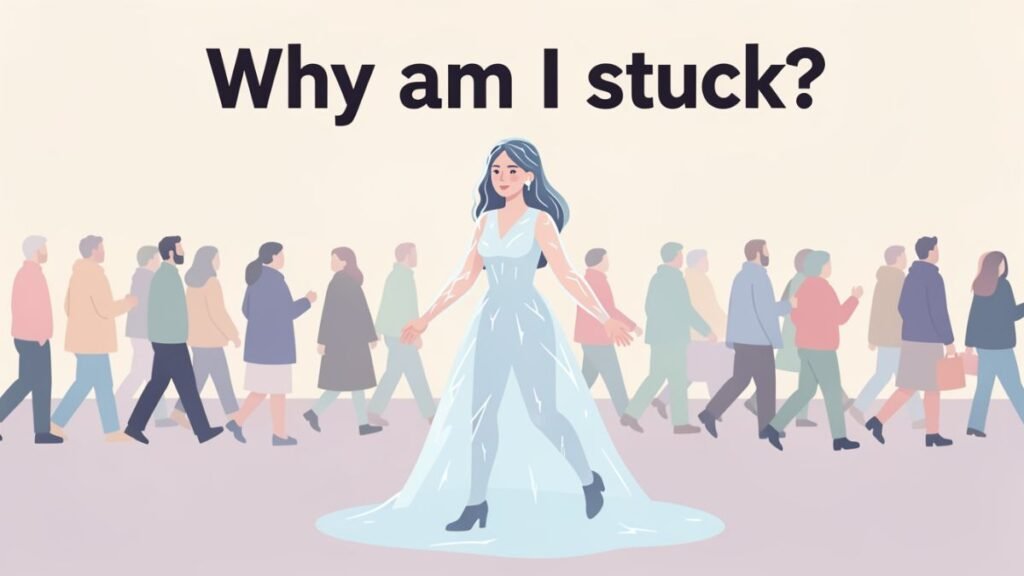
Your mind has let go, but your heart hasn’t.
I see you frustrated with yourself: “Why can’t I just let go emotionally? Why is my heart still attached when my head knows better? What’s wrong with me that I can’t release this?”
Let me tell you something important: Emotional letting go is fundamentally different from mental letting go. And it’s much harder.
Let me explain why and how to finally release what you’re holding onto.
Why Is It So Hard for Me to Emotionally Let Go? (What’s Really Happening)
As a man who understands the complexity of healing, let me be clear: Your emotions don’t work on logic. They work on a completely different system.
You can’t think your way into emotional release. Emotional letting go requires a different process than mental letting go.
Here’s what’s really happening:
Your Mind and Heart Operate on Different Timelines
How the Mind Lets Go Faster
- Analyzes the relationship
- Recognizes red flags
- Concludes it needs to end
- Decides to move on
Done. Mind has let go.
Why the Heart Takes Longer to Let Go
- Needs to feel the grief
- Must process the attachment
- Has to experience the loss
- Requires time to detach
Your heart is still processing while your mind is done. That’s why there’s such a painful gap between knowing you should let go and actually feeling released.
Emotions Are Stored in the Body, Not the Mind
You can mentally decide to let go all day long. But if your body is still holding onto the emotions, you won’t feel released.
Attachment, love, pain, grief—these live in your nervous system, your body, your somatic experience. Not just in your thoughts.
You can’t think away what’s stored in your body. You have to process it somatically—through feeling, through release, through body-based healing.
That’s why you can say “I’m over it” and still feel your chest tighten when you think of him. Your body is still holding the emotion your mind has tried to release.
You’re Attached to More Than Just Him
Think about what you’re actually holding onto:
You’re not just attached to the person. You’re attached to:
- The identity you had in the relationship
- The future you imagined
- The version of yourself who felt loved (even if poorly)
- The hope that things could have been different
- The investment you made (time, energy, love)
Letting go emotionally means releasing all of that. Not just him. That’s massive. No wonder it’s hard.
Fear Is Blocking the Release
Emotionally letting go feels terrifying because it means:
- Accepting the finality
- Facing the unknown future
- Living without the familiar (even if painful)
- Starting over from scratch
- Admitting the time was lost
- Acknowledging it’s really over
Part of you is holding on because letting go feels like jumping off a cliff into an unknown future. The fear keeps you emotionally tethered even when you mentally know you should release.
You Haven’t Fully Grieved
You can’t emotionally let go until you’ve fully grieved what you lost.
But grief is uncomfortable. So you try to skip it:
- Distract yourself
- Stay busy
- “Think positive”
- Focus on anger instead of sadness
- Avoid feeling the pain
Unprocessed grief keeps you emotionally attached. You’re holding onto the relationship because you haven’t allowed yourself to fully grieve losing it.
Part of You Still Hopes
Be honest: Is part of you still hoping?
- That he’ll change
- That he’ll come back
- Those things will work out
- That the ending isn’t really final
Hope keeps you emotionally attached. Because if you let go completely, you have to release the hope. And hope feels like the last thing you have.
You’re Afraid of Who You’ll Be Without This
For however long, this relationship (or this pain) has been part of your identity:
“I’m the woman who…”
- Loves him
- Is waiting for him
- Is hurting over this
- Is trying to make it work
Letting go means releasing that identity. And then who are you?
Identity fear keeps you emotionally attached. Better to hold onto a painful but familiar identity than face the uncertainty of who you’ll be without it.
You’re Waiting for External Permission
Some part of you might be waiting for:
- Him to give you closure
- Someone to tell you it’s okay to let go
- The “right” amount of time to pass
- Some external sign that now is the time
But emotional letting go doesn’t come from outside. No one can give you permission to release. You have to give it to yourself.
You’re waiting for external validation to do something only you can do internally.
Why This Is Keeping You Stuck
You’re living in emotional limbo. Not fully in the relationship, not fully out. Not attached, not released. Stuck in the painful middle.
You can’t move forward. Your mind wants to move on but your heart won’t let you. You’re paralyzed between what you know and what you feel.
You’re exhausted. The internal conflict—knowing you should let go but feeling unable to—is mentally and emotionally draining.
You feel broken. You think something is wrong with you for not being able to just let go. You judge yourself for still feeling attached.
You’re unavailable for new love. Even if you tried to date, your heart is still holding onto someone else. You’re not emotionally available.
You’re missing your present life. While you’re emotionally stuck in the past, your current life is passing by.
How to Emotionally Let Go
Step 1: Accept That Emotional Release Takes Time
Stop expecting your heart to follow your head’s timeline. Emotions need time.
Be patient with yourself. The gap between mentally knowing and emotionally releasing is normal.
Step 2: Feel the Grief Fully
You cannot emotionally let go by avoiding the pain. You have to feel it.
Allow yourself to:
- Cry when you need to
- Sit with the sadness
- Feel the loss deeply
- Grieve without judgment
Grief is the bridge between attachment and release. You have to cross it, not avoid it.
Step 3: Process Emotions in Your Body
Since emotions are stored somatically, you need body-based release:
Practices that help:
- Crying (literal release of stress hormones)
- Movement (yoga, dancing, walking)
- Breathwork
- Somatic therapy
- Anything that helps you feel emotions in your body and release them
You can’t think your way to emotional release. You have to feel your way through.
Step 4: Release the Hope
If you’re still hoping, you need to consciously release it.
Acknowledge: “Part of me is still hoping. But holding onto hope is keeping me stuck. I’m choosing to release the hope so I can move forward.”
Letting go of hope is painful. But it’s necessary for emotional release.
Step 5: Say Goodbye Ritually
Your mind can decide it’s over. Your heart needs a ritual goodbye.
Create a letting-go ritual:
- Write a goodbye letter and burn it
- Create a symbolic act of release
- Have a ceremony (alone or with support)
- Mark the emotional ending deliberately
Rituals help your emotional self catch up to your mental decision.
Step 6: Fill the Space With Something New
Letting go leaves a void. If you don’t fill it intentionally, you’ll fill it with the old attachment.
Pour energy into:
- New goals and projects
- Friendships
- Self-development
- Building the life you want
Give your heart something new to invest in besides the old attachment.
Step 7: Challenge the Fear
When fear blocks release, challenge it:
“What am I afraid will happen if I let go?”
Usually the fear isn’t based in reality. Challenge each fear with truth.
Let go scared. You don’t have to eliminate the fear before releasing. You just have to release despite it.
Step 8: Give Yourself Permission
Stop waiting for external permission. Give it to yourself.
Say to yourself: “I give myself permission to let go. I give myself permission to move forward. I give myself permission to release.”
You don’t need anyone else’s permission to emotionally release what’s hurting you.
Step 9: Get Support
If you can’t emotionally let go on your own, get professional help.
A therapist can help with:
- Processing emotions
- Somatic release
- Grief work
- Attachment patterns
You don’t have to do this alone.
Step 10: Trust the Process
Emotional release isn’t linear. Some days you’ll feel free. Some days you’ll feel stuck again.
That’s normal. Keep doing the work.
One day, you’ll realize you’ve let go. Not because you decided to, but because you finally felt through it.
What You Need to Know
Mental and Emotional Letting Go Are Different
Your mind can let go instantly. Your heart needs time and process.
Both are valid. Don’t judge your heart for not catching up to your head yet.
You’re Not Weak for Struggling
Emotionally letting go is hard. It requires processing grief, fear, attachment, loss.
You’re not weak for finding this difficult. You’re human.
Feeling Is the Path to Release
You cannot think, avoid, or distract your way to emotional freedom.
You have to feel your way through. The only way out is through.
You Will Release—Eventually
Right now it feels impossible. But you will emotionally let go.
It takes:
- Time
- Grief work
- Body-based processing
- Patience with yourself
But you will get there.
The Bottom Line
Sis, emotionally letting go is hard because:
- Emotions don’t follow logic
- Your body is still holding the attachment
- You haven’t fully grieved
- Fear is blocking release
- You’re attached to more than just the person
This isn’t weakness. This is the normal, difficult work of emotional healing.
Be patient with yourself. Feel the feelings. Do the somatic work. Give yourself permission.
Your heart will catch up to your head. But it needs time and compassion, not judgment.
Choose yourself, sis. Feel through it. Release when you’re ready.
FAQ
Q: How long does emotional letting go take?
It varies—weeks to months to years. Depends on relationship length, attachment depth, trauma, and whether you do active healing work. There’s no “should” timeline.
Q: Can I speed up the process?
Active work helps (therapy, somatic processing, grief work, no contact). But you can’t force emotions to release faster than they’re ready. Pushing too hard can backfire.
Q: What if I mentally let go but keep getting pulled back emotionally?
That’s normal in the beginning. Keep reinforcing the mental decision while doing emotional/somatic work. Eventually the gap closes.
Q: Is it normal for letting go to feel like waves?
Yes. You’ll feel released, then attached again. Healing isn’t linear. Each wave usually gets smaller and less intense over time.
Q: What if I never fully let go emotionally?
With proper work, most people do eventually let go. If you’re truly stuck after significant time and effort, trauma-focused therapy (EMDR, somatic experiencing) can help release what talk therapy can’t.