
Sis, this is the one that nobody warns you about.
You prepared for the hard times. You expected that relationships would have rough patches — arguments, miscommunications, seasons where things feel off. You were ready for that. You knew how to show up during difficulty. You knew how to fight for something worth fighting for.
What you didn’t prepare for was him disappearing during the good times.
Not after a fight. Not during a crisis. Not when something went wrong. During the calm. During the stable. During the stretch of days where everything felt solid and connected and safe — exactly the kind of relationship you’ve been working toward.
And that’s when he checked out.
He got quiet. Not the peaceful kind of quiet that comes from two people comfortable in silence. The vacant kind. The kind where his body is next to you but his presence has left the building. The kind where you ask “what’s wrong?” and he says “nothing” — and you know it’s true in the worst way possible. Nothing IS wrong. That’s the problem. Everything is fine. And he still can’t stay.
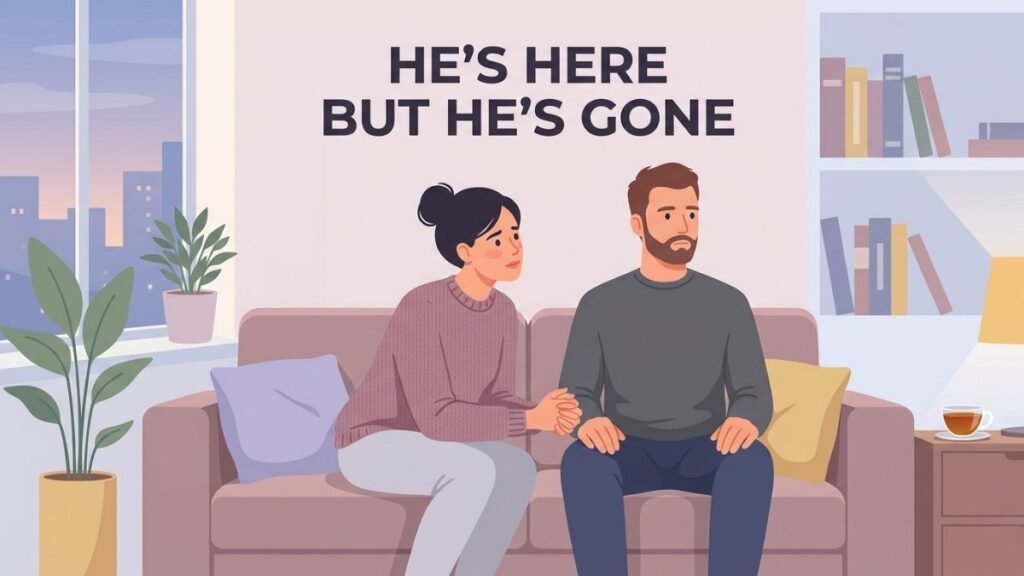
Emotional withdrawal during stability is the pattern that makes women question their own sanity. Because every logic center in your brain says this doesn’t make sense. Things are good. There’s no conflict. No tension. No unresolved issue hanging in the air. And yet he’s drifting further away with every passing day of peace — like calm waters make him more uncomfortable than storms.
And maybe they do.
What Emotional Withdrawal During Stability Looks Like
This isn’t the same as a man who pulls away after a fight. That has a cause you can trace. This has no visible cause — which is what makes it so disorienting.
He becomes physically present but emotionally vacant. He’s there. Sitting on the couch. At the dinner table. In bed beside you. But the aliveness is gone. The engagement is gone. The warmth that was flowing freely during last week’s connected phase has drained out without explanation. He’s not angry. He’s not upset. He’s just gone — without having gone anywhere.
He stops initiating everything. Conversations. Plans. Affection. Connection. The effort that was flowing naturally during the close period simply stops. And when you initiate, he responds — but barely. Enough to technically participate. Not enough to actually be present. You’re pulling teeth to get the same engagement that came effortlessly seven days ago.

He seems uncomfortable with sustained peace. Watch closely during the good stretches. There’s a restlessness underneath his surface. A discomfort he can’t name and won’t address. Like he’s waiting for something to go wrong — and when nothing does, the waiting itself becomes the disturbance. Stability doesn’t settle him. It unsettles him. And his emotional withdrawal is the response to an internal alarm that goes off not during danger but during safety.
He might manufacture conflict to end the calm. This is the tell that confirms the pattern. A random argument about nothing. A sudden mood shift over something insignificant. A criticism that appears out of nowhere. He’s not genuinely upset about the thing he’s picking a fight about. He’s creating turbulence because turbulence is the emotional environment he knows how to navigate. Stability isn’t. And emotional withdrawal — or the conflict he creates to exit stability — is how he returns to the chaos that feels like home.
Why He Disappears When Things Are Good
Stability feels foreign to a nervous system wired for chaos. If he grew up in an unpredictable environment — a household where calm was always the precursor to crisis, where peace never lasted, where good moments were always interrupted by something terrible — his nervous system learned to distrust stability. Calm doesn’t feel safe to him. It feels like the setup. The quiet before the storm. The breath before the blow. So when the relationship is stable and nothing is wrong, his body doesn’t register peace. It registers the absence of the expected crisis — and that absence creates anxiety worse than the crisis itself. Emotional withdrawal is his system’s response to an environment it doesn’t recognize as safe. He’s not leaving the calm. He’s bracing for what he believes calm always leads to.
He doesn’t know who he is without dysfunction. Some men have spent so long navigating chaos, conflict, and emotional instability that they’ve built their entire identity around it. They’re the fixer. The survivor. The man who handles hard things. And when hard things aren’t present — when the relationship is running smoothly, when there’s nothing to fix or fight or survive — he feels purposeless. Empty. Like the version of him that exists during calm isn’t a complete person. Emotional withdrawal during stability is sometimes a man losing himself in the absence of dysfunction. He doesn’t know how to be present when there’s nothing wrong because “something wrong” is the only context that activates the version of himself he recognizes.
Closeness accumulated during stable periods triggers his avoidance. During the good times, connection deepens naturally. Conversations get more real. Intimacy gets more layered. Trust builds. And for a man with avoidant tendencies, that accumulating closeness doesn’t feel like progress. It feels like walls closing in. The stable period isn’t just stable — it’s intimate. And intimacy beyond his threshold activates withdrawal. He’s not pulling away from the stability. He’s pulling away from the depth that stability creates. The better things get, the more exposed he feels. And emotional withdrawal is how he restores the distance that makes him feel safe.
He’s terrified of having something good because good things get taken away. If he’s experienced loss — significant, formative loss — he’s learned that good things don’t last. Happiness is temporary. Love ends. The better things are, the more devastating the eventual loss will be. So his nervous system does something counterintuitive but self-protective: it withdraws before the loss can happen. If he disengages now, while things are good, the eventual ending won’t hurt as much. He’s pre-grieving a loss that hasn’t happened because his history has taught him that loss is always coming. Emotional withdrawal during stability isn’t about the present. It’s about a future his body is convinced will look like his past.
Consistent love overwhelms a system calibrated for scarcity. If love in his history was intermittent — available sometimes, absent others, given conditionally and revoked without warning — his emotional system was calibrated for scarcity. Small doses. Unpredictable delivery. Love that comes and goes. Your consistent, steady, reliable love during stable periods doesn’t match his calibration. It’s too much. Not because you’re too much — because his system was designed for drought and you’re offering steady rain. Emotional withdrawal is his system retreating from abundance it doesn’t know how to process. He’s not rejecting your love. His wiring is rejecting the consistency of it.
He associates peace with boredom and boredom with dying love. If his reference points for “passion” and “love” are intensity, unpredictability, and emotional highs and lows — then stability doesn’t feel like love. It feels like the absence of it. Calm becomes boring. Peace becomes stale. Consistency becomes evidence that the spark is dying. So he withdraws — not because he wants out, but because his distorted definition of love requires turbulence to feel alive. He’s mistaking chaos for passion. And he’s interpreting your stable, loving consistency as proof that something is wrong when it’s actually proof that something is finally right.
He’s punishing himself for happiness he doesn’t believe he deserves. This one runs deeper than most and he’d probably never articulate it. But underneath the withdrawal is sometimes a man who doesn’t believe he’s allowed to be happy. Whose internal narrative says he doesn’t deserve love that lasts. Whose self-worth is so damaged that sustained happiness triggers guilt — an unconscious belief that good things aren’t for people like him. So he sabotages. Not deliberately. Automatically. Emotional withdrawal becomes the mechanism through which he ensures that happiness doesn’t settle long enough to become something he’d have to trust. He can’t trust it because he doesn’t trust that he deserves it.
What His Emotional Withdrawal Is Doing to You
You’ve stopped trusting stability. That’s the deepest cut. The thing every healthy relationship is supposed to offer — consistent, reliable, safe connection — has become the thing you’re most afraid of. Because you’ve learned that good times are the setup for his withdrawal. Peace has become a warning sign instead of a resting place. And you can’t build a secure relationship when security itself has been coded as the prelude to loss.
You’re walking on eggshells during good moments. Not during conflict — during calm. You monitor your behavior during peaceful stretches. Don’t get too comfortable. Don’t relax too much. Don’t lean into the closeness too fully — because every time you have, he’s withdrawn. You’ve learned to protect yourself during the moments that should be safest. And that protection costs you the very experience you’re trying to have.
You blame yourself for his withdrawal during the good times. Because there’s no conflict to point to, no argument to analyze, no mistake to identify — you turn inward. “Maybe I was too available. Maybe I got too comfortable. Maybe he needs me to be more interesting, more exciting, more something.” You’re searching for the flaw in yourself that explains his departure from a perfectly fine relationship. But the flaw isn’t in you. It’s in his inability to sustain what you’re offering.
You’ve started associating peace with impending loss. Your nervous system has been conditioned by his pattern. Calm doesn’t mean safe anymore. Calm means “he’s about to check out.” Good moments don’t feel good anymore. They feel like ticking clocks. You can’t enjoy what’s happening because you’re already grieving what’s coming next.
What You Need to Do
Stop performing to keep the stability alive. You’ve been managing the good periods — trying to be interesting enough, exciting enough, not too close, not too distant — hoping that the right balance will prevent his withdrawal. Stop. His withdrawal isn’t a response to your behavior during stable times. It’s a response to stability itself. No performance on your end will prevent what his internal wiring produces automatically.
Name what you observe without trying to fix it. “Things have been good between us and I can feel you pulling away. This happens every time we’re stable. I need you to see this pattern.” Don’t diagnose him. Don’t offer solutions. Don’t try to be his therapist. Just put the observation in the room. What he does with it tells you whether he’s capable of self-awareness or committed to denial.
Don’t chase him into the withdrawal. When he starts drifting during a good period, the instinct is to pursue. To recreate the closeness. To ask what’s wrong fifteen different ways. Don’t. Let him withdraw. Don’t fill the space his absence creates. Let the distance exist and see whether he has the capacity to recognize it and return on his own. Chasing him teaches his system that withdrawal produces pursuit — which reinforces the cycle without ever addressing the cause.
Protect your ability to enjoy peace. His pattern is trying to rewire your relationship with stability. Don’t let it. Practice sitting in calm moments without bracing. Practice enjoying good days without monitoring for the shift. Your ability to feel safe in peaceful moments is worth protecting — because it’s the foundation of every healthy relationship you’ll ever have, with or without him.
Require professional help. Emotional withdrawal during stability is rooted in attachment wounds, nervous system conditioning, and often childhood trauma. These don’t resolve through patience, love, or better communication. They require therapeutic intervention. If he won’t pursue it, the pattern continues. And your willingness to endure it doesn’t heal it — it just makes the endurance longer.
Decide what you can honestly sustain. A relationship where peace triggers his departure. Where good moments are always followed by cold ones. Where stability — the very thing you’re building toward — is the thing that drives him away. Can you sustain that for a lifetime? Not theoretically. Actually. Because the pattern you’re in right now is the pattern you’ll be in ten years from now if nothing changes. And “nothing changes” is the most likely outcome when he’s not doing the work.
What You Need to Understand
Emotional withdrawal during stability isn’t about you being boring, too available, or not enough. It’s about a man whose nervous system can’t tolerate the consistent safety you’re offering. His wiring was calibrated for chaos. Your love is calibrated for consistency. And those two calibrations create the pattern you’re living in — one where his system retreats from exactly the thing your system is trying to build.
You can’t love a man into being comfortable with peace. You can’t be interesting enough, exciting enough, or unpredictable enough to override a nervous system that treats stability as threat. That rewiring requires professional intervention — not your performance. Not your patience. Therapy.
A man who withdraws during good times isn’t a man who needs more excitement from you. He’s a man who needs more healing from himself. And until that healing happens, you’ll keep experiencing the cruelest version of the pattern — one where doing everything right still produces the same result.
What You Deserve
You deserve a man who can sit in the calm with you. Who doesn’t need conflict to feel alive or chaos to feel connected. Who can look at a peaceful Tuesday evening and think “this is everything” instead of subconsciously looking for the exit.
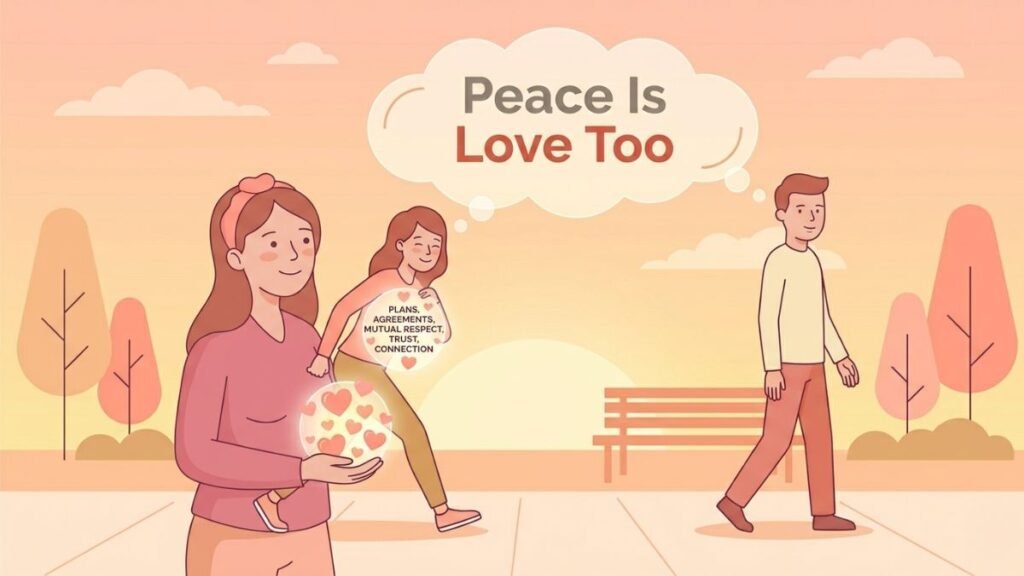
You deserve to trust stability. To enjoy good moments without bracing. To build something consistent without it being dismantled by a man who can’t tolerate what you’re building.
You deserve peace that stays, sis. Real peace. Not the kind that exists between his withdrawals. The kind that’s permanent because the man beside you is finally still.
The Bottom Line
He disappears emotionally when things are stable because his nervous system was wired for chaos and can’t tolerate peace, because accumulated closeness during good times triggers his avoidance, because he’s terrified of having something good because good things in his history get taken away, and because consistent love overwhelms a system calibrated for scarcity.
None of that is your fault. None of it is yours to fix. And none of it changes without professional intervention he has to choose.
Stop performing during good times. Stop chasing during withdrawals. Stop blaming yourself for a pattern that has nothing to do with who you are and everything to do with what he hasn’t healed.
Your love isn’t the problem, sis. His relationship with peace is. And you can’t teach a man to rest when his body only knows how to run.
FAQ
Q: How do I know if he’s withdrawing or just naturally introverted?
Introversion is consistent. He needs quiet time regularly, communicates it, and remains emotionally connected even during solitude. Emotional withdrawal is triggered specifically by stability or closeness, is uncommunicated, and creates emotional distance — not just physical space. The trigger and the communication are the difference.
Q: What if he says nothing is wrong when I ask?
He might be telling the truth — nothing external is wrong. The problem is internal. His nervous system is reacting to stability in ways he probably can’t articulate. “Nothing is wrong” is accurate on the surface. What’s happening underneath — the discomfort with peace, the avoidance of closeness — is where the real issue lives.
Q: Can stability anxiety be treated?
Yes — through therapy focused on nervous system regulation, attachment patterns, and the early experiences that wired stability as threatening. It’s deep work but it’s effective with sustained commitment. The key word is sustained. This doesn’t resolve in a few sessions. It requires ongoing work over months or years.
Q: Should I create more excitement to prevent his withdrawal?
No. Manufacturing chaos to match his calibration means abandoning the stability you both need. You’d be treating his dysfunction as the standard instead of treating healthy consistency as the goal. Don’t become chaotic to keep a man who can’t handle calm. That’s adapting to his wound at the cost of your wellbeing.
Q: What if he only withdraws slightly — is it still a problem?
If the withdrawal is consistent, specifically triggered by stable periods, and creates emotional distance that affects your sense of security — yes. The severity matters less than the pattern. Subtle emotional withdrawal repeated over time produces the same erosion of trust and safety as dramatic withdrawal. Don’t minimize a pattern just because it whispers instead of shouts.