
If someone is controlling your decisions in a relationship, it can slowly affect your confidence, independence, and sense of identity.
Sis, I need to talk to you about who makes decisions in your life.
Specifically: decisions about YOUR life.
Your career. Your friendships. Your family relationships. Your appearance. Your schedule. Your money. Your body. Your choices.
These are decisions that directly affect YOU, your wellbeing, your future, your daily life.
And he’s making them. Or controlling them. Or heavily influencing them to the point where you don’t feel like you have a real choice.
Maybe he:
- Tells you which job to take or whether to pursue opportunities
- Decides which friends you can see or how often
- Controls how you spend your money
- Dictates what you wear or how you look
- Determines your schedule and availability
- Makes major decisions “for you” without consulting you
- Vetoes your choices and replaces them with his
Decisions that should be yours are somehow his.
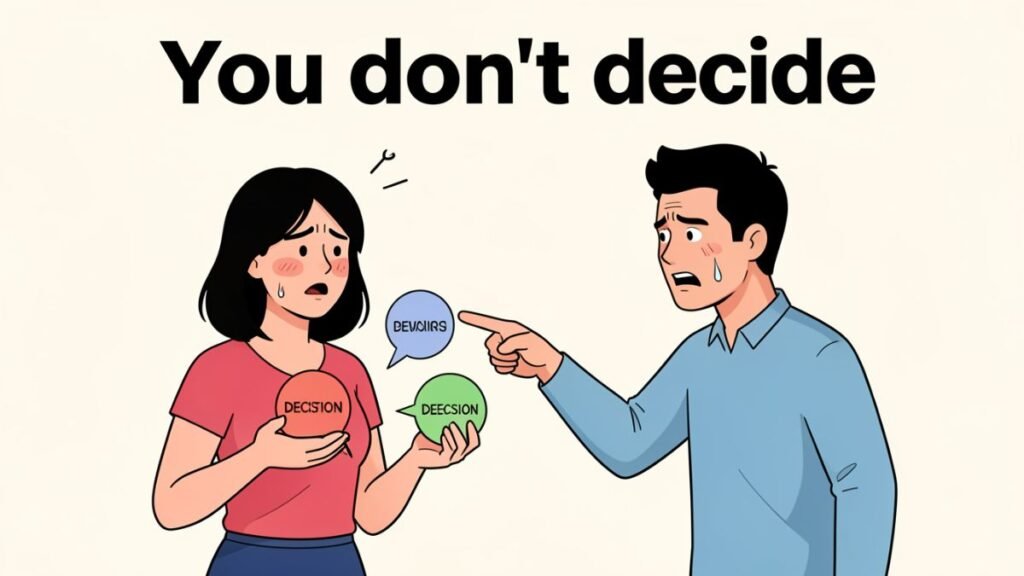
I see how this has happened gradually. How you started including him in decisions, then deferring to him, then not even making choices without his approval.
And I see you wondering: “Is this normal? Aren’t couples supposed to make decisions together? Or is he controlling me?“
He’s controlling you, sis. And what he’s doing is abuse.
Let me explain what’s really happening and why you need to reclaim your autonomy.
What’s Really Happening: The Control Takeover
As a man who understands healthy partnerships, let me be clear: Healthy partners make decisions together about SHARED life. Each person maintains autonomy over their own individual life.
A respectful man:
- Supports YOUR decisions about YOUR career, body, friendships, etc.
- Gives input when asked, but respects your autonomy
- Makes decisions WITH you about shared life (where to live, how to spend shared money, etc.)
- Recognizes you’re an autonomous adult with the right to self-determination
Your boyfriend doesn’t do this. He controls decisions that should be yours.
That’s not partnership. That’s domination.
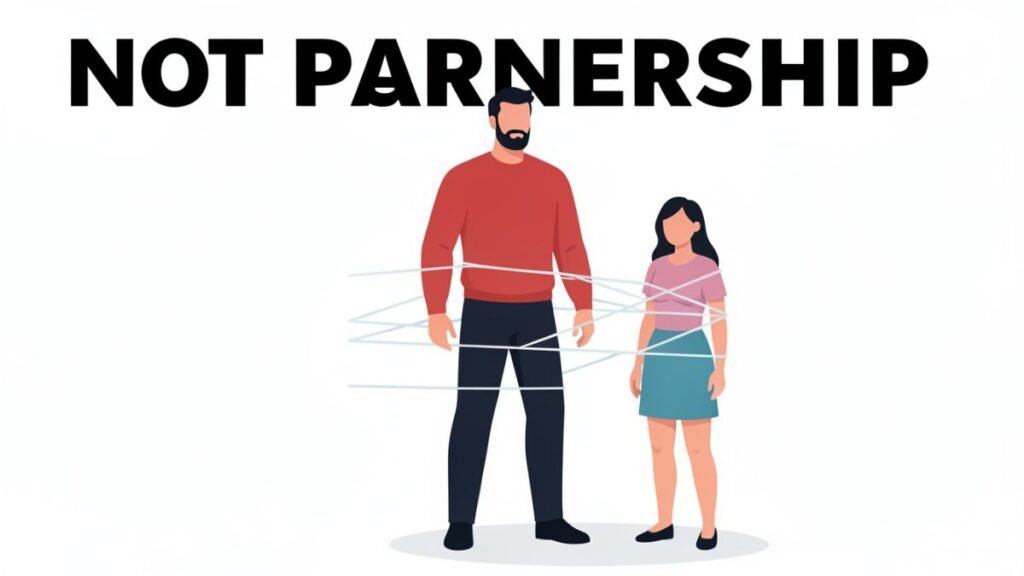
Here’s what’s really going on:
He Believes He Has the Right to Control You
At the core, he believes he has authority over you.
This might come from:
- Sexist beliefs that men should lead and women should follow
- Narcissism (believing he knows better than you)
- Entitlement (believing your relationship gives him rights over your life)
- Control issues (needing to control his environment, including you)
Whatever the source, he fundamentally doesn’t respect your right to self-determination.
In his mind:
- His judgment is superior to yours
- His decisions are better than yours would be
- He knows what’s best for you better than you do
- His preferences should override yours
- Being in a relationship means he gets input/control over your individual choices
He doesn’t see you as an equal, autonomous adult. He sees you as someone who needs his guidance, approval, or permission.
Control Started Small and Escalated
Think about how this evolved:
Phase 1: “Caring” Input
- He gives opinions on your choices
- “I think you should…” “Have you considered…” “I don’t think that’s a good idea…”
- Framed as caring, helpful, protective
Phase 2: Emotional Pressure
- When you don’t follow his input, he gets upset
- Guilt trips, silent treatment, anger
- You start making choices to avoid his negative reaction
Phase 3: Explicit Control
- He tells you what to do
- He makes decisions “for you”
- He vetoes your choices
- Your autonomy is gone
It didn’t start with overt control. It started with seemingly caring involvement that gradually became control.
He Uses Different Control Tactics
Watch for these specific patterns:
Financial Control:
- Controls how you spend money (even your own)
- Monitors purchases
- Gives you an “allowance”
- Criticizes your financial decisions
Social Control:
- Limits contact with friends/family
- Disapproves of your social plans
- Makes you feel guilty for seeing others
- Isolates you gradually
Career Control:
- Pressures you about job decisions
- Discourages opportunities that threaten him
- Wants you to be available for him over career advancement
- Undermines your professional confidence
Physical Control:
- Dictates appearance (hair, makeup, clothing, weight)
- Controls your body and reproductive choices
- Monitors where you go and when
Time Control:
- Demands access to you constantly
- Gets upset when you’re unavailable
- Controls your schedule
- Makes you account for your time
Each area of control removes your autonomy over your own life.
He Punishes Independence
Notice what happens when you make decisions without him or against his preference:
You decide independently → He gets angry, sulks, gives silent treatment, punishes you somehow → You learn that independence leads to punishment
You defer to him → He’s pleased, affectionate, things are good → You learn that compliance leads to reward
He’s training you to give him control through punishment and reward.
He Makes You Doubt Your Own Judgment
Part of how control works: making you believe you’re not capable of making good decisions.
He might:
- Criticize your past decisions
- Point out when things go wrong as proof you need his guidance
- Undermine your confidence
- Frame his control as “helping” because you “need help”
Over time, you internalize: “Maybe I do make bad decisions. Maybe I do need his input. Maybe I can’t trust myself.”
Your self-doubt makes you dependent on his judgment—which gives him more control.
He Benefits From Controlling You
Think about what he gains:
If he controls your decisions:
- You can’t leave easily (controlled finances, isolated from support)
- You’re available to him (controlled schedule, limited social life)
- You don’t threaten him (controlled career, appearance)
- You’re dependent on him (can’t make decisions without him)
- His life is exactly how he wants it (you’ve molded yourself to his preferences)
Control serves his interests at the expense of your autonomy, growth, and wellbeing.
You’ve Given Up Your Power
Here’s the hard truth: This only works if you comply.
At some point:
- You started asking permission when you shouldn’t need it
- You started deferring to his judgment over your own
- You stopped making decisions without his approval
- You accepted that he gets a vote in your individual life
He’s controlling. But you’re allowing it (likely because of conditioning, fear, or gradual erosion of boundaries).
Both have to change for you to reclaim your autonomy.
Why This Pattern Is Destroying You
You’re losing yourself. When someone else controls your decisions, you lose your sense of self. Who are you if you’re not making your own choices?
You can’t grow. Growth requires making your own decisions, including mistakes. His control prevents your development.
You’re becoming dependent. You’re losing the ability to make decisions independently, which makes you increasingly dependent on him.
You’re isolated. If he controls your social connections, you’re cut off from support that could help you see the relationship clearly.
You resent him. Being controlled breeds resentment, even when you comply.
You can’t leave easily. If he controls your finances, career, and social network, leaving becomes much harder.
You’re being abused. Controlling behavior is a recognized form of abuse that causes serious psychological harm.
What You Need to Do
Step 1: Recognize This Is Control, Not Care
Caring partners support your autonomy.
Controlling partners restrict it.
If he frames control as “I just care about you,” reject that framing.
Step 2: Identify Areas of Control
Make a list:
- What decisions does he control or heavily influence?
- Where have you lost autonomy?
- What do you need permission for that you shouldn’t?
See the full scope of the control.
Step 3: Reclaim Small Decisions First
Start with low-stakes areas:
- Make a decision about your appearance without consulting him
- Make plans with a friend without asking permission
- Spend your money on something without his approval
Rebuild your autonomy muscle gradually.
Step 4: Set Boundaries
“These are my decisions to make: [list areas]. I’ll consider your input when I ask for it, but these decisions are mine. You don’t get to veto or control them.”
Then enforce it. Make decisions independently in those areas.
Step 5: Stop Asking Permission
Notice when you’re asking permission for things you shouldn’t need permission for:
- Can I see my friend?
- Is it okay if I buy this?
- Can I take this job?
Start announcing instead of asking:
- I’m seeing my friend tomorrow.
- I bought something I needed.
- I’m taking this job opportunity.
Step 6: Prepare for His Reaction
When you reclaim autonomy, he’ll likely:
- Get angry
- Accuse you of not caring about his opinion
- Punish you (silent treatment, withdrawal, anger)
- Try to guilt you back into compliance
Expect this. Don’t let it deter you.
Step 7: Build Your Independence
Work to regain independence in:
- Finances (your own account if you don’t have one)
- Social connections (reconnect with people he’s isolated you from)
- Career (pursue opportunities regardless of his opinion)
- Decision-making capacity (practice making choices)
The more independent you are, the less he can control you.
Step 8: Leave
If he won’t respect your autonomy, you need to leave.
A relationship where you have no control over your own life is an abusive relationship.
You cannot be healthy, whole, or happy without autonomy over your own life.
What You Need to Understand
You’re an Autonomous Adult
You have the right to:
- Make decisions about your own life
- Control your own money, career, friendships, appearance, schedule
- Make choices without permission
- Make mistakes and learn from them
Being in a relationship doesn’t mean giving up autonomy.
Partnership Involves Shared Decisions, Not Control
Healthy couples make decisions together about SHARED life:
- Where to live together
- How to spend shared money
- Major shared commitments
Each person maintains autonomy over INDIVIDUAL life:
- Career decisions
- Friendships
- Personal appearance
- Individual money
- Personal time
Your boyfriend is a controlling individual decisions that should be yours.
This Is Abuse
Controlling behavior is:
- Recognized as domestic abuse
- A predictor of escalation to other forms of abuse
- Psychologically damaging
- A valid reason to leave
Don’t minimize it. This is serious.
Reclaiming Autonomy Will Be Hard
He’ll resist. He benefits from control and won’t give it up easily.
You’ll face backlash. Expect punishment when you assert independence.
You might doubt yourself. Years of having decisions controlled makes you doubt your judgment.
It’s still necessary. Your wellbeing depends on reclaiming your autonomy.
What You Deserve
You deserve to make your own decisions about your own life.
You deserve a partner who supports your autonomy, not restricts it.
You deserve to be treated as an equal adult capable of self-determination.
You deserve freedom, not control.
That relationship exists. But not with him.
The Bottom Line
Sis, he controls decisions that directly affect your life because:
- He believes he has authority over you
- Control started small and escalated
- He punishes independence and rewards compliance
- He benefits from controlling you
- He’s abusive
This is not normal partnership. This is abuse.
Reclaim your autonomy. Set boundaries. Build independence.
And if he won’t respect your right to self-determination—leave.
Choose yourself, sis. Your life is yours to control, not his.
FAQ
Q: Isn’t it normal to consider your partner’s opinion in decisions?
Yes, considering is normal. Control is not. Considering = “What do you think?” then you decide. Control = “You can’t/shouldn’t do that” or decisions being made for you.
Q: What if he’s genuinely better at making certain decisions?
Being better at something doesn’t give him the right to control. You can ask for input on decisions you want help with while maintaining final authority over your own life.
Q: How do I know if it’s control vs. caring?
Caring = supports your autonomy, gives input when asked, respects your final decision. Control = restricts autonomy, gives unwanted input, doesn’t respect your decisions, punishes independence.
Q: What if I’ve relied on him for decision-making for so long I don’t trust myself?
Rebuild slowly. Start with small decisions. Get therapy. Remember: you made decisions before him. You’re capable. The doubt is a result of his control.
Q: Can a controlling partner change?
Rarely, and only with intensive therapy and genuine commitment to change. Most controlling people don’t change because they fundamentally believe they have the right to control.



One Comment