
Feeling guilty doesn’t make his choices your fault.
You can finish a conversation knowing he hurt you and still spend the rest of the day looking for what you did wrong. Your tone. Your timing. The fact that you brought it up at all. Somehow, his decision gets less attention than the way you responded to it.
And because you care about being fair, you keep looking at yourself. That part of you isn’t the problem. The problem is when looking at yourself turns into carrying responsibility for a man who won’t carry his own.
If you’re trying to understand how to stop blaming yourself, start here: being imperfect doesn’t make you responsible for everything that happens between you. You can have something to work on and still be right about what he did.
You can feel guilty without having done something wrong
That feeling can be strong. You tell him something hurt you, he gets upset, and suddenly you want to take it back. Not because the hurt disappeared. Because now you feel responsible for the fact that he’s upset.
But those are two different things. His discomfort with hearing your concern doesn’t prove the concern was unfair. Asking him to keep his word isn’t the same as attacking him. Being disappointed by a broken promise isn’t something you need to apologize for just because he doesn’t like hearing it.
Look at what actually happened before you decide what you owe. Did you insult him? Did you break an agreement? Did you knowingly hurt him? Those are things you can look at honestly. Or did you tell him that something he chose had an effect on you?
You don’t have to treat every uncomfortable feeling as a confession. Sometimes the feeling is there because the conversation was hard. Sometimes it’s there because you’re used to being the one who makes things okay afterward. That still doesn’t tell you who did what.
Check the action before you accept the blame.
Read this quote as text
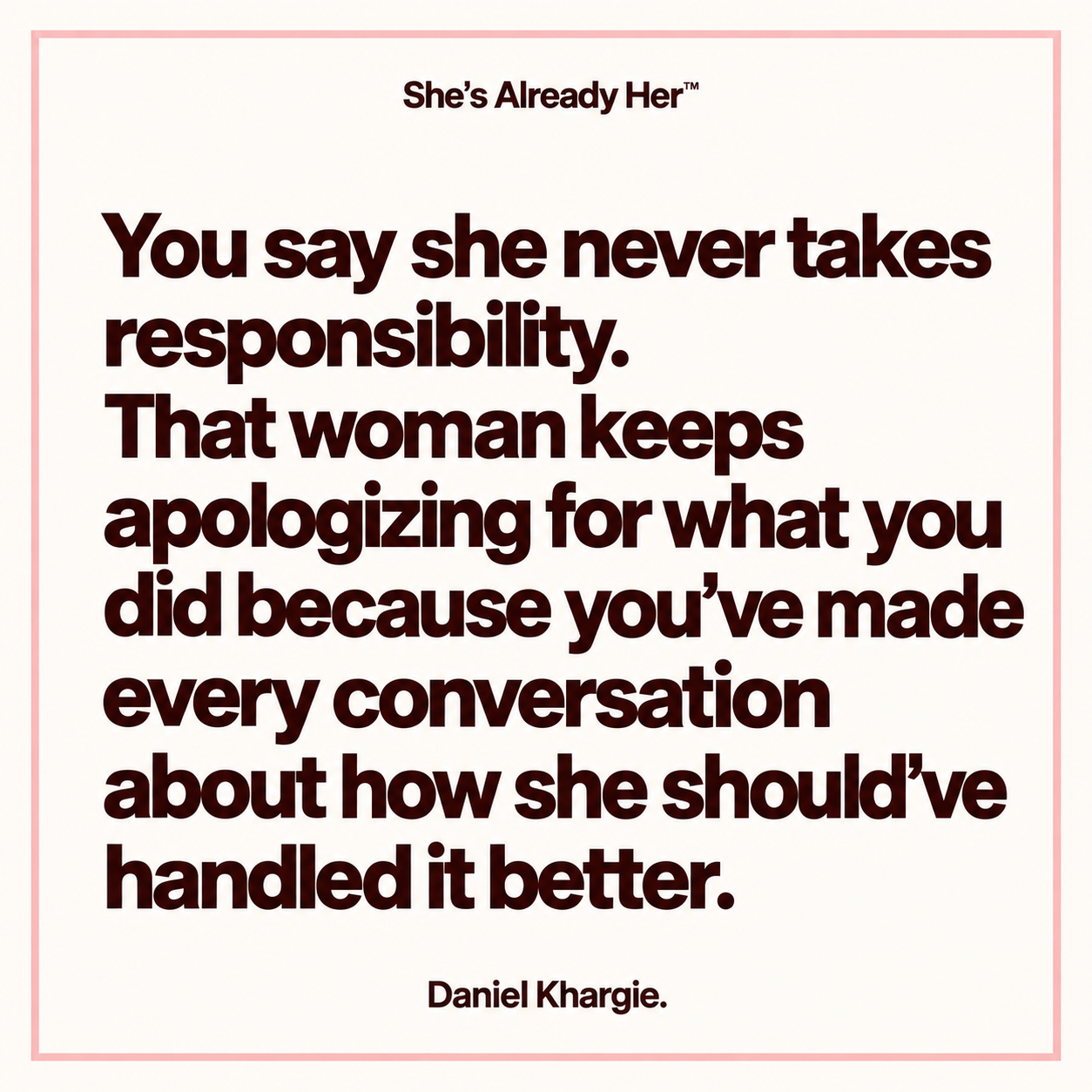
You say she never takes responsibility. That woman keeps apologizing for what you did because you’ve made every conversation about how she should’ve handled it better.
Stop making your mistake explain away his decision
Maybe your delivery wasn’t good. Maybe you said something you shouldn’t have said. You can acknowledge that without turning it into the reason he lied, dismissed you, or broke his word in the first place.
The order matters. Something happened. It affected you. You responded. If your response caused harm, that deserves attention too. But looking at your response shouldn’t erase the thing you were responding to.
And this goes both ways. His behavior doesn’t give you permission to threaten him, humiliate him, or hurt him. Your behavior doesn’t give him permission to do those things to you. Being hurt explains what you were feeling. It doesn’t make harmful conduct okay for either of you.
What you’re looking for is a clear account of what each person did. You’re not looking for a way to put everything on him. You’re also not required to put everything on yourself just to prove you’re honest.
You can say, “I shouldn’t have called you that. I need to change that.” You can also hold onto, “The promise you broke still needs an answer.” One doesn’t cancel the other.
Your willingness to improve shouldn’t become a case against you
Self-blame can have you treating your whole personality like the problem. You stop asking whether you actually did something wrong and start asking what’s wrong with you. Why can’t you be easier? Why can’t you need less? Why can’t you just get over it?
Listen to what you’re asking yourself to change. There’s a difference between working on how you speak and trying to become a woman who isn’t hurt by disrespect. There’s a difference between admitting you interrupted him and deciding you should never bring up a concern again.
You can improve your communication. You cannot communicate so perfectly that another person loses the ability to make a bad choice. There isn’t a sentence that makes him incapable of dismissing you. There isn’t a perfect tone that takes his responsibility away.
And staying longer than you now wish you had doesn’t make you the author of what he did. Hoping he would change wasn’t permission for him to keep hurting you. Loving him didn’t create an obligation to predict every choice he would make.
Be specific about what you want to do differently. Don’t turn a real lesson into a reason to speak to yourself like you deserved the hurt.
Ask what belongs to you before you offer to fix it
When everything starts feeling like your fault, bring it back to something you can name. What did you actually say or do? What did he actually say or do? What part could you choose differently? What part required a different choice from him?
If it’s useful and safe for you, write those answers privately. Keep them plain. “I interrupted him” is something you can examine. “I ruin everything” is a judgment that gives you nowhere useful to go. “He broke our agreement” names his action. “I should’ve made him care” hands you a job you couldn’t do for him.
Emotional responsibility means taking care with what you do when you have a feeling. It doesn’t mean making sure your man never feels disappointed, challenged, or upset. You owe him basic respect. You don’t owe him agreement with every version of events that leaves him comfortable.
If you caused harm, decide what repair looks like. Name the action. Apologize for that action. Change what you can change. If the issue is his choice, notice whether he’s doing any of that himself.
Don’t make your ability to identify his responsibility depend on his willingness to admit it. You can consider what he says without handing him the final decision about what you’re allowed to know.

Read this quote as text
You say she needs to work on herself. She’s been questioning everything she does because you keep blaming her instead of looking at what you did.
An apology shouldn’t buy a few hours of peace
If you keep apologizing because you want the tension to end, pause long enough to ask what you’re apologizing for. You might have a clear answer. Or you might realize you’re trying to make him warm toward you again.
That doesn’t make you weak. Wanting things to feel okay with the man you love makes sense. But an apology you don’t mean can leave you agreeing to a version of events you don’t believe. Then later, you’re carrying the hurt and the admission that supposedly made it your fault.
False guilt is a useful phrase for feeling responsible when the responsibility hasn’t actually been established. Here, that might mean feeling guilty for asking a reasonable question, being disappointed, or needing time after he hurt you. The feeling is real. The accusation still needs to be checked.
You’re allowed to take time before deciding what you owe. If it’s safe to say so, you can tell him, “I want to think about my part before I answer.” You don’t need to promise an apology before you’ve worked out whether you did something that needs one.
And if disagreeing with his blame brings threats or makes you afraid, you don’t have to test these words on him. Your next step can be private support from someone you trust. Understanding your responsibility doesn’t require putting yourself in danger to prove it.
Look for repair instead of another reason to punish yourself
When you genuinely hurt him, accountability should lead somewhere. You acknowledge what you did. You listen to the effect it had. You make a change. You don’t use his mistakes as permission to keep doing yours.
But you also don’t have to keep calling yourself a terrible woman as proof that you care. Beating yourself up isn’t the same as treating him better. Replaying the argument for hours isn’t the same as repairing a specific wrong.
Ask yourself what remains to be done. Is there an apology you haven’t offered? A behavior you need to stop? An agreement you need to honor? Deal with what’s real. If you can’t identify an action beyond “I made him unhappy by saying I was hurt,” look at that before you take on another round of blame.
Then ask the same practical question about him. What is he doing about his part? You don’t need matching speeches. You need to see whether responsibility turns into different conduct on both sides.
You can do your work. You cannot do his work by doing twice as much of yours.
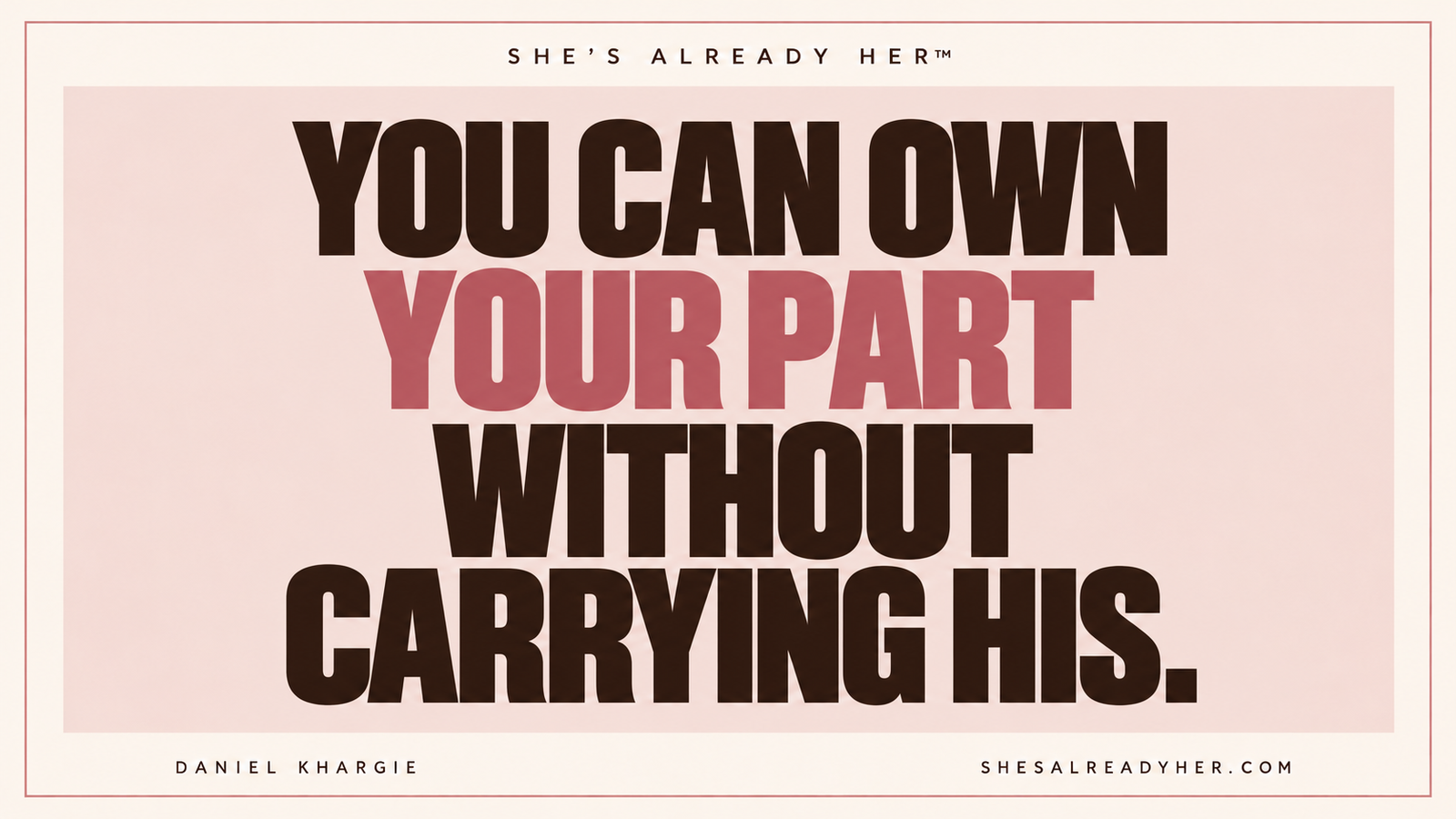
You can own your part without carrying his
You don’t have to leave this conversation believing you handled everything perfectly. You also don’t have to leave believing you caused everything that went wrong.
Those aren’t your only choices. You can say, “That part was mine,” and mean it. You can say, “That part was his,” and stop trying to repair it on his behalf.
Let what you actually did decide what you need to change. Let what he actually does show you whether he’s changing too. Don’t keep turning your willingness to grow into a reason he gets to stay exactly the same.
You can be accountable and still refuse blame that doesn’t belong to you.

Read this quote as text
You say she’s stopped owning her part. She’s finally separating her mistakes from yours because you kept handing her blame that never belonged to her.
Frequently asked questions
Why do I blame myself for everything that goes wrong with him?
You might be trying to find something you can change so the hurt won’t happen again. You may also be used to conversations ending with your behavior getting all the attention. Neither possibility proves you caused everything. Look at one event at a time: what did you choose, what did he choose, and what needs repair from each of you? If blaming yourself happens across your life or feels hard to interrupt, a qualified professional can help you explore it without assuming your relationship explains all of it.
Why do I always feel guilty after telling him he hurt me?
Feeling guilty may come from worrying about his reaction, feeling uncomfortable with disagreement, or being used to putting his feelings first. The feeling alone can’t tell you whether your words were unfair. Check what you said. A personal attack needs a different response from an honest statement about something that hurt you. You can correct harmful words without withdrawing a valid concern just to make the discomfort end.
What is false guilt, and how can I tell whether I actually did something wrong?
Here, false guilt means feeling responsible for a wrong you haven’t actually committed. It isn’t a diagnosis or a way to dismiss every uncomfortable feeling. Ask what action you’re being blamed for, whether you chose it, and whether it caused a harm you need to address. “You’re upset with me” isn’t enough information by itself. If you’re unsure, talk through the specific facts with someone who can help you consider both people’s conduct fairly.
Guilt vs remorse: what is the difference when I genuinely hurt him?
The words overlap in everyday use. Guilt can describe feeling responsible for a wrong; remorse often emphasizes regret about the harm you caused. Neither word automatically proves you’ve taken responsibility. What matters here is whether you can name your action, care about its effect, and change it. You don’t have to keep suffering to prove your apology was sincere. You do need to follow it with conduct that takes the harm seriously.
How to deal with guilt: what can I do without taking responsibility for his choices?
Identify the specific action behind the feeling. If you did something harmful, own it and decide how to repair it. If you’re feeling guilty for having a need or speaking about his behavior, don’t rush into accepting blame just to feel better. Give yourself time, return to the facts, and get support if you need help sorting them. You can care about his feelings while recognizing that his choices require action from him.