Sis, this is the one that makes you feel like you’re going crazy.
Because you could understand him pulling away after a fight. That would make sense. Conflict creates tension. Tension creates distance. If he withdrew after an argument, you’d at least have a reason to point to. Something to explain the cold. A logical connection between cause and effect.
But that’s not what’s happening.
He’s pulling away after the good moments. After the real conversations. After the nights that felt like breakthroughs. After the kind of closeness that made you think, “Finally, we’re getting somewhere.” The wall goes back up not when things are hard, but when things are beautiful.
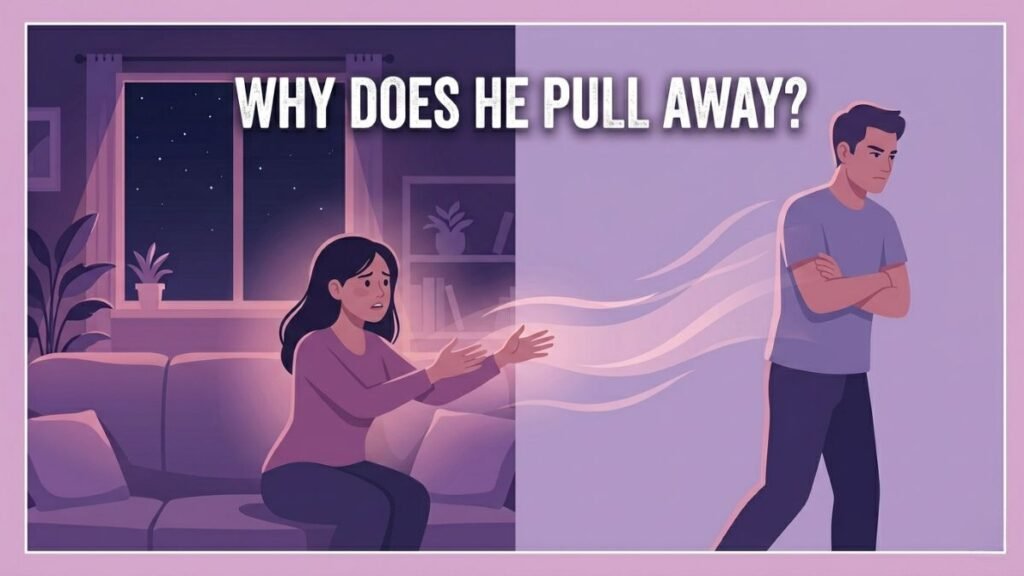
You had an amazing evening together. Deep conversation. Genuine laughter. Vulnerability that felt rare and precious. You went to sleep feeling closer to him than you have in months. And then you woke up next to a stranger. Cold. Distant. Short with his words. Acting like last night didn’t happen. Like the man who held you and opened up to you was someone he’s embarrassed to have been.
And you’re left doing the math in your head — replaying every moment, searching for the thing you said wrong, the line you crossed, the reason he retreated. But there’s nothing to find. You didn’t do anything wrong. The closeness itself is what he’s reacting to. The connection is the trigger. Intimacy is the threat.
That’s fear of intimacy. And it’s one of the most confusing dynamics a woman can experience — because it punishes you for the exact thing you’re supposed to be building together.
What Fear of Intimacy Looks Like After Connection
This pattern has a signature. And once you recognize it, you’ll see it everywhere in the relationship’s history.
He opens up and then shuts down. One night he’s sharing things he’s never told anyone. The next morning he’s monosyllabic. The vulnerability that felt like a door opening was actually a door that swings both ways — and after it opened, he slammed it shut harder than it was before. He didn’t just return to baseline. He retreated further than usual, like the openness created a debt he needed to repay with extra distance.
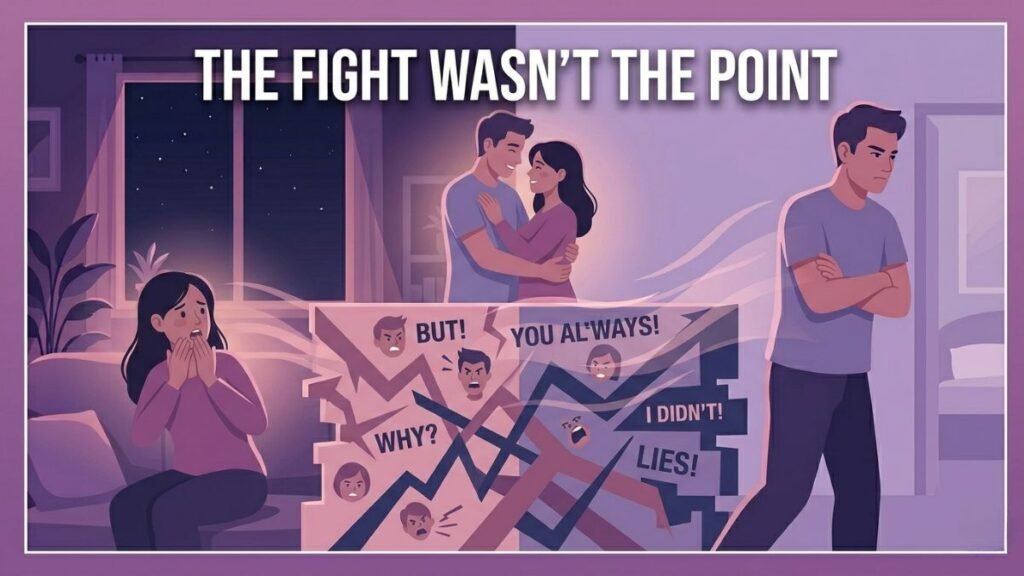
He picks fights after intimate moments. Not about anything real. About the dishes. About something you said three weeks ago. About a tone he suddenly has a problem with. The fight isn’t the point. The distance it creates is. He needs conflict to rebuild the wall that closeness dismantled. And manufacturing a fight is the fastest way to restore the emotional space he lost when he let you in.
He becomes physically or emotionally unavailable right when things deepen. You take a step forward together — a real conversation, a moment of genuine vulnerability, a night where the walls came down — and within hours, he’s unreachable. Not always dramatically. Sometimes it’s subtle. Less eye contact. Shorter responses. A vague distance that fills the room without explanation. He’s not processing. He’s retreating. And the timing — always after closeness, never during conflict — is the tell that separates fear of intimacy from every other form of withdrawal.
He idealizes distance and frames closeness as pressure. “You’re always trying to have deep conversations.” “Why does everything have to be so intense?” “Can’t we just keep things light?” He’s positioned intimacy as something you’re imposing rather than something the relationship naturally produces. Depth is your demand. Lightness is his preference. And the framing makes you feel like wanting connection is a flaw — when the actual flaw is his inability to sustain it.
Why He Pulls Away After Closeness
Closeness activates a threat response his conscious mind can’t override. Fear of intimacy isn’t a preference. It’s a nervous system pattern. When emotional closeness reaches a certain threshold, his body sounds an alarm — not because you did something wrong, but because his wiring interprets vulnerability as danger. That alarm triggers withdrawal the same way a smoke detector triggers evacuation. He doesn’t choose to pull away. His system pulls him. The vulnerability felt good in the moment, but once the moment passes, his body processes it as exposure. As risk. As something that needs to be corrected through distance. You’re not being punished for the closeness. His nervous system is responding to it the only way it knows how — by running.
His earliest experiences of love taught him that closeness leads to pain. Fear of intimacy almost always traces back to early relationships. If his first experience of emotional closeness — with a parent, a caregiver, someone who was supposed to be safe — ended in abandonment, rejection, or betrayal, his developing brain filed a devastating conclusion: getting close to someone leads to getting hurt. That filing happened before language. Before logic. Before he could evaluate whether the conclusion was fair or accurate. It just imprinted. And now, decades later, every time he gets close to you, that imprint activates. Not as a thought. As a feeling. A body-level pull toward distance that operates faster than his conscious mind can intervene.
Vulnerability feels like losing control. When he opens up — when he shares something real, needs you, lets you see behind the armor — he’s in a position he spends most of his life avoiding. Exposed. Undefended. Visible in ways he normally keeps hidden. And that exposure, however beautiful it might have felt in the moment, registers as loss of control afterward. He showed too much. He was too soft. He let you see something that makes him feel weak. And the withdrawal that follows isn’t about you. It’s about him reclaiming the control he surrendered during the closeness. Distance is how he re-armors. Coldness is how he rebuilds the wall. The pull-away isn’t rejection of you. It’s restoration of him — the version of him that keeps everything locked down and everyone at arm’s length.
He’s terrified that closeness creates expectations he can’t meet. A beautiful night of connection raises the bar. It shows you what he’s capable of — emotional depth, genuine vulnerability, real presence. And he doesn’t want that bar raised. Because meeting it consistently would require sustained emotional effort he’s not willing or able to invest. So he resets. Drops the temperature. Creates enough distance that the beautiful moment stays an exception rather than becoming a standard. Fear of intimacy isn’t just about the moment of closeness. It’s about what closeness promises — more closeness. And more closeness feels like a debt he can’t repay.
He associates love with eventual abandonment. If love has always ended in loss for him — if every time he got close to someone, they eventually left, betrayed, or disappointed him — his nervous system has learned that closeness is the setup and abandonment is the punchline. So he beats the punchline to it. He pulls away before you can. He creates the distance before you do. Not because you’ve shown any sign of leaving. Because his history has convinced him that leaving is inevitable and the only power he has is leaving first — even if “leaving” just means emotionally checking out after a night that felt too good to be safe.
He punishes himself for being vulnerable and you catch the fallout. Some men experience genuine shame after being emotionally open. Not because vulnerability is shameful — but because they were taught it is. If he grew up in an environment where softness was mocked, where emotional openness was weakness, where “real men” don’t share feelings — then every moment of genuine connection triggers a shame hangover. He wasn’t supposed to be that open. He wasn’t supposed to need you like that. He wasn’t supposed to let the walls down. So he compensates with distance. He rebuilds the wall thicker than before. He punishes the softness with coldness — and because you’re the person he was soft with, you become associated with the shame. You didn’t cause it. But you’re the closest target.
His attachment style makes closeness and distance a permanent oscillation. If he has avoidant attachment — particularly fearful-avoidant — his system is wired for contradiction. He wants closeness and fears it simultaneously. He craves connection and retreats from it in the same breath. Fear of intimacy in avoidant attachment isn’t about not wanting love. It’s about wanting love and being terrified of what it requires. So he oscillates. Close, then distant. Open, then shut. Warm, then cold. Not because he’s playing games — because his attachment system literally cannot settle on one position. It pulls him toward you and then yanks him back. And you’re caught in the middle of a war he’s fighting with himself.
What His Pattern Is Doing to You
You’ve stopped trusting good moments. That’s the cruelest consequence. A beautiful evening doesn’t fill you with warmth anymore. It fills you with dread. Because you know what follows. You’ve been conditioned by his pattern to associate closeness with incoming pain. So instead of sinking into the connection when it happens, you brace. You hold back. You protect yourself during the moments that should be safest — because experience has taught you that safety is temporary and withdrawal is always next.
You blame yourself for the distance. Every time he pulls away after closeness, you run the replay. What did you say? Were you too intense? Did you push too hard? Should you have held back? You’ve turned his fear of intimacy into your performance review — auditing your own vulnerability for errors that don’t exist. The withdrawal isn’t about what you did. It’s about what closeness triggers in him. But his pattern has taught you to search for your mistake every time — and that search is destroying your ability to be open.
You’re becoming afraid of intimacy too. His pattern is contagious. After enough cycles of closeness followed by coldness, your own system starts adapting. You hold back during vulnerable moments. You measure how much of yourself to share based on how much distance you can tolerate afterward. You’ve started building your own walls — not because you’re avoidant by nature, but because loving an avoidant man has taught your body that openness comes with a price.
You feel emotionally unstable and it’s not because you are. The constant swing — close then distant, warm then cold, present then gone — keeps your nervous system permanently activated. You can’t find a resting state because the relationship never stabilizes long enough for your body to feel safe. The anxiety you feel isn’t a disorder. It’s a reasonable response to an unreasonable emotional environment.
What You Need to Do
Stop chasing him when he withdraws. Every pursuit during his retreat reinforces the cycle. It teaches his system that withdrawal produces pursuit — which confirms his centrality without requiring his vulnerability. Let him pull away. Don’t text. Don’t ask what’s wrong. Don’t try to recreate last night’s closeness. Let the distance exist and see whether he has the capacity to return on his own. If he does, the reconnection is genuine. If he doesn’t, you have your answer.
Stop blaming yourself for his withdrawal. You didn’t get too close. You didn’t say the wrong thing. You didn’t push too hard. You showed up authentically in a moment of connection and his fear of intimacy responded the only way it knows how. That’s his pattern. Not your fault. Stop auditing your vulnerability for mistakes that don’t exist.
Name the pattern without blame. “Every time we get close, you pull away. That pattern is hurting me. I need to know whether you see it and whether you’re willing to address it.” Say it during a calm moment. Not during the withdrawal. Not during the closeness. In the neutral space between — if one exists. His response tells you whether this is a pattern he’s willing to examine or one he’ll deny until it destroys everything.
Refuse to let his pattern redefine your relationship with vulnerability. Don’t let fear of intimacy become your fear too. Don’t start holding back during good moments because you’re bracing for the fallout. Protect your openness. Your willingness to be vulnerable is a strength — one of your greatest. Don’t let a man who can’t handle closeness teach you that closeness is dangerous.
Require professional help as a condition for continuing. Fear of intimacy at this level doesn’t resolve through patience, love, or better communication. It requires therapeutic intervention — typically focused on attachment patterns and the early experiences that created them. If he won’t pursue that work, the cycle will continue indefinitely. Your patience isn’t the medicine his wound needs. Professional help is.
Decide what you can live with honestly. Can you spend the rest of your life with a man who retreats every time you get close? Can you build a future where the best moments are always followed by the worst? Can you sustain a relationship where intimacy — the very thing that should bring you closer — drives him away? Those questions deserve real answers.
What You Need to Understand
Fear of intimacy isn’t a phase he’ll grow out of. It’s a deeply rooted pattern — typically established in the earliest years of life — that doesn’t change without professional intervention. His nervous system won’t rewire itself through your love, your patience, or your willingness to wait. It requires sustained therapeutic work that he has to choose for himself.
You’re not the exception to his pattern. Every woman who’s gotten close to him has encountered this same wall. It’s not about you being too much or not enough. It’s about a system inside him that treats closeness as threat — regardless of who’s offering it.
You can’t love a man through fear of intimacy. You can support him while he does his own work. But the work is his. The healing is his. The decision to face what closeness triggers in him is his. And until he makes that decision, the cycle will keep running — taking pieces of your openness with it every time it repeats.
What You Deserve
You deserve a man who stays warm after vulnerability. Who wakes up grateful for the closeness instead of running from it. Who treats your shared moments as something to protect — not something to recover from.
You deserve consistency after connection. Warmth that doesn’t expire overnight. A man whose response to intimacy is “more of this” instead of retreat.
You deserve to trust good moments, sis. To sink into closeness without bracing for the fall. To be open without being punished for it.
That’s what love is supposed to feel like. Not this.
The Bottom Line
He pulls away after closeness because fear of intimacy turns connection into threat, because his nervous system treats vulnerability as exposure that must be corrected, because love in his history has always preceded loss, and because distance is the only way he knows to regain the control that closeness took from him.
None of that is your fault. None of it is yours to fix. And none of it changes without professional help he has to choose.
Stop chasing the closeness he keeps withdrawing. Stop blaming yourself for a pattern that was written into his system decades before you existed. Stop accepting a relationship where the best moments always cost you the most.
Your love isn’t the problem, sis. His fear is. And you can’t outrun someone else’s fear — no matter how fast your love moves.
FAQ
Q: How do I know if it’s fear of intimacy or if he’s just not that into me?
Fear of intimacy has a specific signature — warmth during distance and withdrawal during closeness. He pursues when things are light and retreats when things get real. If he’s consistently distant without any warmth at all, that might be disinterest. The push-pull pattern — specifically triggered by closeness — is the marker for fear of intimacy.
Q: Can fear of intimacy be healed?
Yes — with sustained therapeutic work, typically focused on attachment patterns and the early wounds that created them. But healing requires his active participation. It’s deep work that takes time, and he has to want it. If he won’t pursue help, the pattern continues regardless of how patient you are.
Q: Should I pull away too to give him what he needs?
Giving him space during withdrawal is reasonable. Becoming avoidant yourself to match his pattern is not. There’s a difference between respecting his need for space and abandoning your own need for connection to accommodate his dysfunction. Don’t lose yourself trying to become someone his system doesn’t run from.
Q: What if he acknowledges the pattern but nothing changes?
Awareness without action is just better-informed avoidance. If he can name the pattern but won’t pursue help, nothing shifts. Words without therapeutic follow-through are just descriptions of a problem he’s chosen to keep.
Q: What if I’ve started dreading closeness too?
That’s a sign his pattern has begun reshaping yours. If you’re bracing during good moments, holding back during vulnerability, or protecting yourself from the closeness you used to crave — his fear of intimacy is becoming contagious. Address it now with professional support before it becomes your permanent default.