
Sis, I need to talk to you about why self love feels unnatural and how strange it feels when you try to love yourself.
You know you’re supposed to love yourself. Everyone says it. Self-help books, therapists, Instagram posts—they all preach self-love.
But when you actually try it, it feels completely unnatural, and self love feels unnatural in a way that makes it feel fake.
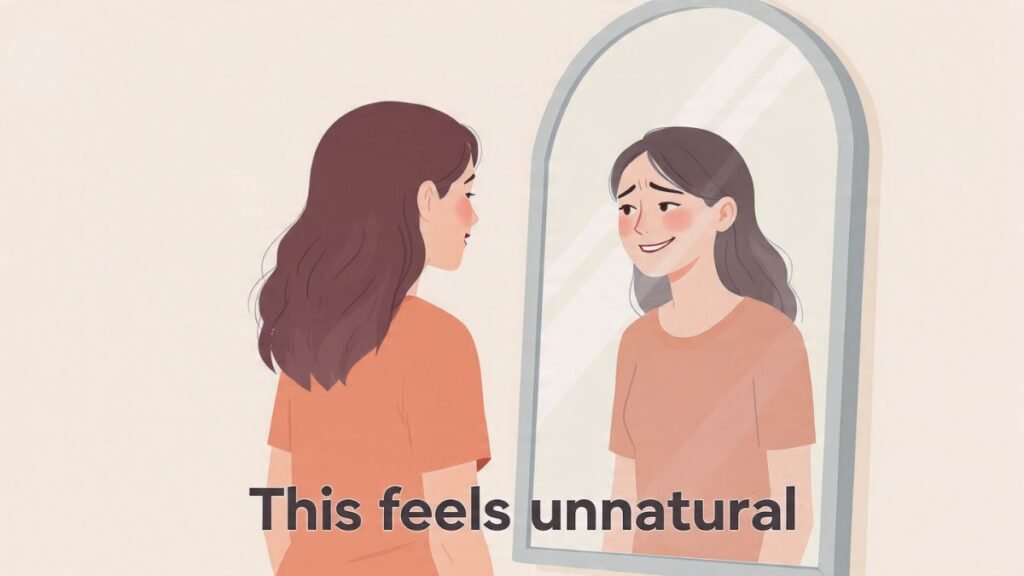
Saying nice things to yourself in the mirror feels ridiculous. Treating yourself with kindness feels forced. Prioritizing your needs feels wrong. Celebrating your wins feels arrogant.
Self-love doesn’t feel empowering or natural—it feels fake, uncomfortable, and deeply foreign.
So you:
- Go through the motions of self-care but feel nothing
- Try affirmations that bounce off you like lies
- Attempt to treat yourself kindly but it feels performative
- Force self-love practices that make you cringe
And the whole time, a voice in your head says: “This isn’t real. This is stupid. Who are you kidding? You don’t deserve this.”
Meanwhile, loving others comes easily. You extend grace, compassion, understanding, and unconditional care to everyone around you. But turning that same love inward? It feels impossible.
I see how frustrated you are. How you WANT to love yourself but it feels like speaking a language you don’t know. How you wonder if something is broken in you because self-love feels so foreign. How you’re trying so hard but nothing feels authentic.
And I see you wondering: “Why does self-love feel so unnatural? Will it ever feel real? Am I doing it wrong? Is self-love even possible for me?”
It’s possible, sis. But first you need to understand why it feels so foreign. Self-love feels unnatural because you weren’t taught it—you were taught the opposite. But what was learned can be unlearned. And you deserve to feel what genuine self-love is like.
Let me help you understand why self-love feels unnatural—and how to make it real for you.
What’s Really Happening: Why Self-Love Feels Unnatural
Let me be direct with you: Self-love feels unnatural because it IS unnatural—to you. Not because you’re broken, but because you were never taught it. You learned self-criticism, self-judgment, self-sacrifice. Self-love is a foreign language you’re trying to speak without ever having been taught.
Of course it feels unnatural. You’re learning something completely new.
Here’s what’s really going on:
You Were Never Taught Self-Love
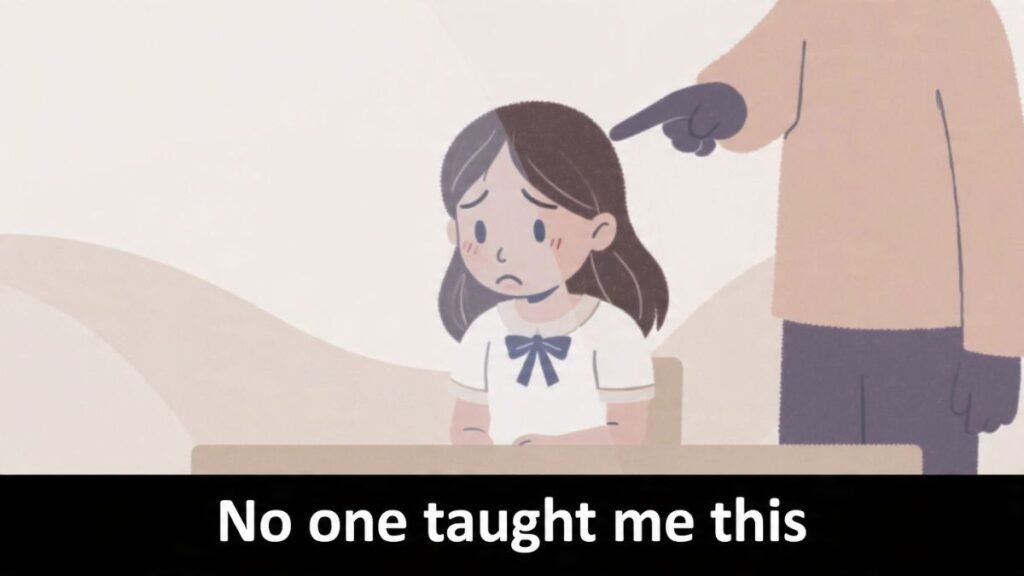
Think about what you learned growing up:
Maybe you learned:
- To be humble (which became self-deprecation)
- To be selfless (which became self-abandonment)
- To not be arrogant (which became self-criticism)
- To earn love (which became conditional self-worth)
You were taught: Love others. Judge yourself. Earn worth. Put yourself last.
You were NEVER taught: Love yourself unconditionally.
Self-love feels unnatural because you never learned it—you learned its opposite. Trying to love yourself now is like trying to speak a language you were never exposed to.
You Were Taught Self-Love Is Selfish
You absorbed messages like:
- “Don’t think too highly of yourself”
- “Pride comes before a fall”
- “It’s better to give than receive”
- “Don’t be self-centered”
You learned: Self-love = selfishness = bad
Now when you try to love yourself:
- It triggers the “selfish” alarm
- It feels morally wrong
- It seems like something bad people do
Self-love feels unnatural because you were taught it’s a character flaw—and trying to do something you believe is wrong feels deeply uncomfortable.
Your Identity Is Built on Self-Criticism
If you’ve spent years:
- Criticizing yourself
- Judging yourself harshly
- Being your own worst enemy
- Finding fault with everything you do
Self-criticism has become your identity:
- It’s how you relate to yourself
- It’s your default mode
- It’s familiar and comfortable (even if painful)
Self-love is a threat to that identity:
- “If I love myself, who am I?”
- “If I’m not hard on myself, what keeps me accountable?”
- “Self-criticism is how I know myself”
Self-love feels unnatural because your entire identity is built on self-criticism—and self-love threatens to dismantle who you think you are.
You Don’t Actually Believe You’re Worthy
Deep down, you believe:
- I’m not good enough
- I’m fundamentally flawed
- I don’t deserve love
- There’s something wrong with me
So when you try to love yourself:
- It feels like lying
- It conflicts with your core belief
- It doesn’t match your self-perception
The affirmations bounce off because you don’t believe them.
Self-love feels unnatural because it contradicts your core belief about your unworthiness—and your brain rejects what doesn’t align with your self-concept.
You’re Performing Self-Love, Not Feeling It
You’re trying to:
- Say the right affirmations
- Do the right self-care rituals
- Think the right thoughts
- Follow the right steps
But self-love isn’t a performance—it’s a feeling, a state, a way of being.
You’re going through the motions without the internal shift:
- The actions feel empty
- The words feel hollow
- Nothing changes internally
Self-love feels unnatural because you’re performing it rather than embodying it—and performances always feel fake.
Self-Love Challenges Your Entire Worldview
Your worldview might be:
- Worth is earned
- Love is conditional
- You have to prove your value
- Acceptance requires perfection
Self-love says:
- Worth is inherent
- Love is unconditional
- You’re valuable as you are
- Acceptance doesn’t require perfection
That’s a complete paradigm shift.
Self-love feels unnatural because it requires a fundamental shift in how you see yourself and the world—and that level of change feels impossible and foreign.
You’ve Never Experienced It
You can’t miss what you’ve never had.
If you’ve never experienced:
- Unconditional self-acceptance
- Genuine self-compassion
- True self-love
You have no reference point for what it feels like:
- You don’t know what you’re aiming for
- You can’t recognize it when it’s happening
- You have no blueprint
Self-love feels unnatural because you’ve never experienced it—and you can’t embody something you’ve never felt.
You’re Afraid of What Will Happen If You Love Yourself
If you loved yourself, you fear:
- You’d become arrogant
- You’d stop improving
- You’d get lazy
- People would reject you
- You’d lose your edge
- You’d become someone you don’t recognize
So you resist it—even as you try to achieve it.
Self-love feels unnatural because part of you is actively resisting it out of fear of who you’d become if you actually loved yourself.
Sis, if you’re ready to move beyond the performance of self-love and develop something real—you don’t have to do this alone.
💜 Self-Love Can Become Natural
I know how frustrating it is to try to love yourself when it feels so foreign. How the affirmations feel like lies. How the self-care feels performative. How you wonder if you’ll ever genuinely feel what everyone else seems to feel naturally.
You can learn to love yourself. It starts with understanding why it feels unnatural—not forcing yourself through actions that feel fake.
She’s Already Hers Sisterhood is a community where women are learning that self-love isn’t about affirmations and bubble baths—it’s about fundamentally changing how you relate to yourself.
Inside the Sisterhood, you’ll find:
💜 Women for whom self-love felt impossible—learning to make it real
💜 Tools to develop genuine self-love—not performative practices, but real internal shifts
💜 An 8-season transformational guide that addresses where self-criticism came from and how to replace it with real self-love
💜 Support when you need it—women who understand that self-love isn’t natural when you were never taught it
Self-love can feel natural—but it takes more than affirmations. It takes unlearning what you were taught.
Join the Sisterhood for just $1 your first month. Learn to develop genuine self-love, not just perform it. Find women who are making self-love real. See if it’s aligned with where you are.
You deserve to love yourself, sis. And it can feel natural—eventually.
Why This Pattern Is Hurting You
You’re stuck in self-criticism and falling into toxic relationship patterns with yourself.
Without self-love, self-judgment is your only mode.
You can’t accept love from others. If you don’t believe you’re lovable, you can’t receive love even when offered.
You’re exhausted from the performance. Trying to force self-love practices that feel fake is draining.
You’re staying in your unworthiness. Without self-love, you can’t challenge the belief that you’re not enough.
You’re missing out on peace. Self-love creates internal peace—self-criticism creates internal war.
You’re reinforcing what you learned. Every day without self-love reinforces that you don’t deserve it.
You can’t grow. Growth requires self-compassion—self-criticism keeps you stuck in shame.
You’re alone even when you’re with yourself. Without self-love, you’re your own enemy—and that’s the loneliest place to be.
What You Need to Do When Self-Love Feels Fake
Step 1: Stop Performing Self-Love
Let go of:
- Forced affirmations that feel like lies
- Self-care rituals that feel empty
- Instagram-worthy self-love that’s all performance
Self-love isn’t about:
- Saying the right things
- Doing the right activities
- Looking like you love yourself
It’s about genuinely changing how you relate to yourself internally.
Step 2: Understand What You’re Unlearning
Recognize:
- You learned self-criticism
- You learned conditional worth
- You learned self-abandonment
Self-love isn’t adding something new—it’s unlearning what you were taught and replacing it.
Acknowledge: “This feels unnatural because I was never taught it. Of course it’s hard—I’m learning something completely new.”
Step 3: Start With Self-Compassion, Not Self-Love
Self-love might feel too far.
Start with self-compassion:
- When you make a mistake: “I’m human. Everyone makes mistakes.”
- When you’re struggling: “This is hard. It’s okay to struggle.”
- When you’re hurting: “I’m in pain. That’s valid.”
Compassion is easier than love—and it builds the foundation for love.
Step 4: Notice the Critical Voice
Pay attention to how you speak to yourself:
- What does the inner voice say?
- How harsh is it?
- Would you speak to a friend that way?
Just notice—don’t judge yourself for the judgment.
Awareness is the first step to change.
Step 5: Challenge the Belief in Your Unworthiness
When the voice says: “You’re not good enough”
Ask: “Where did I learn that? Is it actually true? What evidence contradicts it?”
Start questioning the beliefs that make self-love feel impossible.
Step 6: Practice Small Acts of Self-Regard
Instead of grand declarations of self-love:
Practice small moments:
- Rest when you’re tired
- Feed yourself when you’re hungry
- Say no when you mean no
- Honor a boundary
Self-love is built through small acts of regarding yourself as someone who matters.
Step 7: Accept That It Will Feel Unnatural at First
You don’t have to wait for it to feel natural to do it.
Say to yourself:
“Self-love feels unnatural because I’m learning something new. Unnatural doesn’t mean wrong. I’ll keep practicing even though it feels strange.”
Comfort comes with repetition, not before it.
Step 8: Get Professional Help
If self-love feels impossible because:
- Deep shame makes it unreachable
- Trauma prevents self-compassion
- Core unworthiness is too entrenched
Consider therapy focused on:
- Self-compassion development
- Healing shame
- Challenging core beliefs
- Internal Family Systems or similar modalities
Sometimes self-love requires professional support to develop.
What You Need to Understand
Self-Love Isn’t Arrogance (supported by research on self-compassion)
Self-love is:
- Treating yourself with the kindness you give others
- Accepting yourself as you are
- Regarding yourself as worthy
Arrogance is:
- Believing you’re better than others
- Lacking humility
- Being self-absorbed
They’re completely different.
You can love yourself without being arrogant.
Unnatural Doesn’t Mean Wrong
Many good things feel unnatural at first:
- Learning a new language
- Developing a new skill
- Changing a lifelong pattern
Self-love is the same:
- It will feel strange initially
- That doesn’t mean you’re doing it wrong
- It means you’re learning something new
Discomfort is part of growth, not evidence of error.
Self-Love Is Learned, Not Innate
Some people seem to naturally love themselves:
- They were taught it
- They had models for it
- They absorbed it early
You weren’t taught it—but you can learn it now.
It’s never too late to learn self-love.
It Becomes Natural With Practice
The more you practice:
- The more natural it feels
- The less forced it seems
- The more authentic it becomes
But you have to practice while it feels unnatural for it to eventually feel natural.
There’s no shortcut—you have to do it before it feels right.
What You Deserve
You deserve to love yourself as easily as you love others.
You deserve self-love that feels natural, not forced.
You deserve to experience what unconditional self-acceptance feels like.
You deserve to be your own safe place.
Self-love isn’t a luxury—it’s your birthright.
The Bottom Line
Sis, self-love feels unnatural because:
- You were never taught it—you learned its opposite
- You were taught self-love is selfish
- Your identity is built on self-criticism
- You don’t actually believe you’re worthy
- You’re performing it rather than feeling it
- It challenges your entire worldview
- You’ve never experienced it before
Self-love feels unnatural because it IS unnatural—to you. But it can become natural.
Stop performing. Start with compassion. Practice despite discomfort. Be patient.
Choose yourself, sis. Self-love is learnable.
FAQ
Q: How long until self-love feels natural?
Varies widely—weeks to years depending on depth of self-criticism. Most see shifts within months of consistent practice. Progress is gradual, not sudden. Be patient.
Q: What if I feel like I’m faking it?
At first, you are—and that’s okay. “Fake it till you make it” applies here. Acting with self-love even when it feels fake eventually creates real self-love. The feeling follows the action.
Q: Do I really need to love myself to be happy?
You can survive without it, but you can’t thrive. Self-love creates internal peace, resilience, and the ability to receive love. Without it, you’re constantly at war with yourself.
Q: What if I love myself and become arrogant?
People who worry about becoming arrogant never do. Arrogant people don’t have that concern. Your worry proves you won’t become what you fear.
Q: Can self-love develop without therapy?
Yes, for some. Self-help books, journaling, community support can help. But if shame is deep or trauma-based, therapy accelerates the process significantly. Don’t hesitate to get professional help.