
Sis, I need to talk to you about the guilt that’s keeping you trapped.
You know you need boundaries.
You know you need boundaries. You understand intellectually that you’re allowed to say no, to protect your time and energy, to have limits.
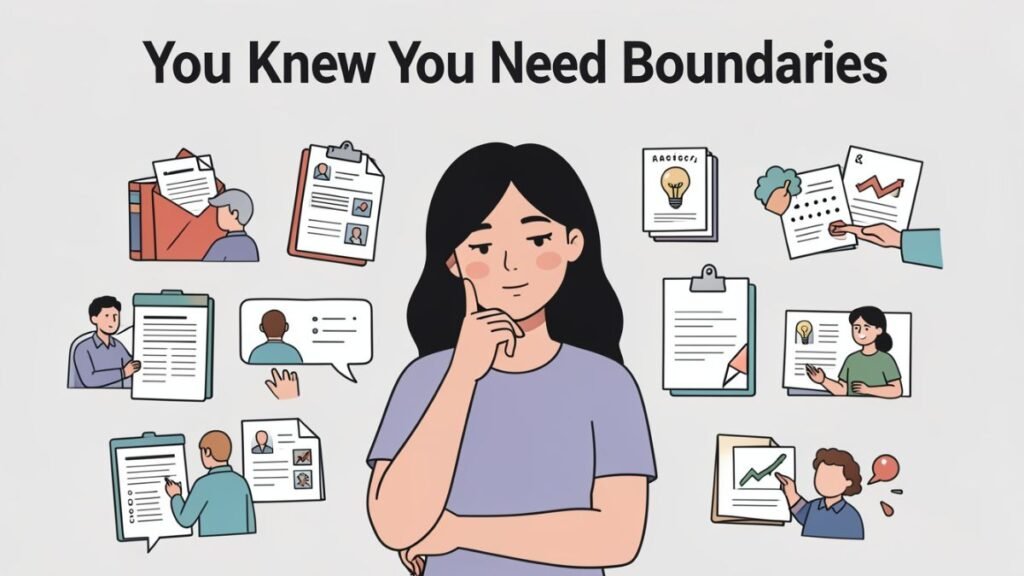
You even try to set boundaries sometimes.
But the moment you do, the guilt floods in.
Crushing, overwhelming guilt that makes you feel like you’ve done something terrible. Like you’ve hurt someone. Like you’re selfish, mean, uncaring. The guilt is so intense that you often end up taking the boundary back just to make the awful feeling go away.
So you’re stuck. You need boundaries to survive, but setting them makes you feel so guilty that you can’t maintain them.
You end up overextending yourself, saying yes when you mean no, allowing behavior you shouldn’t allow—all because the guilt of setting boundaries feels worse than the exhaustion of having none.
You’re being destroyed by your own guilt for trying to protect yourself.
I see how trapped you are. How does guilt control you more than any external force? How you’re your own jailer, imprisoning yourself with guilt that won’t let you say no.
And I see you wondering: “Why do I feel so guilty for setting boundaries? Am I wrong for having limits? Is the guilt telling me I’m being selfish?”
No, sis. The guilt is not true. It’s conditioning—programming you were taught that keeps you available for mistreatment and exploitation. And you need to understand it so you can finally set yourself free.
Let me help you understand why boundaries trigger guilt and how to set them anyway.
What’s Really Happening: The Boundary Guilt Trap
Let me be straight with you: Guilt is not a reliable moral compass. Just because you feel guilty doesn’t mean you did something wrong.
Guilt serves a purpose: It’s supposed to signal when you’ve violated your values or hurt someone.
But your guilt is broken. It fires when you try to protect yourself. It tells you that self-care is selfish. It punishes you for having limits.
You’ve been conditioned to feel guilty for boundaries—and that conditioning is keeping you in prison.
Here’s what’s really going on:
You Were Taught That Boundaries Are Selfish
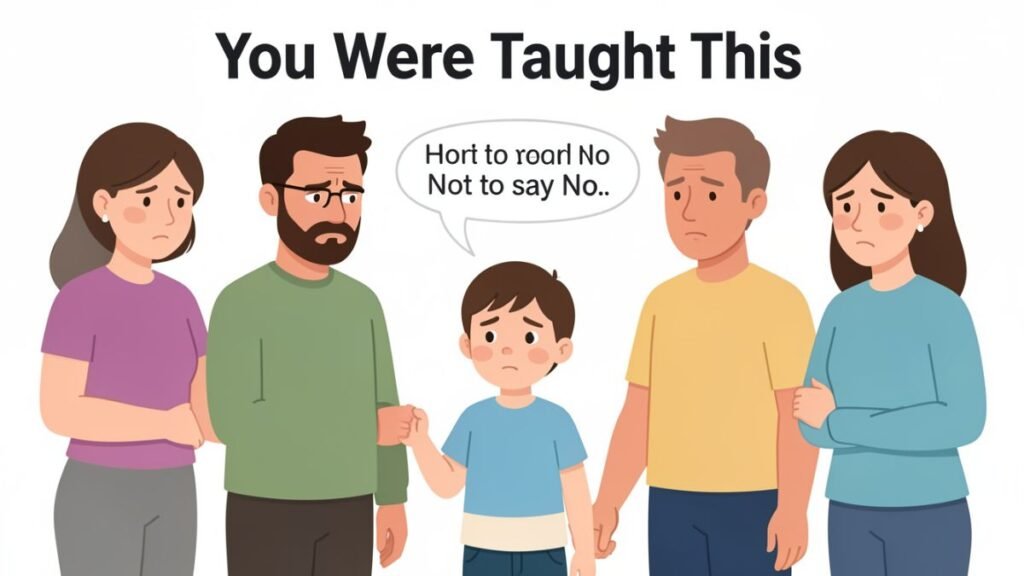
Think about what you learned growing up:
Maybe:
- Your boundaries were overridden (“You’ll do it anyway”)
- You were called selfish when you said no
- Adults guilted you for having needs or limits
- “Good girls” didn’t have boundaries
- Love meant sacrifice and never saying no
- Your job was to accommodate others
You learned: Boundaries = selfish = bad = guilt
Now, as an adult, setting a boundary triggers that childhood programming:
“I’m being selfish. I’m bad. I should feel guilty.”
But the guilt isn’t about what you’re doing now. It’s about what you were taught then.
You Were Conditioned to Prioritize Others
You were trained to believe:
- Other people’s needs matter more than yours
- Other people’s feelings are more important than yours
- You should sacrifice yourself to make others comfortable
- Your value comes from what you do for others
Setting a boundary violates this programming.
When you say no or protect yourself, you’re prioritizing yourself—which you were taught is wrong.
The guilt is your internal alarm system saying: “You’re breaking the rules! You’re supposed to put others first!”
But those rules were designed to keep you compliant, not to protect you.
You Confuse Guilt With Conscience
Healthy conscience: Feels guilt when you actually harm someone or violate your values
Your guilt: Fires when you try to protect yourself, even when you’re not doing anything wrong
You’ve been conditioned to feel guilty for:
- Saying no
- Having needs
- Taking care of yourself
- Disappointing someone
- Not being available
- Setting limits
None of these things is morally wrong. But you feel guilty anyway.
You’re confusing conditioned guilt (programming) with genuine conscience (moral guidance).
You Fear Their Reaction
When you set a boundary, you imagine:
- They’ll be angry
- They’ll be hurt
- They’ll reject you
- They’ll think you’re selfish
- They’ll withdraw love
The guilt is anticipatory anxiety disguised as moral feeling.
You feel guilty because you fear the consequences of the boundary, not because the boundary is wrong.
The guilt is trying to protect you from their potential reaction by making you back down.
You Believe You’re Responsible for Their Feelings
When you set a boundary, and someone is disappointed/upset:
You feel guilty because you believe:
- I caused their unhappiness
- I’m responsible for how they feel
- I hurt them
- I should prevent their negative feelings
But their disappointment with your boundary is:
- Their feeling to manage
- Not your responsibility
- There is no evidence that you did something wrong
You can set a boundary, and they can be upset—and you’re not guilty of anything.
But because you believe you’re responsible for their feelings, their upset = your guilt.
Guilt Is a Control Mechanism
People who benefit from your lack of boundaries often weaponize guilt:
They:
- Make you feel guilty for saying no
- Guilt-trip you for prioritizing yourself
- Act hurt when you set limits
- Frame your boundaries as you are hurting them
Over time, you’ve internalized this:
Now you don’t even need them to guilt you—you guilt yourself preemptively.
Guilt is a control mechanism that keeps you compliant even when no one is actively guilting you.
You’ve Never Seen Healthy Boundaries Modeled
If you grew up without examples of healthy boundaries:
You don’t know:
- What they look like
- How to set them
- That they’re normal and healthy
- That they don’t make you a bad person
So when you try to set a boundary, it feels foreign, wrong, selfish—because you’ve never seen it done in a healthy way.
You have no reference point for boundaries being okay.
Your Self-Worth Is Conditional
Deep down, you believe:
- I’m only valuable if I’m useful
- I’m only lovable if I’m accommodating
- I’m only worthy if I’m selfless
Setting a boundary threatens this conditional worth:
If you say no:
- Maybe you’re not valuable
- Maybe you’re not lovable
- Maybe you’re not worthy
The guilt is existential anxiety about your worth being contingent on having no boundaries.
Why This Guilt Is Destroying You
You can’t protect yourself. The guilt prevents you from setting necessary boundaries that would protect your time, energy, and well-being.
You’re being exploited. People who know you can’t set boundaries without guilt will take advantage of that.
You’re trapped in relationships that hurt you. You can’t leave or set limits because the guilt won’t let you.
You’re teaching others that they can violate your boundaries. When you back down from guilt, you show them boundaries don’t stick.
You’re exhausted and depleted. Without boundaries, you’re constantly overextending yourself.
You resent everyone. You’re angry at people for crossing boundaries you feel too guilty to enforce.
You’ve lost yourself. You can’t be yourself when guilt controls every decision about your limits.
You’re living in a prison of your own guilt. The bars are in your mind, but they’re just as real.
You’re denying yourself basic human rights. Everyone deserves to have boundaries. Your guilt denies you that right.
What You Need to Do
Step 1: Understand Guilt Is Not Truth
Repeat this:
“Just because I feel guilty doesn’t mean I did something wrong. My guilt is conditioned, not accurate.”
Guilt is a feeling, not a fact.
Feel it and set the boundary anyway.
Step 2: Identify the Source of the Guilt
Ask yourself:
“Where did I learn that boundaries are wrong?”
“Who taught me to feel guilty for saying no?”
“What happened when I tried to have boundaries growing up?”
Understanding the source helps you see its programming, not truth.
Step 3: Separate Healthy Guilt From Conditioned Guilt
Healthy guilt: You actually harmed someone, violated your values, or did something wrong
Conditioned guilt: You said no, prioritized yourself, or set a limit
When guilt comes, ask:
“Did I actually do something wrong, or am I just breaking old programming by having a boundary?”
Step 4: Expect the Guilt and Set the Boundary Anyway
You don’t have to wait for the guilt to go away.
The guilt will come. Expect it.
Feel guilty AND set the boundary.
Action despite guilt is how you reprogram yourself.
Step 5: Challenge the Guilty Thoughts
When guilt says: “You’re being selfish.”
Challenge it: “Having limits is not selfish. I’m allowed to protect myself.”
When guilt says: “You’re hurting them.”
Challenge it: “Their disappointment is not harm. I’m not responsible for their feelings.”
Talk back to the guilt.
Step 6: Tolerate Their Discomfort
When you set a boundary, and they’re upset:
Sit with the discomfort of their upset without fixing it.
Remind yourself:
- They can be disappointed
- I’m not responsible for managing their feelings
- Their upset doesn’t mean I did something wrong
- I can tolerate this discomfort
Don’t let their discomfort guilt you into dropping the boundary.
Step 7: Build New Evidence
Each time you set a boundary despite guilt:
Notice:
- You survived
- The relationship didn’t end (usually)
- You didn’t die from the guilt
- Life continued
- You protected yourself
Your brain needs evidence that boundaries are safe and guilt is not truth.
Step 8: Get Professional Support
If guilt is severely limiting your life:
- Boundary-setting skills
- Understanding the roots of your guilt
- Challenging conditioned beliefs
- Building tolerance for guilt
This is deep work. Don’t try to do it alone.
What You Need to Understand
Boundaries Are Not Selfish
Boundaries are:
- Healthy
- Necessary
- Your right
- Self-protective
- Normal
Selfishness is demanding that others have no boundaries while you violate theirs.
Having boundaries is not selfish. It’s self-respect.
Good People Set Boundaries
You’ve been taught that good people are boundaryless.
That’s a lie.
Good, healthy, mature people have boundaries.
Bad people are the ones who violate boundaries and guilt you for having them.
Their Reaction Is Not Your Responsibility
You can set a boundary and:
- They can be upset
- They can be disappointed
- They can disagree
All of that is okay. Their feelings are theirs to manage.
You’re not responsible for preventing their negative feelings about your boundaries.
The Guilt Will Decrease
The first boundary: Intense guilt
The tenth boundary: Moderate guilt
The hundredth boundary: Minimal guilt
Each boundary you set, despite guilt, weakens the guilt’s power.
It won’t always be this hard.
What You Deserve
You deserve to set boundaries without crushing guilt.
You deserve to protect yourself without feeling like a bad person.
You deserve to say no without shame.
You deserve freedom from guilt that keeps you trapped.
That freedom is possible. But it requires setting boundaries despite the guilt, over and over, until the guilt loses its power.
The Bottom Line
Sis, you feel guilty for setting boundaries because:
- You were taught that boundaries are selfish
- You were conditioned to prioritize others
- You confuse guilt with conscience
- You believe you’re responsible for others’ feelings
- Guilt has been used to control you
But the guilt is lying to you.
Boundaries are not wrong. Your guilt is conditioned, not accurate.
Feel the guilt. Set the boundary anyway.
Choose yourself, sis. You deserve boundaries without guilt.
FAQ
Q: How do I know if my boundary is reasonable or if I really am being selfish?
Ask: Would I judge someone else for having this boundary? If the answer is no, it’s reasonable. Worry about being selfish is usually a sign you’re not actually selfish.
Q: What if setting a boundary really does hurt someone?
Disappointing someone ≠ hurts them. People can be upset about your boundary without being harmed. You’re not obligated to sacrifice yourself to prevent their disappointment.
Q: Should I explain my boundaries to reduce their upset?
A brief explanation is fine, but don’t over-justify. “No” is a complete sentence. Explaining too much invites negotiation and implies your boundary needs their approval.
Q: What if the guilt is so intense I can’t function?
That level of guilt suggests deep conditioning, possibly trauma. Work with a therapist. In the meantime, start with tiny boundaries in low-stakes situations to build tolerance.
Q: Will the guilt ever go away completely?
For most people, it decreases significantly but might not disappear entirely. You learn to feel it without letting it control you. The goal isn’t no guilt—it’s action despite guilt.