
Sis, I need to talk to you about what happens after you disagree with him.
You had a conflict. Maybe a small argument. Maybe a serious fight. Maybe just a difficult conversation about something that needed to be addressed.
The conflict itself was hard enough. But at least you were communicating, engaging, trying to work through it.
Then the conversation ends, maybe unresolved, maybe seemingly resolved, maybe somewhere in between.
And suddenly, he goes silent.
You text him. No response. You reach out to check in. Nothing. You send a message trying to continue the conversation or repair the connection. Radio silence.
He’s ignoring you completely after the conflict.
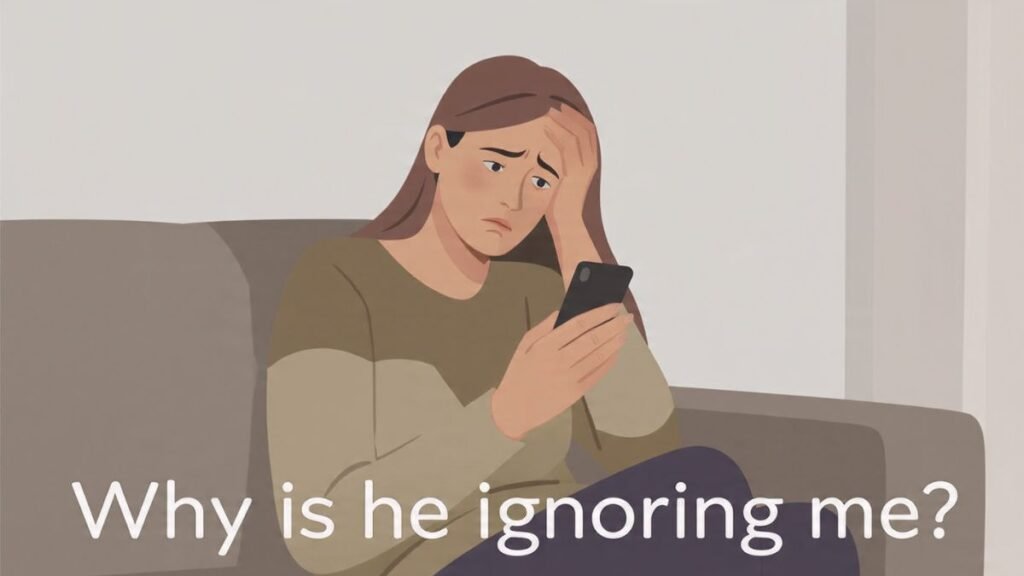
Hours pass. Maybe days. You’re left anxious, wondering what’s happening, if you’re still together, if he’s done with you, if the relationship is over.
You’re being punished with silence after daring to have a conflict.
I see how this makes you panic. How you end up apologizing just to get him to respond. How do you backtrack on legitimate concerns just to end the silent treatment? How do you learn to avoid conflict entirely because the aftermath is unbearable?
And I see you wondering: “Why does he ignore me after we argue? Is he just processing? Should I give him space? Or is something else happening?”
Something else is happening, sis. What he’s doing is called the silent treatment—and it’s emotional abuse designed to control you through fear of abandonment.
Let me explain what’s really happening and why you need to stop tolerating it.
What’s Really Happening: The Post-Conflict Silent Treatment
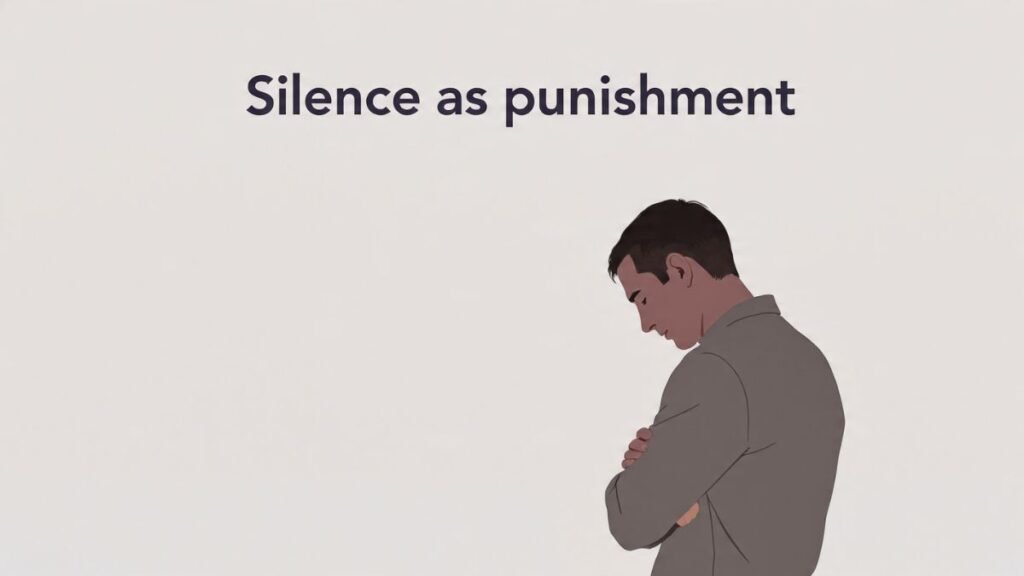
As a man who understands healthy conflict, let me be clear: Healthy partners don’t abandon you emotionally after disagreements. They communicate, they repair, they reconnect.
A mature man after conflict:
- Might need a brief space to calm down
- Communicates that need: “I need an hour, then we’ll talk.”
- Returns and repairs the connection
- Doesn’t leave you hanging, wondering if the relationship is over
- Doesn’t weaponize silence
Your boyfriend goes completely silent after a conflict, leaving you in emotional limbo.
That’s not processing. That’s punishment.
Here’s what’s really going on:
He’s Punishing You for the Conflict
Watch the pattern that’s being created:
You have a conflict/disagreement → He goes silent → You experience anxiety, fear, desperation → You reach out apologizing/backtracking → He eventually responds → You learn: Conflict = punishment
This is classical conditioning.
He’s training you to:
- Fear conflict
- Avoid bringing up issues
- Associate disagreement with abandonment
- Do anything to prevent future conflicts (including suppressing legitimate concerns)
The silent treatment after conflict is a punishment designed to make you afraid to ever disagree or raise issues again.
He’s Using Your Fear of Abandonment
The silent treatment works because it triggers:
- Fear that he’s leaving
- Fear that the relationship is over
- Fear of abandonment
- Anxiety about where you stand
Your fear makes you:
- Desperate to end the silence
- Willing to apologize even when you didn’t do anything wrong
- Ready to drop legitimate concerns
- Compliant to avoid future silent treatment
He’s exploiting your attachment and fear of abandonment to control your behavior.
The message is clear: “If you upset me or create conflict, I might leave. So don’t.”
He Can’t Regulate His Own Emotions
Some people go silent after conflict because they genuinely can’t handle:
- The emotional intensity of disagreement
- Their own anger or hurt feelings
- The complexity of working through issues
- Continued engagement while upset
So they shut down completely:
- Not maliciously (necessarily)
- But because they lack emotional regulation skills
- They need to completely withdraw to manage their feelings
Here’s the problem: Even if not malicious, this is still emotionally damaging to you and prevents healthy relationship functioning.
His inability to regulate emotions and communicate during that regulation process is HIS problem to solve—not yours to endure.
He’s Avoiding Accountability and Resolution
Notice what the silent treatment accomplishes:
With continued communication:
- Issues might need to be resolved
- He might have to acknowledge wrongdoing
- He might need to apologize
- He might have to change his behavior
With silent treatment:
- Issues never get fully resolved
- The conversation ends without a conclusion
- Accountability is avoided
- By the time he responds, the focus is on his silence—not the original issue
The silent treatment stems from the original conflict and prevents resolution.
When he finally responds, you’re so relieved the silence is over that you don’t even care about resolving the original issue anymore.
He’s Testing Your Investment
Some people use the silent treatment to gauge:
- How much will you chase
- How desperate will you get
- How much will you apologize
- How important is the relationship to you
Your response to his silence tells him:
- How much power does he has
- How much do you need him
- What you’ll tolerate
- How much control can he exert
If you chase, apologize, and backtrack when he goes silent—he learns he can control you this way.
He Learned This Pattern
Think about where he might have learned this:
Maybe:
- His parents used silent treatment as punishment
- He learned conflict = withdrawal
- He was given the silent treatment as a child
- This pattern was modeled in his family
He’s repeating learned behavior.
Understanding the origin doesn’t excuse it—but it explains why the pattern is so automatic for him.
He Has Contempt for You
The silent treatment, especially when prolonged and repeated, often indicates contempt:
His silence communicates:
- You’re not worth responding to
- Your feelings don’t matter enough to address
- You’re beneath him
- He doesn’t respect you enough to engage
Contempt is one of the strongest predictors of relationship failure.
If he has contempt for you, the silent treatment is a symptom of a much larger problem.
You’re Reinforcing the Pattern
Here’s the uncomfortable truth: The pattern continues because of how you respond.
Every time you:
- Chase him when he goes silent
- Apologize to end the silence
- Backtrack on your concerns to get him to respond
- Accept the silent treatment without consequences
You teach him: “Silent treatment works. I can control her through withdrawal. There are no consequences for ignoring her.”
Your tolerance of the pattern enables it to continue.
Why This Pattern Is Destroying You
You’re living in constant anxiety. Never knowing if the next disagreement will result in his disappearance creates chronic anxiety.
You can’t address problems. If bringing up issues leads to being ignored, you stop bringing up issues. Problems accumulate unresolved.
You’re being emotionally abused. The silent treatment is a recognized form of emotional abuse.
Your self-worth is eroding. Being ignored after a conflict makes you feel worthless, like your feelings and concerns don’t matter.
You’re walking on eggshells. You avoid any conflict or disagreement for fear of triggering the silent treatment.
You can’t have real intimacy. Intimacy requires the ability to work through conflict. The silent treatment prevents that.
You’re losing yourself. You suppress legitimate concerns and feelings to avoid conflict, which means suppressing yourself.
What You Need to Do
Step 1: Recognize the Pattern
Silent treatment looks like:
- No response to messages after the conflict
- Complete communication shutdown
- Ignoring calls and texts
- Hours or days of silence with no explanation
- Using withdrawal as punishment
Name it: “You’re giving me the silent treatment.”
Step 2: Don’t Chase
When he goes silent after conflict:
Don’t:
- Send multiple messages begging for a response
- Apologize just to end the silence
- Backtrack on legitimate concerns
- Chase him desperately
Do:
- Send one message: “When you’re ready to communicate like an adult, let me know.”
- Then stop contacting him
- Go about your life
- Let him be silent
Stop rewarding the silent treatment by chasing.
Step 3: Set a Clear Boundary
After this happens, address it directly:
“Ignoring my messages after conflict is the silent treatment, and it’s emotional abuse. If you need space, say so and give a timeframe. But ignoring me for hours or days is not acceptable. If it happens again, I’m leaving.”
Make it a firm boundary.
Step 4: Distinguish From Legitimate Space
Healthy taking space:
- “I need a few hours to calm down. I’ll text you at 6 pm.”
- Communicates the need for space
- Gives a specific timeframe
- Follows through on reconnecting
Silent treatment:
- Just disappears
- No communication about needing space
- Indefinite silence
- No plan to reconnect
Respect healthy space-taking. Don’t tolerate silent treatment.
Step 5: Don’t Apologize to End the Silence
If you didn’t do anything wrong:
Don’t apologize just to get him to respond.
You’re teaching him: “If I ignore her long enough, she’ll apologize for whatever I want, even if she didn’t do anything wrong.”
Hold your ground. Don’t apologize for things you didn’t do.
Step 6: Address the Original Issue When He Returns
When he finally responds after the silent treatment:
Don’t just be relieved and move on.
Say: “We need to address two things: the original issue we were discussing, and the fact that you ignored me for [time period]. Both are problems.”
Don’t let the silent treatment derail from the original conflict.
Step 7: Insist on Therapy
If he’s willing to work on this:
“The silent treatment pattern is destroying our relationship. We need couples therapy. Are you willing?”
If he refuses therapy, he’s refusing to fix the problem.
Step 8: Leave If It Continues
If, after clear boundaries, he continues giving you the silent treatment after conflicts:
Leave.
The silent treatment is emotional abuse. You cannot build a healthy relationship with someone who uses withdrawal as a weapon.
What You Need to Understand
The Silent Treatment Is Abuse
Emotional abuse includes:
- Withholding communication as punishment
- Using withdrawal to control
- Ignoring someone to create fear and compliance
- Punishing through abandonment
The silent treatment checks all these boxes. It’s abuse.
This Isn’t About Needing Space
There’s a world of difference between:
Healthy: “I’m too upset to talk productively right now. I need an hour to calm down. Let’s continue this at 7 pm.”
Abuse: [Complete silence for hours/days with no communication or explanation]
Don’t let him conflate the two. They’re not the same.
You Can’t Fix This Alone
No amount of:
- Being patient
- Giving him space
- Understanding his “processing style.”
- Waiting for him to be ready
Will stop someone from using the silent treatment.
This requires HIS acknowledgment that it’s a problem and HIS commitment to change.
Research Shows This Is Toxic
Dr. John Gottman’s research identifies withdrawal and stonewalling (which includes silent treatment) as one of the “Four Horsemen” that predict relationship failure.
If the silent treatment continues, this relationship will fail.
What You Deserve
You deserve a partner who doesn’t punish you with silence.
Someone who communicates when they need space instead of disappearing.
Someone who repairs the connection after conflict instead of withdrawing.
Someone who sees conflict as something to work through together, not as something to punish you for.
That person exists. But it’s not someone who gives you the silent treatment.
The Bottom Line
Sis, he ignores your messages after a conflict because:
- He’s punishing you for the disagreement
- He’s using your fear of abandonment to control you
- He can’t regulate his own emotions
- He’s avoiding accountability and resolution
- He’s testing how much you’ll chase
This is emotional abuse, not processing.
Don’t chase. Set boundaries. Leave if it continues.
Choose yourself, sis. You deserve communication, not punishment through silence.
FAQ
Q: How long is too long for him not to respond after a conflict?
A few hours with communication (“I need space till tonight”) is reasonable. Anything beyond that without explanation, or any duration without communicating the need for space, is silent treatment.
Q: What if he says I’m not respecting his need for space?
Space requires communication: when he needs it and when he’ll reconnect. Silent treatment is disappearing without explanation. If he’s not communicating, it’s not a healthy space—it’s silent treatment.
Q: Should I keep messaging even when he’s not responding?
No. Send one message setting a boundary, then stop. Don’t chase. Let him be silent—but evaluate whether you want to stay with someone who does this.
Q: What if he says he “just needs time to process”?
Processing is valid. But it requires communication: “I need time to process, I’ll reach out tomorrow.” If he can’t communicate that, he’s not processing—he’s giving silent treatment.
Q: Can someone who uses silent treatment change?
Only with acknowledgment, it’s a problem, genuine commitment to change, and usually therapy. Most don’t change because they see nothing wrong with it or enjoy the control it gives them.