
Sis, let me ask you something.
When was the last time things felt stable, calm, and good in your relationship—and he actually stayed present for it?
I see a pattern you’re living through: Every time the relationship settles into a good place—no drama, no fighting, just consistent connection and stability—he disappears emotionally.
Not physically (always). He might still be around. But emotionally? He’s gone.
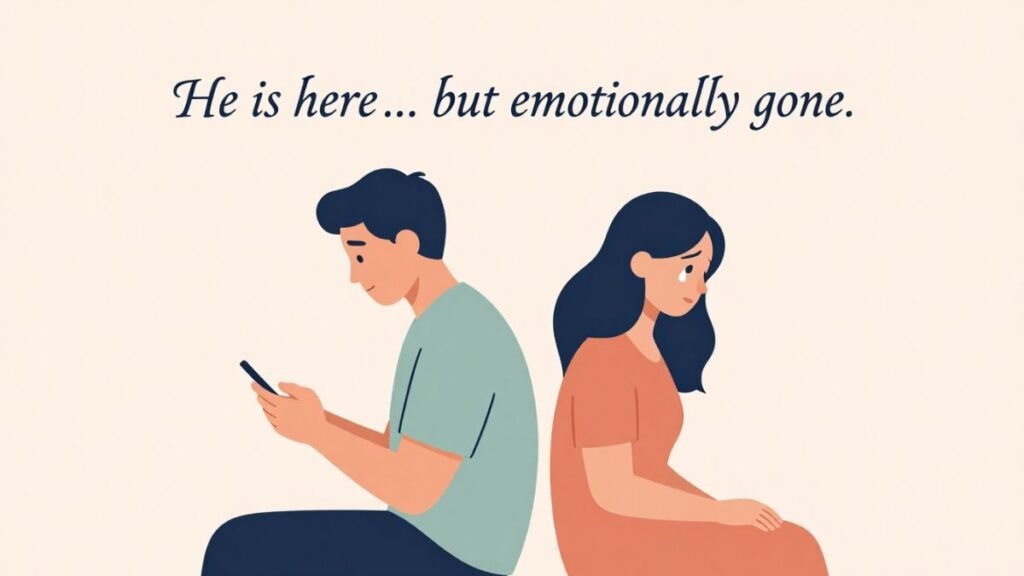
He becomes distant. Detached. Goes through the motions. Stops initiating conversation. Stops being emotionally present. It’s like he’s checked out even though he’s standing right there.
And the confusing part? This happens when things are GOOD. When you’ve worked through issues. When you’re finally in a peaceful place. When the relationship feels secure and stable.
That’s when he vanishes emotionally.
I see you confused and frustrated: Why does he leave when things are finally good? Shouldn’t stability be what he wants? Did I do something wrong by making things too comfortable?
No, sis. This isn’t about you making things “too stable.” This is about his inability to handle stability.
Let me explain what’s really happening, why peace triggers his disappearance, and what it means about your future together.
What’s Really Happening: Why Stability Scares Him Away
As a man who understands healthy relationships, let me tell you something: Emotionally healthy men thrive in stability. They want peace, consistency, and security.
When things are good, a secure man relaxes into it. He appreciates the calm. He enjoys the stability. He feels grateful for the peace.
Your boyfriend does the opposite. When things stabilize, he disappears. Here’s why:
Stability Makes the Relationship Real
Think about what stability represents:
- The relationship is working
- You’re compatible
- This could actually be long-term
- Real commitment might be next
- This is getting serious
For someone terrified of commitment, stability is a threat.
As long as the relationship is chaotic—fighting, drama, uncertainty—he can tell himself it’s temporary, not serious, might not last. Chaos gives him an exit excuse.
But when things are stable and good? He can’t use chaos as an excuse anymore. The relationship is working. Which means he might actually have to commit. And that terrifies him.
So he creates emotional distance to avoid facing the reality that this relationship is real and working.
He’s Addicted to the Chase, Not the Relationship
Some people are addicted to the pursuit phase:
- The uncertainty
- The “will she/won’t she”
- The chase
- The drama
- The highs and lows
- The excitement of winning someone over
Once they “win” and things stabilize, they lose interest.
It’s not about you. It’s about their need for the dopamine hit that comes from pursuit and uncertainty.
Stability feels boring to him because there’s nothing to chase anymore. You’re his. The relationship is secure. The game is won.
So he emotionally disappears—either to create new drama/uncertainty (which makes the relationship interesting again) or because he’s genuinely lost interest now that the chase is over.
Stability Requires Emotional Intimacy He Can’t Sustain
Chaos and drama create distance even while you’re together. You’re fighting, so you’re not actually intimate. You’re making up, so you get bursts of closeness without sustained intimacy.
Stability requires sustained emotional presence. No drama to hide behind. No conflict to create distance. Just consistent, daily emotional intimacy.
And he can’t do that.
He can handle emotional intensity in bursts (during fights, during makeups). But the quiet, consistent, daily intimacy of a stable relationship? That’s too much vulnerability for too long.
So when things stabilize and require sustained emotional presence, he disappears because he can’t handle that level of ongoing intimacy.
He Sabotages Good Things Because He Doesn’t Believe He Deserves Them
Some people have a deep-seated belief that they don’t deserve happiness, love, or good relationships.
So when things are finally good, their brain panics: “This is too good. I don’t deserve this. It’s going to end badly anyway. I should sabotage it now before it falls apart and hurts more.”
When your relationship stabilizes and feels genuinely good, he emotionally disappears as a form of self-sabotage. He’s destroying the good thing before it can be taken from him or before you realize he doesn’t deserve it.
It’s a self-fulfilling prophecy: he fears losing good things, so he destroys them, which confirms his belief that he can’t have good things.
Stability Means He Can’t Blame Problems for His Emotional Unavailability
When the relationship has problems, he has excuses for being emotionally distant:
- “We’re always fighting, that’s why I’m distant”
- “You’re too emotional, that’s why I pull back”
- “The relationship is too stressful, that’s why I’m unavailable”
But when things are stable and peaceful? He has no excuse.
His emotional unavailability becomes obvious. It’s not about the drama or the fighting or your behavior—it’s just him.
So he disappears emotionally to avoid facing the fact that he’s emotionally unavailable regardless of whether things are good or bad.
He Might Be Using Stability as Permission to Pursue Others
I need you to consider this possibility: When things are stable with you, he might feel “secure” enough to emotionally invest elsewhere.
Think about it:
- When you’re stable, you’re not going anywhere
- He doesn’t have to chase you or win you back
- He can emotionally disconnect from you
- And pursue excitement/novelty/attention elsewhere
His emotional disappearance during stable times might coincide with him getting emotionally engaged somewhere else.
He keeps you stable and secure (so you don’t leave) while emotionally disappearing (so he can focus energy elsewhere). You’re the safe option. Someone else is the exciting one.
Why This Pattern Destroys You
You can never enjoy the good times. When things are finally peaceful and stable, you can’t relax into it because you know he’s about to disappear. The good times become anxiety-inducing instead of enjoyable.
You create drama to keep him engaged. You learn that he’s only present during chaos, so subconsciously you create problems, pick fights, or manufacture drama—just to keep him emotionally engaged with you.
You believe stability is bad. You start to think that peace and stability are relationship killers. That you need excitement and drama to keep love alive. This is a toxic belief that will damage all your future relationships.
You can’t build a life together. How do you build a future with someone who disappears every time things are good? Healthy lives are built on stability, not chaos. If he can only show up during drama, you can never create a stable life together.
You exhaust yourself. Constantly cycling between drama (when he’s present) and stability (when he disappears) is emotionally exhausting. You’re never at peace. You’re either fighting or anxiously waiting for him to disappear.
You lose yourself. You become someone who creates drama, who can’t enjoy peace, who’s addicted to chaos—because that’s the only way to keep him engaged. You lose the peaceful, stable version of yourself.
What His Pattern Really Means
He Cannot Handle Adult Relationships
Adult relationships are built on:
- Stability
- Consistency
- Peaceful daily life together
- Sustained emotional intimacy
- Working through problems and then enjoying the peace
If he can only show up during chaos and disappears during stability, he’s incapable of adult partnership. He can do teenage-style drama relationships, but not mature love.
You Will Never Have Peace With Him
Think about what this pattern means for your future:
You work through problems → things stabilize → he disappears → you have to create drama to bring him back → you work through the drama → things stabilize → he disappears again.
You will spend your entire relationship cycling through this pattern. Peace will always be temporary. Stability will always trigger his disappearance.
Is that the life you want? Never being able to enjoy calm because calm makes him leave?
This Won’t Change Without Professional Help
His pattern of disappearing during stability is rooted in deep psychological issues:
- Fear of commitment
- Addiction to chaos
- Inability to sustain intimacy
- Self-sabotage
- Possible narcissistic need for drama
These don’t just resolve themselves. They require intensive therapy and genuine desire to change.
If he’s not actively in therapy working on why he can’t handle stability, this pattern is permanent.
What You Need to Do
Step 1: Name the Pattern
“Every time our relationship stabilizes and feels good, you disappear emotionally. This is a pattern, and it’s preventing us from building anything real.”
Make him see what he’s doing. Show him the pattern clearly.
Step 2: Refuse to Create Drama to Keep Him
When he disappears during stable times, do not create chaos to bring him back.
Don’t pick fights. Don’t manufacture problems. Don’t create drama.
Let the stability stand. And let him disappear. His inability to handle peace is his problem, not yours to solve by creating chaos.
Step 3: Stop Accepting Emotional Absence During Good Times
“I will not accept a relationship where you only show up during chaos and disappear during peace. That’s backwards and toxic.”
Make it clear: if he can’t be present during the good times, he doesn’t get access to you during the bad times either.
Step 4: Demand He Gets Help
“Your pattern of emotionally disappearing during stable times is destroying this relationship. You need therapy to figure out why you can’t handle peace.”
If he refuses, you have your answer about whether he’s willing to change.
Step 5: Evaluate If He’s Pursuing Others
Pay attention to whether his emotional disappearance during stable times coincides with:
- Increased phone secrecy
- New “friends” or activities
- Changes in availability
- Social media activity with others
His emotional absence with you might be emotional presence with someone else.
Step 6: Set a Deadline
“The next time things stabilize, you have [timeframe] to stay emotionally present. If you disappear again, I’m done.”
Give him one chance with a clear deadline. Then enforce it.
Step 7: Ask Yourself the Hard Question
Can you spend your life with someone who disappears every time things are good? Who can only show up during chaos?
Can you accept never having lasting peace because peace makes him leave?
If the answer is no, you know what you need to do.
What You Deserve
You deserve someone who thrives in stability, not someone who runs from it.
Someone who relaxes into peace instead of creating chaos.
Someone who’s MORE present during good times, not less.
Someone who can build a calm, stable life with you instead of requiring constant drama to stay engaged.
That person exists. But it’s not him.
At least not the version of him that exists right now. And you cannot sacrifice years waiting for him to become capable of handling peace.
The Bottom Line
Sis, a man who emotionally disappears when things feel stable is showing you:
- He’s addicted to chaos, not committed to partnership
- He can’t handle the sustained intimacy stability requires
- He might be pursuing others when things are secure with you
- He’s incapable of building a peaceful life
- He needs professional help to change this pattern
You cannot build a life with someone who leaves every time things are good.
Stop creating drama to keep him. Stop accepting that chaos is the only way to have his presence.
You deserve peace. You deserve stability. You deserve someone who stays.
FAQ
Q: What if he just needs excitement and I’m boring him?
If peace and stability bore him, he’s not ready for adult partnership. Healthy relationships are built on peaceful daily life, not constant excitement. You’re not boring—he’s immature.
Q: Should I try to be more exciting to keep him engaged?
No. You shouldn’t have to perform constantly to keep someone emotionally present. If he can’t show up during normal, stable life, he can’t be a real partner.
Q: Could he have ADHD or need more stimulation?
ADHD might make someone seek stimulation, but it doesn’t make them emotionally disappear during relationship stability. If he genuinely has a condition affecting this, he needs treatment—not you managing it by creating drama.
Q: What if he comes back after disappearing and things are good again?
That’s the cycle: disappear during stability, come back with drama, repeat. Don’t accept the pattern. Demand sustained presence through both chaos and calm.
Q: How long should I give him to change?
If you’ve addressed the pattern and he hasn’t shown consistent change within 2-3 months, he’s not going to. Don’t waste years on someone who can’t handle peace.