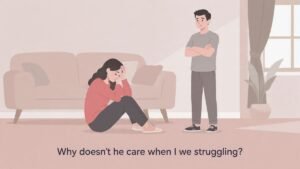
Sis, I need to talk to you about what happens inside you when he pulls away.
One day, everything feels good. Connected. Close. You feel secure.
Then he pulls away.
Maybe he’s distant. Maybe he’s “busy.” Maybe he’s suddenly cold where he was warm. Maybe he’s stopped texting as much. Maybe he’s emotionally unavailable when he was just emotionally present.
And the moment you notice his withdrawal, something happens inside you.
You don’t just think: “He’s pulling away.” You think: “What did I do wrong? What’s wrong with me? I’m not enough. I’m too much. I’m not pretty enough, smart enough, interesting enough, sexy enough.”
His distance triggers an immediate, crushing feeling of inadequacy. His pulling away is proof that you’re insufficient.
I see you spiraling. Replaying every interaction. Analyzing what you said, what you did, and how you looked. Searching desperately for what you did to make him pull away. Convinced that his distance is your fault, evidence of your inadequacy.
And I see you trying to fix it. Becoming more available. More accommodating. More perfect. Trying to pull him back by proving you’re not inadequate after all.
Stop right there.
Listen to me carefully: His pulling away is not proof of your inadequacy. His behavior is about him, not evidence of your worth.
Let me explain what’s really happening and how to break this painful pattern.
What’s Really Happening: Why His Distance Triggers Your Inadequacy
As a man, let me tell you something: Men pull away for a thousand reasons that have nothing to do with your worth.
Work stress. Emotional overwhelm. Fear of intimacy. Personal issues. Needing space. Processing emotions. Dealing with problems, they don’t want to burden you with.
And yes, sometimes men pull away because they’re losing interest. But even that isn’t about your inadequacy—it’s about compatibility, timing, or his own limitations.
His pulling away is information about him and the relationship. It’s not a referendum on your value as a person.
So why does it feel like proof you’re inadequate? Let me show you what’s really happening:
You Learned Early That Withdrawal Means You Did Something Wrong
For many women, the pattern started in childhood:
Maybe when you were a kid:
- A parent withdrew affection when you “misbehaved.”
- Love felt conditional—present when you were “good,” absent when you weren’t
- You learned that other people’s distance meant you failed somehow
- Connection was something you had to earn and could lose through mistakes
You internalized the lesson: When someone pulls away, it’s because I’m inadequate. I did something wrong. I’m not enough.
So now, when a man pulls away, you’re not just reacting to his behavior—you’re reliving that childhood wound. His distance activates the old belief that you’re inadequate when people withdraw.
You’ve Made Him the Measure of Your Worth
Think about what his pulling away means to you:
If he’s close → I’m worthy, valuable, enough
If he pulls away → I’m inadequate, not enough, flawed
You’ve outsourced your sense of worth to his proximity. His closeness validates you. His distance invalidates you.
That’s not about his actual behavior. That’s about you using his attention as the barometer for your value.
When your worth depends on someone else’s behavior, you’ll always feel inadequate when that behavior changes—because you have no stable internal sense of value independent of external validation.
You’re Trying to Control the Uncontrollable
Here’s what happens in your mind when he pulls away:
Your brain says: “If his distance is about my inadequacy, then I can fix it. If I can just figure out what I did wrong and fix it, I can bring him back. I have control.”
Feeling inadequate is actually an attempt to feel in control.
Because if his pulling away is about something beyond your control (his issues, his fears, his needs), you’re powerless. But if it’s about your inadequacy, you can do something about it.
So your brain chooses inadequacy as the explanation because inadequacy feels more controllable than powerlessness.
It’s painful, but it gives you the illusion that you can fix this if you just become “enough.”
You’re in a Pattern With Someone Who Uses Distance as Control
Some men have figured out—consciously or not—that pulling away makes you chase.
They’ve learned:
- When they’re distant → You pursue
- When they withdraw → You try harder
- When they pull away, → You become more accommodating
- When they’re cold → You work to warm them up
They use distance as a manipulation tactic. And it works because it triggers your inadequacy wound.
You’re not just reacting to normal relationship dynamics. You’re reacting to someone who’s weaponizing distance to keep you off balance and desperate for their approval.
His Actual Behavior Suggests You’re Not a Priority
Sometimes your feeling of inadequacy when he pulls away is actually your intuition telling you something true:
You’re not a priority to him.
When a man is truly invested, truly values you, truly sees you as important—he doesn’t go hot and cold. He doesn’t pull away without explanation. He doesn’t leave you guessing.
Maybe you feel inadequate because, on some level, you sense that you’re not as important to him as he is to you.
And instead of accepting that truth (which would mean leaving), you turn it inward: “I must not be enough. If I were better, he wouldn’t pull away.”
You’re making yourself inadequate instead of making him accountable.
Why This Pattern Is Destroying You
You can’t feel secure. If his pulling away means you’re inadequate, you’ll never feel secure—because his behavior is unpredictable and you have no control over it.
You lose yourself trying to prevent his withdrawal. You become whatever you think will keep him close. You suppress your needs, your boundaries, your authentic self—all to avoid triggering his distance.
You’re constantly anxious. Monitoring his mood. Watching for signs of withdrawal. Living in fear of the next time he pulls away and proves (in your mind) that you’re inadequate.
You chase when you should evaluate. Instead of asking “Why is he pulling away and is this relationship healthy?”, you ask “What’s wrong with me and how do I fix it?”
You accept terrible treatment. If his distance means you’re inadequate, you’ll accept him pulling away repeatedly because you believe it’s your fault and you deserve it.
You reinforce the inadequacy belief. Every time he pulls away, and you react by feeling inadequate, you strengthen the neural pathway that says: “Other people’s behavior determines my worth.”
You miss the real issue. His pulling away might be a red flag about him or the relationship. But you’re too busy feeling inadequate to see it clearly.
What You Need to Understand
His Pulling Away Is About Him, Not You
When a man pulls away, it’s because of something happening inside him:
- He’s overwhelmed emotionally
- He’s dealing with stress or problems
- He’s scared of intimacy
- He needs space to process
- He’s questioning the relationship
- He’s emotionally unavailable
- He’s seeing other people
Notice how none of those are about your inadequacy?
Your adequacy or inadequacy doesn’t control his behavior. His internal state, his issues, and his choices control his behavior.
You Are Not Inadequate—The Relationship Might Be
If he’s consistently pulling away, the inadequacy isn’t yours—it’s the relationship’s.
Maybe:
- You’re incompatible
- He’s not ready for commitment
- He’s emotionally unavailable
- The relationship isn’t healthy
- He’s not the right person for you
The relationship being inadequate doesn’t make you inadequate. It just means this isn’t the right fit.
Your Worth Is Constant, Not Variable
Your worth doesn’t increase when he’s close and decrease when he pulls away.
Your worth is constant. It exists whether he sees it or not. Whether he’s present or absent. Whether he’s engaged or distant.
His behavior doesn’t change your value. It only reveals whether he’s capable of recognizing it.
How to Break This Pattern
Step 1: Notice the Pattern
When he pulls away, pay attention to what happens inside you:
- Do you immediately feel inadequate?
- Do you replay interactions, looking for what you did wrong?
- Do you try to “fix” yourself to bring him back?
Awareness is the first step to breaking the cycle.
Step 2: Separate His Behavior From Your Worth
When he pulls away, practice saying:
“His pulling away is about him, not about my worth.”
Repeat it. Write it down. Make it your mantra.
His behavior is information about him and the relationship, not evidence about your adequacy.
Step 3: Stop Chasing to Prove You’re Adequate
When he pulls away, resist the urge to chase.
Don’t text more. Don’t try to fix it. Don’t become more available.
Let him pull away. Use that space to evaluate whether this relationship is actually serving you.
Step 4: Build Worth Independent of Him
Your worth cannot be based on his proximity or attention.
Build a sense of value that exists regardless of his behavior:
- Pursue your own goals and passions
- Spend time with people who value you consistently
- Practice self-compassion
- Develop your identity outside the relationship
Step 5: Address the Root Wound
If his pulling away triggers childhood wounds about conditional love, you need to heal those wounds.
Work with a therapist. Process the early experiences that taught you that withdrawal means you’re inadequate.
Heal the wound so his behavior stops having power over your sense of worth.
Step 6: Evaluate the Relationship
Instead of asking “What’s wrong with me?”, ask:
“Is this relationship healthy? Does this man treat me with consistency and respect? Am I getting my needs met?”
If he’s constantly pulling away, maybe the relationship is the problem—not you.
Step 7: Be Willing to Leave
If his pattern of pulling away continues, if your worth continues to feel tied to his proximity, if the relationship keeps triggering your inadequacy, be willing to leave.
You cannot heal your worth in a relationship that keeps wounding it.
What You Deserve
You deserve someone whose presence is consistent.
Someone who doesn’t pull away without explanation.
Someone whose behavior doesn’t make you question your worth.
Someone who makes you feel valued, not inadequate.
That person exists. But you’ll never find them if you’re stuck in a cycle of feeling inadequate with the wrong person.
The Bottom Line
Sis, when a man pulls away, and you feel inadequate:
It’s not because you ARE inadequate. It’s because you’ve learned to interpret distance as evidence of your unworthiness.
His pulling away is about him—his issues, his fears, his capacity (or lack thereof).
Stop making his behavior a referendum on your value. Stop chasing to prove you’re enough. Stop accepting that his distance means you’re inadequate.
You are adequate. You are enough. You are worthy.
And any man who makes you feel otherwise through his inconsistent behavior doesn’t deserve access to you.
Choose yourself, sis. Your worth doesn’t decrease when he pulls away—but your tolerance for his behavior should.
FAQ
Q: What if he’s pulling away because I really did do something wrong?
Even if you made a mistake, that doesn’t make you inadequate as a person. Mistakes don’t equal inadequacy. And a healthy partner communicates about issues rather than just withdrawing.
Q: How do I stop the immediate inadequacy feeling when he pulls away?
It takes practice. Notice the feeling. Acknowledge it. Then consciously remind yourself: “This feeling is my wound, not truth. His behavior is about him.” Over time, the automatic response will weaken.
Q: What if I can’t tell if it’s my issue or if he’s actually being shady?
Look at patterns. If he consistently pulls away without explanation, keeps you guessing, or his distance feels manipulative—that’s about him. If his behavior is generally consistent, but your reaction is extreme, that’s your wound.
Q: Should I ask him why he’s pulling away?
You can ask once: “I notice you’ve been distant. Is everything okay?” But if he dismisses it or doesn’t change, don’t keep asking. His continued pattern tells you everything you need to know.
Q: How do I know when to work on myself vs. when to leave?
Work on yourself to heal the wound that makes you feel inadequate when anyone pulls away. Leave the relationship if HIS specific pattern of pulling away is unhealthy, manipulative, or consistently triggers your wound without care for how it affects you.