Why do I struggle without closure? If a relationship ends without answers or a proper goodbye, it can feel impossible to move on and find peace.
Sis, I need to talk to you about why you can’t seem to let go.
You’re struggling not just with the loss, but with how it ended.
No final conversation. No real explanation. No goodbye. No closure.
They just… left. Or it ended messily. Or they gave vague reasons that don’t make sense. Or they disappeared without a real ending.
And you’re stuck in the limbo of an unresolved ending.
You can’t close the chapter. You can’t file it away. You can’t make peace with it. Because it doesn’t feel finished.
Other people who had clear endings seem to move on easier. They had the breakup talk, the explanations, the resolution—they had closure.
You didn’t get that. And you’re drowning in the ambiguity.
I see how hard this is. How the lack of closure makes everything harder. How you can’t grieve properly because it doesn’t feel complete. How you’re trapped between what was and what’s next—unable to fully leave one or enter the other.
And I see you wondering: “Why is this so much harder without closure? Why can’t I move on like people who got proper endings? Will I ever find peace without it?”
Yes, you will find peace, sis. But first you need to understand why the lack of closure is so difficult—and how to create resolution for yourself when they won’t give it to you.
Let me help you understand why you struggle without closure and how to heal anyway.
Why No Closure Hurts: The Unresolved Ending Trap
Let me be honest with you: Closure is deeply important to the human psyche. The struggle you’re experiencing without it is real, valid, and completely understandable.
But here’s the truth: Most people don’t get the closure they’re seeking. And they still heal. You can too.
Here’s what’s really going on:
Your Brain Needs Narrative Completion
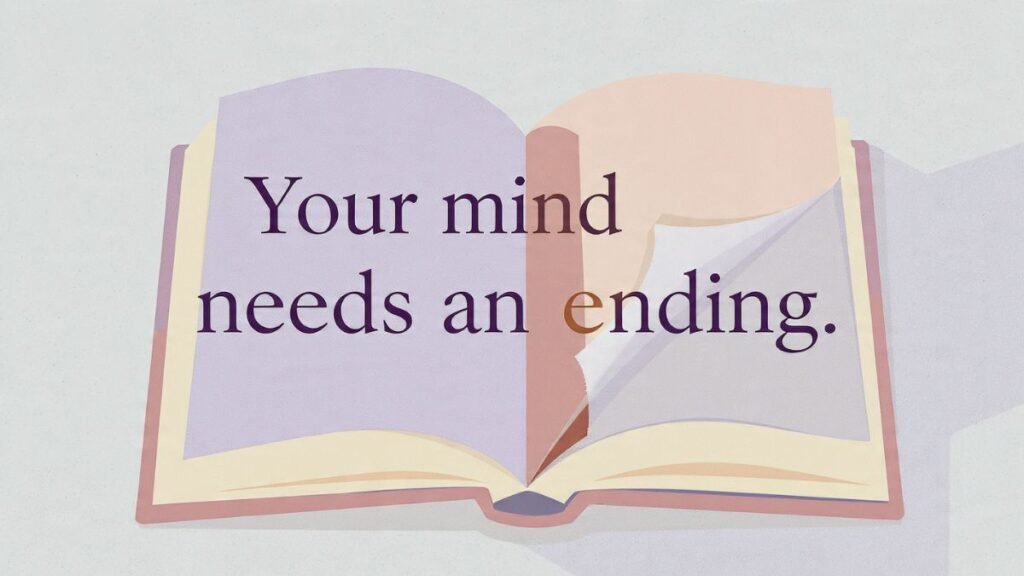
Humans are story-making creatures. We need:
- Beginning
- Middle
- End
Without closure, you have:
- Beginning ✓
- Middle ✓
- End → Unclear, incomplete, unresolved
Your brain literally can’t close the file on this relationship.
It’s like reading a book where the last chapter is missing—your brain keeps searching for the ending, unable to shelve the story.
You struggle without closure because your brain is in a state of unresolved tension, searching endlessly for the completion it needs.
You’re Living in Ambiguity
Without closure, you don’t have clarity on:
- Why it ended (the real reasons)
- What it meant (to them, to you, objectively)
- If it’s truly over (or if there’s a chance)
- How to interpret what happened (your narrative is uncertain)
Ambiguity is psychologically distressing.
Humans struggle with uncertainty—we want clear answers, definite endings, knowable truths.
You struggle without closure because ambiguity creates anxiety, and your brain is trying desperately to convert uncertainty into certainty.
You Can’t Properly Grieve
Healthy grief requires acknowledging what’s lost.
Without closure:
- You can’t fully accept it’s over (it feels unfinished)
- You can’t clearly define what ended (was it real? what did you lose?)
- You can’t process the loss (how do you grieve something undefined?)
You’re in a grief limbo—knowing you should grieve but unable to fully begin because the loss feels incomplete.
You struggle without closure because you can’t grieve properly, and unprocessed grief is toxic.
You’re Stuck in Magical Thinking
Without a definitive ending:
Part of you believes:
- Maybe they’ll come back with an explanation
- Maybe this isn’t really over
- Maybe if I wait, I’ll get closure
- Maybe there’s still a chance
The lack of closure keeps hope alive—even painful, false hope.
You struggle without closure because you can’t fully let go when there’s still uncertainty, and the uncertainty keeps a tiny flame of hope burning.
Your Nervous System Is in Limbo
Your nervous system needs to know:
- Safe or threat?
- Fight or flight?
- Attach or detach?
Without closure, your nervous system gets mixed signals:
- The relationship is over (detach)
- But it’s not definitively closed (maybe attach?)
This creates chronic nervous system dysregulation.
You struggle without closure because your body is stuck in a stress response, unable to shift to safety and rest.
You Have Unanswered Questions
Without closure, you’re left with questions:
- Why did they really leave?
- Did they ever love me?
- What did I do wrong?
- Was any of it real?
- What changed?
The unanswered questions create obsessive loops.
Your brain keeps asking, searching, analyzing—unable to rest without answers.
You struggle without closure because the unanswered questions create mental torture that won’t resolve.
You Feel Disrespected
Ending a relationship without closure is:
- Dismissive of what you shared
- Disrespectful of your right to understanding
- Cruel (denying you basic human dignity)
You don’t just struggle with the lack of closure—you struggle with what it represents:
- You didn’t matter enough for a proper ending
- You weren’t worth their time to explain
- Your pain doesn’t deserve acknowledgment
You struggle without closure because it feels like a final rejection—being denied even the dignity of a real ending.
You’re Comparing to Others
You see others who:
- Got explanations
- Had closure conversations
- Seem to be moving on easier
And you think: “If I just had what they had, I could move on too.”
You struggle without closure because you believe it’s the missing piece that would make healing possible—and comparing to others reinforces that belief.
Why Breakups Without Closure Are Harder to Move On From
You can’t start over without ending what was. The lack of closure keeps you tethered to the past.
You’re expending energy seeking what you can’t get. That energy could go toward healing.
You can’t trust the narrative. Without closure, you don’t know what story to tell yourself about what happened.
You’re prone to idealizing the relationship. Ambiguity allows you to fill in blanks with fantasy.
You’re more likely to accept breadcrumbs. Without a clear ending, you’re vulnerable to them coming back without real resolution.
You’re stuck in analysis paralysis. Trying to create closure yourself through endless analysis.
You can’t properly protect yourself. Without understanding what happened, you can’t learn and set boundaries.
How to Heal Without Closure (Step-by-Step Guide)
Step 1: Validate Your Struggle
Say this out loud:
“Struggling without closure is normal and valid. This is harder because I don’t have a resolution. My pain is real and understandable.”
Don’t minimize your struggle, acknowledge it.
Step 2: Grieve the Lack of Closure
You’re not just grieving the relationship, you’re grieving the closure you didn’t get.
Acknowledge:
- I deserved a proper ending
- I didn’t get it
- That hurts
- That’s a loss too
Let yourself grieve the absence of closure itself.
Step 3: Accept You May Never Get It
This is the hardest step:
They may never:
- Reach out to explain
- Give you the conversation you deserve
- Provide closure
And you still have to heal.
Accept: “I may never get external closure. And I can still move forward.”
Step 4: Create Your Own Ending
Since they won’t provide closure, create it yourself:
Write the closure conversation:
- What you’d say
- What you wish they’d say
- What you need to hear
Say it out loud, write it down, or tell a friend.
Then ritualize the ending:
- Burn the letter
- Have a funeral for the relationship
- Create a symbolic goodbye
- Declare it closed yourself
Give yourself the ending they didn’t give you.
Step 5: Answer Your Own Questions
For each unanswered question:
Create the most likely answer based on what you witnessed:
“Why did they leave?” → Based on their behavior, I believe they left because [patterns you saw].
“Did they love me?” → I’ll never know their interior experience, but I know I felt [what you felt]. That’s my truth.
Your answers won’t be perfect—but they’re better than endless questioning.
Step 6: Write Your Own Narrative
Without their version, you get to write the story:
Your narrative might be: “We had a relationship that mattered to me. It ended without explanation. That was painful and unfair. I’m choosing to close this chapter myself and move forward.”
You control the narrative when they won’t provide one.
Step 7: Set a Deadline for Closure
Pick a date:
“By [date], I’m considering this relationship officially closed—with or without their participation.”
On that date:
- Have a closure ritual
- Symbolically end it
- Tell yourself: “This is over. I’m closing it.”
Don’t wait indefinitely for external closure. Give yourself an end date.
Step 8: Focus on What You Can Control
You can’t control:
- If they’ll ever give you closure
- Why they left
- What they think
You can control:
- How you interpret what happened
- How you care for yourself
- How you move forward
- When you close the chapter
Shift focus from what you can’t control to what you can.
What You Need to Understand
Closure Is Often Disappointing
Even people who get “closure” often find:
- The explanations don’t satisfy
- They have more questions after
- It doesn’t bring the peace they expected
- The conversation creates new pain
Closure isn’t the magic solution you imagine.
You’re not actually missing much.
You Can Heal Without It
Millions of people heal from relationships without closure.
You can too.
Healing doesn’t require:
- Their explanation
- Their apology
- Their participation
It requires:
- Your acceptance
- Your commitment to moving forward
- Your willingness to create closure yourself
The Struggle Will Ease
Right now, the lack of closure feels unbearable.
But with time and the steps above:
- The urgency for closure decreases
- You create your own resolution
- The struggle becomes manageable
- You find peace despite the ambiguity
It won’t always be this hard.
Closure Is Something You Give Yourself
The most powerful truth:
Real closure doesn’t come from them—it comes from you.
You close the chapter. You declare it over. You create the ending.
Their participation is optional.
What You Deserve
You deserve to have gotten a proper ending.
You deserve to not have to struggle without closure.
You deserve respect and dignity in how relationships end.
You deserve to find peace—even without the closure you were denied.
And you can create that peace yourself.
The Bottom Line
Sis, you struggle without closure because:
- Your brain needs narrative completion
- You’re living in ambiguity
- You can’t properly grieve something unresolved
- You have unanswered questions torturing you
- The lack of closure feels like a final disrespect
The struggle is real and valid.
But you can heal without their closure. Create your own. Close the chapter yourself.
Choose yourself, sis. Don’t wait for them to give you permission to move on.
FAQ
Q: What if they do reach out later with closure?
By then you won’t need it as desperately—you’ll have created your own. If it comes, fine. But don’t wait for it. Heal now.
Q: How do I know if I’m avoiding closure or genuinely can’t get it?
If you’ve tried to have the conversation and they refuse or are unavailable—you genuinely can’t get it. If you haven’t tried because you’re afraid—that’s avoidance.
Q: What if I still want them back?
Then you’re not seeking closure—you’re seeking reconciliation. Be honest about what you really want. Closure and getting back together are opposite goals.
Q: Can I create closure while still hoping they’ll reach out?
You can, but it will be less effective. Real self-generated closure requires accepting they probably won’t reach out and healing anyway.
Q: What if I feel worse after creating my own closure?
You might feel worse briefly (grief of accepting it’s really over). But then you’ll feel better. Creating closure often hurts before it heals.