
Self-love after being hurt can feel impossible. Sis, I see you carrying wounds…
He hurt you. Maybe he cheated. Maybe he lied. Maybe he betrayed your trust. Maybe he abandoned you. Maybe he spent months or years making you feel like you weren’t enough.
And now you’re trying to love yourself. Trying to rebuild. Trying to see your own value again.
But it’s so hard.
You look in the mirror, and instead of seeing someone worthy of love, you see the person he rejected.
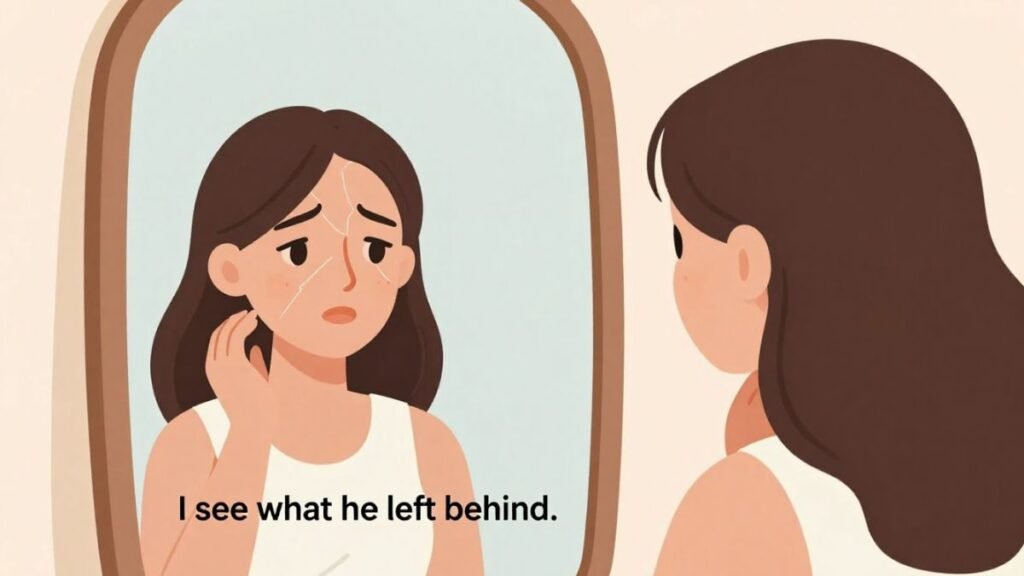
The person he cheated on. The person he lied to. The person who wasn’t enough to make him stay, be faithful, and treat you right.
You’re trying to love someone he convinced you was unlovable.
I see you reading the self-love content. Doing the affirmations. Trying to believe you’re worthy. But the words feel hollow because deep down, you’re still carrying his verdict about your value.
And I see you wondering: Why is it so hard to love myself after what he did? Will I ever feel valuable again? How do I rebuild self-love after someone destroyed it?
Let me help you understand what really happened and how to heal.
What’s Really Happening: How Being Hurt Damages Self-Love
As a man who’s seen the aftermath of what toxic partners do to women, let me tell you: When someone you love hurts you deeply, it doesn’t just break your heart. It damages your sense of self-worth.
Because the betrayal, the rejection, the hurt—it all sends a message: “You weren’t worth treating better. You weren’t enough to be faithful to. You weren’t valuable enough to keep.”
And even though you logically know his behaviour was about him, emotionally, you internalised it as being about your inadequacy.
Here’s what’s really happening:
His Treatment of You Became Evidence of Your Worth
Think about what his behaviour taught you:
He cheated → Message: “I’m not desirable enough. If I were, he wouldn’t have needed someone else.”
He lied → Message: “I’m not worthy of honesty. I’m not important enough to tell the truth to.”
He abandoned you → Message: “I’m disposable. I’m not special enough to stay for.”
He criticised you constantly → Message: “I’m defective. There’s something fundamentally wrong with me.”
He chose someone else → Message: “She’s better than me. I’m inferior.”
His behaviour became evidence in the case against you. Proof that you’re not lovable, not valuable, not enough.
Even though you know intellectually that his behaviour was about his flaws, emotionally, you absorbed it as proof of yours.
You Lost Trust in Your Own Judgment
Being hurt by someone you loved and trusted doesn’t just hurt your heart—it destroys your confidence in your own judgment.
You think:
- “I trusted him and look what happened”
- “I chose wrong”
- “I didn’t see the red flags”
- “I stayed too long”
- “I believed his lies”
You blame yourself for not protecting yourself better. For not seeing it coming. For choosing him in the first place.
And that self-blame erodes self-love. How can you love yourself when you don’t trust yourself?
The Hurt Activated Old Wounds
For most women, the pain from a toxic relationship isn’t just about that relationship.
It activates old wounds:
- Childhood rejection
- Past abandonments
- Previous betrayals
- Core beliefs that you’re not enough
The current hurt layers on top of old hurt. And suddenly you’re not just healing from this relationship—you’re dealing with a lifetime of accumulated pain about your worth.
The reason self-love is so hard now isn’t just because of what he did. It’s because what he did opened up every wound you’ve ever had about not being enough.
You’re Trying to Love Someone You See as Damaged
Look at how you see yourself now:
Before the hurt: You might have had insecurities, but you still saw yourself as fundamentally okay, lovable, worthy.
After the hurt: You see yourself as damaged goods. Broken. Tainted. Less than. Used. Stupid for trusting. Too much or not enough.
How can you love someone you see as damaged?
Self-love requires seeing yourself as worthy. But the hurt has convinced you that you’re fundamentally flawed. That perception is blocking self-love.
You’re Holding Onto Shame
Being hurt in relationships often comes with shame:
Shame about:
- Staying too long
- Not seeing the signs
- Believing the lies
- “Letting” him treat you that way
- Not being enough to make him change
- Being the person this happened to
Shame is corrosive to self-love. You can’t love what you’re ashamed of.
And as long as you carry shame about what happened, you’ll struggle to love yourself.
You’re Waiting for External Validation to Prove Your Worth
After being hurt, many women unconsciously believe:
“If another man chooses me, loves me, treats me well, then I’ll know I’m worthy. Then I’ll be able to love myself again.”
You’re waiting for external validation to repair the internal damage.
But self-love can’t come from outside. If you need someone else to prove your worth, you haven’t reclaimed your sense of value—you’ve just transferred dependence from him to someone else.
Real self-love has to come from within. And waiting for external proof is keeping you stuck.
You Haven’t Processed the Grief and Rage
To move forward and rebuild self-love, you need to process:
The grief:
- The relationship you thought you had but didn’t
- The man you thought he was but wasn’t
- The time you lost
- The version of yourself before the hurt
- The future you imagined
The rage:
- At him for what he did
- At yourself for not protecting yourself
- At the injustice of being hurt while giving your best
- At the loss and pain
But if you haven’t processed these emotions, they’re stuck inside you, blocking self-love. You can’t love yourself while you’re carrying unprocessed grief and rage.
Why This Makes Self-Love So Hard
You see yourself through his eyes. Instead of seeing yourself clearly, you see the distorted reflection he created—the person who wasn’t enough, wasn’t desirable, wasn’t worth treating well.
You’ve internalised his judgment. His assessment of your worth has become your assessment. You’re judging yourself by his standards instead of your own.
The wound is still raw. You can’t love yourself when you’re in pain. Self-love requires a level of peace and acceptance that’s hard to access when you’re still bleeding.
You don’t feel safe in your own skin. Being hurt creates a sense that you’re not safe—even from yourself. How can you love what doesn’t feel safe?
You’re grieving. Grief occupies emotional space. It’s hard to actively love yourself when you’re in the process of grieving what you lost.
You equate what happened with who you are. You’ve confused what was done to you with what you deserve, what you are. “He hurt me” has become “I am someone worthy of being hurt.”
How to Rebuild Self-Love After Being Hurt
Step 1: Separate His Actions From Your Worth
Write this down and read it daily:
“What he did is about him. Who I am is about me. His inability to love me properly does not define my lovability. His choice to hurt me does not make me less worthy.”
His behaviour is not evidence of your value. It’s evidence about his character, his capacity, his choices.
Step 2: Process the Grief and Rage
You need to feel and release these emotions:
Allow yourself to grieve:
- What you lost
- Who do you think he was
- The time you gave
- The trust that was broken
Allow yourself to rage:
- At what he did
- At the injustice
- At the pain he caused
- At the betrayal
Cry. Scream. Write rage letters you don’t send. Talk to a therapist. Feel it all.
You can’t bypass grief and rage on the way to self-love. They have to be processed and released.
Step 3: Challenge the Internalised Messages
Identify the messages his behaviour sent you about your worth. Then challenge each one:
Message: “I’m not desirable enough.”
Truth: “His cheating is about his inability to be faithful, not about my desirability.”
Message: “I’m not worthy of honesty.”
Truth: “His lying is about his character deficiency, not my worth.”
Message: “I’m disposable.”
Truth: “His inability to value me doesn’t make me less valuable.”
Actively challenge and replace the false messages with truth.
Step 4: Forgive Yourself
You need to forgive yourself for:
- Trusting him
- Not seeing the red flags sooner
- Staying too long
- Any choices you wish you’d made differently
You did the best you could with the information you had. You were operating in good faith while he was operating in bad faith.
You are not to blame for what he did to you.
Step 5: Reclaim Your Narrative
Stop letting his version of events define you:
His narrative: “She wasn’t enough, so I had to cheat/leave/hurt her.”
Your narrative: “I gave my best to someone who wasn’t capable of receiving it well. His inability to treat me properly is about his limitations, not my inadequacy.”
Take control of the story. You’re not the inadequate person he made you feel like. You’re the person who deserved better and didn’t get it.
Step 6: Do the Somatic Work
Hurt lives in the body. Self-love requires healing the body, too.
Practices that help:
- Therapy modalities like EMDR or somatic experiencing
- Yoga or movement practices
- Breathwork
- Anything that helps you reconnect with your body as safe
Heal the body, not just the mind.
Step 7: Build Evidence of Your Worth
Create new evidence that contradicts what he taught you:
Do things that make you feel valuable:
- Pursue your goals
- Spend time with people who appreciate you
- Develop your talents
- Accomplish things that matter to you
- Be of service in ways that feel meaningful
Build a new body of evidence that proves you’re worthy, capable, and valuable.
Step 8: Give It Time
Self-love after being hurt doesn’t happen overnight.
You’re healing from:
- The immediate hurt
- Old wounds that were activated
- False beliefs that were reinforced
- Trust in yourself that was damaged
That’s deep work. Be patient with yourself. Self-love will return, but it takes time.
What You Need to Remember
What He Did Doesn’t Define What You Deserve
Just because he hurt you doesn’t mean you deserved to be hurt.
Just because he couldn’t love you properly doesn’t mean you’re unlovable.
Just because he didn’t value you doesn’t mean you’re not valuable.
His actions are about him. Your worth is about you.
You Are Not Broken
You’re hurt. You’re healing. But you’re not broken.
Broken things can’t heal. You’re healing, which means you’re not broken—you’re wounded.
And wounds heal. You will heal.
Self-Love Is the Destination
Right now, self-love feels impossible. Distant. Out of reach.
But you will get there. With time, work, processing, and healing, you will love yourself again.
Maybe even more deeply than before, because you’ll have chosen to rebuild what was broken.
The Bottom Line
Sis, struggling with self-love after being hurt is one of the most normal, understandable things.
He damaged your sense of worth. His betrayal, his rejection, his hurt—it all sent messages that you internalised as truth about your value.
But those messages are lies. His inability to love you properly doesn’t mean you’re unlovable. It means he was incapable of loving properly.
You can rebuild self-love. But it requires:
- Processing the grief and rage
- Challenging the false messages he left you with
- Forgiving yourself
- Reclaiming your narrative
- Healing your body
- Giving yourself time
You will love yourself again, sis. Not because someone else finally treats you well. But because you do the work to see your own worth clearly again.
Choose yourself. Heal yourself. Love yourself.
FAQ
Q: How long will it take to love myself again after being hurt?
It varies widely—weeks to years depending on the depth of hurt, your support system, whether you do therapy, and how much the old wound was activated. Be patient with your own timeline. Healing isn’t linear.
Q: What if I can’t stop seeing myself through his eyes?
That’s a sign you need professional help—therapy specifically. A therapist can help you separate his distorted view from reality and reclaim your own perspective.
Q: Can I rebuild self-love while in a new relationship?
It’s possible, but harder. New relationships can reinforce self-love or prevent it. If you’re looking to the new person to validate your worth, you’re not building self-love—you’re transferring dependence.
Q: What if he was right and I really wasn’t enough?
Even if you had areas to grow (everyone does), that doesn’t justify hurtful behaviour. If he thought you “weren’t enough,” the correct response is honest communication or leaving—not cheating, lying, or abusing. His treatment of you was wrong regardless.
Q: Should I wait to date until I love myself again?
Ideally, yes. Dating before you’ve healed often leads to repeating patterns or choosing badly. Focus on healing first. But if you date, do so consciously, with therapy support, and with clear awareness of your healing process.