Sis, I need to talk to you about the pain you’re feeling right now.
Many people wonder why heartbreak feels like physical pain after a breakup.
Your heart hurts. And I don’t mean metaphorically—I mean you can physically feel it.

Your chest is tight. Your body aches. You feel nauseous. You can’t eat. You can’t sleep. Your head throbs. Your stomach is in knots. Your entire body is in pain.
And people keep telling you “it’s just a breakup”—like emotional pain shouldn’t feel this physical.
But it does. It feels like you’re dying. Like something in your body is broken. Like the pain is so intense it can’t possibly be “just emotional.”
You’re not being dramatic. You’re not overreacting. The pain you’re feeling is real—your body is genuinely in distress.
I see how confusing this is. How do you wonder if something is medically wrong with you? How the physical pain makes the emotional pain even more overwhelming. How can you not understand why losing someone feels like a physical wound?
And I see you wondering: “Why does heartbreak hurt my body? Why is emotional pain so physical? Am I going crazy, or is this real?”
It’s real, sis. Heartbreak creates actual, measurable physical pain in your body. And understanding why can help you be gentle with yourself as you heal.
Let me help you understand why heartbreak feels like physical pain and how to care for yourself through it.
What’s Really Happening: The Body-Mind Connection in Heartbreak
Let me be direct with you: Heartbreak doesn’t just hurt emotionally—it creates real, measurable physical pain in your body.
This isn’t “all in your head.” It’s in your nervous system, your brain chemistry, your cardiovascular system, your immune system.
Your body is responding to heartbreak the same way it responds to physical injury.
Here’s what’s really going on:
Your Brain Processes Emotional Pain Like Physical Pain
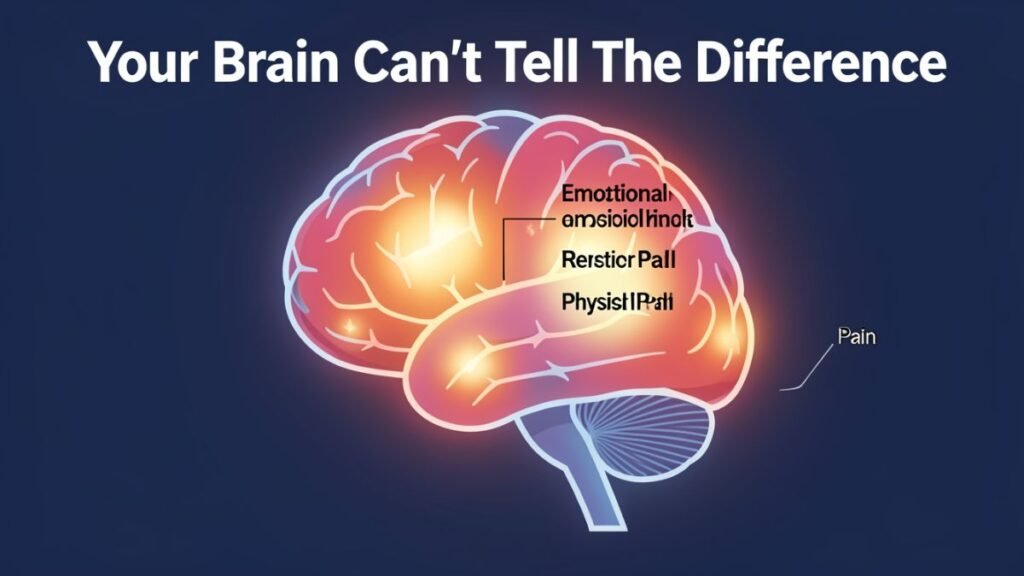
Here’s the science:
Brain imaging studies show:
- Emotional pain (like heartbreak) activates the same brain regions as physical pain
- The anterior cingulate cortex and insula light up for both
- Your brain literally can’t distinguish between physical injury and emotional loss
So when you say “my heart hurts,” your brain is processing that the same way it processes “my arm hurts.”
The pain is neurologically real.
Your brain is experiencing heartbreak as a physical injury—because to your brain, loss IS injury.
You’re Experiencing Withdrawal
Think about what happened:
You were in a relationship where:
- Your brain releases oxytocin (bonding hormone) when together
- You got dopamine hits from the connection
- Your nervous system is regulated with theirs
- Your body was physiologically attached
Then suddenly it’s gone.
You’re in withdrawal:
- From the oxytocin
- From the dopamine
- From the neurochemical cocktail of being loved
Your body is going through the same withdrawal process as coming off a drug:
- Physical pain
- Nausea
- Insomnia
- Loss of appetite
- Anxiety
- Depression
The physical pain you feel is actual chemical withdrawal in your body.
Your Stress Response Is in Overdrive
Heartbreak triggers your body’s stress response:
Your body releases:
- Cortisol (stress hormone)
- Adrenaline
- Other stress chemicals
At crisis levels sustained over days/weeks.
This creates:
- Chest tightness (elevated heart rate, blood pressure)
- Muscle tension and aches
- Headaches
- Digestive issues
- Exhaustion (from chronic stress)
- Weakened immune system
Your body is in fight-or-flight mode constantly, which is physically painful and exhausting.
Broken Heart Syndrome Is Real
Takotsubo cardiomyopathy (broken heart syndrome):
Intense emotional stress can actually:
- Temporarily weaken the heart muscle
- Create symptoms that mimic a heart attack
- Cause chest pain, shortness of breath, irregular heartbeat
In extreme cases, heartbreak can literally affect your heart function.
Most heartbreak doesn’t reach this level—but it shows that emotional pain has real cardiovascular effects.
Your Vagus Nerve Is Involved
The vagus nerve connects your brain to your heart and gut.
During heartbreak:
- Your vagus nerve signals distress
- This creates that “pit in your stomach” feeling
- It affects your heart rate
- It impacts digestion (why you can’t eat)
The physical sensations of heartbreak—nausea, chest tightness, stomach pain—are your vagus nerve responding to emotional distress.
Your Sleep and Appetite Are Disrupted
Heartbreak disrupts:
Sleep:
- Cortisol keeps you awake
- Anxiety prevents deep sleep
- You wake up in distress
Appetite:
- Stress suppresses hunger signals
- Nausea makes eating difficult
- Or stress eating to self-soothe
Sleep deprivation and nutritional disruption create:
- More physical pain
- Exhaustion
- Body aches
- Headaches
The physical effects compound.
Your Immune System Is Compromised
Chronic stress from heartbreak:
- Suppresses immune function
- Makes you more susceptible to illness
- Slows healing
- Increases inflammation
You might get sick more easily after heartbreak—that’s your immune system struggling under the stress.
You’re Experiencing Actual Loss
Your body doesn’t distinguish between:
- Physical loss (like losing a limb)
- Emotional loss (like losing a person)
Both trigger grief responses that are physical:
- Your body is mourning
- Your nervous system is adapting to the absence
- Your physiology is adjusting to life without them
The pain is your body grieving what it lost.
Why Understanding This Matters
You’re not weak or dramatic. The pain is real, measurable, and scientifically documented.
You need physical care, not just emotional processing. Your body is in distress and needs tending.
The physical pain will ease. As your body adjusts to the loss, the physical symptoms decrease.
You can help your body heal. There are things you can do to support your physical recovery.
This validates your experience. You’re not overreacting—your body is having a legitimate physiological response to trauma.
What You Need to Do
Step 1: Acknowledge the Physical Reality
Say this out loud:
“My body is in pain because heartbreak is physically painful. This is real. I’m not being dramatic.”
Validating the physical pain helps you care for yourself appropriately.
Step 2: Treat Your Body Like It’s Injured
Because it is.
Your body is recovering from trauma. Care for it accordingly:
- Rest more than usual
- Be gentle with yourself physically
- Don’t expect normal functioning
- Allow time for physical recovery
You wouldn’t run a marathon with a broken leg. Don’t push your heartbroken body too hard.
Step 3: Address the Stress Response
Help your body calm down:
Try:
- Deep breathing exercises (activate the parasympathetic nervous system)
- Progressive muscle relaxation
- Gentle movement (walking, stretching, yoga)
- Warm baths
- Anything that signals “safe” to your nervous system
You need to help your body shift out of constant fight-or-flight.
Step 4: Support Your Sleep
Even though sleep is hard:
Do what you can:
- Keep a consistent sleep schedule
- Create a calming bedtime routine
- Limit screens before bed
- Consider sleep aids if needed (talk to doctor)
- Accept that sleep will be disrupted for a while
Sleep is when your body heals. Do everything possible to support it.
Step 5: Nourish Your Body
Even when you don’t want to eat:
Try:
- Small, frequent meals if big meals are too much
- Nutrient-dense smoothies (easier to consume)
- Foods that are comforting and easy to digest
- Stay hydrated (grief dehydrates you)
Your body needs fuel to heal—even if you have to force it.
Step 6: Move Your Body Gently
Movement helps:
Try:
- Walking (releases endorphins, reduces cortisol)
- Gentle yoga
- Stretching
- Any movement that feels good
Don’t push hard exercise—but gentle movement helps process stress hormones.
Step 7: Get Medical Support If Needed
If physical symptoms are severe:
- Chest pain that concerns you
- Complete inability to eat/sleep
- Physical symptoms interfering with functioning
See a doctor.
Severe heartbreak can sometimes need medical intervention—and that’s okay.
Step 8: Be Patient With Your Body
Physical recovery from heartbreak takes time—weeks to months.
Just like a physical injury, your body needs time to heal.
Be patient. The physical pain will decrease as your body adjusts.
What You Need to Understand
This Is Your Body Protecting You
The physical pain serves a purpose:
- It forces you to slow down and heal
- It makes you seek support
- It signals that something important was lost
- It’s your body’s way of processing trauma
The pain is protective, not punishment.
The Physical Pain Will Ease Before the Emotional Pain
Typically:
- Acute physical symptoms: days to weeks
- Emotional pain: weeks to months
Your body will adapt physiologically before you’ve fully processed emotionally.
As your neurochemistry rebalances, the physical pain decreases—even while you’re still emotionally grieving.
Everyone’s Body Responds Differently
Some people:
- Feel intense physical pain
- Others feel it less acutely
Both are normal.
Don’t compare your physical response to others’—your body’s response is valid.
Physical Pain Doesn’t Mean You Loved More
Intense physical pain doesn’t mean:
- You loved harder
- The relationship was more important
- You’re grieving “correctly.”
It means your body is responding to loss, but the intensity of physical pain doesn’t correlate with the depth of love.
What You Deserve
You deserve to have your physical pain acknowledged and validated.
You deserve to care for your body as it heals from heartbreak.
You deserve patience with yourself as you recover physically and emotionally.
You deserve to know that the physical pain will ease with time.
Your body is doing what it’s designed to do grieve. Let it. Care for it. Be gentle with it.
The Bottom Line
Sis, heartbreak feels like physical pain because:
- Your brain processes emotional pain like physical pain
- You’re in chemical withdrawal from the relationship
- Your stress response is in overdrive
- Your heart, gut, and nervous system are all responding to loss
- Your body is grieving
The pain is real. It’s not in your head.
Care for your body. Rest. Be patient. The physical pain will ease.
Choose yourself, sis. Your body needs you to be gentle as it heals.
FAQ
Q: How long will the physical pain last?
Acute physical symptoms typically peak in the first few days/weeks and gradually decrease over 1-3 months as your body adjusts. Everyone’s timeline is different.
Q: Should I see a doctor about the chest pain?
If you’re concerned about chest pain, always get it checked. Better safe than sorry. Severe or persistent chest pain should be evaluated.
Q: Why can’t I eat anything?
Stress suppresses appetite and can cause nausea. Try small amounts of easy-to-digest foods. If you can’t eat for several days, see a doctor—you may need support.
Q: Is it normal that I feel physically sick?
Yes. Heartbreak can trigger nausea, headaches, body aches, and other physical symptoms. Your body is in stress response. It’s normal and will pass.
Q: Will the physical pain come back in waves?
Yes, grief comes in waves. You might have periods of physical ease followed by a resurgence of symptoms when grief hits. This is normal healing.