
Sis, let me name the betrayal nobody talks about.
Not the one he committed. Not the one she delivered. Not the external betrayal that cracked your world open and left you standing in the wreckage trying to figure out how something you trusted so completely could have been so wrong.
The betrayal I’m talking about is the one that happened after. The internal one. The one where you looked at the wreckage and said “this is my fault. I should have known. I should have seen it. I should have trusted my instincts instead of his words. I should have left sooner. I should have never stayed.”
And from that moment the moment you turned the betrayal inward you stopped trusting yourself. Not just in relationships. In everything. Your judgment. Your instincts. Your ability to evaluate situations, read people, and make decisions that protect you. The hurt didn’t just damage your trust in others. It damaged your trust in yourself the most critical relationship you have. The one that’s supposed to hold steady when every other relationship falls apart.
And now you move through life second-guessing everything. Every decision gets revisited. Every instinct gets questioned. Every choice gets filtered through the lens of “but I was wrong last time.” The woman who once knew her own mind now polls her friends before making a move. The woman who once trusted her gut now ignores it because her gut was the same gut that told her he was safe. And he wasn’t. So how can she trust anything it says now?
How to be your own best friend starts here. Not with self-care routines or positive affirmations. With the reclamation of a trust that was lost not because you were wrong, but because you were hurt. And the hurt made you blame the one person who should have been protected from blame. You.
What Lost Self-Trust Looks Like After Being Hurt
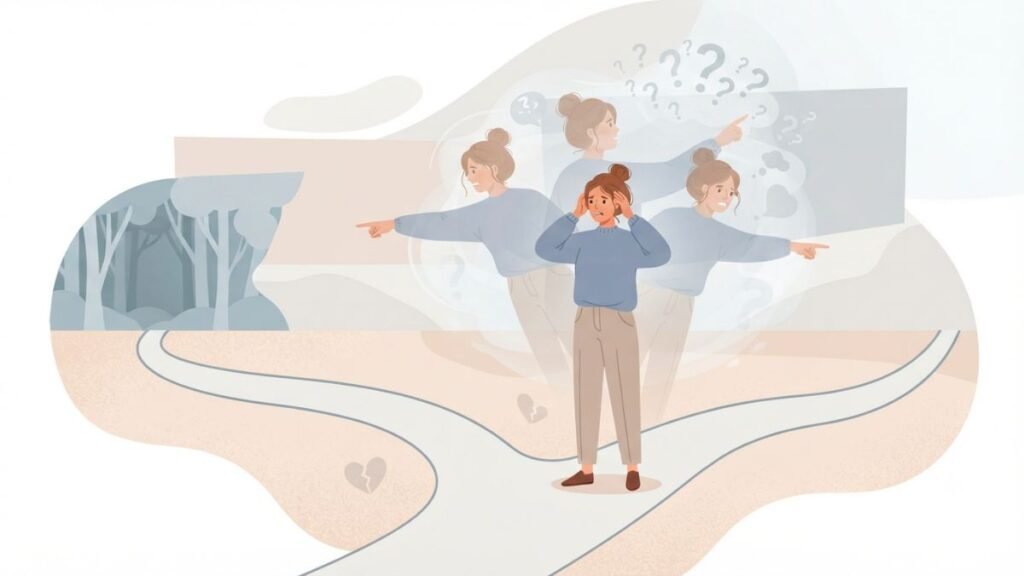
It doesn’t always look like obvious paralysis. Sometimes it looks like a woman who functions perfectly while running every decision through a filter of doubt that nobody else can see.
You second-guess decisions you’ve already made. You made the choice. It’s done. And yet you cycle back — replaying the decision, searching for the flaw, wondering if the alternative would have been better. Not because the decision was bad. Because your system no longer trusts that any decision you make is reliable. How to be your own best friend means recognizing that the second-guessing isn’t quality control. It’s the residue of a wound that said “your judgment failed once, so it can’t be trusted again.”
You outsource your judgment to other people. Before making a decision — even a small one — you check with someone. A friend. A family member. A coworker. Not for their perspective, which would be healthy. For their permission. For the reassurance that someone else agrees with the choice before you commit to it. Because committing to your own choice, without external validation, feels reckless now. How to be your own best friend requires noticing the difference between seeking perspective and seeking permission — and recognizing that the outsourcing is your wound’s way of saying “I don’t trust myself to get this right alone.”
You dismiss your instincts even when they’re screaming. Something feels off. Your gut tightens. Your body sends the signal it’s sent a thousand times — the signal that says “pay attention.” And you override it. Deliberately. Because the last time your gut spoke, you listened — or you didn’t — and either way, you got hurt. So the gut can’t be trusted. The instincts are compromised. The internal compass that’s supposed to guide you has been demoted from authority to suggestion. How to be your own best friend means promoting the compass back to its rightful position — not because it’s infallible, but because it’s yours.
You avoid decisions altogether. If making choices leads to hurt — if the evidence says your decisions produce bad outcomes — then not deciding feels safer. You stay in ambiguity. You defer. You let circumstances choose for you so that when things go wrong, the blame doesn’t land on your judgment. It lands on the circumstance. How to be your own best friend means recognizing avoidance as a strategy your wound deployed to protect you from the vulnerability of choosing — and understanding that not choosing is itself a choice, and usually the most expensive one.
Why Being Hurt Destroyed Your Self-Trust
You blamed yourself for not seeing what was hidden from you. He hid things. She concealed. The truth was deliberately kept from you by someone whose deception was practiced, strategic, and designed to be invisible. And when the truth emerged — when the betrayal was revealed — you didn’t direct your anger at the person who hid it. You directed it at yourself for not finding it. “How did I miss that?” “The signs were there — why didn’t I see them?” The self-blame felt logical because hindsight makes everything look obvious. But hindsight is a liar. It presents information as though it was always available when much of it wasn’t. You didn’t fail to see what was there. You failed to see what was deliberately concealed. And failing to detect deception isn’t a judgment failure. It’s a trust response. You trusted because you loved. Not because your judgment was defective. How to be your own best friend means separating the vulnerability of trust from the failure of judgment — because they’re not the same thing, even though the wound has been treating them as interchangeable.
You interpreted the outcome as evidence about your capacity rather than their character. The relationship ended badly. The friendship collapsed. The situation that you chose to enter — with hope, with investment, with your whole heart — produced pain. And instead of filing the outcome under their behavior — “they were dishonest” or “they were incapable” — you filed it under your judgment. “I chose wrong.” “I trusted wrong.” “My picker is broken.” How to be your own best friend means re-filing that evidence. The outcome wasn’t produced by your decision to trust. It was produced by their decision to betray. Your judgment brought you to someone who presented as trustworthy. Their behavior made that presentation a lie. The filing error was putting the betrayal in your judgment folder when it belongs in their character folder.
The hurt happened more than once, which made the pattern feel personal. One hurt could be an isolated event. Two hurts create a suspicion. Three or more create a verdict — “something about my judgment consistently produces this outcome.” The repetition made the self-doubt feel evidence-based rather than wound-based. How to be your own best friend means examining the evidence differently. Yes, the hurt happened multiple times. But the repetition isn’t about defective judgment. It’s about a wound that attracts familiar dynamics — not because you can’t evaluate people accurately, but because your attachment system gravitates toward the dynamics your early environment normalized. The repetition isn’t a judgment failure. It’s a pattern — and patterns operate at a level deeper than conscious choice.
You lost trust in your ability to distinguish between safe and unsafe. Before the hurt, you had a framework. People fell into categories — trustworthy and untrustworthy, safe and unsafe, honest and dishonest. The framework worked well enough to navigate the world. And then someone you placed firmly in the “safe” category turned out to be unsafe. And the framework collapsed. If you were wrong about him — if you were wrong about her — how can you trust the framework for anyone? How to be your own best friend means rebuilding the framework rather than abandoning it. The framework wasn’t wrong. It was given false data by someone who manipulated the input. A system that receives false data produces false output. That’s not a system failure. That’s sabotage. And sabotage is the saboteur’s fault — not the system’s.
You’ve been punishing yourself for being human. You trusted. You loved. You believed the best about someone because believing the best is what loving people do. And the trust was violated. And now you’re punishing yourself for having trusted at all — as though the alternative, trusting nobody, would have produced a better life rather than a lonelier one. How to be your own best friend means forgiving yourself for the most human thing you’ve ever done — opening your heart to someone who seemed worthy of it. The opening wasn’t the failure. The other person was. And the punishment you’ve been delivering to yourself for years — the second-guessing, the self-doubt, the erosion of your own authority — is a sentence you imposed on yourself for a crime you didn’t commit.
Your nervous system coded “trusting yourself” as the thing that produced the pain. At the level of your nervous system — below consciousness, below rational thought — a simple association was formed. You trusted your judgment → you got hurt. Therefore: trusting your judgment = pain. The association is logical. It’s also wrong. Because the actual chain was: you trusted your judgment → someone betrayed that trust → you got hurt. The variable that produced the pain wasn’t your trust. It was their betrayal. But the nervous system doesn’t distinguish between adjacent events in a chain. It codes the whole sequence as one unit — and the unit says “trusting yourself is dangerous.” How to be your own best friend means breaking the association at the nervous system level — which requires repeated experiences of trusting yourself and having it work. Not just thinking about trusting yourself. Actually doing it. Making a choice. Seeing it succeed. And letting the new data update the association the wound installed.
What Lost Self-Trust Is Doing to You
You’ve become a spectator in your own life. Decisions happen to you rather than through you. You defer. You wait. You let other people choose and then adjust to their choices. The agency that should be driving your life has been sidelined by a wound that says “your choices aren’t reliable — let someone else drive.” How to be your own best friend means taking the wheel back. Not because you’ll never crash. Because a life driven by your own choices — even imperfect ones — is infinitely more alive than a life where you’re permanently riding in the passenger seat.
You’ve abandoned your own instincts. The gut feelings that used to guide you — the intuitions that said “something’s off” or “this person is safe” or “this situation needs attention” — get overridden by the doubt your wound installed. Your instincts are still talking. You’ve just stopped listening. Because listening to them and being wrong felt worse than ignoring them and being passive. How to be your own best friend means rebuilding the relationship with your instincts — the quiet, body-level intelligence that was always trying to protect you and got fired for one failure in an otherwise impressive career.
You’ve stopped entering situations that require your own judgment. Relationships you don’t start because choosing wrong again feels unsurvivable. Opportunities you don’t pursue because your decision-making feels compromised. Risks you don’t take because the last risk produced a wound you’re still carrying. The avoidance isn’t laziness. It’s self-protection — the kind that protects you from pain by protecting you from living. How to be your own best friend means accepting that living requires judgment, judgment carries risk, and risk sometimes produces pain. The alternative isn’t safety. It’s stagnation.
You carry a constant hum of anxiety because no decision ever feels settled. Without self-trust, nothing is ever decided. Choices get made and then revisited. Conclusions get reached and then questioned. Positions get taken and then second-guessed. The anxiety isn’t about any specific decision. It’s about the absence of internal authority — the missing foundation that would allow a decision to feel complete rather than permanently provisional. How to be your own best friend means becoming your own authority again. Not the authority that’s always right. The authority that trusts itself to handle whatever the outcome is — right or wrong.
You’ve created a version of yourself that needs external verification to function. Before the hurt, you made decisions independently. Quickly. With a confidence that came from trusting your own mind. Now you need confirmation. Agreement. A second opinion that tells you your first opinion is safe to act on. The external verification has become a crutch — and the crutch has weakened the muscle it was supposed to support. How to be your own best friend means putting the crutch down. Not all at once. Gradually. Making small decisions without checking with anyone. Trusting the outcome. Building the evidence that your judgment — imperfect, human, fallible — is still yours to wield.
What You Need to Do
Forgive yourself for trusting. Not for trusting the wrong person. For trusting at all. Because the punishment you’ve been inflicting on yourself for years has been for the act of trust itself — as though trust were reckless rather than human. You trusted because loving people trust. You believed the best because generous people believe the best. You opened your heart because open-hearted people do that. None of those things were failures. They were your finest qualities — exploited by someone who didn’t deserve them. How to be your own best friend means forgiving the person who trusted. Because she was never the one who did anything wrong.
Start making small decisions without external input. Where to eat. What to wear. How to spend your Saturday. Small choices. Made by you. Without polling anyone. And then — this is the crucial part — trust the outcome. Even if the restaurant wasn’t great. Even if the outfit wasn’t perfect. Even if the Saturday didn’t go as planned. The outcome doesn’t determine the quality of the decision. The act of deciding does. How to be your own best friend is rebuilt through the accumulation of small choices that prove your decision-making muscle still works.
Rehabilitate your instincts rather than ignoring them. When your gut speaks — when something feels off, when something feels right, when your body sends the signal that says “pay attention” — listen. Not blindly. Curiously. “What are you telling me? What data are you processing that my conscious mind hasn’t caught yet?” Your instincts weren’t wrong about him. Your instincts probably flagged something early that you overrode with hope or rationalization. The instincts weren’t the failure. The override was. How to be your own best friend means reinstating the gut’s authority — and this time, not overriding it when its message is inconvenient.
Separate the betrayal from your judgment. They’re two different events. Your judgment said “this person seems trustworthy.” Their betrayal said “I’m going to violate that trust.” Your judgment was based on the information available. Their betrayal was based on their character. You can evaluate both — but they need to be filed in separate folders. How to be your own best friend means stopping the merger between their character failure and your judgment failure. They failed. You trusted. Those are different things.
Build a track record of successful self-trust. The wound says your judgment is unreliable. The way to counter that narrative is evidence — accumulated through repeated acts of trusting yourself and observing the results. Make a choice. See what happens. Make another. Observe the outcome. Over time, the track record builds — and the evidence begins to outweigh the wound’s single data point of “you were wrong once.” How to be your own best friend is an evidence-based project. The evidence is built through action, not affirmation.
Get professional support. Lost self-trust that traces back to betrayal, that connects to attachment patterns, that’s been running your decision-making for years — that depth requires therapeutic intervention. A therapist can help you separate the betrayal from your judgment, process the grief of lost self-trust, rehabilitate the instincts your wound demoted, and rebuild the internal authority that was always rightfully yours.
What You Need to Understand
Your judgment wasn’t the thing that failed. Someone else’s integrity was. The hurt you experienced wasn’t produced by your decision to trust. It was produced by their decision to betray. And the self-trust you lost in the aftermath was collateral damage — not of your poor judgment, but of their poor character.
How to be your own best friend means understanding that self-trust isn’t about being infallible. It’s about being reliable — to yourself. It’s the commitment to listen to your own mind, honor your own instincts, make your own choices, and handle whatever outcomes those choices produce. Not because the outcomes will always be good. Because the act of trusting yourself — of being your own authority — is the foundation everything else in your life is built on. Without it, every relationship is entered from a position of dependence. Every decision is outsourced. Every choice carries the shadow of a wound that says “you’ll get this wrong.”
You won’t always get it right. Nobody does. But getting it wrong sometimes doesn’t mean your judgment is broken. It means you’re human. And human judgment — imperfect, fallible, occasionally wrong — is still the most valuable instrument you have for navigating your own life. It deserves to be trusted. Not because it’s perfect. Because it’s yours.
What You Deserve
You deserve to trust yourself again. Not the blind trust that existed before the hurt — the wiser, more grounded trust that exists after. The trust that says “I know I can be wrong. I know I can be hurt. And I still choose to listen to my own mind, follow my own instincts, and make my own decisions — because a life guided by my own authority, even imperfect, is better than a life guided by the fear of repeating a mistake someone else made.”
You deserve to be your own best friend. The one who says “I’ve got you” when the world gets uncertain. The one who says “trust yourself” when the doubt arrives. The one who shows up for you the way you show up for everyone else — with unwavering loyalty, with fierce protection, with the deep and abiding belief that the woman she’s standing behind is worth backing.
You were always worth backing, sis. The betrayal didn’t change that. It just made you forget. And how to be your own best friend is really just the process of remembering what the hurt made you forget — that your mind is trustworthy, your instincts are valuable, and the woman who trusted someone who turned out to be unworthy isn’t a woman whose judgment failed. She’s a woman whose heart was bigger than someone else’s integrity.
And that’s never been the wrong way to live.
The Bottom Line
You struggle to trust yourself after being hurt because you blamed your judgment for someone else’s betrayal, because the pain convinced your nervous system that self-trust is dangerous, because the repetition of hurt made the pattern feel personal rather than circumstantial, because you’ve been punishing yourself for being human enough to trust, and because the wound has been demoting your instincts since the moment the hurt confirmed its authority.
How to be your own best friend? Forgive the woman who trusted. Rehabilitate the instincts that were sidelined. Rebuild the track record through small, daily choices. Separate their failure from your judgment. And stop — permanently — punishing the one person who was brave enough to love fully in a world that sometimes rewards that bravery with pain.
The trust you lost wasn’t taken by the person who hurt you. It was surrendered by the person who blamed herself for being hurt. And that person — you — deserves to have it back.
Take it back, sis. It was always yours.
FAQ
Q: How do I trust myself again when I was so wrong about someone?
You weren’t wrong about trusting. You were wrong about who to trust. And those are different skills. Your capacity for trust is intact — it was just applied to someone who exploited it. Rebuilding self-trust isn’t about learning to trust less. It’s about trusting smarter — with the additional information the hurt provided. Your judgment now has data it didn’t have before. That makes it more reliable, not less.
Q: What if my instincts were actually warning me and I ignored them?
That’s important information — and it actually supports rebuilding self-trust rather than abandoning it. If your instincts warned you and you overrode them, the instincts weren’t the failure. The override was. Rebuilding self-trust means reinstating the instincts’ authority and committing to honoring them rather than rationalizing them away when they deliver inconvenient messages.
Q: How long does it take to rebuild self-trust?
There’s no fixed timeline. Self-trust rebuilds through accumulated evidence — small decisions made independently that produce acceptable outcomes. Some women rebuild significant self-trust in months. Others take longer. The pace depends on the depth of the wound, the support available, and the consistency of the practice. What matters isn’t speed. It’s direction. As long as you’re making choices and observing outcomes, the trust is rebuilding.
Q: What if I make another bad choice while trying to rebuild?
You will. That’s part of being human. The goal isn’t error-free judgment. The goal is trusting yourself to handle the error. A bad choice that you recover from becomes evidence of resilience, not evidence of broken judgment. How to be your own best friend means staying on your own side even when the choice doesn’t go well.
Q: Can therapy help with lost self-trust?
Absolutely. Therapy provides a structured environment where the wound can be processed, the self-blame can be separated from the betrayal, the instincts can be rehabilitated, and the internal authority can be rebuilt with professional guidance. Self-trust lost through betrayal often connects to deeper attachment patterns that benefit from therapeutic exploration.