
Sis, let me describe the rhythm you’ve been living in.
He pushes you away. Not always with words. Sometimes with distance. Sometimes with coldness. Sometimes with behavior so dismissive that you finally reach the point where you think “I’m done. I can’t do this anymore.” You start to detach. You begin to accept that this isn’t working. You feel the shift inside yourself — from desperate hope to quiet resignation. You’re ready to walk.
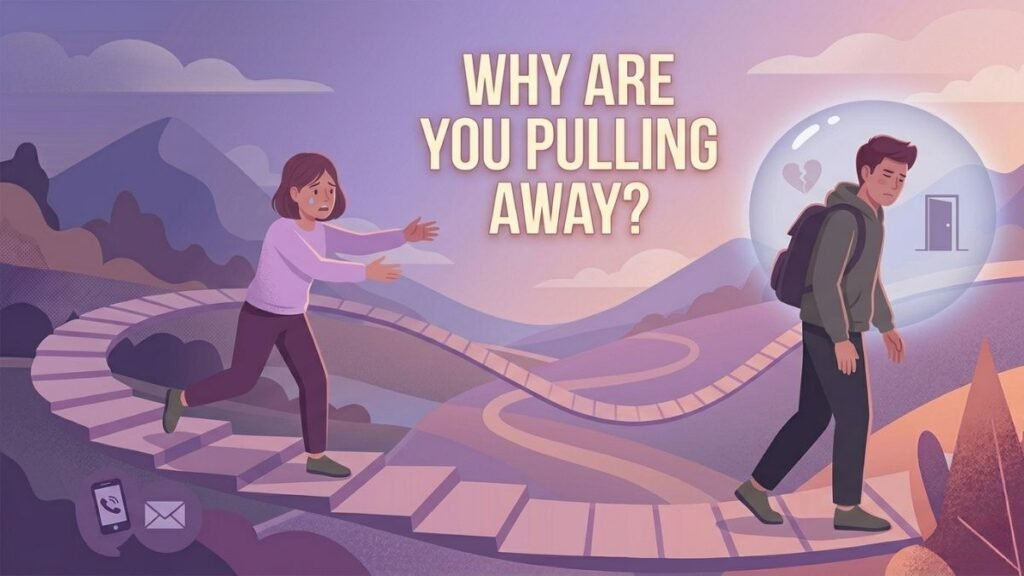
And that’s when he pulls you back.
A text that hits different. A phone call with vulnerability you haven’t heard in months. A gesture so perfectly timed it feels like he read your mind. Words that sound exactly like the ones you’ve been begging to hear. And suddenly the man who was pushing you away is standing in front of you being everything you’ve ever asked him to be.
So you stay. You open back up. You let him in again. You tell yourself “this time is different — he finally gets it.” And for a few days, maybe a week, he’s present. Warm. Showing up like the man you always believed he could be.
Then he pushes again.
Same pattern. Same distance. Same cold. And you’re right back where you started — except this time you’re more exhausted, more confused, and a little more broken than the last round.
That’s a push pull relationship. And the most dangerous thing about it isn’t the pushing or the pulling. It’s that the pulling feels so much like love that you forget the pushing is the pattern. You keep measuring the relationship by its best moments — the returns, the grand gestures, the vulnerability he shows when he’s about to lose you — instead of measuring it by its consistent behavior, which is distance, disconnection, and emotional abandonment that only breaks when you stop tolerating it.
What a Push Pull Relationship Looks Like
The cycle has a rhythm you can predict once you stop hoping long enough to observe it.
The push phase looks like slow abandonment. He doesn’t announce he’s leaving. He fades. Texts get shorter. Presence gets thinner. The warmth dims gradually, like someone turning down a light so slowly you don’t notice the room getting dark until you’re sitting in it wondering when you lost the ability to see. He becomes emotionally unavailable in a way that feels intentional but just deniable enough that confronting it seems like overreacting.
The breaking point is always yours, not his. He doesn’t end things during the push phase. He just pushes until you reach the edge. Until you say “I can’t do this.” Until your pain exceeds your hope and you start the terrifying process of actually letting go. He brings you to the edge — but never jumps. He makes you jump. And then catches you mid-air.
The pull phase feels like a miracle. Everything you’ve been asking for appears overnight. The communication. The vulnerability. The effort. The emotional presence that’s been missing for weeks or months. It feels like a breakthrough. Like he’s been doing internal work you couldn’t see. Like your near-departure shocked him into becoming who you’ve always known he could be. It feels like proof that he does care, that he can show up, that the man behind the walls is real and worth waiting for.
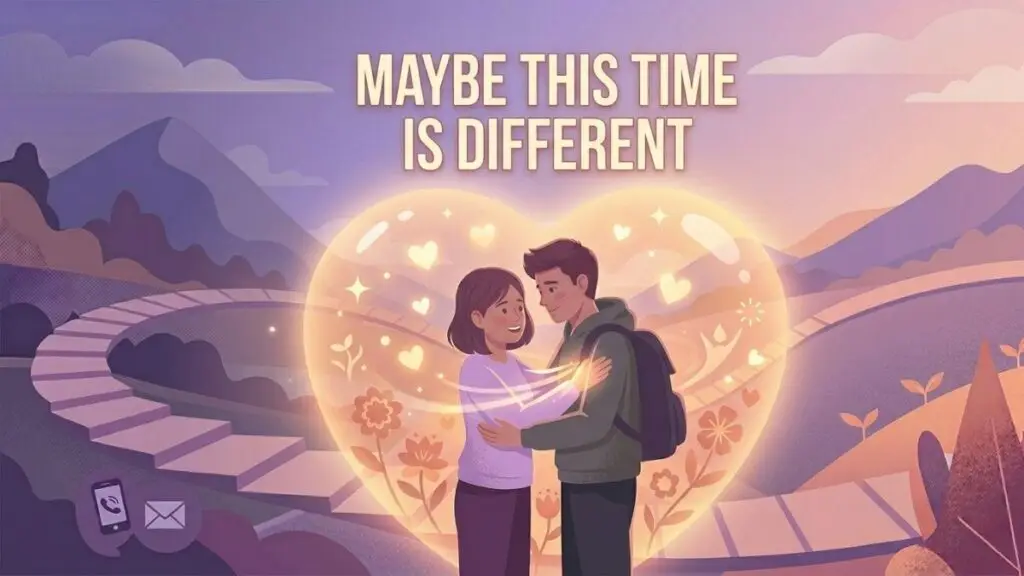
The return to the push phase is inevitable. The pull never lasts. It can’t — because it wasn’t built on genuine change. It was built on the threat of loss. And once that threat passes — once you’re back, once you’ve reinvested, once your departure is no longer imminent — the motivation disappears. The warmth fades. The distance returns. And the cycle begins again with the quiet precision of something that was always going to happen.
Why He Pushes You Away Then Pulls You Back
He needs the space that pushing creates but can’t survive the loss that pushing produces. A push pull relationship is driven by a fundamental contradiction inside him. He needs emotional distance — from intimacy, from vulnerability, from the demands that closeness places on his underdeveloped emotional system. So he pushes. He creates space. He withdraws. But once that space reaches the point where you might actually leave — where the distance becomes permanent — his system panics. Not because he values the closeness he just abandoned. Because he can’t tolerate the loss of it being available. He doesn’t want to be close. He just wants to know he could be if he chose to. And pulling you back restores that option without requiring him to actually exercise it.
The pull is a retrieval system, not a reconciliation. This is the hardest distinction to accept because the pull looks so much like love. He’s showing up. He’s vulnerable. He’s saying everything right. But look at the timing. The pull doesn’t happen during stability. It doesn’t happen during the normal flow of the relationship. It happens precisely when you’re about to leave. That timing is the tell. A push pull relationship produces effort that’s reactive — triggered by the threat of loss, not by genuine desire to connect. He’s not pulling you back because he realized your value. He’s pulling you back because he’s about to lose access to something he’s been taking for granted. The pull isn’t about you. It’s about what you provide.
His attachment system is at war with itself. If he has fearful-avoidant attachment, he’s experiencing two conflicting drives simultaneously — the desire for connection and the terror of it. When closeness gets too intense, the avoidant side activates and pushes. When distance gets too real, the anxious side activates and pulls. A push pull relationship is the external expression of an internal conflict he may not even be fully aware of. He’s not choosing to hurt you. His system is oscillating between two fears — the fear of being engulfed by intimacy and the fear of being abandoned by distance. And you’re caught in the crossfire of a war that has nothing to do with you and everything to do with wounds he hasn’t healed.
He’s addicted to the intensity the cycle produces. A push pull relationship generates enormous emotional intensity. The despair of the push phase. The relief of the pull phase. The hope that follows reunion. The anxiety that precedes the next push. That intensity is neurologically activating in ways that stable love never is. And for some men, that activation is what “love” feels like. They confuse the adrenaline of the cycle with the depth of the connection. He doesn’t pursue calm, consistent love because it doesn’t produce the emotional charge he’s become dependent on. The push pull relationship isn’t dysfunctional to him. It feels alive. The chaos is his comfort zone.
Losing you would mean losing his primary source of emotional regulation. You provide something he can’t generate internally — stability, attention, emotional grounding, the sense of being wanted. When he pushes and you start to leave, he’s not just losing a partner. He’s losing his emotional infrastructure. The pull isn’t motivated by love for you. It’s motivated by dependence on what you provide. He needs you — not as a person he cherishes, but as a function he requires. And a push pull relationship is the mechanism that keeps that function available without requiring him to invest in maintaining it through consistent behavior.
He learned that love is supposed to look like this. If his earliest experience of love was chaotic — a parent who was warm then cold, affectionate then absent, close then distant — he internalized that pattern as what love looks like. The push pull dynamic doesn’t feel dysfunctional to him. It feels normal. Familiar. Even comfortable in its discomfort. He’s not recreating chaos because he enjoys hurting you. He’s recreating it because it’s the only emotional language he speaks. Love, in his experience, has always come and gone. It’s always hurt. It’s always involved the cycle of reaching and retreating. And he’s running that program with you because nobody ever showed him a different one.
Control lives in the cycle itself. In a push pull relationship, who holds the power? He does. He decides when to push. He decides when to pull. He determines the rhythm. He sets the emotional temperature. And you? You respond. You endure the push. You accept the pull. You adjust your emotional state based on which phase he’s currently running. The cycle isn’t random. It’s a control structure that keeps you permanently off-balance — too hopeful to leave during the pull, too confused to leave during the push, and too exhausted from the oscillation to see clearly at any point in between.
What the Push Pull Cycle Is Doing to You
You’re addicted to the pull and you know it. The moments when he returns — when the walls come down and the warm version shows up — those are the highs you’re living for. Not because the relationship is good. Because the contrast between the push and the pull creates a relief so intense it mimics deep love. You’re not attached to him. You’re attached to the feeling of being chosen after being abandoned. And that feeling — the flood of relief and hope that comes when someone who was leaving decides to stay — is one of the most addictive emotional experiences a human can have. A push pull relationship survives on that addiction.
You can’t tell the difference between love and relief anymore. When he pulls you back and everything feels warm and connected, ask yourself honestly — is this love, or is this the absence of pain? Because love and the removal of pain feel identical when you’ve been hurting long enough. He creates the wound during the push phase and then offers the bandage during the pull phase. And you’re so grateful for the bandage that you forget he’s the one who cut you.
You’ve lost the ability to trust stability. After enough push pull cycles, your nervous system has been rewired. Stability doesn’t feel safe anymore. It feels like the precursor to the next push. Good moments don’t bring peace. They bring anxiety — “how long until this ends?” You can’t relax into love because your body has learned that relaxation is always followed by withdrawal. He hasn’t just damaged the relationship. He’s damaged your capacity to feel safe in any relationship.
Your self-worth fluctuates with the cycle. During the pull, you feel valuable — chosen, wanted, worthy. During the push, you feel disposable — rejected, abandoned, not enough. Your sense of self rises and falls with his proximity. And a woman whose worth is determined by someone else’s oscillation isn’t a woman who knows her worth. She’s a woman who’s been trained to source it from a man who only provides it intermittently.
What You Need to Do
Stop participating in the pull phase. This is the only thing that breaks the cycle. Not the next conversation. Not the next boundary. Not the next explanation of how his behavior makes you feel. The cycle breaks when you stop returning. When the pull happens — when he shows up with warmth and vulnerability and everything you’ve been asking for — don’t immediately open back up. Stay where you are. Watch. Wait. See whether the effort sustains without your reinvestment as the reward. If it disappears the moment you’re back, it was retrieval, not reconciliation.
Name the cycle for what it is. “You push me away until I’m ready to leave, then pull me back just enough to stay. That’s not love. That’s a cycle. And I’m not doing another round.” Say it clearly. Say it once. And let your behavior match your words. Naming it takes it out of the fog where it operates most effectively and puts it in the light where it becomes undeniable — even to him.
Stop measuring the relationship by pull-phase behavior. The pull version of him — attentive, vulnerable, present — isn’t the baseline. It’s the crisis response. The baseline is the push version — distant, unavailable, emotionally absent. That’s the man you’re actually in a relationship with. The pull version is the man who shows up when the other one is about to lose something he needs. Stop letting the exception define the relationship while the rule destroys it.
Understand that the cycle is the relationship. This isn’t a good relationship with occasional rough patches. The push pull cycle IS the relationship. It’s the whole thing. Every push and every pull. If you removed the cycle, what would be left? Not a stable partnership. An empty space where consistent love should have been but never was.
Get professional support. A therapist who understands attachment dynamics and push pull relationships can help you see the pattern clearly, understand your role in the cycle, break the trauma bond the oscillation has created, and make decisions from clarity instead of the emotional exhaustion the cycle manufactures.
Set a non-negotiable that you honor. Not a boundary you announce to him — a commitment you make to yourself. “I will not go back after the next push. I will not accept the pull as proof of change. I will evaluate his behavior over months of consistency, not days of crisis-driven effort.” And then honor it. The cycle only continues with your participation. You’re the only one who can step off the ride.
What You Need to Understand
A push pull relationship isn’t love with turbulence. It’s a control dynamic with a cycle. And the cycle doesn’t change because the pattern serves his needs perfectly — distance when he needs space, your presence when he needs supply. He has no incentive to change a system that gives him everything.
The pull isn’t love. It’s retrieval. A man who only shows up when you’re leaving isn’t a man who loves you. He’s a man who needs what you provide and will perform whatever version of himself is required to restore access to it. That performance disappears the moment access is restored — because the performance was never about becoming a better man. It was about keeping you.
You can’t love a man out of a push pull pattern. The pattern is structural — rooted in attachment wounds, fear of intimacy, fear of abandonment, and emotional regulation deficits that require professional intervention. Your patience doesn’t heal these wounds. Your love doesn’t rewire these patterns. Only his sustained therapeutic work does. And if he’s not doing that work, the cycle continues — with you inside it, getting more exhausted with every revolution.
What You Deserve
You deserve a man who stays without being chased back. Who shows up without the threat of loss as his motivation. Who doesn’t need to push you to the edge before he finds the effort to pull you close.
You deserve consistency that doesn’t require crisis to activate. Presence that exists during stability, not just during emergencies. Love that builds steadily instead of swinging between extremes.
You deserve to stop riding the roller coaster, sis. To step off. To feel solid ground. To choose a man whose love doesn’t come in waves designed to keep you seasick — but in the steady current that actually takes you somewhere.
The Bottom Line
He pushes you away then pulls you back because a push pull relationship gives him distance when he needs space and your presence when he needs supply, because the pull is retrieval not love, because his attachment system is at war with itself, and because the cycle produces intensity he’s confused with connection.
Stop being pulled back. Stop treating the return as the real him. Stop mistaking relief for love. Stop participating in a cycle that only continues because you keep accepting tickets to a ride that never changes its route.
The cycle is the relationship, sis. And the only way it ends is when you decide you deserve something that doesn’t spin.
FAQ
Q: What if he’s genuinely trying to change during the pull phase?
Genuine change doesn’t appear only during crisis. It shows up during stability. If his effort exclusively materializes when you’re about to leave and dissolves when you stay, that’s not change. That’s crisis management. Watch whether his behavior sustains for months without your departure as the motivator. That’s the only real test.
Q: Is a push pull dynamic always toxic?
Some minor fluctuation in closeness is normal in relationships. The dynamic becomes toxic when it’s extreme, repetitive, and creates a pattern of emotional whiplash that damages your sense of security. If you can predict the cycle — push, reach breaking point, pull, reinvest, push again — it’s not fluctuation. It’s dysfunction.
Q: Can I break the cycle without leaving?
You can attempt to by refusing to participate in the pull — staying emotionally grounded when he returns instead of immediately reinvesting. But if he’s not doing his own therapeutic work to address the attachment wounds driving the cycle, your changed behavior alone won’t transform the dynamic. It takes two people working on the pattern for it to break without someone leaving.
Q: Why do I keep going back despite knowing the pattern?
Because the push pull cycle creates a trauma bond that operates like addiction. The deprivation during the push creates intense craving. The pull delivers the fix. The neurological relief is powerful enough to override your logical understanding of the pattern. You’re not weak for going back. You’re human. But recognizing the addiction is the first step toward breaking it.
Q: What if he says he pushes because he’s scared of getting hurt?
His fear is valid. His response to that fear is not. Being scared of getting hurt doesn’t give someone the right to repeatedly hurt someone else through a cycle of abandonment and retrieval. Fear explains the pattern. It doesn’t excuse the damage. And a man who’s aware that his fear is hurting you and continues the cycle without pursuing help has chosen his comfort over your wellbeing.