Sis, let me say something you already know but haven’t fully accepted yet.
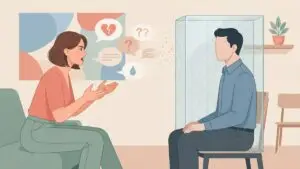
You told him you were hurting. Not in code. Not through hints or body language did he have to interpret. You looked at him and said it plainly — I’m struggling, I need you, please show up for me right now. And he gave you nothing.
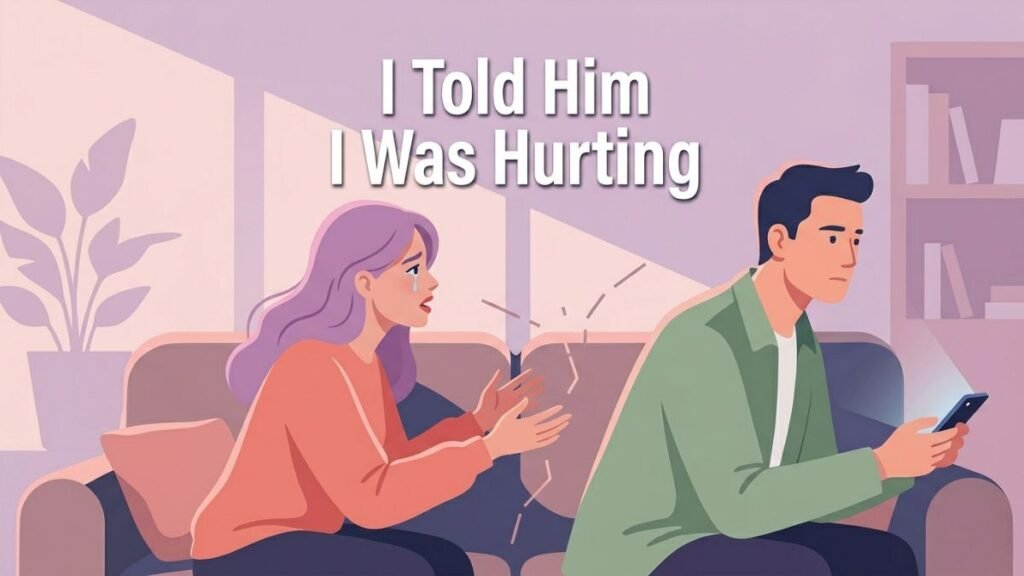
Maybe he changed the subject. Maybe he told you to stop being so emotional. Maybe he picked up his phone mid-sentence like your pain was background noise he could scroll through. Maybe he offered a solution nobody asked for instead of the comfort everyone needs. Or maybe he just stared at you with that blank expression that makes you feel like you’re talking to a wall that somehow has a heartbeat.
Whatever his version of nothing looks like — you got it. Again.
And now you’re sitting with two kinds of pain. The original hurt that made you reach for him. And the second, deeper hurt of reaching for someone who watched you drown and didn’t even get his feet wet. That second pain is worse. Because the first one life gave you. The second one he chose to give you.
A lack of empathy in relationships doesn’t always look like cruelty. Sometimes it looks like a man sitting three feet away from the woman he claims to love while she falls apart — and feeling nothing that moves him to act. No instinct to hold her. No impulse to ask questions. No discomfort watching her suffer. Just stillness where love should be moving.
And if you’ve been living with that stillness — wondering why the man who says he loves you can’t seem to feel anything when you’re in pain — you need to understand what you’re actually dealing with. Because it’s not a bad day. It’s not stress. It’s not “how men are.” It’s a pattern. And that pattern is telling you something you need to hear.
What This Actually Looks Like
A lack of empathy in relationships rarely announces itself on the first date. It reveals itself slowly, through moments that accumulate until the pattern becomes undeniable.
It looks like telling him about something painful — a hard day at work, a falling out with a friend, a family situation that’s weighing on you — and watching his eyes glaze over before you finish the first sentence. Not because he’s distracted. Because he’s uninterested. Your emotional world doesn’t engage him unless it involves him directly. Your pain, when it has nothing to do with his comfort, simply doesn’t register as important.
It looks like crying in front of him and being met with irritation instead of comfort. Like your tears are an inconvenience he has to manage rather than a signal that the woman he loves needs care. It looks like him sighing, checking the time, or asking “are you done?” while your heart is actively breaking.
It looks like the quiet moments after you’ve poured yourself out and he responds with advice you didn’t ask for, criticism you didn’t earn, or silence that communicates louder than words ever could — your pain is not my problem.
Why He Can’t Show Up When You’re Hurting
He lacks the emotional wiring for empathy and no amount of love will install it. Some men don’t feel what other people feel. Not because they’re choosing coldness in the moment, but because the neurological and psychological capacity for emotional empathy simply isn’t there. When you cry, he doesn’t experience a pull to comfort you. When you’re hurting, something that should activate in his chest — that instinct to move toward the person you love when they’re in pain — doesn’t fire. This isn’t something you caused and it’s not something your patience will fix. A lack of empathy in relationships at this fundamental level is about his internal architecture, not your emotional delivery. You could communicate your pain in fifty different ways and the result would be the same — because the issue isn’t how you’re expressing it. It’s that the receiving end is built without the equipment to process it.
Your pain triggers his avoidance, not his compassion. For some men, watching someone they’re close to suffer doesn’t create a desire to help. It creates a desire to escape. Your hurt activates discomfort in him — not empathy-driven discomfort that moves him toward you, but self-protective discomfort that moves him away. He shuts down, changes the subject, minimizes what you’re feeling — not because he thinks your pain is small, but because staying present with it overwhelms a system he’s never developed the capacity to manage. His emotional avoidance looks like coldness. And functionally, it is coldness. But underneath it is a man so ill-equipped to handle emotional intensity that he abandons you in your worst moments to protect himself from the discomfort of witnessing them.
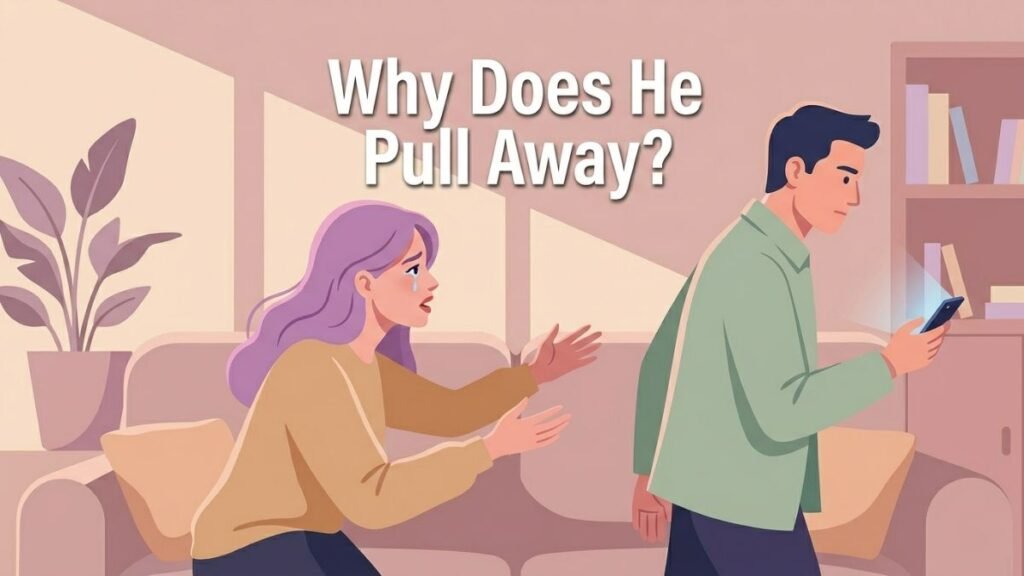
He sees your emotional needs as demands he didn’t sign up for. In his version of the relationship, his job is provision — roof, stability, physical presence. Emotional support? That’s not in his contract. When you come to him hurting and asking for care, he doesn’t hear a woman seeking comfort from her partner. He hears an obligation he resents. Your emotional needs feel like work to him — not the natural exchange of two people who love each other, but labor he didn’t agree to and doesn’t want to perform. And that resentment shows up as absence. He doesn’t meet your pain because he genuinely believes your pain isn’t his responsibility. That’s not a communication gap. That’s narcissistic thinking operating at the most basic level — the belief that your emotional experience is separate from his job as a partner.
He was raised in an environment where emotions were liabilities. If he grew up in a home where crying was mocked, where vulnerability was punished, where the unspoken rule was “handle it yourself and don’t make anyone uncomfortable” — he learned that emotional expression is weakness and emotional response is unnecessary. Nobody modeled empathetic care for him. Nobody showed him what it looks like to hold someone’s pain. So when you present yours, he doesn’t know what to do with it — not because the moment is confusing, but because his entire emotional education is missing the chapter on caring for another person’s feelings. This explains the pattern. But a grown man with access to therapy, books, and the woman he loves telling him exactly what she needs has no excuse for staying emotionally illiterate. Explanation isn’t absolution.
Your pain implies his failure and his ego can’t absorb that. When you say “I’m hurting and I need support,” a healthy man hears an invitation to show up. He hears an accusation. If you’re hurting, especially within the relationship, it means something isn’t right. And if something isn’t right, he might be the reason. That implication — that he could be responsible for or connected to your pain — threatens his self-image. So instead of moving toward you, he dismisses. Minimizes. Deflects. Not because your pain is invalid but because acknowledging it might require him to acknowledge his role in it. A lack of empathy in relationships is often armor protecting a man from the accountability that empathy would require.
He genuinely believes his response is adequate. This is the version that will make you want to scream. Some men truly believe they’re being supportive. In his mind, he’s present — he’s in the room, isn’t he? He hasn’t left, has he? He offered a solution, didn’t he? His bar for emotional support is so catastrophically low that physical presence and unsolicited advice constitute “showing up.” He’s not being deliberately cold. He’s operating from a definition of support that doesn’t include emotional attunement, active listening, or empathetic response. And because he genuinely believes he’s doing enough, telling him otherwise doesn’t land as feedback. It lands as ingratitude. You’re not just fighting his lack of empathy. You’re fighting his entire understanding of what empathy even means.
He’s capable of empathy — just not with you. Watch how he responds when a friend is going through something. Notice his reaction when a coworker shares bad news. Pay attention to whether he shows compassion to strangers, to his mother, to people he respects. If empathy shows up everywhere except in your direction, the issue isn’t capacity. It’s choice. He can feel for others. He’s choosing not to feel for you. And selective empathy isn’t a limitation. It’s a statement about where you rank. A man who can comfort everyone except the woman he comes home to has made a decision about your worth that his words will never admit but his behavior screams every single day.
What His Absence Is Doing to You
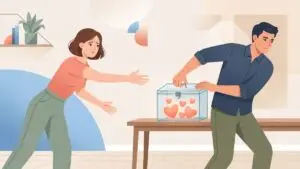
You’re learning to stop reaching. Every time you extended your hand and got nothing, a part of you closed. Not all at once. Slowly. Quietly. Until one day you realize you don’t even try anymore. You handle your pain alone — not because you’re strong enough to, but because reaching for him hurts worse than the pain itself. And a woman who stops reaching for her partner hasn’t healed. She’s given up. There’s a difference.
You’re questioning whether your pain is valid. His non-response has become a mirror you didn’t ask for — one that reflects back the message “this isn’t worth responding to.” And after enough reflections, you start believing it. Maybe you are too emotional. Maybe this isn’t a big deal. Maybe you should be able to handle it alone. His absence has gaslit you into distrusting your own emotional experience. And that erosion of self-trust is one of the most damaging things a lack of empathy in relationships produces.
You’re emotionally starving beside a man who thinks you’re fed. The loneliness of needing support from someone who’s physically present but emotionally gone is a specific kind of hell. You’re not alone in the world. You’re alone in your relationship. And that’s worse — because at least when you’re single, you know to look elsewhere for care. When you’re partnered with an empathy-void, you keep looking at him. Waiting. Hoping. And starving.
What You Need to Do
Stop adjusting your pain to fit his capacity. You’ve been shrinking your needs, softening your hurt, minimizing your experience to make it small enough that maybe he’ll respond. Stop. Your pain is your pain. It doesn’t need to be reduced to qualify for his attention. If he can’t meet you at your actual emotional reality, that’s information about him — not instructions for you to feel less.
Name what you’re experiencing. Say it plainly: “I come to you in pain and you give me nothing. That’s not a relationship I can sustain.” One time. Clearly. Without anger and without apology. Let him sit with it.
Stop going to an empty well. He’s shown you what he offers when you’re hurting. Believe him. Build your support system elsewhere — friends, family, a therapist, community. Not because he shouldn’t be a source of comfort, but because he isn’t one. And you can’t keep dying of thirst while staring at a well that’s been dry every time you’ve checked.
Watch where his empathy does show up. If it shows up with others and disappears with you, stop making excuses for him. That’s not inability. That’s a choice. And that choice tells you exactly what you need to know.
Evaluate the relationship with clear eyes. Can you spend your life with a man who doesn’t move when you’re breaking? Can you raise children watching their mother reach for someone who never reaches back? Can you grow old next to someone whose response to your pain is nothing? Answer honestly. Then honor the answer.
Get professional support. A therapist can help you process the damage his emotional absence has caused and make decisions from clarity instead of the exhaustion his pattern has created.
What You Need to Understand
A lack of empathy in relationships isn’t a phase, a mood, or something he’ll outgrow. Without professional intervention he pursues on his own, it doesn’t change. You can’t love a man into feeling for you. You can’t communicate clearly enough to create a capacity that isn’t there. And you can’t wait long enough for something that isn’t developing.
A man who watches the woman he loves suffer and feels nothing that moves him to act has told you who he is. Not with words — with absence. And absence, when it’s consistent, is the loudest message he’ll ever send.
What You Deserve
You deserve a man who can’t sit still when you’re hurting. Who doesn’t have perfect words but moves toward you anyway. Who feels your pain in his chest because that’s what love does — it connects you to someone else’s experience so deeply that their hurt becomes something you can’t ignore.
You deserve to reach for someone and find them reaching back. Every single time.
That’s not too much to ask, sis. That’s love. And what he’s offering isn’t it.
The Bottom Line
He lacks empathy when you’re hurting because the capacity isn’t there, because your pain triggers his avoidance instead of his compassion, because he sees emotional support as labor he didn’t sign up for, and because his ego can’t absorb the accountability that empathy would require.
Stop reaching for a man who doesn’t reach back. Stop shrinking your pain to fit his comfort. Stop wondering what’s wrong with you when everything is wrong with his response.
You’re not too much. He’s not enough. And that truth will set you free the moment you stop running from it.
FAQ
Q: What if he shows empathy sometimes but not consistently?
Inconsistent empathy is still a problem. If he can show up emotionally when it’s convenient but disappears when you genuinely need him, that’s selective empathy — and it reveals that the capacity exists but the willingness is conditional. Empathy that only appears on his schedule isn’t reliable enough to build a relationship on.
Q: Can a man learn empathy if he wasn’t raised with it?
Empathy can be developed with sustained therapeutic work, genuine self-awareness, and a desire to change. But the desire has to come from him. If he doesn’t see his lack of empathy as a problem, no amount of your patience or communication will create the motivation. He has to want to build what’s missing.
Q: What if he says he cares but just doesn’t know how to show it?
A man who cares but doesn’t know how still tries. He might fumble. He might not have perfect words. But he moves toward you. He asks what you need. He’s visibly affected by your pain even if he can’t fix it. If he says he cares but shows zero effort to learn how to express that care, the words are empty.
Q: Is lack of empathy the same as narcissism?
Not always, but it’s a core feature of narcissistic personality patterns. A lack of empathy in relationships can also stem from avoidant attachment, emotional neglect in childhood, or untreated mental health issues. The label matters less than the impact. Whatever the cause, the damage to you is the same.
Q: How do I stop blaming myself for his lack of empathy?
Remind yourself daily: you didn’t create his emotional limitations. You can’t fix them. And you don’t deserve to suffer because of them. His inability to show up when you’re hurting says everything about him and nothing about your worth.