

You can know the relationship needed to end and still have no idea what to do with yourself now that it has. That doesn’t mean you made the wrong decision. It means being with him had become part of how you understood your life.
You weren’t only loving him. You were making plans around him, keeping time for him, thinking about what the two of you would become. So when you let go, you’re left asking, ‘Okay, but what happens to me now?’
Listen. Not knowing how to find yourself again doesn’t mean there’s nothing left of you. You’ve spent so much time considering him that considering yourself feels unfamiliar. You don’t have to have your whole future worked out before you stop putting your life on hold for his promises.
You’re letting go of the future you kept believing in
Part of what hurts is that you can still see what you wanted this relationship to become. You put real effort into that future. You kept making room for it. Accepting that it isn’t happening can feel like all that effort has nowhere to go.
But wanting a future with him didn’t give you the power to build it for both of you. What he promised and what he kept doing are both part of the truth. You don’t have to throw away the good memories. You do have to stop using them to cover what you were going through.
The future you pictured mattered to you. Of course losing it hurts. That doesn’t mean you owe it the rest of your life too.
So much of your day had become about him
You got used to considering him before making a decision. Whether he would be available. Whether bringing something up would turn into another argument. Whether you should give it a little more time. That takes up a lot of your day, even when you’re not actually together.
Now you have time you don’t know what to do with. You can make a choice and still catch yourself wondering what he would think. That habit doesn’t disappear just because the relationship ended.
Don’t take the unfamiliar feeling as an instruction to go back. A routine can be familiar and still have been wearing you out. You’re allowed to need time to get used to a day that isn’t organized around him.
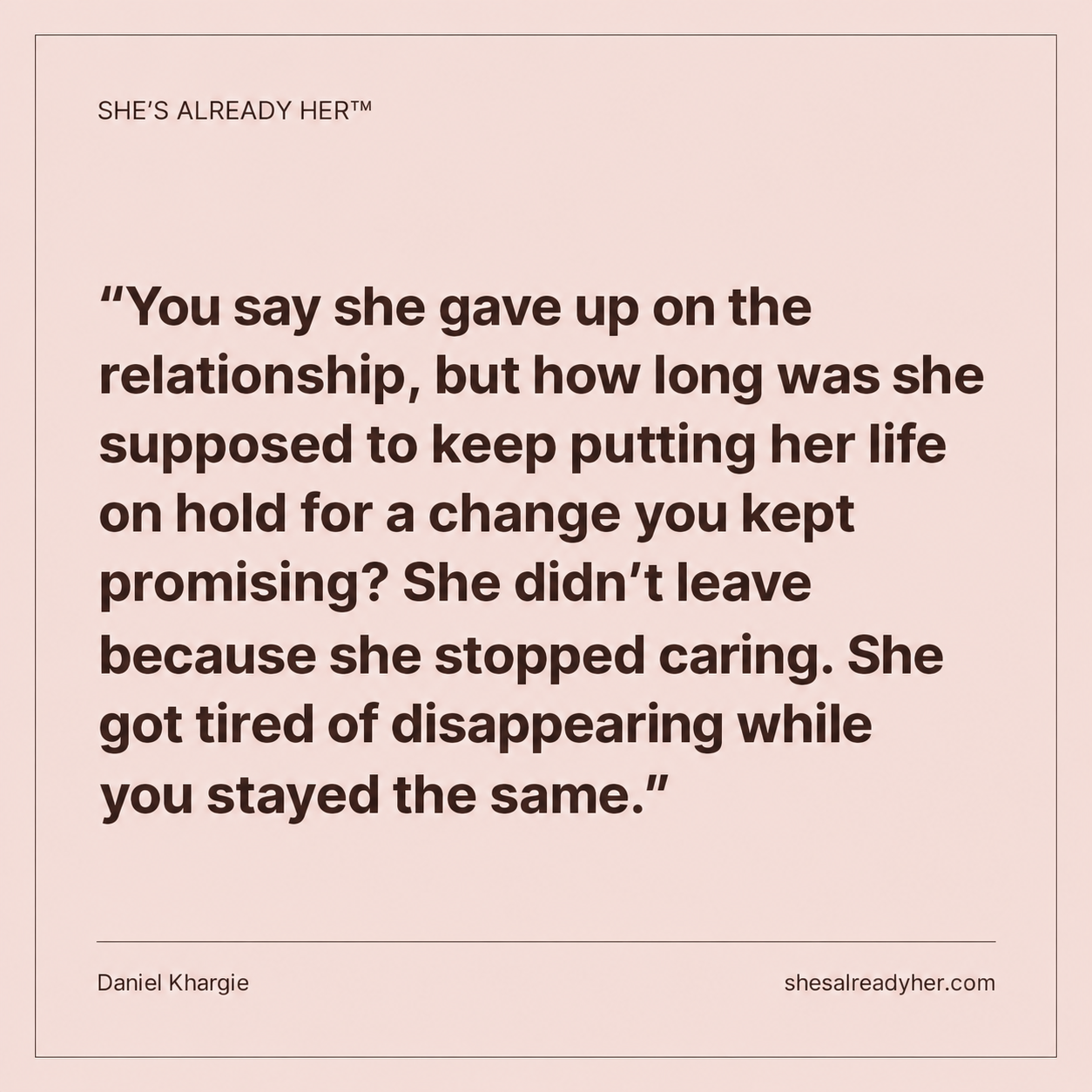
Read this quote as text
You say she gave up on the relationship, but how long was she supposed to keep putting her life on hold for a change you kept promising? She didn’t leave because she stopped caring. She got tired of disappearing while you stayed the same.
What did you keep putting aside?
Start there. What did you keep saying you’d get back to once the relationship was better? What did you stop making time for because dealing with him took so much out of you? You don’t need an impressive answer. Something you enjoyed counts. Something you wanted to learn counts. Rest counts.
And if you can’t think of anything yet, don’t turn that into another reason to be hard on yourself. Start noticing what interests you now. You’re allowed to try something and decide you don’t like it. You’re allowed to change your mind without explaining the decision to him.
Rebuilding your life can start with one thing you’ve been putting off. You don’t need to announce a whole new version of yourself. Give one of your own interests some time and see how it feels.
Missing him doesn’t answer what you need
You might miss having someone to share things with. You might miss the good parts of being with him. You might miss knowing what your future was supposed to look like. None of that is embarrassing.
But missing those things doesn’t tell you whether he was willing to give you a relationship you could feel good in. Ask yourself what you were still asking for when it ended. Had it actually changed, or were you still waiting?
If you keep thinking, ‘Why do I miss him when I know the relationship was hurting me?’, you can take that feeling seriously without letting it make every decision. You can want closeness and still decide you can’t keep accepting what came with being close to him.
Make one part of your day yours again
Don’t make this so big that you feel defeated before you start. Choose one thing you can decide for yourself this week. What you do with some of your free time. An interest you want to return to. A plan you want to follow through on without waiting to see what he wants first.
Learning to be alone doesn’t mean you have to enjoy every minute of it. Some of that time will feel uncomfortable. You can make room for company too. You’re learning that your time belongs to you, whether you spend it by yourself or with someone you trust.
If there are bills, belongings, work, or other responsibilities to sort out, deal with what needs a practical decision. You don’t have to solve every feeling before taking care of yourself. Small decisions still count when the bigger ones feel too much.

Read this quote as text
You want her to miss you enough to come back, but what are you asking her to come back to? She can miss the good moments and still remember how much of herself she kept putting aside while you kept ignoring what she needed.
You don’t have to become who you were before him
You keep asking how to get the old you back. I understand why. You remember a time when you weren’t thinking about this relationship so much. But you’re allowed to have changed. You don’t have to recreate that exact version of yourself to have a life you like.
Ask what you want now. What matters to you now? What do you want more time for? What are you no longer willing to keep making excuses for? You can find out gradually.
Healing after a breakup doesn’t have to look impressive from the outside. Making a decision without checking whether he’d approve is something. Following through on something you wanted is something. You don’t have to feel completely sure of yourself for those choices to matter.
Be honest about what contact is doing to you
You don’t have to decide your whole future with him today. But look at what happens after you speak. Are you dealing with something that needed dealing with, or spending the rest of the day waiting to see whether that conversation means he wants you back?
If every exchange puts your own plans on hold again, that matters. You’re allowed to limit conversations that keep bringing you back to the same uncertainty. If you have responsibilities together, keep the communication focused on what actually needs arranging.
If you’re afraid of how he may react to a change in contact, get support with that decision. You don’t owe him a confrontation to prove you’re moving forward. The point is to make choices that help you look after yourself.
Your life needs room for more than talking about him
You can need someone to listen and also need time when the relationship isn’t the whole conversation. Tell someone you trust what would help. Company. Help with something practical. Time to talk about an interest you’re trying to get back to. You don’t have to discuss him every time to prove that the breakup still hurts.
And when you do enjoy something, let yourself enjoy it. You don’t have to interrupt a good moment to check whether you still miss him. Feeling better for a while doesn’t make the love fake.
You’re allowed to have parts of your day that he has nothing to do with. That can feel strange at first. Keep giving yourself the chance to find out what you like about your life beyond that relationship.
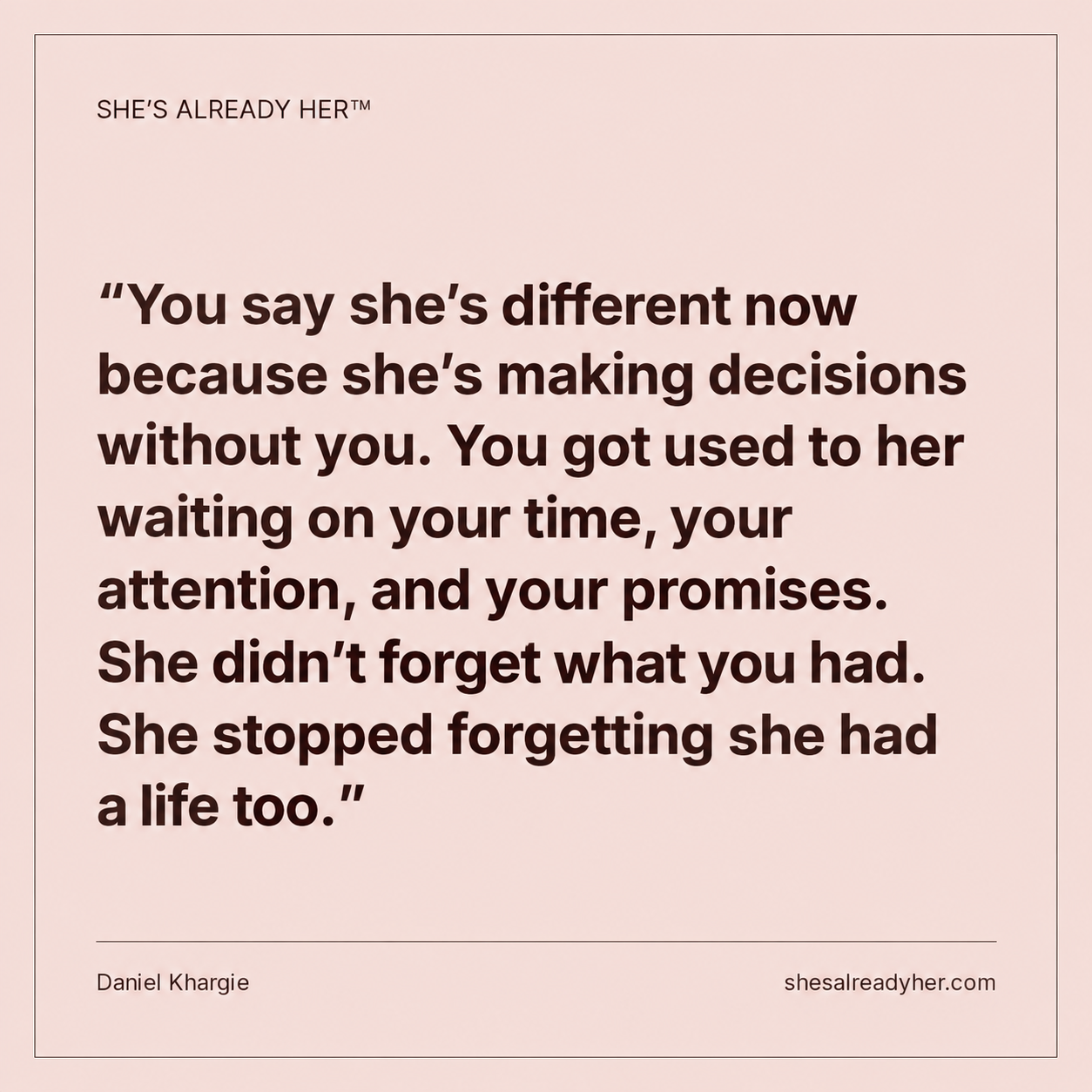
Read this quote as text
You say she’s different now because she’s making decisions without you. You got used to her waiting on your time, your attention, and your promises. She didn’t forget what you had. She stopped forgetting she had a life too.
He doesn’t get to decide whether you’re ready to move forward
If he says you gave up, that doesn’t erase the time you spent trying. If he doesn’t understand why you’re making different choices, you don’t have to put them on hold until he does. You know what it took to keep waiting.
You may still feel guilty about leaving. You may need practice choosing yourself without asking him to agree. That doesn’t make the decision selfish. His opinion can’t be the condition you keep attaching to your own future.
Here’s what I want you to take with you. You don’t have to stop loving him before you start making a life that includes what you need. You can miss him and still follow through on a plan that matters to you. You can feel uncertain and still decide you’ve waited long enough.
You haven’t lost the right to a future because this relationship didn’t become what you wanted. You don’t owe him the rest of your life because you already gave him so much of it.
Questions you may still be asking
How long does it take to heal from a breakup?
There isn’t one timetable that tells you when you should be over it. The relationship, the ending, and the responsibilities you still share can affect what you’re dealing with. Look at changes in your daily life as well as whether you still miss him: making your own plans, getting support, and following through on decisions that matter to you. If you’re struggling to manage daily life, you can ask for professional support without waiting a set amount of time.
How do I rebuild confidence after a breakup?
If you’re looking for how to rebuild confidence after a breakup, start with decisions small enough to follow through on. Choose something because it matters to you, then give yourself the chance to act on it. Notice what you manage instead of measuring every choice against what your ex would think. You can ask someone you trust for support without handing over every decision to them.
How can I be happy after a breakup?
When you’re wondering how to be happy after a breakup, don’t make constant happiness the first requirement. Begin with things that give your days some structure, connection, or enjoyment. You can have a good hour and a difficult evening. Enjoying part of your life doesn’t mean you’ve forgotten the relationship or that you should be finished feeling sad.
How do I enjoy my own company again?
Learning how to enjoy your own company can start with a short amount of time doing something you actually choose. It doesn’t have to be productive or prove that you’re independent. Try an interest, return to something you used to enjoy, and notice what suits you now. Keep room for connection with others too; enjoying time alone doesn’t require cutting yourself off.
Why do I miss my ex when I chose to leave?
You can miss the affection, routine, and future you associated with him even when you had reasons to leave. Missing him describes what you feel; it doesn’t establish that the relationship has changed. Remember what you needed and what was happening when you made the decision. There’s more on missing an ex after an unhealthy relationship if that’s the part you’re stuck on.