
Sis, I need to talk to you about what happens when you’re vulnerable.
This is why he goes cold when you express emotional needs in a relationship.
You express an emotional need. Something legitimate. Something you need to feel secure, loved, or supported in the relationship.
“I need more communication when we’re apart.” “I need reassurance when I’m feeling insecure.” “I need you to be more present when we’re together.” “I need to feel prioritized sometimes.”
And he goes cold.
This is why he goes cold when you express emotional needs.
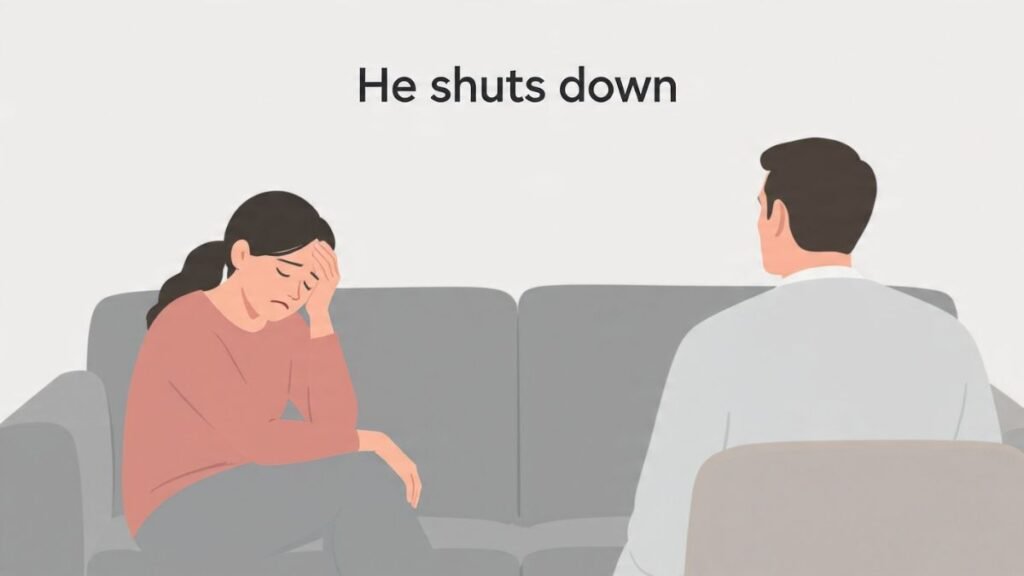
Not just unresponsive cold. Distant. Withdrawn. Shut down. Like you just asked for something completely unreasonable.
He might: Signs He Withdraws When You Show Vulnerability
- Give you the silent treatment
- Become emotionally unavailable
- Pull away physically
- Act annoyed or irritated
- Make you feel like you’re being too needy
- This is similar to being called overthinking.
- Punish you with coldness until you take it back
Your vulnerability is met with ice.
Many women experience this when a partner goes cold after emotional vulnerability.
And you learn quickly: Expressing emotional needs leads to withdrawal. Having needs leads to coldness. Being vulnerable leads to punishment.
So you stop expressing needs. You suppress what you need. You become smaller, quieter, less demanding—because the cost of having needs is his coldness, and that’s too painful to endure.
I see how this is destroying you. How you’re learning to hide your needs to avoid his withdrawal. How you’re becoming a version of yourself with no needs at all. How you’re starting to believe maybe you ARE too needy, too emotional, too much.
And I see you wondering: “Why does expressing needs make him go cold? Am I being too demanding? Is it wrong to have emotional needs? Should I just be more independent?”
You’re not too needy, sis. Having emotional needs in a relationship is normal and healthy. His coldness when you express them isn’t a natural response—it’s punishment designed to make you stop having needs. And you deserve someone who welcomes your vulnerability, not someone who punishes it with ice.
Let me help you understand why he goes cold when you express emotional needs in relationships and what you need to do about it.
Why He Goes Cold When You Express Emotional Needs
What’s Really Happening: The Coldness-as-Punishment Pattern
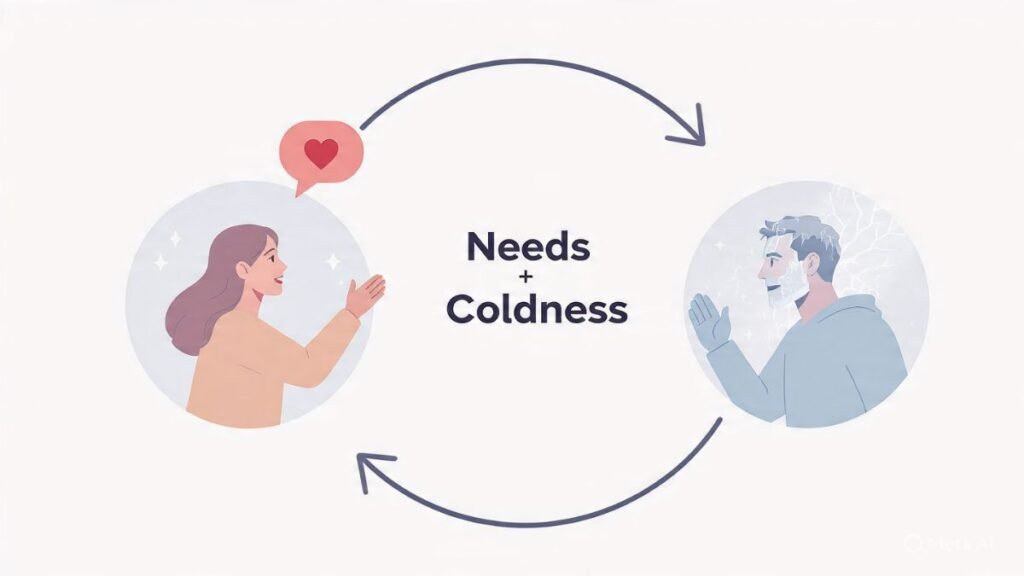
Let me be direct with you: In healthy relationships, expressing needs is welcomed. Partners respond to vulnerability with warmth, not coldness. Emotional needs are met with care, not punishment.
Emotional Abuse and Emotional Unavailability Signs
Your partner does the opposite. And that’s emotionally abusive.
Here’s what’s really going on:
He’s Punishing You for Having Needs
Think about what his coldness accomplishes:
You express need → He goes cold → You experience his withdrawal → You feel rejected → You stop expressing needs
This is conditioning through punishment:
- Express need = punishment (coldness)
- Suppress need = no punishment (he stays warm)
- You learn to suppress needs to avoid punishment
He’s training you to not have needs.
He goes cold when you express emotional needs because coldness is punishment designed to make you stop expressing needs—and it’s working.
Your Needs Threaten His Comfort
When you express needs:
You’re asking him to:
- Show up differently
- Give more
- Be more present
- Change his behavior
- Consider you more
That threatens:
- His comfort
- His freedom
- His current low-effort arrangement
So he punishes the threat (your need) with coldness to eliminate it.
He goes cold when you express emotional needs because your needs require effort from him—and coldness is how he shuts down your needs to protect his comfort.
He Can’t Handle Emotional Intimacy
Emotional needs require emotional intimacy:
When you say: “I need reassurance”
You’re asking for: Emotional connection, vulnerability, intimacy
Some people can’t handle that:
- They don’t have emotional capacity
- Intimacy feels threatening
- Vulnerability triggers their fear
- They can’t meet emotional needs
So when you express needs:
- It triggers their incapacity
- They panic
- They shut down
- They go cold to create distance
He goes cold when you express emotional needs because emotional needs require intimacy he’s not capable of—and coldness is how he creates the distance his fear requires.
He Sees Your Needs as Weakness
In his worldview:
Having needs = weakness
Expressing needs = being needy
Emotional vulnerability = something to mock
When you express needs:
- He sees weakness
- He feels contempt
- He responds with coldness
This often stems from:
- How he was raised (emotions were mocked)
- His own suppressed needs (he judges in you what he denies in himself)
- Toxic masculinity (real men don’t have feelings, partners shouldn’t either)
He goes cold when you express emotional needs because he judges emotional vulnerability as weakness—and he responds to perceived weakness with coldness and contempt.
He’s Using Coldness to Control You
Watch what his coldness controls:
It ensures:
- You don’t ask for more
- You don’t expect emotional support
- You accept whatever he gives
- You suppress yourself
- You become easier to manage
Someone without needs is easier to be with—for someone who doesn’t want to give.
He goes cold when you express emotional needs because coldness is a control mechanism that keeps you small, quiet, and undemanding.
He Lacks Emotional Intelligence
Meeting emotional needs requires:
- Understanding emotions
- Empathy
- Emotional vocabulary
- Ability to respond to feelings
He lacks these capacities:
- He doesn’t understand your needs
- He doesn’t know how to respond
- He has no emotional tools
- Feelings overwhelm him
So he defaults to:
- Shutting down
- Going cold
- Withdrawing
He goes cold when you express emotional needs because he doesn’t know what else to do—he has no emotional skills, so coldness is his only response to needs he can’t meet.
Your Needs Expose His Inadequacy
When you express needs he can’t or won’t meet:
It reveals:
- He’s not the partner you need
- He’s inadequate for the relationship
- He’s failing you
He doesn’t want to face that.
So he makes YOU the problem:
- You’re too needy (not: he’s emotionally unavailable)
- You’re too demanding (not: he’s giving too little)
- You’re too emotional (not: he’s emotionally stunted)
The coldness punishes you for exposing his inadequacy.
He goes cold when you express emotional needs because your needs reveal his failure as a partner—and coldness deflects from his inadequacy by making you the problem.
You’re Accepting the Coldness
Here’s the hard truth: You’re staying despite being punished for vulnerability.
Every time you:
- Accept his coldness without leaving
- Suppress your needs to avoid withdrawal
- Apologize for having needs
- Stay despite emotional punishment
You teach him: “Coldness works. I’ll suppress my needs if you punish me with withdrawal. I’ll stay even when you ice me out for being vulnerable.”
The pattern continues because you’re accepting punishment as the price of the relationship.
Sis, if you’re exhausted from being punished for having needs—if you’re tired of his coldness every time you’re vulnerable—you need support.
💜 Your Needs Are Valid
I know how painful it is to express a need and be met with ice. To learn that vulnerability leads to withdrawal. To start suppressing yourself to avoid his coldness. To wonder if you’re too needy for wanting basic emotional support.
You’re not too needy. He’s too cold.
She’s Already Hers Sisterhood is a community where women are learning to stop accepting coldness as punishment for needs, to recognize emotional abuse, and to choose partners who welcome vulnerability instead of punishing it.
Inside the Sisterhood, you’ll find:
💜 Women who’ve been punished for expressing needs with coldness and withdrawal
💜 Tools to recognize emotional abuse—and to respond to coldness with boundaries
💜 An 8-season transformational guide that addresses why you suppress your needs and how to honor them
💜 Support when you need it—validation that your needs are legitimate
You deserve warmth when you’re vulnerable, not ice.
Your first month is just $1. Experience the community, access the resources, and find women who’ve stopped accepting coldness as response to vulnerability. See if it’s aligned with where you are.
Your needs matter, sis. Don’t let his coldness convince you otherwise.
How His Coldness Affects You Emotionally
Why This Pattern Is Destroying You
You’re suppressing your needs. You can’t express what you need, so you’re emotionally starving.
You’re being emotionally abused. Punishing vulnerability with coldness is emotional abuse.
You’re learning you’re too much. His coldness teaches you that having needs is wrong.
You can’t be yourself. You’re becoming a version of yourself with no needs to avoid punishment.
You’re accepting crumbs. A relationship where you can’t express needs is no relationship at all.
You’re living in fear. Fear of his coldness controls what you can say and ask for.
You can’t have real intimacy. Intimacy requires vulnerability—which he punishes.
You’re losing yourself. Suppressing needs to avoid coldness means losing connection to who you are.
What To Do When He Withdraws Emotionally
What You Need to Do
Step 1: Recognize Coldness as Punishment
His coldness isn’t just his personality or communication style—it’s punishment.
Say clearly:
“When I express needs, you respond with coldness. That’s not a communication issue—it’s punishment designed to make me stop having needs. That’s abuse.”
Name it as abuse.
Step 2: Express Needs Anyway
Don’t:
- Suppress your needs to avoid his coldness
- Apologize for having needs
- Make yourself smaller to accommodate him
- Stop being vulnerable to prevent withdrawal
Do:
- Express what you need clearly
- Expect his coldness (but express anyway)
- Refuse to accept coldness as normal
“I need [X]. I’m expressing this even though I know you’ll probably go cold. But I’m done suppressing my needs.”
Step 3: Name the Coldness When It Happens
When he goes cold after you express a need:
“I expressed a need and you’ve gone cold. That’s a punishment response, and it’s not okay. I’m allowed to have needs without being punished with withdrawal.”
Don’t let the coldness go unaddressed.
Step 4: Set a Clear Boundary
“I need a partner who can respond to emotional needs without going cold. If you can’t do that, we can’t continue this relationship.”
Make emotional responsiveness non-negotiable.
Step 5: Don’t Chase During Coldness
When he goes cold:
Don’t:
- Pursue him to warm him back up
- Apologize for having the need
- Take back what you said
- Accommodate his coldness
Do:
- Let him be cold
- Focus on yourself
- Maintain your need as legitimate
- Evaluate if you want someone who punishes vulnerability
Stop rewarding his coldness by chasing.
Step 6: Create Consequences
“If you respond to my needs with coldness again, I will [consequence].”
Examples:
- “I will create distance myself.”
- “I will seriously reconsider this relationship.”
- “I will leave.”
Then follow through.
Step 7: Evaluate If He Can Change
Ask yourself:
Can he:
- Acknowledge the pattern?
- Take responsibility for using coldness as punishment?
- Commit to therapy to develop emotional capacity?
- Actually change (not just promise to)?
If he can’t do all of these—he won’t change.
Step 8: Leave If the Coldness Continues
If he:
- Continues responding to needs with coldness
- Won’t acknowledge it’s abuse
- Refuses therapy or help
- Shows no genuine change
Leave.
You can’t have a real relationship with someone who punishes you for vulnerability.
What You Need to Understand
Having Needs Is Not Being Needy
You’re not too needy for:
- Wanting communication
- Needing reassurance
- Asking for presence
- Expressing emotional needs
These are normal, healthy relationship needs.
If he makes you feel needy for having basic needs—he’s gaslighting you.
Coldness Is Emotional Abuse
Using coldness/withdrawal to punish vulnerability is:
- Emotional abuse
- Manipulation
- Control
- Not acceptable
Don’t minimize it as “just his personality” or “how he handles stress.”
It’s abuse.
You Can’t Love Him Into Warmth
You might think:
- If I’m patient, he’ll warm up
- If I express needs better, he won’t go cold
- If I prove I’m not too needy, he’ll respond differently
But:
- Patience doesn’t fix abusive responses
- The problem isn’t how you express needs—it’s his response
- You’re not too needy—he’s too cold
His coldness isn’t about you. It’s about him.
This Rarely Changes Without Intensive Work
People who punish vulnerability with coldness:
- Rarely see it as their problem
- Usually don’t change
- Often get worse over time
Don’t wait years for warmth that likely won’t come.
What You Deserve
You deserve to express needs without punishment.
You deserve warmth in response to vulnerability.
You deserve a partner who welcomes your emotional needs.
You deserve to be yourself without suppressing your needs.
That partner exists. But it’s not someone who goes cold when you’re vulnerable.
The Bottom Line
Sis, he goes cold when you express emotional needs because:
- He’s punishing you to make you stop having needs
- Your needs threaten his comfort
- He can’t handle emotional intimacy
- He sees your needs as weakness
- He’s using coldness to control you
- He lacks emotional intelligence
- Your needs expose his inadequacy
Coldness as response to vulnerability is emotional abuse.
Express needs anyway. Set boundaries. Leave if the coldness continues.
Choose yourself, sis. You deserve warmth, not ice.
FAQ
Q: What if he says he just needs space to process?
Needing space to process is legitimate—but should be communicated, not used as punishment. “I need an hour to think” is different from going cold for days every time you express a need. One is processing, one is punishment.
Q: How do I know if I’m actually being too needy?
Ask trusted friends if your needs seem excessive. If multiple people validate your needs as reasonable and only HE says you’re too needy—you’re not too needy. He’s emotionally unavailable.
Q: Should I change how I express needs?
You can express needs calmly and clearly, but if he goes cold regardless of how you express them—the problem isn’t your delivery. It’s his response to needs period.
Q: What if he had a difficult childhood and can’t help going cold?
Trauma explains but doesn’t excuse. He’s responsible for healing his trauma (therapy) so it doesn’t become your abuse. If he won’t get help, his past trauma becomes your present abuse.
Q: Can someone who goes cold learn to respond warmly?
Only with intensive therapy and genuine commitment to change. Most people who use coldness as punishment don’t change because it effectively controls their partners. Don’t wait years hoping he’s the exception.