
Why does loss change how I see myself? After losing someone, it’s common to feel like a different person, as grief can deeply impact your identity and self-perception.
Sis, I need to talk to you about the stranger you see in the mirror.
You don’t recognize yourself anymore.
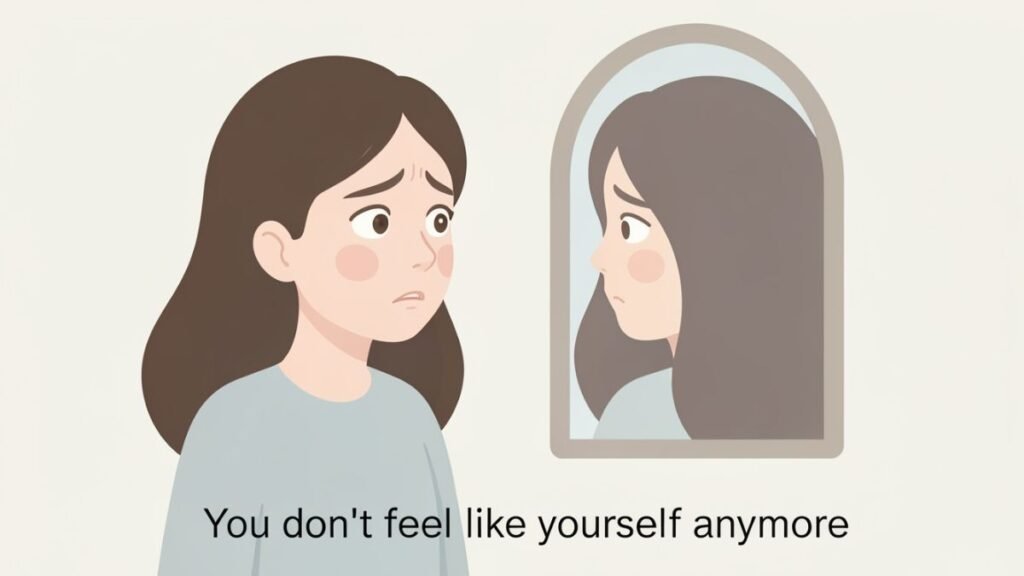
Not just emotionally—but fundamentally. Who you are feels different. The person you were before the loss feels like someone else entirely.
You see yourself differently now:
- Weaker than you thought
- Less lovable than you believed
- More broken than you knew
- Less certain about who you are
- Changed in ways you didn’t choose
Loss didn’t just take them away—it changed how you see yourself.
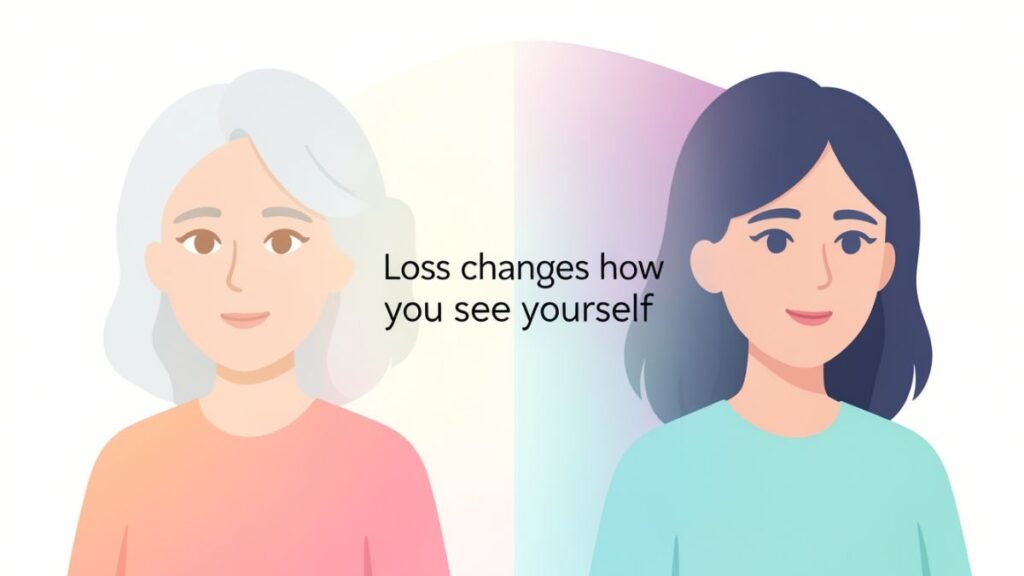
Maybe you thought you were strong, but the grief broke you. Maybe you believed you were worthy of love, but the loss made you doubt. Maybe you knew who you were, but now you’re lost.
Your entire self-perception has shifted—and you don’t know who you are anymore.
I see how disorienting this is. How you’re not just grieving the relationship—you’re grieving the version of yourself who existed before the loss. How are you trying to figure out who you are now, in the aftermath?
And I see you wondering: “Why did losing them change how I see myself? Who am I now? Will I ever recognize myself again?”
Loss is transformative, sis. It doesn’t just change your circumstances—it changes you. And that’s one of the hardest parts of grief: mourning not just who you lost, but who you were before you lost them.
Let me help you understand why loss changes your self-perception and how to rebuild your sense of self.
What’s Really Happening: The Identity Shift of Loss
Let me be honest with you: Major loss fundamentally changes how you see yourself. It’s not just grief—it’s a transformation of identity.
You’re not the same person you were before the loss. And you never will be.
That’s both the pain and the potential of grief.
Here’s what’s really going on:
Your Identity Was Partially Built Around Them
In a relationship, you become:
- Their partner
- Part of a “we”
- Someone is defined partly through connection to them
Your identity included:
- Being loved by them
- Being chosen by them
- Being someone’s person
- The roles you played in the relationship
When they left, that part of your identity died.
You see yourself differently because a foundational piece of who you were is gone.
You’re not just missing them, you’re missing the version of yourself that existed in relationship to them.
Loss Shattered Your Beliefs About Yourself
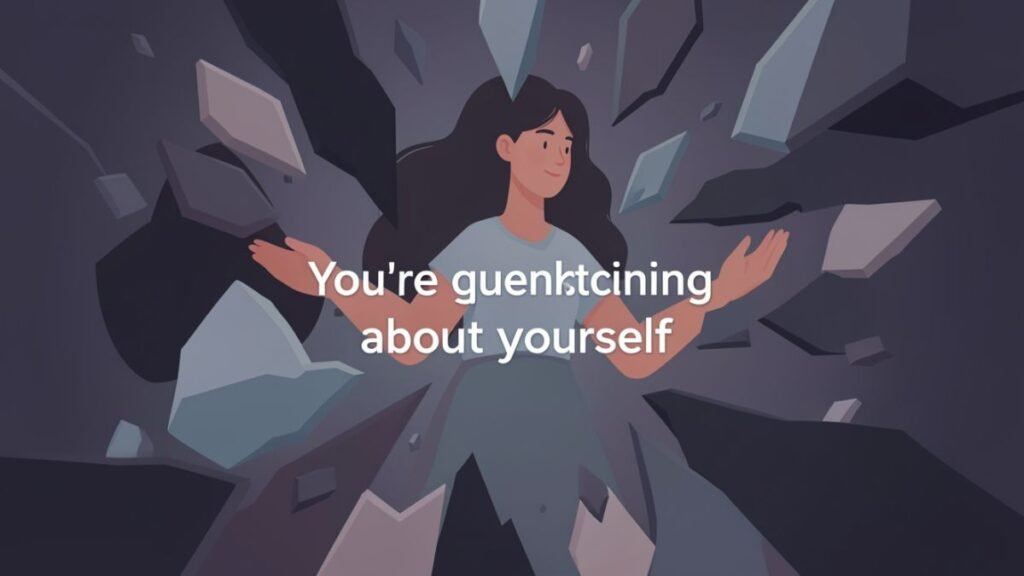
Before the loss, you might have believed:
- I’m strong
- I’m lovable
- I can handle anything
- I know who I am
- I’m worthy of lasting love
The loss challenges these beliefs:
- “If I’m strong, why did this break me?”
- “If I’m lovable, why did they leave?”
- “If I can handle anything, why can’t I handle this?”
- “If I know who I am, why do I feel so lost?”
- “If I’m worthy, why didn’t they stay?”
Loss doesn’t just hurt—it makes you question fundamental truths about yourself.
You see yourself differently because your core beliefs about who you are have been challenged.
You See Your Vulnerability
Before the loss, maybe you didn’t know:
- How much could you hurt
- How deeply you could love
- How broken you could become
- How much did you need them
- How dependent you’d become
The loss revealed:
- Your vulnerability
- Your capacity for pain
- Your need for connection
- Your fragility
You see yourself as more vulnerable, more breakable, more human than you realized.
This can feel like weakness—but it’s actually just the truth about being human.
You’re Grieving Your Pre-Loss Self
You’re mourning:
- The person you were before this happened
- The innocence you had about love
- The confidence you felt
- The version of yourself who didn’t know this pain
You can’t go back to being that person—the loss changed you.
You see yourself differently because you ARE different.
The pre-loss version of you is gone—and you’re grieving that loss too.
Your Narrative About Yourself Changed
Before, your story might have been:
- “I’m someone who finds lasting love”
- “I’m resilient and strong”
- “I know what I want”
- “I’m confident in relationships”
After the loss, the narrative shifts:
- “I’m someone who lost love”
- “I’m broken by grief”
- “I don’t know who I am anymore”
- “I’m afraid to trust again”
You see yourself through the lens of loss now—and that changes your entire self-narrative.
Loss Exposes What You Didn’t Know About Yourself
Through the grief, you’re discovering:
- How you handle pain (and maybe you’re not handling it like you thought you would)
- What you’re capable of surviving (more than you knew)
- What you truly need (which might be different than you thought)
- Who you become in crisis (which might surprise you)
Loss is a forced self-discovery.
You see yourself differently because loss revealed parts of you that were hidden—both your strengths and your struggles.
You’re in the Liminal Space
You’re not who you were (with them) and not yet who you’re becoming (without them).
You’re in the in-between:
- No longer that person
- Not yet this person
- Just… undefined
You see yourself as unclear, undefined, lost—because you’re in transition.
The ambiguity of who you are right now is disorienting.
Shame and Self-Blame Changed Your Self-View
Maybe you’re telling yourself:
- “I wasn’t enough”
- “I did something wrong”
- “There’s something wrong with me”
- “I’m unlovable”
- “I’m the reason they left”
These shame-based narratives reshape how you see yourself:
- From worthy to unworthy
- From enough to not enough
- From lovable to unlovable
Loss often triggers shame—and shame distorts self-perception.
Why This Identity Shift Matters
You’re not just grieving a relationship—you’re grieving yourself. That’s a double loss.
Identity reconstruction is one of the hardest parts of grief. It’s disorienting and painful.
How you see yourself now will shape your future. If you see yourself as broken, you’ll live from brokenness. If you see yourself as transforming, you’ll live from growth.
This is an opportunity for radical self-redefinition. Loss breaks you open—and you get to decide how to rebuild.
What You Need to Do
Step 1: Acknowledge the Identity Loss
Say it out loud:
“I’m not who I was before this loss. That version of me is gone. And I’m grieving both the relationship and the person I was in it.”
Acknowledging the identity shift validates the complexity of your grief.
Step 2: Question the Shame-Based Narratives
When you think: “I’m unlovable because they left”
Challenge it: “Their leaving says nothing about my inherent lovability. People leave for many reasons. This doesn’t define my worth.”
When you think: “I’m weak because I’m broken by grief”
Challenge it: “Grief is the appropriate response to loss. Breaking open is not weakness—it’s being human.”
Don’t let shame-based narratives redefine you.
Step 3: Separate Loss From Identity
Remember:
- You experienced a loss
- You didn’t become a loss
- Loss is something that happened to you, not who you are
You’re not:
- “The person who got left”
- “The broken one”
- “The one who couldn’t make it work”
You’re:
- A person who experienced loss and is grieving
- A person who loved deeply and is healing
- A person in transition
Don’t make loss your identity.
Step 4: Rediscover Who You Are
Use this forced transition to explore:
Ask yourself:
- Who am I without them?
- What do I value?
- What do I want?
- Who do I want to become?
- What parts of myself did I lose in the relationship that I want to reclaim?
This is painful but also an opportunity—to intentionally choose who you become.
Step 5: Reclaim What Was Lost
In relationships, we sometimes:
- Suppress parts of ourselves
- Adapt to accommodate
- Lose hobbies, interests, friendships
Now is the time to reclaim:
- Parts of yourself you suppressed
- Interests you abandoned
- Friendships you neglected
Rebuild yourself by recovering what was lost.
Step 6: Create a New Narrative
Instead of: “I’m the person who got left and fell apart”
Try: “I’m someone who loved deeply, experienced profound loss, and is courageously rebuilding myself”
The story you tell about yourself shapes who you become.
Choose a narrative of growth, not just loss.
Step 7: Be Patient With the Process
Identity reconstruction takes time—months to years.
You won’t know who you are immediately after loss.
Be patient as you:
- Discover yourself
- Try new identities
- Figure out who you’re becoming
It’s okay to not know who you are right now.
Step 8: Consider Therapy
If you’re struggling with:
- Profound identity confusion
- Shame-based self-perception
- Inability to see yourself clearly
Work with a therapist on:
- Identity reconstruction
- Processing the loss
- Rebuilding self-perception
This is deep work that benefits from professional support.
What You Need to Understand
Loss Changes Everyone
You’re not uniquely broken because loss changed you.
Everyone who experiences significant loss is changed by it.
The change is evidence of the depth of your love—not evidence of weakness.
You Get to Choose Who You Become
Loss breaks you open—but you decide how to rebuild:
You can become:
- Bitter or compassionate
- Closed or open
- Smaller or larger
- Fearful or brave
The loss happened TO you. Who you become AFTER is your choice.
The Old You Is Gone—And That’s Okay
You can’t go back to who you were before the loss.
And that’s okay:
- The old you couldn’t handle what you’ve handled
- The old you didn’t know what you now know
- The old you was good, but the new you can be too
Grieve the old you—then become the new you intentionally.
How You See Yourself Now Isn’t Permanent
Right now you see yourself as:
- Broken
- Lost
- Changed (negatively)
But as you heal:
- Broken becomes broken-open
- Lost becomes discovering
- Changed becomes transformed
Your self-perception will continue to evolve.
What You Deserve
You deserve to see yourself with compassion through this transformation.
You deserve to grieve the version of yourself you lost.
You deserve to intentionally create who you become.
You deserve to know that loss changing you doesn’t mean you’re broken—it means you’re human.
Loss transforms everyone. You get to decide if the transformation breaks you or makes you.
The Bottom Line
Sis, loss changed how you see yourself because:
- Your identity was partially built around them
- Loss shattered beliefs about yourself
- You see your vulnerability clearly now
- You’re grieving your pre-loss self
- Your self-narrative changed
- You’re in the liminal space between identities
You’re not who you were—and that’s both the pain and the potential.
Grieve the old you. Choose who you become. Rebuild intentionally.
Choose yourself, sis. Loss changed you—now you get to decide who you become.
FAQ
Q: Will I ever feel like myself again?
You’ll feel whole again—but as a different version of yourself. The pre-loss you is gone. The post-loss you can be strong, whole, and happy—just different.
Q: Is it normal to not recognize myself?
Completely normal. Major loss creates identity disruption. You’re in transition. The unfamiliarity is temporary.
Q: How do I rebuild my sense of self?
Slowly. Through self-discovery, trying new things, reclaiming old interests, challenging negative beliefs, and intentionally choosing who you want to become.
Q: What if I don’t like who I’ve become?
You’re in process. Who you are right now in the middle of grief isn’t who you’ll be after healing. Be patient. You can still shape who you become.
Q: How long until I know who I am again?
Identity reconstruction typically takes 1-3 years after major loss. But you’ll start feeling clearer in months. The timeline varies. Be patient with the process.