
Sis, I need to talk to you about the anxiety that grips you when you even think about saying no.
Many people secretly ask themselves why they feel anxious saying no, even when they are already overwhelmed and exhausted.
You’re overwhelmed. Your plate is overflowing. You’re exhausted, stretched thin, running on empty. You have nothing left to give.
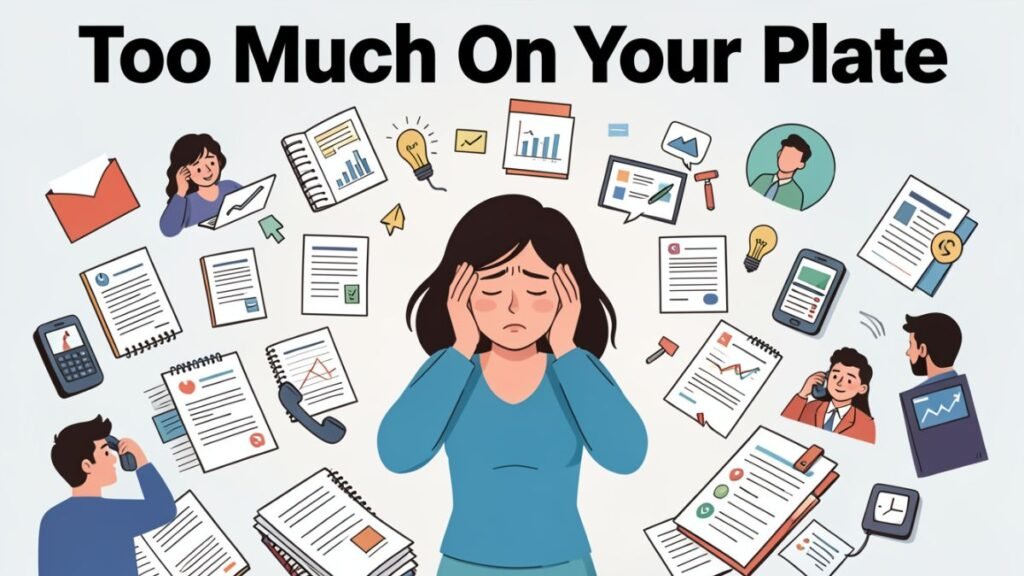
Then someone asks you for something.
And logically, you know you should say no. You NEED to say no. You literally don’t have the capacity to take on one more thing.
But when you try to form the word “no,” anxiety floods your entire body.
Your heart races. Your chest tightens. Your mind spirals with worst-case scenarios. You imagine their disappointment, their anger, their rejection. The anxiety becomes so overwhelming that saying yes feels easier than enduring the anxiety of saying no.
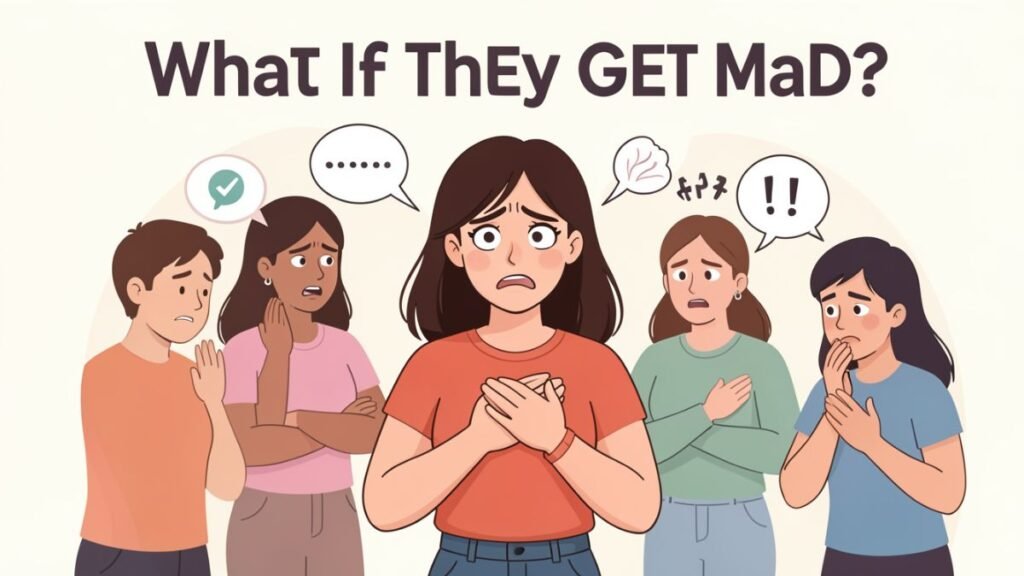
So you say yes. Again. Even though you’re drowning.
And then you’re stuck with one more commitment you don’t have capacity for, feeling resentful and exhausted, while simultaneously relieved that you avoided the anxiety of saying no.
I see this cycle you’re trapped in. How does the anxiety of disappointing others feel worse than the exhaustion of overextending yourself? How would you rather sacrifice yourself than feel the discomfort of saying no?
And I see you wondering: “Why does saying no make me so anxious? Why can’t I just set a boundary? What’s wrong with me?”
Nothing is wrong with you, sis. But you’ve been conditioned to believe that saying no is dangerous and that conditioning is creating anxiety that’s destroying your life.
Let me help you understand why saying no triggers anxiety and how to say it anyway.
Why Do People Feel Anxious Saying No?
What’s Really Happening: The No-Anxiety Cycle
Let me be straight with you about what’s happening: Your anxiety around saying no isn’t random. It’s a conditioned response based on what you’ve learned about the consequences of prioritizing yourself.
Your brain has learned: Saying no = danger
Psychology research shows that people-pleasing behavior is often rooted in fear of rejection and childhood conditioning.
So it triggers anxiety to prevent you from doing the “dangerous” thing.
But the danger isn’t real. The danger is a lie you were taught.
Here’s what’s really going on:
You Were Taught That No Has Consequences.
Think about your history with saying no:
Maybe:
- As a child, saying no led to punishment, anger, or withdrawal of love
- Your no’s were overridden (“You’ll do it anyway”)
- You were called selfish, difficult, or ungrateful for saying no
- People got angry or gave you the silent treatment
- You learned that saying no meant losing love or safety
Your brain cataloged: No = punishment/rejection/loss
Now, as an adult, even the thought of saying no triggers your nervous system’s alarm:
“Danger! This could lead to rejection/anger/abandonment! Do not say no!”
The anxiety is your nervous system trying to protect you from a danger that was real once, but isn’t anymore.
You’re Afraid of Disappointing People
The anxiety you feel is specifically about:
- Letting someone down
- Not meeting their expectations
- Being a disappointment
- Seeing their face fall
- Hearing their frustration
You’d rather overwhelm yourself than disappoint someone else.
Why? Because somewhere you learned:
- Other people’s feelings matter more than yours
- Disappointing others is intolerable
- You’re responsible for other people’s happiness
- Being a disappointment = being unlovable
The anxiety is your brain screaming: “Don’t disappoint them! You’ll lose their love!”
You Fear Conflict
Saying no can create conflict:
- They might get upset
- They might argue with you
- They might try to convince you
- There might be tension
And you’re conflict-avoidant because:
- Conflict feels dangerous
- You weren’t allowed to have conflict growing up
- Conflict = anger = potential abandonment
- You don’t know how to handle conflict healthily
So your anxiety spikes at the possibility of conflict that saying no might create.
It feels safer to say yes and avoid conflict than to say no and potentially face it.
You’re Afraid of Being Seen as Selfish or Mean
When you consider saying no, your brain floods with fears:
“What if they think I’m selfish?”
“What if they think I’m mean?”
“What if they think I don’t care?”
“What if I’m being a bad person?”
You’ve internalized that:
- Good people always help
- Saying no = selfish
- Prioritizing yourself = bad
Anxiety is the fear of being judged as a bad person for having boundaries.
You Fear Rejection or Abandonment
Many people who struggle with saying no also feel they must always put everyone else’s needs before their own.
At the deepest level, the anxiety is about:
“If I say no, will they still love me? Will they leave me?”
You learned (implicitly or explicitly):
- Love is conditional on saying yes
- People only stay if you’re useful/helpful
- Saying no means risking the relationship
So when you think about saying no, your brain triggers abandonment anxiety:
“Say yes, or you’ll be alone!”
The anxiety is trying to protect you from the perceived threat of abandonment.
You Don’t Believe You Have the Right to Say No
Deep down, you don’t believe:
- Your time is your own
- Your energy belongs to you
- You have the right to decline
- Your capacity matters
- You’re allowed to prioritize yourself
So when you try to say no, it feels like you’re doing something you don’t have permission to do.
That creates anxiety because you’re transgressing what you believe are the rules.
You’ve Had Bad Experiences Saying No
Maybe you’ve tried to say no before and:
- People got really angry
- They guilted you until you gave in
- They called you selfish
- They withdrew affection
- The consequences were painful
Those experiences reinforced: Saying no = bad outcome
Now your brain uses anxiety to try to prevent you from saying no again:
“Remember what happened last time? Don’t say no!”
The Anxiety Reinforces the Pattern
Here’s the vicious cycle:
- Someone asks you for something
- You’re overwhelmed and should say no
- Anxiety spikes at the thought of saying no
- You say yes to relieve the anxiety
- Immediate relief (anxiety goes away)
- Later: resentment, exhaustion, overwhelm
- Your brain learns: Saying yes = anxiety relief
The temporary relief from saying yes reinforces the pattern.
You’re being conditioned by your own anxiety to keep saying yes.
Why This Anxiety Is Destroying You
You’re constantly overwhelmed. Because you can’t say no, you’re perpetually overextended and exhausted.
You resent everyone. You’re angry at people for asking (even though asking is normal) because you can’t say no.
You resent yourself. You’re frustrated with yourself for saying yes when you meant no.
You’re living in constant anxiety. Either the anxiety of saying no, or the anxiety of being overwhelmed from saying yes. Either way, you’re anxious.
You attract people who take advantage. People who respect boundaries will accept your no. People who don’t will keep asking because they know your anxiety will make you say yes.
You can’t protect yourself. Without the ability to say no, you can’t set boundaries or protect your time, energy, or well-being.
Your yes means nothing. If you can’t say no, your yes is meaningless—it’s not a choice, it’s compulsion driven by anxiety.
You’re trapped. The anxiety of saying no keeps you imprisoned in a life of overextension and self-abandonment.
What You Need to Do
Step 1: Understand Your Anxiety
Your anxiety isn’t the enemy. It’s trying to protect you.
It learned: No = danger
Recognize: The anxiety is a conditioned response to an outdated threat.
The danger it’s warning you about (punishment, abandonment) isn’t real anymore.
Step 2: Challenge the Catastrophic Thinking
When anxiety spikes, your mind catastrophizes:
“If I say no, they’ll hate me forever, and I’ll be alone.”
Challenge it:
- Is that realistic?
- What’s the actual worst that could happen?
- Have I survived saying no before?
- Are people who love me really that fragile?
Reality check the fear.
Step 3: Start With Low-Stakes No’s
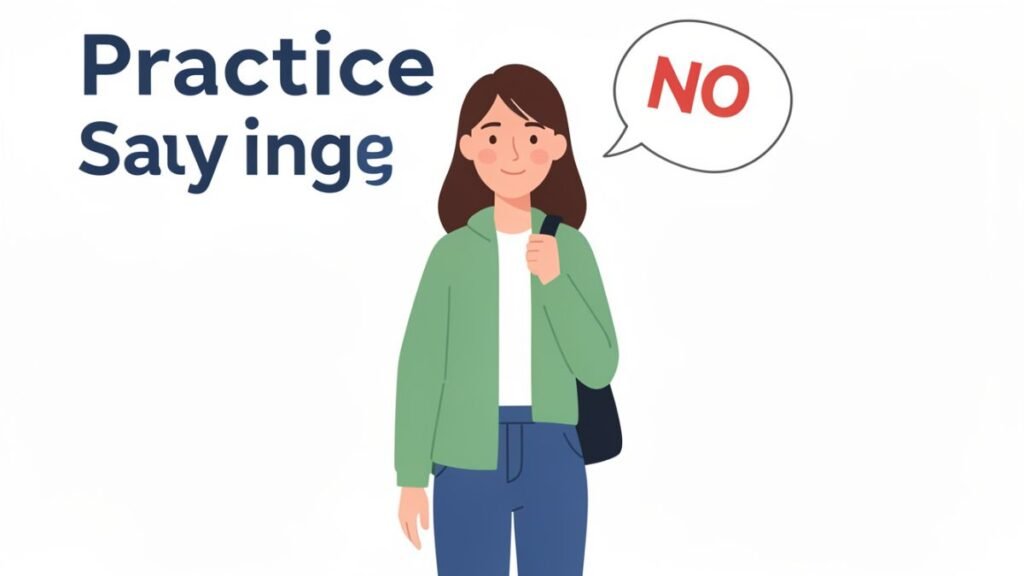
Don’t start by saying no to your boss or best friend.
Practice with lower-stakes situations:
- Decline a telemarketer
- Say no to an optional meeting
- Turn down a minor request from an acquaintance
Build the muscle in situations where the stakes are lower.
Step 4: Feel the Anxiety and Say No Anyway
This is crucial:
The anxiety will come. You’ll feel it. Say no anyway.
You don’t have to wait for the anxiety to go away to say no.
Feel anxious AND say no.
The anxiety is just a feeling. It won’t kill you.
Step 5: Tolerate the Discomfort
After you say no:
You’ll feel:
- Anxious
- Guilty
- Worried they’re mad
- Tempted to take it back
Sit with the discomfort. Don’t fix it by changing your no to yes.
The discomfort will pass. And you’ll learn: I can survive saying no.
Step 6: Notice Nothing Catastrophic Happens
After you say no and the anxiety passes:
Notice:
- The relationship didn’t end
- They didn’t hate you
- Life continued
- You survived
Your brain needs evidence that saying no is safe.
Each time you say no and survive, you’re retraining your nervous system.
Step 7: Have Scripts Ready
Pre-plan responses to reduce anxiety:
- “I can’t commit to that right now.”
- “That doesn’t work for me.”
- “I’m not available.”
- “I need to check my schedule and get back to you.” (Buys time)
Having language ready reduces anxiety in the moment.
Step 8: Get Support
Work with a therapist on:
- Anxiety management
- Boundary-setting
- Understanding the root of your fear of saying no
- Building distress tolerance
This pattern is deep. Professional support helps.
What You Need to Understand
The Anxiety Is Lying to You
Your anxiety says, “If you say no, something terrible will happen.”
The truth: Most of the time, nothing terrible happens. People might be disappointed, but they move on.
Don’t let anxiety make decisions for you.
Saying No Gets Easier
The first no is terrifying. The tenth is easier. The hundredth is natural.
Each time you say no despite anxiety:
- You build tolerance
- You rewire your brain
- The anxiety decreases
It won’t always be this hard.
You’re Allowed to Disappoint People
Other people’s disappointment is:
- Not your responsibility
- Not a sign you did something wrong
- A normal part of life
- Their feeling to manage, not yours to prevent
You’re allowed to say no even if it disappoints someone.
Real Love Survives Boundaries
People who genuinely love you:
- Will accept your no
- Won’t abandon you for having limits
- Will respect your boundaries
- Want you to take care of yourself
If someone leaves because you said no, they weren’t your person.
What You Deserve
You deserve to be able to say no without crippling anxiety.
You deserve to have your no respected.
You deserve to protect your time and energy without fear.
You deserve relationships where your boundaries are welcomed, not punished.
That life is possible. But it requires you to feel the anxiety and say no anyway.
The Bottom Line
Sis, you feel anxious saying no even when you’re overwhelmed because:
- You were taught that no has dangerous consequences
- You fear disappointing people
- You fear rejection and abandonment
- You don’t believe you have the right to say no
- The anxiety has reinforced the people-pleasing pattern
But the anxiety is based on outdated programming, not current reality.
Feel the anxiety. Say no anyway. Notice you survive.
Choose yourself, sis. Your no matters as much as your yes.
FAQ
Q: What if the anxiety is so bad that I physically can’t say the word no?
Start with: “Let me think about it and get back to you.” This buys time to say no via text/email, where anxiety is lower. Work with a therapist on the intense anxiety.
Q: How long will I feel anxious after saying no?
Initially, minutes to hours. But it decreases each time. Eventually, the anxiety becomes brief and manageable.
Q: What if saying no really does have consequences (like at work)?
Assess realistically: Will you actually be fired for declining optional tasks? Usually, consequences are overestimated. But yes, strategic no’s are important in power-imbalanced situations.
Q: Should I explain why I’m saying no?
A brief explanation is fine if you want, but not required. Don’t over-justify or give so much detail that they can problem-solve around your no.
Q: What if I say no and they keep pushing?
“I understand you’re disappointed, but my answer is no.” Repeat as needed. You don’t have to convince them. No is a complete sentence.