
Sis, I see you trying to address problems before they become crises.
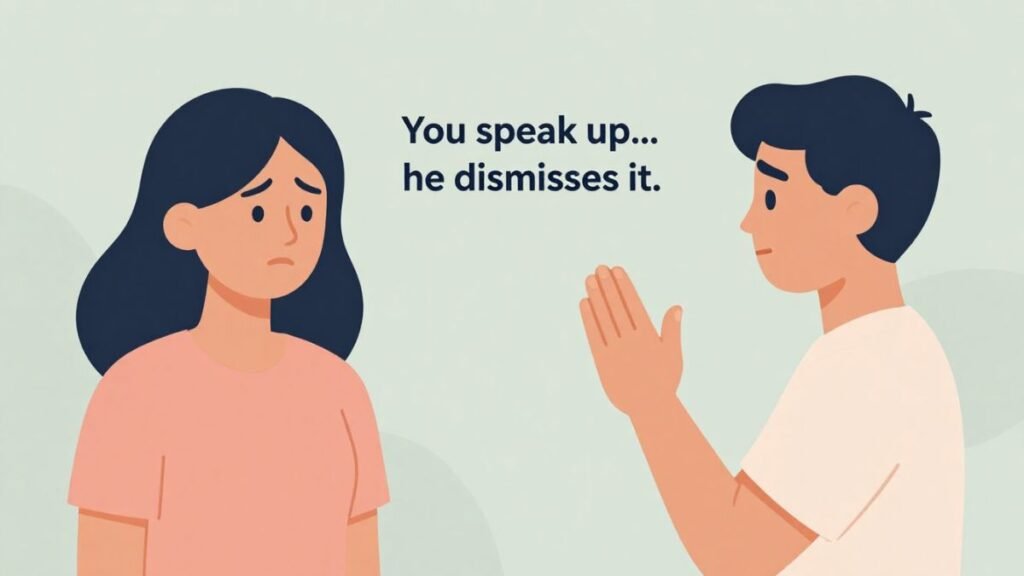
You mention something that’s bothering you. You bring up an issue that needs attention. You point out a pattern that’s hurting the relationship. You try to have conversations about things that need to change.
And he ignores you.
“It’s not that big of a deal.” “You’re overreacting.” “We’re fine.” “Why are you always bringing up problems?”
He dismisses your concerns. He minimizes the issues. He acts like everything is fine when you can clearly see things aren’t fine.
So the problems continue. They get worse. They pile up.
And he still does nothing.
Not until you’re at your absolute breaking point. Not until you’re so hurt, so exhausted, so done that you’re ready to walk away.
That’s when he suddenly cares. That’s when the issue suddenly matters. That’s when he’s willing to talk, to try, to change.
I see you exhausted from having to reach crisis level before he’ll address anything. I see you frustrated that he won’t fix small problems before they become relationship-ending problems. I see you wondering why your pain only matters to him when it’s about to cost him the relationship.
And I see you questioning yourself: Why can’t he just listen when I first bring things up? Do I have to threaten to leave to be heard? Am I creating drama by wanting to address issues early?
No, sis. You’re not creating drama. He’s creating crisis through neglect.
Let me explain what’s really happening, why he waits until you’re broken to care, and why this pattern will destroy you.
What’s Really Happening: The Crisis-Only Response Pattern
As a man who understands healthy relationships, let me be clear: Emotionally intelligent men address problems when they’re small, not when they’ve exploded into relationship-threatening crises.
A secure man hears “This is bothering me” and thinks: “I should address this now before it becomes a bigger issue.”
Your boyfriend hears “This is bothering me” and thinks: “If I ignore this, maybe it will go away. Or maybe she’ll drop it. Either way, I don’t have to deal with it right now.”
And that avoidance continues until you’re so hurt and angry that you’re about to leave. Only then does he panic and finally engage.
Here’s what’s really going on:
He’s Comfortable Until You’re Leaving
Think about his incentive structure:
When you bring up problems early:
- He’s comfortable (you’re still there, still invested)
- Addressing the issue requires effort and change
- Ignoring it requires nothing
- You might drop it if he waits long enough
Why would he address the problem? There’s no consequence for ignoring it. You’re not going anywhere. The relationship is secure (for him).
When you’re at your breaking point:
- He’s uncomfortable (you’re about to leave)
- Ignoring it means losing you
- Addressing it is now less painful than losing you
- He has to act or face real consequences
Now he has motivation to care. Not because the problem suddenly became important, but because ignoring it now has consequences.
His willingness to address issues isn’t based on how much the issue matters—it’s based on how close you are to leaving.
He’s Trained You to Reach Crisis Level to Get His Attention
Pay attention to the pattern you’ve been taught:
You bring up issue calmly → He ignores it
You bring it up again → He dismisses it
You’re upset about it → He minimizes it
You’re at your breaking point → He finally listens
What you learn: The only way to get him to address problems is to reach crisis level. Small concerns don’t matter. Moderate upset doesn’t count. Only when you’re about to leave does he care.
So you’ve learned to escalate to crisis just to be heard. And he’s taught you that you have to.
This creates a toxic dynamic where everything becomes a potential relationship-ending crisis because that’s the only level at which he engages.
Avoidance Is Easier Than Accountability
When you bring up a problem, it usually requires him to:
- Acknowledge he did something wrong
- Take responsibility
- Apologize
- Change his behavior
- Put in effort
All of that is uncomfortable and requires work.
Ignoring the problem requires nothing. It’s easier. It’s more comfortable. And as long as you stay despite him ignoring it, why would he choose the harder path?
He’s choosing comfort over accountability. And he’ll keep choosing it until the cost of comfort (losing you) becomes higher than the cost of accountability (admitting fault and changing).
He Doesn’t Believe Problems Are Real Until They Threaten Him
Emotional avoidance in relationships often appears when one partner refuses to address problems early.
In his mind, if a problem isn’t threatening the relationship, it’s not a real problem.
Your hurt doesn’t register as real. Your concerns don’t register as valid. Your requests for change don’t register as necessary.
Only when the relationship is on the line does he take things seriously. Because only then is the problem affecting him directly.
Your pain alone isn’t enough. The issue itself isn’t enough. Only the potential loss of the relationship is enough to make him care.
He Might Be Doing This Deliberately to Control You
Here’s the manipulative angle: By only addressing problems when you’re about to leave, he keeps you in a perpetual state of “almost leaving but not quite.”
You’re always on the edge. Always threatening. Always about to be done. But never actually leaving because he finally gives you just enough attention when you reach that point.
This keeps you:
- Emotionally exhausted
- Too drained to actually leave
- Hoping “this time” he’ll really change
- Stuck in the relationship
- Under his control
The pattern prevents you from leaving while also preventing the relationship from actually improving.
He’s Conflict-Avoidant to a Toxic Degree
Some people are so terrified of conflict that they’ll avoid addressing problems even when avoidance creates bigger problems.
They’d rather ignore a small fire until it becomes an inferno than deal with the discomfort of putting out the small fire.
When you bring up issues:
- He experiences anxiety and discomfort
- He avoids to make those feelings stop
- The avoidance works (he feels better temporarily)
- The pattern reinforces
He’s choosing short-term emotional comfort over long-term relationship health. And he’ll keep doing it because the avoidance temporarily feels better than facing problems.
Why This Pattern Destroys You
You can’t address problems early. You’re forced to let issues fester and grow until they become crises. You can’t have preventative conversations. You can’t fix small things before they become big things.
You’re always at crisis level. To get him to care, you have to be at your breaking point. So you’re constantly in a state of emotional crisis, always on the edge of leaving, always in pain-level-10 just to be heard.
You exhaust yourself. Reaching breaking point over and over is emotionally devastating. You’re drained from having to get to crisis just to address normal relationship maintenance.
You lose trust that he cares. If he only cares when you’re leaving, does he actually care about you? Or does he just care about not losing access to you? You start to believe the latter.
Small problems become relationship-enders. Issues that could have been easily fixed when small become massive, relationship-threatening problems because he refused to address them until they exploded.
You feel unheard and invisible. Your pain doesn’t matter until it threatens him. Your concerns aren’t valid until they’re relationship-ending. You only exist to him when you’re leaving.
You become someone who threatens to leave. You don’t want to be that person. But it’s the only way to get him to listen. So you become someone who’s always threatening, always at their limit, always about to be done.
You can’t enjoy the relationship. You’re too busy managing problems that should have been addressed months ago. The relationship becomes crisis management instead of partnership.
What His Pattern Really Means
Your Pain Doesn’t Motivate Him—Only His Loss Does
When you’re hurt and bring up a problem, he doesn’t care enough to address it.
When you’re about to leave and he’s losing you, suddenly he cares.
That tells you everything. He’s not motivated by your wellbeing. He’s motivated by his own loss.
He’ll Give You the Minimum Required to Keep You
Notice what happens when you reach crisis and he finally addresses the issue:
Does he actually fix it? Or does he just do the bare minimum to get you to stay, then go back to ignoring problems?
Most likely, he gives you just enough to keep you from leaving. Then the pattern repeats.
This Pattern Will Continue Forever
For this to change, he would need to:
- Value your concerns before they become crises
- Address problems proactively
- Care about your pain independent of whether it threatens him
- Do the uncomfortable work of dealing with issues early
He won’t do any of this. Because the current pattern works for him. He gets to avoid discomfort most of the time, and only has to deal with issues when absolutely necessary.
You’re Teaching Him This Works
Every time you:
- Stay after reaching your breaking point
- Accept his crisis-level engagement as progress
- Don’t follow through on leaving
You teach him: “If I ignore problems long enough, she’ll stay anyway. And when she gets to breaking point, all I have to do is show minimal effort and she’ll stay longer.”
The pattern continues because you keep accepting it.
What You Need to Do
Step 1: Stop Reaching Breaking Point to Be Heard
Bring up the issue once, clearly: “This is a problem that needs to be addressed.”
If he ignores it, don’t keep bringing it up. Don’t escalate to crisis. Don’t reach your breaking point trying to make him care.
Just leave. If he won’t address small problems, he’s shown you he won’t maintain the relationship.
Step 2: Name the Pattern
“I’ve noticed I have to reach my breaking point before you’ll address any problem I bring up. That’s not acceptable. I need you to take my concerns seriously the first time I bring them up, not wait until I’m about to leave.”
Make him see the pattern clearly.
Step 3: Set a Boundary
“The next time I bring up an issue and you dismiss or ignore it, I’m not going to keep bringing it up. I’m not going to reach crisis level to make you care. I’m just going to leave.”
Make it clear: you’re not playing this game anymore.
Step 4: Follow Through
The next time you bring up a problem and he ignores it—leave.
Not threaten to leave. Not reach breaking point. Actually leave.
Show him you meant what you said.
Step 5: Stop Accepting Crisis-Level Engagement as Victory
When you finally reach breaking point and he suddenly wants to address the issue—don’t celebrate that as progress.
“You’re only willing to address this now because I’m leaving. That’s not good enough. I needed you to care when I first brought this up months ago.”
Don’t reward him for only caring when he’s losing you.
Step 6: Recognize You Can’t Fix This
His pattern of ignoring problems until crisis is deeply ingrained. You cannot love him into caring about your concerns before they threaten him.
This is who he is. Accept it and act accordingly.
What You Deserve
You deserve someone who addresses problems when they’re small.
Someone who cares about your pain before it becomes a crisis.
Someone who values your concerns the first time you express them.
Someone who maintains the relationship proactively, not just when threatened with loss.
That person exists. But it’s not him.
The Bottom Line
Emotional avoidance in relationships can slowly damage trust, communication, and emotional safety.
Sis, a man who ignores problems until you reach your breaking point is showing you:
- Your pain doesn’t matter to him unless it threatens him
- He’s more committed to comfort than to the relationship
- He’ll only give you the minimum required to keep you
- You have to destroy yourself to get basic relationship maintenance
You cannot build a life with someone who only cares when you’re leaving.
Stop reaching crisis to be heard. Stop accepting that your pain only matters when it threatens him.
You deserve to be heard the first time. You deserve better.
FAQ
Q: What if he’s just bad at recognizing when things are serious?
If you’ve explicitly said “This is a problem that needs to be addressed” and he ignores it, he knows it’s serious. He’s choosing not to engage until forced to.
Q: Should I be more patient while he learns to address problems earlier?
How long have you been patient? If this pattern has existed for months or years, he’s not learning—he’s refusing. Don’t waste more years being “patient” with someone who won’t change.
Q: What if he really does change when I reach my breaking point?
Does he actually change, or does he just do enough to get you to stay? If the problems resurface and you’re back to being ignored, he didn’t change—he temporarily engaged to prevent you from leaving.
Q: Could this be because he doesn’t realize how serious the problems are?
You’ve told him. Repeatedly. If he still doesn’t “realize” it’s serious until you’re leaving, he’s choosing not to take your words seriously. That’s worse than not realizing.
Q: Am I expecting too much by wanting him to address small issues?
No. Addressing small issues before they become big problems is basic relationship maintenance. You’re not expecting too much—he’s giving too little.