
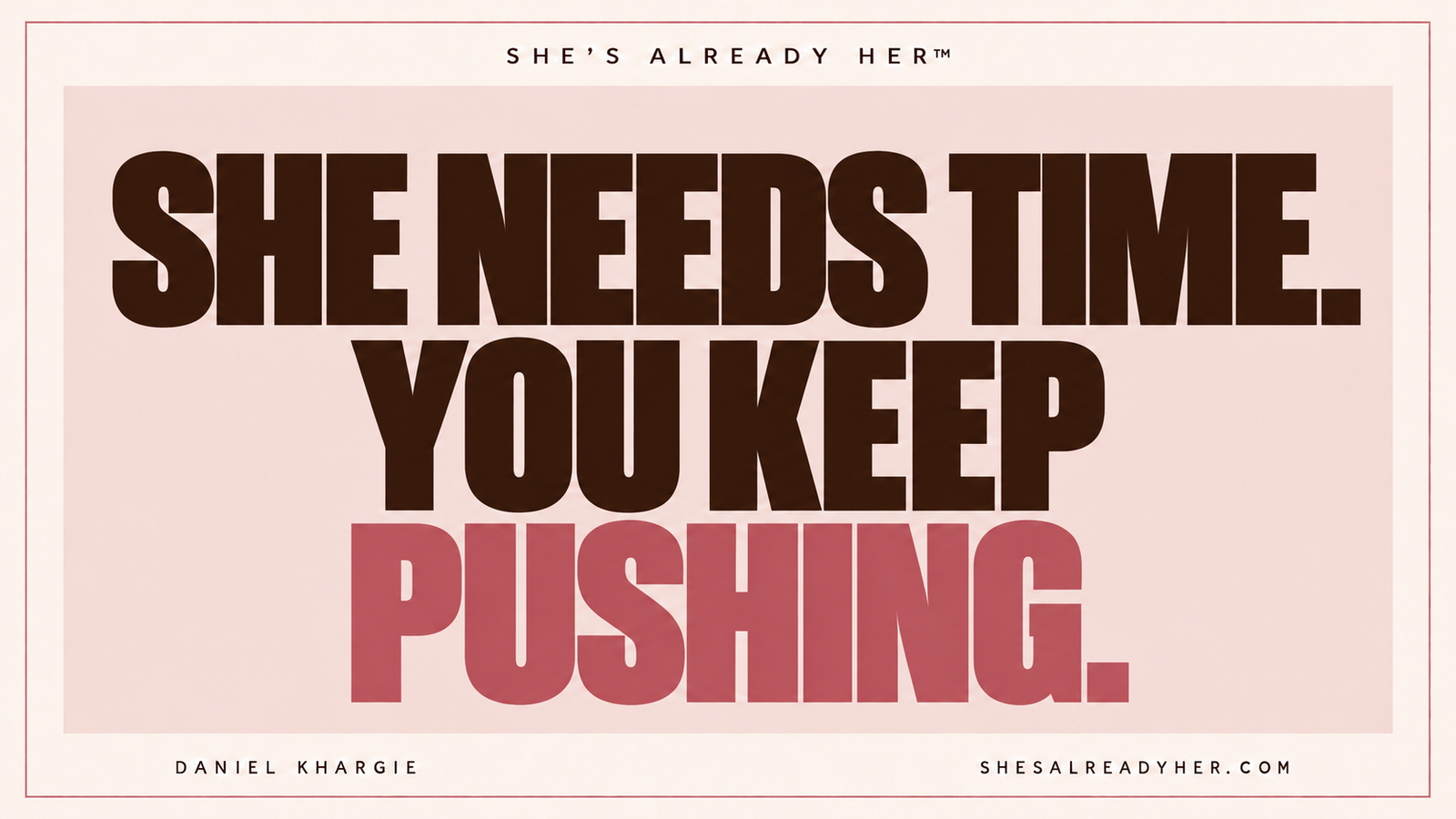
You don’t have to move faster just to prove you like him.
You can enjoy talking to him, want to see him again, and still need more time before the next step. Those things can all be true. Liking a man does not mean you’ve already agreed to everything he wants this relationship to become.
But when he keeps treating your hesitation like an insult, you start feeling as if you have to choose between keeping him interested and being honest with yourself.
Now you’re agreeing to things before you feel ready. Then wondering why something you wanted to enjoy has started feeling like something you have to keep up with.
If you’re trying to figure out how to slow down a relationship, start with the part that feels rushed. Work out what you’re ready for, what you need more time to consider, and what a manageable next step would look like. Where it feels safe to talk, be clear about that. Then pay attention to whether there is room for your answer.
You’re getting to know him. You do not owe him certainty before you’ve had time to find it.
Liking him doesn’t mean you’re ready for everything
I want you to hear this, because you can talk yourself out of your own discomfort when you really like somebody.
You don’t have to find something terrible about him before you’re allowed to want more time. You don’t need a list of reasons that would convince everyone else. Not being ready is something he needs to take seriously.
Maybe you’re comfortable with one part of the relationship and unsure about another. That doesn’t make your feelings fake. It means the next step needs its own answer.
Taking it slow in a relationship can be a way of giving those answers time to become honest. You’re not required to match his certainty just because he sounds sure.
And this goes both ways. If he isn’t ready for something you want, you can take that seriously without pretending your own needs disappeared. Neither person gets to decide that liking each other means the other person has to be ready now.

Read this quote as text
You don’t get to rush her into a relationship and then call her difficult because she wants time to know who she’s actually choosing.
Name the part that feels too fast
“Everything is moving too quickly” may be how it feels, but try to notice what you mean by everything.
Is it how often he expects access to you? The pressure to put a label on things? Talking about living together before you’ve decided whether you want that? Feeling as if the future is already settled while you’re still getting to know him?
You don’t have to answer every question about the relationship at once. Start with the step you’re being asked to take.
What feels comfortable to you right now? What would you want more time to learn? What are you agreeing to because you want it, and what are you agreeing to because you don’t want to deal with his reaction?
Those are different reasons. Let yourself notice the difference without turning it into another criticism of yourself.
Moving too fast in a relationship isn’t decided by comparing your dates to somebody else’s calendar. A pace that both people freely want is different from one person feeling pushed along. Speed alone doesn’t tell you how he treats you. Look at whether you can say you’re not ready and have that answer respected.
Be clear about the step you’re not ready to take
Where it feels safe to have the conversation, you can keep it simple. “I like getting to know you. I’m not ready for that step yet.”
You can also say what does feel right to you, if you know. More time before a label. Plans that leave room for the rest of your life. A chance to know each other before making a bigger commitment.
You’re giving him an honest answer, not promising that a certain amount of waiting will earn him a different one. More time might help you feel ready. It might also help you realize you want something else.
Be fair about what you know. If you already know you don’t want the relationship he wants, calling it “taking things slowly” can leave him waiting for something you don’t intend to offer. You’re allowed to be unsure, and you’re allowed to be honest about a no.
But you do not have to keep adding explanations until your answer becomes the one he wanted.
If you’re worried that saying you need time could bring threats, intimidation, or retaliation, you do not have to test him with a conversation. Private support and your circumstances matter more than delivering the perfect sentence.
Give yourself time to know more than his promises
There is nothing wrong with being excited. You don’t have to drain every good feeling out of the beginning of a relationship to prove you’re being careful.
Just leave room to learn who you’re choosing.
What do you know about how he handles a different opinion? Can a plan change without you being blamed for ruining everything? Does he keep the commitments he makes? Can you have time for yourself without having to reassure him through all of it?
These questions don’t require setting up situations to see what he’ll do. You can notice what happens naturally as you get to know him. You’re not running an investigation. You’re deciding whether this relationship fits you.
Relationship milestones can feel exciting, but reaching one doesn’t answer every question about the man you’re reaching it with. A label is not the same as knowing how he treats you when you disagree. Moving in is not something you have to do to prove the relationship is serious.
You can want a future and still take time to consider the next step. Keeping room to think does not make your interest less real.

Read this quote as text
She’s trying to enjoy getting to know you. You keep making her feel like she has to prove she wants you by moving faster.
Notice whether he makes room for your answer
He may feel disappointed when you’re not ready for something he wants. Disappointment by itself doesn’t mean he’s controlling you.
Look at what he does with it.
Can he talk about what each of you wants without turning your answer into an accusation? Can he consider a different pace? If what you want doesn’t work for him, can he be honest about that without trying to wear you down?
That is different from repeatedly pushing after you’ve answered, treating every limit as proof you don’t care, or making you feel you need to agree so you can get through the conversation.
You do not need to settle his feelings by taking a step you don’t want. And he does not have to hide what he wants to keep you interested. You both need room to be truthful about whether this works.
When pressure keeps replacing that honesty, pay attention to the pressure. Finding softer words is not guaranteed to change how he responds.
A pace you agreed to because you were tired of defending yourself deserves another look. You are allowed to recognize that it didn’t feel like a choice, even if you said yes at the time.
Different timelines need honesty from both of you
Sometimes the issue is that you want different things, or you’re ready at different times. That can hurt without either person being entitled to overrule the other.
You can need more time. He can decide that the relationship you’re available for isn’t the one he wants. You can want commitment. He can be honest that he isn’t ready to offer it. Neither answer makes the other person wrong for having needs of their own.
What you don’t need is a vague arrangement where the words keep changing and you’re expected to keep adjusting without understanding what you’re choosing.
If it is safe to discuss, be specific about what slowing down means. Does it mean more time before a commitment, fewer expectations about constant contact, or acknowledging that you’re still deciding? Don’t assume that the same phrase means the same thing to both of you.
You don’t have to give him a guaranteed date when your feelings will change. You can be honest about what you can offer now. You can also revisit whether the arrangement still works for you, without treating his agreement as something he owes you.

Read this quote as text
She didn’t get distant because she stopped liking you. You kept pushing past her comfort until being around you started feeling like another obligation.
Your readiness belongs in this relationship too
I’m not telling you to turn a good connection into a waiting game. I’m telling you that a connection needs room for the woman who is actually in it.
Your feelings count while they’re still developing. Your questions count before you have an answer. Your hesitation does not have to become a flaw you keep trying to hide from him.
You can like him and want more time. You can be excited and still have a life outside getting to know him. You can change your mind about a step after realizing you agreed before you were ready.
And you don’t have to call yourself difficult because keeping up with him has started costing you the chance to hear yourself.
The next step should have your honest answer in it. Not the answer you gave because he kept asking. Not the answer you felt you needed to give to keep him. The one that reflects where you actually are.
Questions you might still be asking
How fast is too fast in a relationship?
There isn’t one timetable that determines whether you’re moving too quickly. Ask whether you both freely want the next step, understand what you’re agreeing to, and have room to say no or ask for time. An exciting beginning alone does not establish a harmful pattern. Pressure to ignore your own readiness is something worth taking seriously.
What are the signs a relationship is moving too fast?
Notice whether commitments are happening before you’ve considered them, your own plans keep being pushed aside, or you feel unable to ask for time without being questioned or blamed. These are reasons to look at the pace and how you’re being treated. A number of dates or one person feeling more excited than the other does not tell the whole story.
What does taking it slow mean when we still like each other?
It means deciding what pace you’re each comfortable with rather than assuming liking each other settles every next step. Clarify what it means for contact, labels, exclusivity, and bigger commitments where those are relevant. Slowing down does not automatically mean ending things, but it also does not promise a future commitment. Be honest about what you do and don’t know.
Is my relationship moving too slow, or do we want different things?
Look at what each of you has actually said and whether your needs can be discussed honestly. Wanting more time is valid; wanting a clearer commitment is valid too. Neither person can require the other to become ready. If the arrangement doesn’t work for you, that matters. Slower progress alone is not proof that he is controlling or manipulating you.
How long should you date before making it official?
No single number of weeks can decide that for both of you. Consider whether you want the same kind of relationship, understand the commitment, and freely want to make it. You can ask for clarity without demanding an answer he doesn’t mean. You can also decline a label you aren’t ready for without having to prove your interest by accepting it.