
You shouldn’t have to explain what he did wrong after he has already apologized for it.
You heard the word “sorry.” You waited for the part where he acknowledged what happened. Instead, you got an explanation about why you took it badly, why he was frustrated, or what you did before he reacted.
Now he thinks he apologized. You still feel like the original concern never got answered.
That gap matters.
A fake apology can sound close enough to the real thing that you start questioning yourself for wanting more. You don’t want to pick apart every word. You don’t want to demand some perfect speech. You just want him to address what he actually did.
You’re allowed to notice when that part is missing.
And you don’t have to prove he planned to mislead you before you can say, “That still doesn’t address what happened.”
Listen for what he is taking responsibility for
The word “sorry” can do different things in a sentence.
Someone can be sorry that you’re hurting. Sorry a disagreement happened. Sorry he got caught. Sorry he spoke harshly. Those are different acknowledgments, even when they begin with the same word.
What matters here is whether he has addressed the conduct you brought up.
For example, imagine you told him something private and asked him not to share it. Later, he tells his friends.
“I’m sorry this turned into such a big deal” acknowledges that there is now a disagreement.
It does not acknowledge that he shared something you asked him to keep private.
“I told them something you asked me not to share. I shouldn’t have done that” addresses his choice.
You can hear the difference without grading his vocabulary. He doesn’t need to use those exact words. He needs to make clear what he understands he did.
Otherwise, you end up doing both parts of the conversation. You describe the hurt, explain his behavior, and supply the acknowledgment that was supposed to come from him.
You can stop and ask yourself: if I removed the word “sorry,” what would this sentence actually be saying?
Sometimes the answer is, “He wishes I weren’t upset.” That may be true. It still leaves his conduct unaddressed.
“I’m sorry you feel that way” can leave his choice out entirely
You tell him that a comment he made was hurtful. He answers, “I’m sorry you feel that way.”
Now your feelings have been mentioned. His comment hasn’t.
That is why this response can leave you feeling brushed off even though he technically said sorry.
People often use the term non apology for words that sound apologetic while avoiding responsibility for the behavior in question.
But context still matters.
If you tell someone you’ve had a terrible day and they say they’re sorry you feel so discouraged, they may be showing care. They aren’t necessarily apologizing for causing your day.
It’s different when the concern is something they did and the response keeps making your feelings the whole subject.
Back to the example of your private information. “I’m sorry you feel exposed” recognizes an effect on you. It still doesn’t say whether he thinks sharing the information was wrong.
If you want clarification and feel comfortable asking, you could say, “Are you apologizing for sharing it, or saying you’re sorry that I’m upset?”
That’s a direct question about what he means. You don’t need to accuse him of lying.
His answer may clear things up. He might say, “You’re right. I shared it, and I shouldn’t have.” Or he might keep returning to why you should feel differently about it.
Notice which conversation you’re actually having.
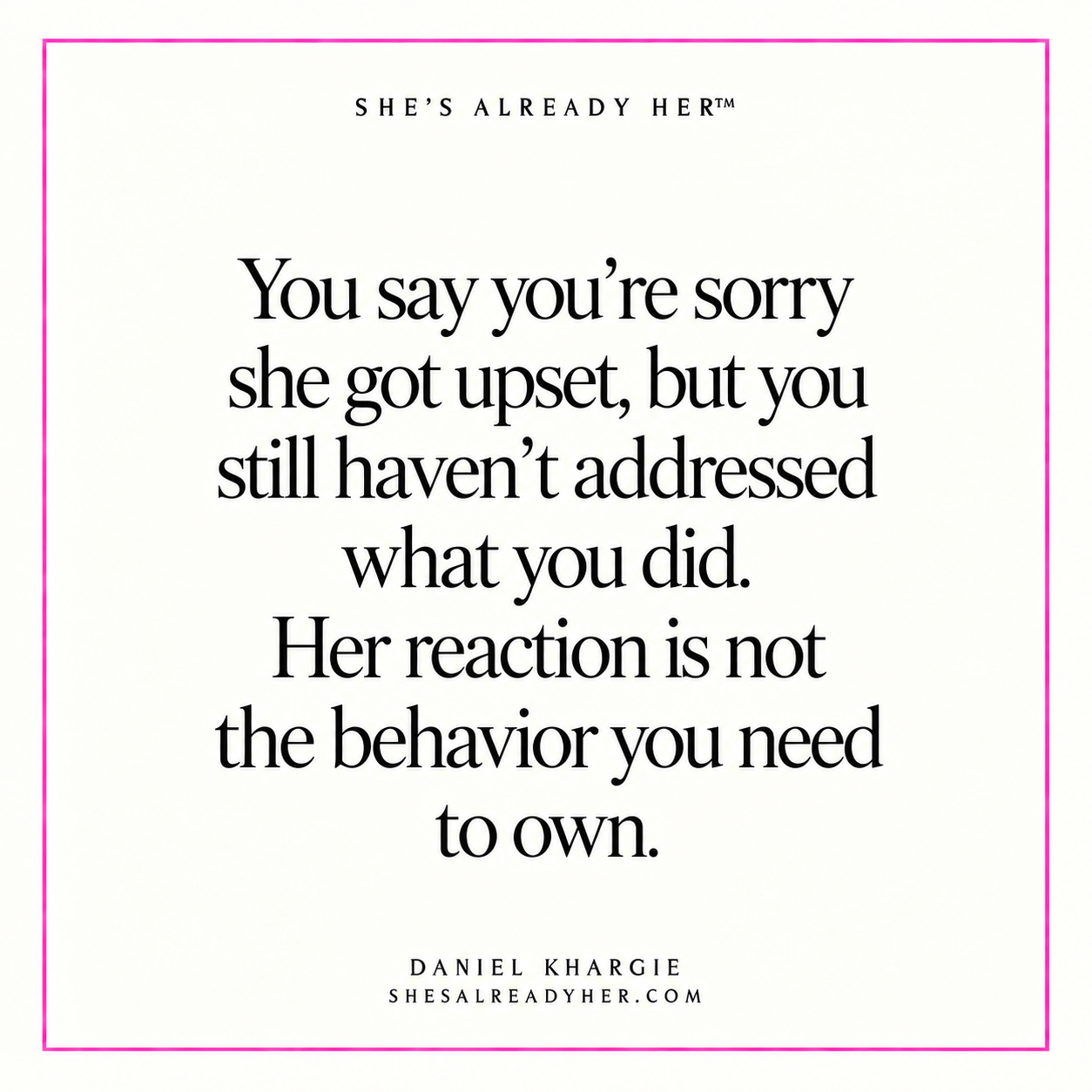
Read this quote as text
You say you’re sorry she got upset, but you still haven’t addressed what you did. Her reaction is not the behavior you need to own.
An apology can bring the blame right back to you
A backhanded apology can include an acknowledgment and a fresh accusation in the same breath.
“I’m sorry I snapped, but you kept asking.”
“I shouldn’t have said that, but you know how you get.”
“I’m sorry I embarrassed you. Maybe next time you won’t put me on the spot.”
You hear a small acknowledgment followed by a reason you should see his choice as your fault.
That doesn’t mean the events before his reaction can never be discussed. Maybe you interrupted. Maybe you raised your voice. Maybe there is something you need to take responsibility for too.
Both people can have something to address.
The problem is making his responsibility depend on you accepting blame for it first.
Compare these two responses to the same disagreement.
“I shouldn’t have called you that. I want to talk about the interruption too, but it didn’t make that insult okay.”
“I’m sorry I called you that, but I wouldn’t have if you’d let me finish.”
In the first, he owns the insult and identifies a separate concern. In the second, his acknowledgment leads straight into an excuse for it.
You can take an honest look at how you spoke without accepting responsibility for the words he chose.
And you don’t need to pretend you handled everything perfectly before you’re allowed to expect that same honesty from him.
“If I hurt you” means something different when the harm is already clear
Sometimes someone genuinely doesn’t know what happened or how their words landed.
They may need to ask. They may remember an exchange differently. It can take a conversation to understand a concern.
That is different from keeping the whole event hypothetical after it has been clearly identified.
For example, you show him the message where he shared your private information. You explain why you had asked him to keep it between you.
He says, “Well, if I did anything wrong, I’m sorry.”
The “if” leaves you wondering whether he acknowledges the choice at all.
A clearer response would address what is known: he shared it after you asked him not to. He can still have questions about part of the situation without making that fact disappear.
Now imagine a different situation. You say something he told you sounded dismissive, and he genuinely isn’t sure which comment you mean.
Asking, “Can you tell me which part hurt you?” can be an effort to understand. It doesn’t automatically mean he is avoiding you.
Look at whether clarification leads to an acknowledgment or simply creates another way to keep the concern unsettled.
You don’t have to demand agreement about every interpretation. You can expect him to address conduct he can recognize.
An explanation can help without replacing the apology
“I was exhausted.”
“I got embarrassed.”
“I misunderstood what you were asking.”
Those explanations might be honest. They may help you understand the exchange.
But they don’t all answer the question you brought up: does he recognize what he did, and does he take responsibility for it?
Imagine he missed a plan you had both agreed to and never let you know. He explains that work ran late.
That could explain the delay. You may still need him to address why he didn’t tell you he couldn’t make it.
A sincere apology can include context and responsibility together.
“Work ran late, and I didn’t let you know. I left you waiting. I should have contacted you.”
You’re not asking him to pretend his day was easy. You’re asking him to acknowledge the part that affected you.
And sometimes there was no agreement or wrongdoing to apologize for. You can be disappointed that he wasn’t available without that automatically meaning he mistreated you. The actual facts still matter.
The same fairness applies when he explains an intention. Maybe he meant the comment as a joke. He can say that and still acknowledge that he shared something private or made fun of you in front of other people.
If the entire conversation keeps becoming a defense of his intentions, this article about what follows “I didn’t mean it” looks more closely at that issue.
Here, listen for whether the explanation helps him address his part or keeps replacing it.

Read this quote as text
You cannot apologize for hurting her while making her responsible for your choice. Bringing her mistakes into your apology does not erase what you did.
You’re looking for ownership, not a flawless speech
I don’t want you sitting through an apology counting the words he got wrong.
Someone can be nervous, clumsy, or unsure how to say something difficult. An awkward sentence does not tell you everything about his sincerity.
He might start badly, hear what you’re saying, and correct himself.
“I said I was sorry you felt that way. That wasn’t clear. I’m sorry I told them. You asked me not to.”
That correction matters because it changes what he is acknowledging.
It doesn’t instantly fix everything. It gives you a clearer answer than the first sentence did.
When you’re considering what makes a good apology, look for whether you can understand what he is owning. Can he acknowledge his conduct without insulting your reaction? Can he hear a correction? Can he address what needs to be put right?
He doesn’t need to sound like he read an apology checklist. And saying all the expected words doesn’t prove the issue is resolved either.
You can appreciate a clear acknowledgment and still look at what happens afterward.
If something needs correcting, does he do his part? If he shared false information, does he correct it? If he agreed not to share something private again, does he respect that?
Those are practical questions. You don’t have to decide what kind of person he is from a single conversation.
Notice whether you have to write the apology for him
There’s a difference between explaining your concern and carrying his entire response.
You may need to tell him which comment you mean. You may need to explain an impact he hadn’t considered.
But you shouldn’t have to keep supplying every acknowledgment while he waits to see which words will satisfy you.
You describe the event. He repeats a sentence. You explain why it still leaves something out. He changes a word and asks whether you’re happy now.
At some point, the conversation can start feeling like you’re writing a speech he wants credit for delivering.
You can notice that without deciding he has never cared about you.
What you need to understand is whether he can recognize his own part, rather than only repeat the answer you gave him.
If you choose to continue, you might ask, “What do you understand the concern to be?”
Then listen. You don’t have to turn the conversation into a test. You’re giving him room to explain what he actually understands.
And if you’re too tired to keep going, you can pause. You don’t owe another hour of explaining just because his last response still didn’t address the issue.
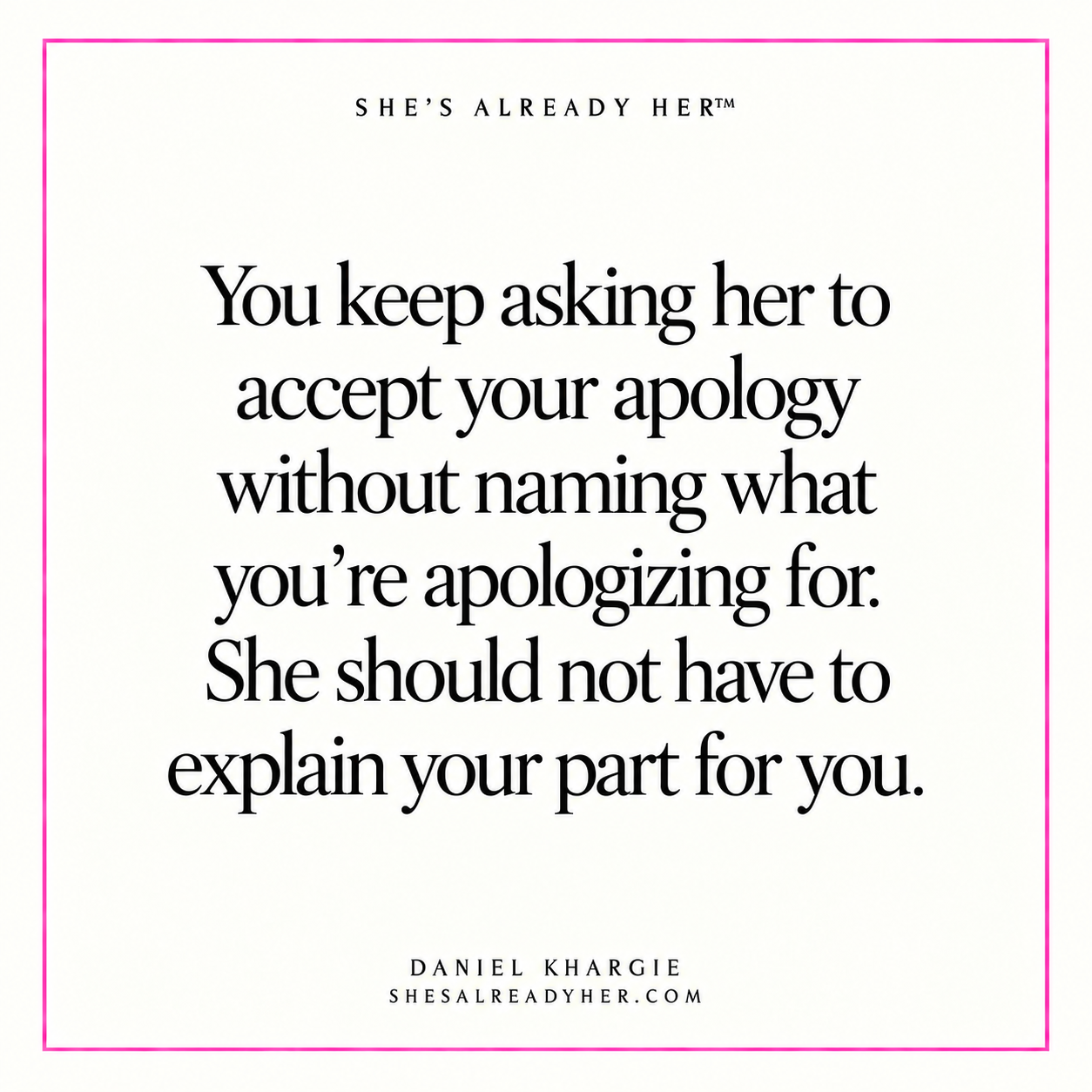
Read this quote as text
You keep asking her to accept your apology without naming what you’re apologizing for. She should not have to explain your part for you.
You can name what is missing without proving he is lying
Maybe you don’t know whether he means it.
You can still know that he hasn’t acknowledged sharing your information. Or that his response keeps blaming you for the insult. Or that an important part of what happened remains unanswered.
Stay with what you can actually describe.
“I heard you say sorry. I still haven’t heard you acknowledge that you shared something I asked you to keep private.”
That says more than spending the whole evening arguing about whether he is a sincere person.
You don’t need his agreement that it was a fake apology before you can decide the acknowledgment was incomplete.
If you’re wondering how to respond after an apology, Article 78 gives more room to your choices about time, forgiveness, trust, and whether you want another chance.
You also don’t have to keep asking for clarification when the exchange feels unsafe. If speaking honestly brings threats, intimidation, or retaliation, focus on support and your safety. You don’t need to deliver any of these example sentences to prove your concern was fair.
A guide for looking beyond the words

When His Actions Don’t Match His Words takes this conversation further when you’re trying to understand the gap between what he says and what you keep experiencing.
The 123-page Book + Guide includes 20 chapters, guided reflection, a section on remorse and reliability, and a 30-Day Believing the Evidence plan.
Its opening chapter addresses something you may recognize: he finally says what you’ve been waiting to hear, and the relief can feel like progress before anything in daily life has changed.
The guide makes room for sincerity while helping you consider whether it becomes dependable behavior. You don’t have to treat every apology as a lie to take the repeated pattern seriously.
Explore When His Actions Don’t Match His Words
You deserve an answer about what happened
You aren’t asking for a polished performance.
You’re asking whether he can address his choice without turning your feelings into the problem, making your mistakes the excuse, or leaving you to explain his part for him.
That is a fair thing to pay attention to.
You can listen carefully. You can make room for clarification. You can acknowledge a correction when it comes.
And you can still be honest when “sorry” leaves the very thing you raised untouched.
Frequently asked questions
Is “I’m sorry you feel that way” an apology?
It depends on what the person is responding to. Those words can express sympathy when someone is having a difficult experience. When you’re raising something he did, they may acknowledge your feelings while leaving his behavior unaddressed. Look at the surrounding conversation and whether he clarifies his responsibility. The phrase alone doesn’t prove he intended to mislead you.
What is an apology supposed to acknowledge?
An apology acknowledges something the person did wrong and expresses regret. In a relationship disagreement, it helps when you can tell which action or words he is taking responsibility for. “Sorry things got difficult” may recognize the tension while leaving the actual conduct unclear. He doesn’t have to agree with every interpretation to acknowledge a choice he made.
What makes a good apology different from a defensive one?
A good apology addresses the conduct and makes room for its impact without making you responsible for his choice. A defensive response may spend more time explaining why he shouldn’t be held responsible. Context can still be relevant. The question is whether the explanation accompanies ownership or replaces it. Perfect wording isn’t required, and clear wording still needs appropriate follow-through.
How to respond to an apology that blames you?
If you want to continue and feel safe doing so, you can separate the two concerns: “I’m willing to discuss what I did. That doesn’t explain away the insult.” You can also ask for time or leave the exchange. You don’t have to accept responsibility for his behavior to acknowledge your own. Keep any response honest rather than saying it is okay just to finish the conversation.
Can a genuine apology sound awkward?
Yes. Someone may struggle to find the words and still be trying to take responsibility. Notice whether he can clarify what he means, hear the concern, and correct an incomplete acknowledgment. An awkward sentence isn’t proof of a fake apology. A smooth speech isn’t proof of lasting change. You can consider both what he acknowledges and what he does afterward.