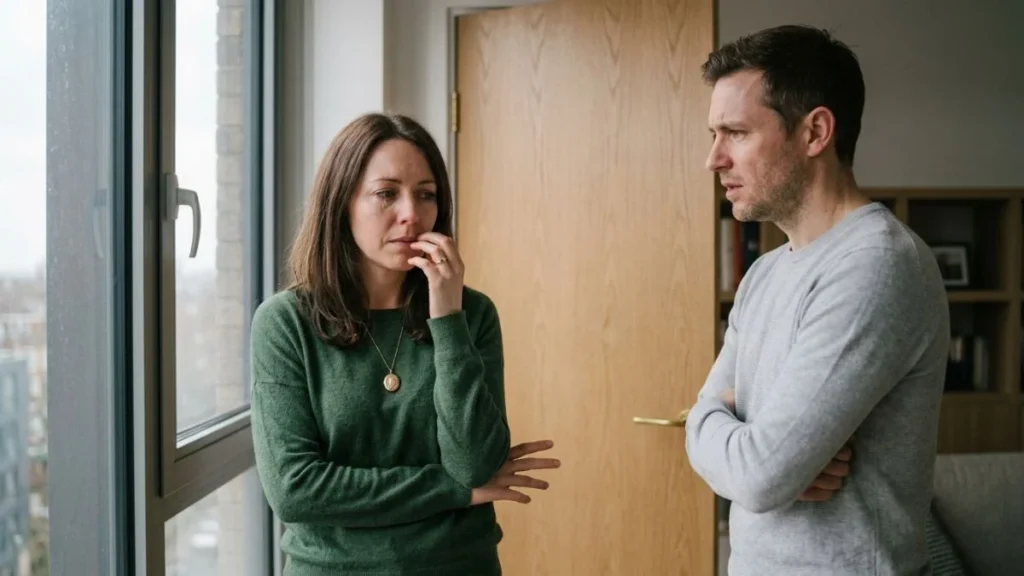
Emotional invalidation in relationships can make you feel like there is never enough room for your pain. The second you start talking about what hurt you, somehow the conversation becomes about him. You tell him what he did, explain how it affected you, and before you even finish, he is talking about how bad your reaction makes him feel, how tired he is of being blamed, how you always make him feel like the bad guy, or why you should understand that he never meant for things to happen that way.
Now you are sitting there trying to comfort the same man you came to because you were hurt.
That is what makes this pattern so confusing.
You were not trying to destroy him.
You were not saying he had never done anything good.
You were saying one specific thing hurt you and you wanted the man you love to understand what happened inside you because of it.
Instead, you walk away feeling like your pain created another problem.
Sis, when somebody hurts you, you should not have to make your pain smaller just so he can feel better about being the person who caused it.
Emotional Invalidation in Relationships Can Sound Reasonable at First
This pattern is not always obvious because he may not say, “I do not care about your feelings.”
It can sound much more reasonable than that.
You say, “What you did really hurt me.”
He says, “That was never my intention.”
That sentence by itself is not necessarily wrong.
Intent matters.
The problem starts when his intention becomes the reason your experience is no longer allowed to matter.
You tell him that something embarrassed you and he says he was only joking. You tell him you felt ignored and he reminds you how busy he was. You tell him you felt betrayed and he immediately explains everything that was going on in his life at the time.
There may be truth in every explanation.
But if the explanation becomes a replacement for empathy, you still leave feeling unseen.
He can explain why something happened and still care that it hurt you.
Both things can exist in the same conversation.
“I Didn’t Mean It Like That” Does Not Automatically Fix How It Landed
You do not need a man to admit that every painful thing he ever did was intentional.
Sometimes people hurt each other without meaning to.
That is normal.
The issue is what happens after he realizes something landed differently than he intended.
A caring response sounds like, “That is not what I meant, but I can understand why it felt that way.”
That keeps your experience in the room.
An invalidating response sounds like, “Well, that is not what I meant, so you should not feel like that.”
Now his intention has become more important than your emotional reality.
Sis, you are allowed to tell somebody how something affected you even if he did not plan the effect.
That is part of communication.
He May Start Talking About His Feelings Before He Ever Acknowledges Yours
This is one of the clearest signs.
You finally tell him how deeply something affected you and immediately he says, “Do you know how hard this has been for me?”
Maybe it has been hard for him.
But you were not finished.
You came to the conversation needing space for your pain, and suddenly you are being asked to make room for his before yours was ever acknowledged.
That is where resentment starts.
You are not saying his feelings do not matter.
You are saying there has to be enough room for yours to exist first when you are the person bringing up the hurt.
A relationship where one person’s emotions always take over the room eventually teaches the other person to stop bringing emotions into the room at all.
Emotional Invalidation Can Make You Feel Guilty for Being Hurt
This is where the pattern starts working against your own self-trust.
You tell him you are hurt.
He gets upset.
Now you feel guilty because he looks ashamed, frustrated, or overwhelmed.
You start thinking maybe you should have waited.
Maybe your timing was bad.
Maybe you made too much out of something.
Before long, you are apologizing for bringing it up.
Think about that.
You went into the conversation carrying pain from something he did.
You left carrying guilt for making him uncomfortable about it.
That is how emotional invalidation can slowly train you to keep more things inside.
You Should Not Have to Protect Him From the Consequences of Hearing the Truth
There is a difference between attacking somebody and telling the truth about your experience.
You can be calm.
You can be respectful.
You can choose your words carefully.
He may still feel uncomfortable hearing that something he did hurt you.
That discomfort is not automatically something you need to fix.
Sometimes discomfort is part of accountability.
Nobody enjoys realizing they disappointed somebody they love.
A mature partner can sit with that long enough to understand the impact instead of immediately trying to escape the feeling.
You do not have to make the truth harmless before you are allowed to say it.
When He Makes It About Himself, the Original Hurt Never Gets Repaired
This is the practical problem with invalidation.
Nothing actually gets solved.
You tell him he hurt you.
He explains why he is not a bad person.
You reassure him that you are not saying he is a bad person.
He tells you how much pressure he has been under.
You acknowledge his stress.
Now an hour has passed and nobody talked about what he originally did.
The relationship looks like it had a deep conversation.
It may have gone nowhere.
That is why the same issue keeps coming back.
how a lack of accountability keeps relationship pain unresolved
The pain was discussed around.
It was never actually dealt with.
Validation Does Not Mean He Has to Agree With Everything You Think
This part matters.
Validation is not surrender.
If you say something hurt you, he does not have to agree that his behavior was exactly as bad as you believe it was.
He is allowed to have his own perspective.
Healthy communication sounds like, “I remember the situation differently, but I can understand why you felt hurt.”
That creates space for two people.
One person does not have to disappear so the other person’s experience can exist.
That is what emotionally mature conversations look like.
You do not need him to agree with every interpretation.
You need him to stop treating disagreement like permission to dismiss you.
Emotional Invalidation Can Make You Over-Explain Everything
You start giving background.
Context.
Examples.
Dates.
Exact wording.
You think if you explain the situation perfectly enough, he will finally understand why you feel the way you do.
That is exhausting.
Sometimes women over-explain because previous conversations taught them that a feeling alone is not enough.
You need a case.
You need proof.
You need to make the argument airtight before the emotion is taken seriously.
That is not emotional closeness.
A healthy partner may ask questions because he wants to understand.
You should not have to build a courtroom presentation before he agrees that your feelings are real.
He May Focus on Your Reaction Because Your Reaction Is Easier Than Facing Your Pain
You cry.
He says he cannot deal with you when you are emotional.
You raise your voice.
Now the whole conversation becomes your tone.
You go quiet.
He says you are shutting him out.
No matter how you respond, the focus keeps moving toward how you are expressing the pain instead of what created it.
Your reactions still matter.
If you behave in ways you are not proud of, own that.
But a relationship cannot become healthier if every reaction gets examined while the original hurt stays untouched.
Sometimes focusing on your reaction gives him somewhere safer to look.
Feeling Unheard Eventually Changes the Way You Communicate
At first, you probably tried.
You told him what you felt.
You asked questions.
You wanted to work through things.
Then after enough conversations where you left feeling more confused than understood, your communication started changing.
You shortened your answers.
You stopped explaining as much.
You began saying “I’m fine” because you knew telling the whole truth would turn into another exhausting conversation.
Then he says you stopped communicating.
Maybe you did.
But silence has a history.
You did not necessarily wake up one day deciding to shut him out.
Maybe talking stopped feeling worth it.
Emotional Invalidation Can Make You Start Doubting Your Own Feelings
You know something hurt.
Then he tells you it was not serious.
You know you felt disrespected.
He says you are too sensitive.
You know the conversation made you feel small.
He tells you that you always take things the wrong way.
After hearing that enough times, you stop automatically trusting yourself.
Now whenever something bothers you, you ask whether you should even be bothered.
That is where invalidation can do real damage.
You start editing your emotions before anybody else even gets a chance to dismiss them.
You become your own invalidator.
You Are Allowed to Have Feelings He Does Not Understand
This sounds simple, but it matters.
Nobody is going to fully understand every emotion another person has.
You have different histories.
Different sensitivities.
Different experiences.
Maybe something does not seem like a big deal to him.
It can still be a big deal to you.
A healthy relationship makes room for curiosity.
healthy relationships and emotional communication
“Help me understand why this hit you so hard.”
That sentence creates connection.
“What is wrong with you that this bothers you so much?” creates distance.
Same situation.
Completely different emotional environment.
Stop Trying to Make Your Pain More Convenient
You may start choosing when to hurt.
You hold things in because he had a long day.
You wait because he is stressed.
You tell yourself you will bring it up this weekend, then something else happens and you keep waiting.
Before you know it, you are carrying three months of things you never felt like there was a good time to discuss.
That is not sustainable.
You should be thoughtful about timing.
You should not have to wait for a perfect emotional weather forecast before your feelings can exist in the relationship.
setting healthy boundaries to protect your emotional well-being
A Man Can Feel Bad Without Making You Responsible for Making Him Feel Better
Maybe he finally hears what you are saying and feels terrible.
That is okay.
You can care about his feelings without immediately rescuing him from them.
He may need to sit with the fact that he hurt somebody he loves.
That does not mean you punish him.
It means you stop treating every uncomfortable emotion he experiences as something you have to solve.
Sometimes a man needs enough emotional space to face himself.
If you always rush in and reassure him that everything is okay, he may never sit long enough with the part that needs to change.
Emotional Validation Is One of the Ways Couples Feel Close
Think about how different it feels when somebody really hears you.
You say you are overwhelmed and he says, “I can see why. You have been carrying a lot.”
Nothing about your situation may have changed yet.
You still feel lighter.
Why?
Because you are no longer carrying the emotion completely alone.
That is what validation does.
It tells you, “I see your experience.”
People underestimate how powerful that is.
You do not always need a solution.
Sometimes you need to know your feelings made sense to the person who says he loves you.
Making Everything About Himself Can Turn You Into His Emotional Caretaker
You become the person constantly managing the emotional aftermath of his behavior.
He hurts you.
Then he feels guilty.
You comfort him.
He becomes defensive.
You reassure him.
He gets overwhelmed by the conversation.
You calm him down.
Eventually, you start realizing you are doing more emotional work after being hurt than the man who caused the hurt.
That gets exhausting.
You are allowed to care about him without becoming responsible for carrying his feelings and yours at the same time.
Emotional Invalidation Can Build Resentment Quietly
You may not even notice how angry you have become.
Then something small happens and you react much more strongly than the moment seems to deserve.
Maybe the reaction is carrying everything that never got resolved before.
Every time you felt dismissed, another layer was added.
Every time you told yourself to let it go, something stayed.
That is why validation matters before resentment becomes the only way your emotions finally get loud enough to be noticed.
He Cannot Keep Asking Why You Are Distant Without Asking What Made You Stop Feeling Seen
Distance has a reason.
Maybe you stopped sharing because everything became about him.
Maybe you stopped asking for support because his response usually made you feel worse.
Maybe you became more independent because emotional dependence stopped feeling safe.
He notices the result.
He has to be willing to look at the road that got you there.
how blame shifting makes your reaction the bigger problem
Otherwise, he will keep blaming the distance without changing the environment that created it.
Emotional Invalidation Is Different From One Bad Response
Everybody gets this wrong sometimes.
Maybe you come to him upset and he immediately tries to fix the problem when you just wanted him to listen.
Maybe he says the wrong thing because he does not know how to respond.
That does not automatically mean the entire relationship is emotionally invalidating.
Patterns matter.
Does he correct himself when you tell him what you needed?
Does he become more curious?
Does he try again?
Or does every conversation leave you feeling like your emotions are inconvenient?
That is the difference.
You Should Be Able to Say “I’m Hurt” Without Starting a Debate About Whether You Should Be
Imagine how exhausting it would be if every physical injury required somebody else to approve the pain before you were allowed to feel it.
Emotions should not work that way either.
You say, “That hurt me.”
The first response does not need to be, “Well, it should not have.”
Start with understanding.
There can be a conversation about perspective later.
You are much more likely to hear each other once both people feel like they are being treated as real human beings instead of arguments that need to be defeated.
Stop Letting His Defensiveness Become Proof That You Are Wrong
Some men react strongly when they feel criticized.
That does not automatically mean you accused them unfairly.
Defensiveness is a reaction.
It is not evidence.
You still need to look at what actually happened.
Did you communicate respectfully?
Is the concern legitimate?
Is the pattern real?
Judge those things.
Do not automatically assume that because he became extremely upset, you must have crossed a line by mentioning it.
Validation Can Exist With Accountability on Both Sides
Maybe he hurt you.
Maybe you reacted in a way that hurt him too.
Both things can be discussed.
He can validate your pain and still talk about your reaction later.
You can own your reaction without pretending the original behavior never happened.
Healthy relationships do not need one permanent victim and one permanent villain.
They need two people capable of separating issues and taking responsibility without erasing each other’s experiences.
You Do Not Need Him to Agree With Your Pain Before You Start Taking It Seriously
This is where self-trust comes back.
You know what affected you.
You know how the relationship feels.
You know what happens after certain conversations.
His agreement may help the relationship heal.
His disagreement does not erase your experience.
You should still examine yourself honestly.
You should still ask whether your expectations are reasonable.
But you do that from self-awareness, not because somebody trained you to believe every emotion requires outside approval.
Emotional Invalidation in Relationships Can Make Love Feel Lonely
That may be the hardest part.
You are not alone.
There is somebody right beside you.
But emotionally, you still feel by yourself because the person closest to you cannot seem to make room for what happens inside you.
That loneliness hits differently.
You can love someone and still feel unseen by him.
You can live in the same house and feel like there is nowhere safe to put your feelings.
That is why emotional connection matters so much.
Relationships are not only about sharing space.
They are about feeling known inside that space.
A Man Who Loves You Should Care About the Pain Even When He Does Not Like What It Says About Him
Sis, sometimes your pain is going to tell him something uncomfortable about himself.
Maybe he was selfish.
Maybe he handled something badly.
Maybe he hurt you more deeply than he realized.
That is hard to hear.
But loving you means caring enough to listen anyway.
You do not need him to drown in shame.
You need him to have enough emotional maturity to say, “I do not like knowing I did this, but I need to understand what happened.”
That is how relationships grow.
You Are Not Asking Him to Make Everything About You
This is important because validation does not mean every relationship conversation revolves around your feelings.
His emotions matter too.
His experience matters.
There should be room for both of you.
The problem is when yours consistently disappears.
When every time you bring up pain, his becomes more important.
When his discomfort about being confronted gets more care than your discomfort from what actually happened.
Balance matters.
Emotional Invalidation in Relationships Stops When Both People Learn to Stay in the Room
This is really what it comes down to.
Can he stay emotionally present when you are hurting?
Can you stay present when he is hurt?
Can both of you listen without immediately making everything about defending yourselves?
That is where connection grows.
You do not need perfect responses.
You need willingness.
Curiosity.
Humility.
Enough care to understand before trying to win.
Stop Making Your Pain Smaller Just to Keep Him Comfortable
Sis, you should not have to water down every feeling before a man can hear it.
You should not have to say, “It wasn’t that bad,” just because he feels guilty.
You should not have to reassure him that he is still a good man before you are allowed to talk about something he did wrong.
You should not have to turn your pain into a softer version that protects him from having to look at himself.
Your feelings are not an attack simply because they make him uncomfortable.
You can communicate them respectfully.
You can be fair.
You can listen to his side.
But you do not have to disappear inside the conversation.
Emotional Invalidation in Relationships Makes You Feel Alone Because Your Pain Never Gets Somewhere to Land
Sis, you do not need a man who has the perfect answer every time you are hurting.
Sometimes there is no perfect answer.
You need somebody willing to sit in the conversation long enough to understand what happened inside you.
Somebody who can hear, “That hurt me,” without immediately turning it into, “Well, what about me?”
Somebody who knows that acknowledging your pain does not make him weak, guilty forever, or automatically the worst man in the world.
It makes him emotionally present.
That presence matters.
Because when a woman repeatedly feels unseen, she eventually stops bringing the deepest parts of herself into the relationship.
She handles more alone.
She talks less.
She becomes more guarded.
And then everybody starts wondering why the connection disappeared.
The connection did not disappear all at once.
It got weaker every time her pain entered the room and was told there was no space for it.
You deserve better than that.
You deserve to be able to say what happened to you without having to immediately take care of the man who caused it.
You deserve a relationship where both people can have feelings without one person’s emotions always swallowing the other’s.
Most importantly, you deserve to stop questioning whether your pain is real simply because somebody else does not want to sit with what it says about their behavior.
Your feelings do not need to control the relationship.
But they absolutely deserve room inside it.
Frequently Asked Questions
What is emotional invalidation in a relationship?
Emotional invalidation happens when a partner dismisses, minimizes, judges, ignores, or redirects your feelings instead of making room to understand them. It can leave you feeling unheard, unreasonable, or guilty for having an emotional response.
What are examples of emotional invalidation?
Examples can include telling you that you are too sensitive, saying you are overreacting, minimizing what happened, focusing only on intention instead of impact, changing the subject when you express hurt, or making the conversation primarily about how your pain affects them.
Why does emotional invalidation make you doubt yourself?
Repeated invalidation can make you question whether your feelings are reasonable because you keep receiving the message that your reactions are wrong, excessive, or inconvenient. Over time, you may begin dismissing your own emotions before anyone else does.
Can someone invalidate your feelings without realizing it?
Yes. Some people try to fix problems too quickly, minimize situations because they want you to feel better, or become defensive because they feel criticized. What matters is whether they become more aware and change how they respond once the pattern is discussed.
How do you respond to emotional invalidation in a relationship?
Stay clear about what you are trying to communicate, separate intention from impact, ask the conversation to remain focused on the original concern, and pay attention to whether your partner becomes more willing to listen and understand over time.