
He’s walking you through the plan with that light in his eyes, and you’re smiling and nodding, and somewhere inside you something is quietly breaking. Coping with change is hard enough. It gets a whole lot lonelier when the man next to you is thrilled about the same thing you’re sad about.
Big life transitions do this. They’re exciting and sad at the same time. The hard part is when you each end up holding a different half.
Maybe you’ve even asked yourself, “Why do I feel so lonely when my boyfriend is excited about a change I’m grieving?”
You’re not wrong for asking that. You’re not ungrateful. And you’re not trying to ruin it for him.
Maybe it’s a move to a new city. Maybe it’s leaving the town where your people are. Maybe it’s moving in together and letting go of the little place that was all yours. Whatever it is, you both said yes. And now he’s counting down the days while you’re quietly saying goodbye to things he hasn’t even noticed you’re losing.
So let’s talk about your half, because it matters too.
You’re Not Against the Change. You’re Grieving What It Costs
First, let’s get one thing clear in your own head.
Being sad about a change isn’t the same as being against it. You can want this. You can know it’s the right move. You can even be a little excited yourself. And you can still grieve what it’s going to cost you.
Because every big change costs something. Moving away from your people means you won’t be ten minutes from your best friend anymore. Moving in together means the place that was all yours becomes ours. A fresh start somewhere new means leaving the coffee shop where they know your order, the friend who drops by unannounced, the street you could drive with your eyes closed.
He might be looking at everything you’re about to gain. You’re looking at that too. But you’re also looking at what you’re about to lose.
That’s not negativity. That’s you seeing the whole picture.

Read this quote as text
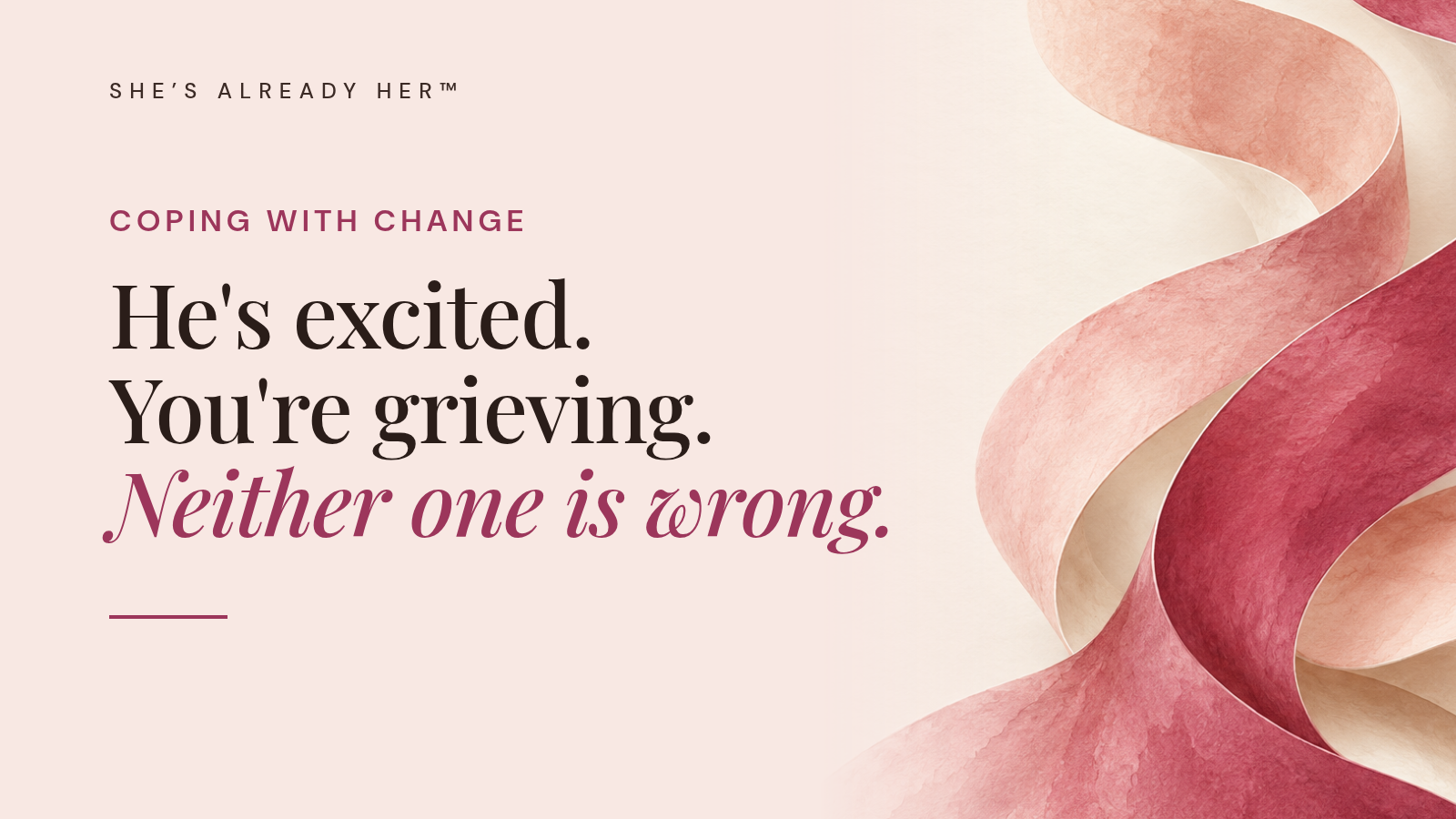
He’s excited. You’re grieving. Neither one of you is wrong.
And it’s okay if he isn’t losing the same things you are. Maybe the move takes him closer to what he wants and further from what you love. Maybe the place you’re leaving was more yours than his. Two people can make the same change and pay very different prices for it. That doesn’t make anybody the villain. It just means your loss is yours, and it’s real even if his list looks shorter.
Major life changes come with loss baked in, even the good ones. Especially the good ones, sometimes, because nobody expects you to be sad about them.
So before you do anything else, let yourself name it. Not to him yet. Just to you. “I’m sad about leaving.” “I’m going to miss my life the way it is.” That’s allowed.
Sad About It Doesn’t Mean It Was the Wrong Choice
Here’s where a lot of women trip themselves up.
They feel sad, and then they panic. “If I’m this sad, maybe we’re making a mistake. Maybe I don’t really want this. Maybe something’s wrong with me.”
And because that thought is so scary, they shove the sadness down so nobody, including them, has to look at it.
But sad and wrong aren’t the same thing.
Read this quote as text
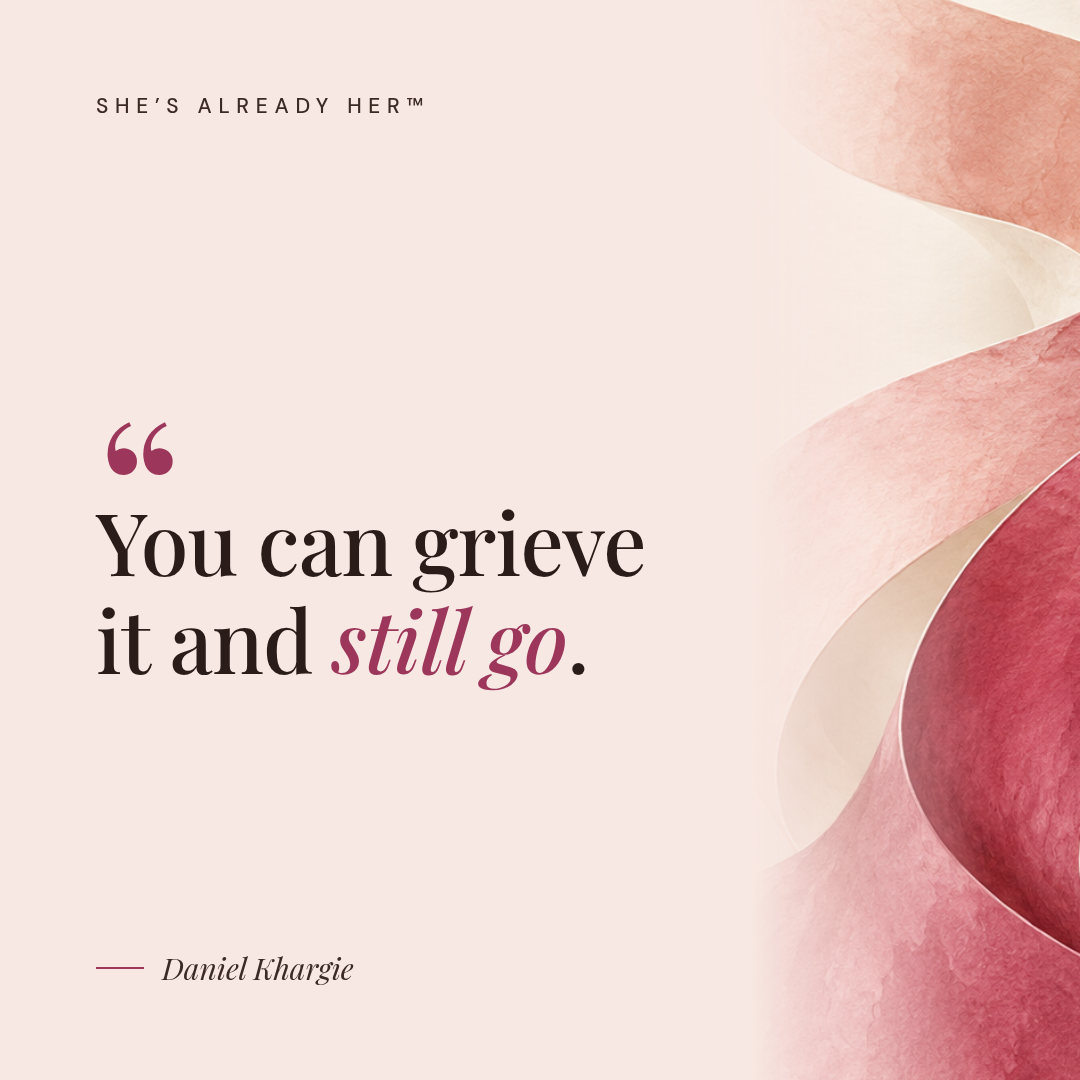
You can grieve it and still go.
A Psychology Today writer who calls this the grief of growth put it in one plain line. Grief and regret are not the same experience. She wrote that a person can feel sure about a decision and still be sad at what gets left behind.
You can feel sure and sad at the same time. That’s what dealing with life changes actually feels like for most people, even if nobody posts that part.
So don’t judge whether the change is right by how sad you feel. Those are two different questions. Answer them separately.
You can grieve it and still go.
Sad about it doesn’t mean you regret it.
Why His Excitement Can Make You Feel So Alone
Now let’s talk about why this feels so lonely.
When he’s excited, he talks about it a lot. The new place. The new plans. What life’s going to look like. His energy fills up the room. And every time you think about saying, “I’m kind of sad about this,” it feels like you’d be throwing cold water on him.
So you don’t say it. You smile. You match his energy as best you can. And you carry your sadness around by yourself.
That’s where the loneliness comes from. It’s not that he’s excited. It’s that there’s no room in the conversation for the other feeling.
The same Psychology Today piece described how people grieving a happy change often feel guilt, shame, and isolation around it, and end up hiding their feelings from the people they love. That’s exactly what you’re doing. You’re hiding half of yourself so the moment stays nice.
And here’s the thing. The longer you hide it, the further away he feels. Not because he moved away from you. Because you stepped back from him to protect his good mood.
Some women get really good at this. They become the cheerleader. They help pack, they plan the goodbye party, they say all the right things. And then they cry in the shower where nobody can hear. If that’s you, I want you to know that being strong for him and being honest with him aren’t opposites. You can do both.
He can’t sit with you in something he doesn’t know you’re carrying.
His Excitement Counts Too
I need to be fair to him here, because he’s not the bad guy in this.
He’s excited because something he wants is happening. That’s a good thing. That’s a man looking forward to a life with you. A lot of women would love to have a partner who’s that invested in what’s next.
And honestly, you don’t know everything that’s going on under his excitement. Some people get loud and happy about big changes partly because that’s how they handle being nervous. Some people just really are that excited. I can’t tell you which one he is, and you can leave that question alone.
What you can know is this. His excitement doesn’t mean he doesn’t care about what you’re losing. It might just mean he hasn’t thought about it from where you’re standing. Or he has, and he figured the best thing he could do was keep the mood up for both of you.
And remember, he may be giving things up too. Maybe not the same things, and maybe he’s not talking about them. But a man who’s excited about where you’re headed may still miss parts of where you’ve been. Leave room for the possibility that he’s carrying something quiet of his own.
Either way, his feelings about this are real. So are yours. Nobody has to lose this one.
His excitement isn’t a betrayal. Your sadness isn’t a vote against him.
Coping With Change Gets Easier When You Stop Hiding Your Half
Listen to me on this one.
Coping with change is a lot harder when you’re doing it alone. And right now, you’re doing your half alone because you haven’t let him see it.
You don’t have to make a big announcement. You don’t have to say you’re having doubts if you’re not. You just have to let the sad part be part of the conversation too.
There’s a Psychology Today piece on change as a shared project that said it simply. Life transitions themselves don’t break relationships. What makes the difference, it said, is how a couple responds to the stress of those changes.
That means the change itself isn’t the threat. The question is whether you face it side by side, or each of you goes through your own version of it alone.
And you can’t go through it together if one of you is pretending.
So let him in. Let him see that you’re happy and sad. Let him know which parts are hard for you. That’s not dumping on his excitement. That’s giving him the chance to actually be with you in it.
Ask Him to Be Sad With You, Not Fix It
When you do tell him, he might jump straight into fixing. “We’ll visit all the time.” “You’ll make new friends in no time.” “It’s going to be so much better, trust me.”
He means well. He’s trying to make the sad go away.
But that’s not what you need right now. You don’t need it solved. You need company.
So tell him exactly that. “I don’t need you to fix it. I just need you to be sad with me about this part for a minute.”

Read this quote as text
Ask him to be sad with you, not to fix it.
That one sentence can change everything. A lot of men really do want to help, and they think helping means making the bad feeling stop. When you tell him that sitting with you is the help, you’re giving him something he can actually do.
And then let him do it. Even if he’s a little awkward. Even if he only manages a hug and “Yeah, I’m going to miss it too.” That counts.
Pick your moment, too. Not when he’s halfway through telling his friends how great it’s going to be. Not in the middle of packing when everybody’s tired and short. Find a quiet minute, just the two of you, when he’s not on the spot.
You might find out he’s been sad about some of it too, and he was keeping it quiet for the same reason you were.
How to Cope With Life Changes as a Couple Without Losing Your Side of It
If you’re wondering how to cope with life changes when you and your partner feel so differently about them, here’s what I’d tell you if you were sitting across from me.
Make a point of making room for both feelings. Let him have his excitement out loud. Let yourself have your sadness out loud. Neither one has to win.
Say goodbye to what you’re leaving. Take the last walk. Have the last dinner at your spot. Tell your friends what they’ve meant to you. Grief goes easier when you get to actually say goodbye, and it’s a lot less lonely if he comes with you.
Decide together what you’re keeping. Maybe it’s a weekly call with your best friend. Maybe it’s a ritual from your old place that comes with you to the new one. Change doesn’t have to take everything.
And ask for appreciation out loud. Research on couples who moved for one partner’s opportunity found that expressing gratitude for an accompanying partner’s support can greatly benefit the relationship. The same study of 229 people who relocated also found it helped when they saw their partner making sacrifices too. So it’s okay to say, “I need to hear that you know what I’m giving up.”
And give it time. Coping with life changes doesn’t happen on moving day. It happens over the next few months, when the new place still doesn’t feel like home and you still reach for your phone to call the friend who used to live down the street. Some days you’ll feel settled. Some days you’ll miss your old life so much it surprises you. That’s normal. Keep talking to him through all of it, not only at the start.
That’s how to handle change as a team. Not by agreeing on how to feel about it. By making sure both of you get seen.
You don’t have to fake being excited to be on his team.
What to Say When You’re Sad and He’s Thrilled
Skip the speech. A few honest words will do, the kind that let him in without knocking him down.
Try one of these:
- “I’m excited too. And I’m also really sad about leaving. Can both be okay?”
- “I don’t want to change the plan. I just need you to know this part is hard for me.”
- “Can you just be sad with me for a minute? I don’t need you to fix it.”
- “I love how happy you are about this. I need some room to miss what we’re leaving, too.”
- “It would help me a lot to hear that you know what I’m giving up.”
Notice what those do. They don’t cancel the change. They don’t attack his excitement. They just put your half of the story on the table where he can see it.
Adjusting to change takes time for most people, and it’s easier when the person you love knows where you really are.
When It Still Feels Lonely After You’ve Told Him
Now for the harder possibility.
Say you’ve told him. Clearly, kindly, more than once. And every time, he brushes past it. He changes the subject back to the exciting stuff. He tells you you’ll get over it. He gets annoyed that you’re bringing it up again.
At that point, look at what keeps happening.
I can’t tell you why he’s not making room for it. Nobody can read his mind from the outside, me included. Maybe he’s scared that if he really looks at your sadness, the whole plan falls apart. Maybe he just doesn’t know what to do with it. You can take it seriously without solving it.
Here’s what you do know. You asked to be seen, and you still feel alone in it.
That matters. Not as a reason to cancel everything, and not as proof he doesn’t love you. As information. You can keep moving forward with the change and still tell him plainly, “I need you to make room for this part of me too. I’m not okay carrying it by myself.”
If the change is really about his job and how it’s changing things between you, the piece on how his job is changing us talks about that side of it. If your feelings keep getting brushed off in general, the piece on a partner who dismisses your feelings might feel familiar.
And if you’re feeling lonely even when he’s right there, the piece on why he can make you feel alone even when you’re together goes deeper into that. If you’re the one who’s changing and he keeps missing the old version of you, read growing together in a relationship.
FAQ
Why is dealing with change so hard for me when he seems fine?
Often because you’re looking at different parts of it. He may be focused on what you’re both gaining, and you’re also feeling what you’re losing. Dealing with change is hard for most people. It just looks easier from the outside when someone is mostly showing the excited side.
How do I cope with change when I’m the only one who’s sad about it?
Start by letting yourself be sad without deciding it means something’s wrong. Then tell him plainly which part is hard and what you need from him. Knowing how to cope with change usually starts with not carrying the sad part by yourself.
How do I deal with change I agreed to but still feel sad about?
Remember that agreeing to something and grieving it can both be true. Give the sadness a place to go. Say goodbye to what you’re leaving, keep what you can, and let him know. Learning how to deal with change you chose means letting yourself miss what came before.
How do I accept change without pretending I’m excited?
You don’t have to pretend. Acceptance can sound like, “This is happening, and I’m going to miss what we had.” If you’re wondering how to accept change, it often comes slowly, after the sadness gets to be said out loud.
What does grief in relationships look like when nobody died?
It can look like quiet sadness about a move, a new stage, or a life you’re leaving behind. Grief in relationships shows up during good changes too. It often feels lonely because nobody expects it, so it helps to name it to each other.
Two True Feelings About One Big Change
Hold onto these:
- Being sad about a change isn’t the same as being against it.
- Grief isn’t regret. You can be sure and sad at once.
- His excitement counts. So does your sadness.
- The loneliness comes from hiding your half. Let him see it.
- Ask him to be sad with you, not to fix it.
- Say goodbye to what you’re leaving, and decide together what you’ll keep.
He’s excited. You’re grieving. Neither one of you is wrong. And if you let him into your side of it, you don’t have to go through this big change alone.