

He doesn’t get to keep telling you how much you mean to him while treating everything that matters to you like it can wait.
You make room for what he needs. You consider what he’s dealing with. You think about how your decisions affect him. Then you need that same consideration, and somehow you’re asking for too much.
You’re feeling unappreciated, and now you’re trying to explain why your needs should count in your own relationship.
Look at that. You’re not asking to become more important than him. You’re asking to matter alongside him.
If you’ve been looking for signs he doesn’t value you, start with what happens when something matters to you and asks something of him. Does he consider it? Or does it only count when it doesn’t require him to change anything?
You can’t read his mind. But you can look at the treatment you keep receiving. You don’t need to prove he has no feelings for you before you’re allowed to say this isn’t enough.
1. He expects your help, but your no becomes a problem.
He’s used to you making things work. You’ve helped because you cared, and he’s had plenty of time to get comfortable receiving that help.
Now look at what happens when you can’t.
Does he care about what you have going on? Does he accept that you have something else to give your time to? Or does he make you feel guilty for not being available the way you usually are?
Your previous yes doesn’t mean every future yes belongs to him.
You can be dependable and still have limits. You can love him and still be tired. You can have something you need to do for yourself without turning it into a discussion about whether you still care.
He benefits from your support. That should give him more reason to consider you, not more reason to expect you to keep putting yourself off.
2. There’s room for his needs. Yours keep getting pushed back.
You know what he needs from you. He’s made that clear enough. But when you bring up what you need, there’s always another reason it can’t be dealt with yet.
You’ve tried being patient. You’ve tried understanding. And you’re still waiting for the part where your patience leads to something changing.
Feeling valued includes knowing your needs have somewhere to go. You can bring something up and expect it to be taken seriously, even when the answer takes time or needs working through.
You’re not asking for every problem to disappear immediately. You’re asking him to stay involved in the answer.
If he can keep finding room for what matters to him, look at whether he helps make room for what matters to you. You shouldn’t have to reach the point of being ready to give up before your concern gets his attention.
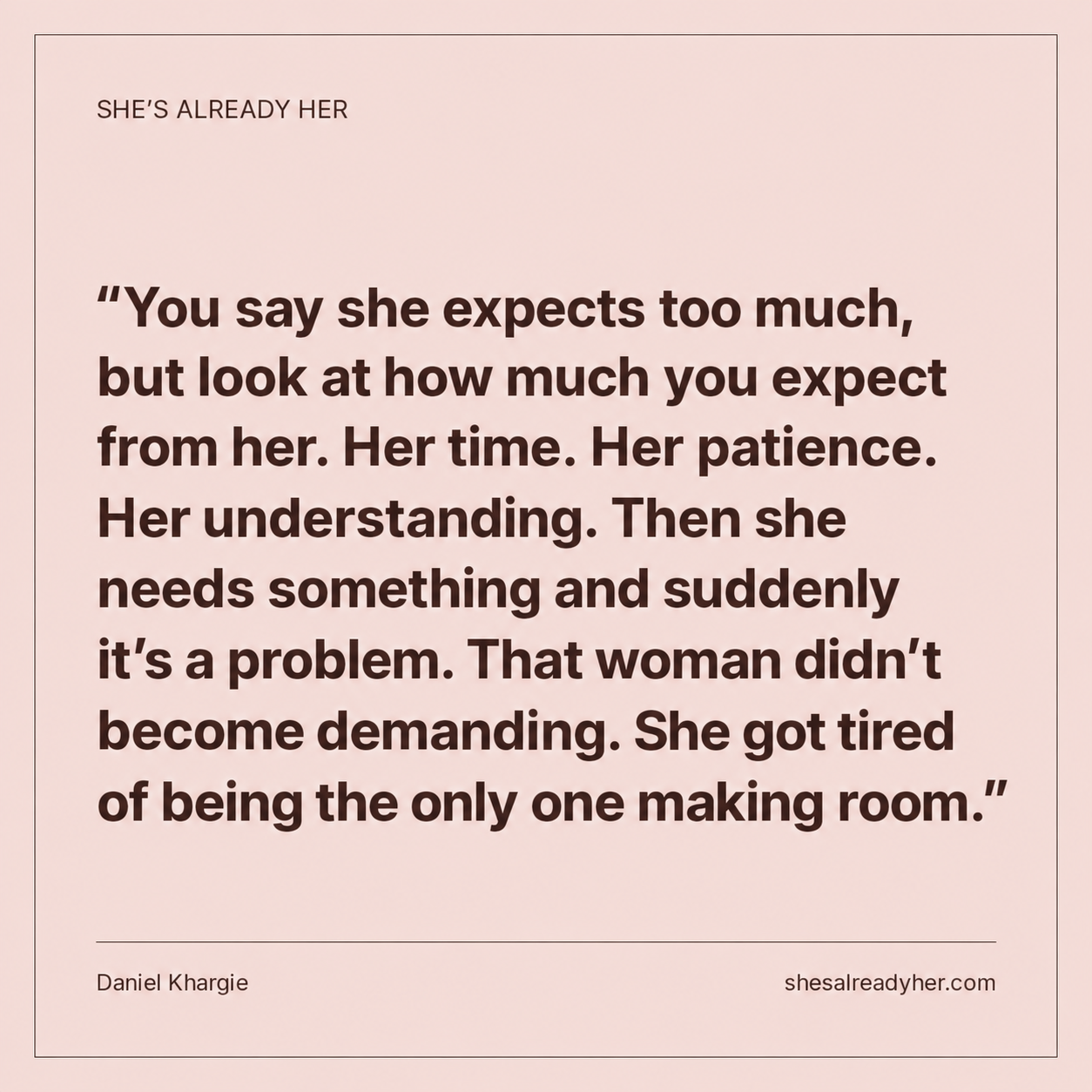
Read this quote as text
You say she expects too much, but look at how much you expect from her. Her time. Her patience. Her understanding. Then she needs something and suddenly it’s a problem. That woman didn’t become demanding. She got tired of being the only one making room.
3. Your time is the part he keeps expecting to bend.
You have plans too. Your time doesn’t become less important because you’ve been willing to adjust before.
When he changes an agreement, does he think about what that changes for you? Does he let you know, take responsibility, and help work out what happens next?
Or are you expected to absorb it again because you’re the one who usually makes everything work?
Something can genuinely come up. The question is whether your time stays part of the decision or disappears from it.
Feeling undervalued can come from repeatedly being treated like whatever you have going on is the easiest thing to move. His plans get protected. Yours stay negotiable.
You don’t need him to control every interruption. You need him to consider you when something changes, instead of assuming you’ll keep being the one who deals with the cost.
4. He wants your forgiveness without changing what hurt you.
You’ve already told him. He’s already said he understands. So why does the same thing keep coming back to you to get over?
You want to move forward. That doesn’t mean you can do his part of the repair for him.
An apology should lead somewhere. What is he taking responsibility for? What will be different? What happens after the conversation ends and you’re both back to your usual lives?
You don’t owe him immediate trust because he wants the discomfort over with.
And you don’t have to pretend the next incident is separate from everything that came before it. If you’ve discussed the same hurt repeatedly, that history matters.
Your willingness to forgive didn’t cause his choices. You giving him another chance also doesn’t remove his responsibility to do something with it.
5. Your life matters until it asks him to adjust.
You support what he wants to do. You’ve thought about his future, his goals, and what would help him get there.
Does he give your life that same attention?
Not just a nice comment about how proud he is. Does he help make space for what matters to you when it affects how things are arranged between you?
Your goals can need planning. So can his. What matters is whether both of you get included in that planning.
If every idea you have ends with why it won’t work for him, notice whether he ever helps look for another way. You should not be the only one trying to make your life fit.
You’re allowed to want something beyond keeping everything convenient for him. You had a life to live before you became the woman helping him live his.

Read this quote as text
You say she’s changed because she doesn’t rearrange everything for you anymore. Look at how many times her own plans had to wait so yours didn’t have to. She’s allowed to have a life you don’t keep putting on hold.
6. He argues with your concern instead of addressing it.
You tell him something is hurting, and suddenly the conversation is about whether you appreciate him enough.
Now you’re reassuring him. You’re explaining what you do recognize. You’re trying to prove you weren’t saying he never does anything.
Meanwhile, the thing you brought up is still sitting there without an answer.
You can acknowledge what he contributes and still need him to address what’s missing. You don’t have to erase the hurt to prove you noticed something good.
If he keeps dismissing your feelings, another longer explanation may not be what’s missing.
Look at whether he comes back to your concern. Does he ask what needs to change? Does he take responsibility for his part? Or do you leave having spent the whole conversation making him feel better about something that hurt you?
7. He pays attention when you pull back, then lets it fade.
When you say you can’t keep doing this, he suddenly has more to say about how important you are.
You want that to mean something. Of course you do. You’ve wanted him to take this seriously for a long time.
But look beyond the moment he realizes the relationship might change.
Does he keep considering you once he feels more certain you’re staying? Does he respect what you said you can’t keep doing? Does the effort continue without another conversation about losing you?
You don’t have to create a test or threaten to leave to find out. Look at what already happens after the promises.
Being important to him should show up while you’re still there. You shouldn’t have to keep reaching the end of what you can tolerate before he remembers to consider the woman beside him.
You can say what needs to change without proving why you deserve it.
Start with the treatment you need to be different. Keep it specific enough that an answer has to include more than another compliment.
You can say, “I need my plans to be considered too.” Or, “I’ve told you this is hurting me. What are you willing to do differently?”
When disagreement is safe, you can hear his response without abandoning the point you raised. You’re asking for participation, not another reason you should manage without it.
You can also look at what you keep offering beyond what you can sustain. For more on that part, read about overgiving in a relationship. Reducing what you take on isn’t a trick to make him value you.
Make reliable arrangements before changing anything affecting essential needs or shared responsibilities. Your next step should take care of you, not create another problem you have to carry.

Read this quote as text
You keep saying you don’t want to lose her, but when she tells you what’s hurting her, you still expect her to put up with it. She’s tired of hearing how much she means to you while being treated like what she needs can wait.
His choices need to consider your life too.
You don’t have to make a final decision today. You can start by being honest about what you’ve already asked for and what has actually changed.
You can recognize effort without declaring everything fixed. You can still love him without agreeing that the same arrangement gets unlimited time.
If you’re afraid of his reaction, seek private support before confronting him or announcing changes. Use a safer device or contact method if your activity may be monitored. You don’t have to put yourself at risk to prove your concern matters.
Look at whether your needs, limits, time, and goals have a real place in the relationship. Not just when he’s apologizing. Not just when he needs something from you.
He knows how much better his life is with you in it. Now look at whether his choices show that your life matters to him too.
Questions you may still be asking
What are the signs your husband doesn’t value you?
Repeated disregard for your needs, time, limits, and goals can indicate a lack of consideration. Examples include breaking agreements without helping repair them, expecting support without making room for yours, or dismissing concerns you have already explained. These behaviors do not reveal his private thoughts. Look at the recurring treatment and his response when it is raised, rather than treating one mistake as proof.
My husband doesn’t appreciate me. What should I do?
Identify the specific treatment you need to change and discuss it when disagreement is safe. Ask for practical follow-through rather than reassurance alone. Consider support for yourself and what you can realistically sustain. Avoid hidden tests or dropping essential responsibilities without a plan. If you fear threats or retaliation, get private support before confronting him or changing an arrangement.
Why am I not feeling appreciated even though he pays the bills?
Financial contributions can matter while other needs remain unmet. Paying bills does not replace respect for your time, interest in your life, or willingness to address hurtful behavior. You can recognize his contribution and still discuss those gaps. Keep the conversation about the specific consideration you need rather than using one contribution to cancel out every other concern.
Is being appreciated the same as being needed?
No. He may rely on your help while giving little attention to your own needs. Appreciation can include words, but it should also show through consideration for your limits, goals, and well-being. Notice whether he respects you when you cannot provide something and whether he participates when you need support. Being useful to him does not answer whether the relationship includes you.
How do I explain feeling unappreciated in a relationship?
Describe the repeated behavior, its effect on you, and the change you need. You do not have to list every loving thing you have done to justify wanting consideration. When it is safe, ask for a specific answer and look at what follows. If you have explained it repeatedly, include that history; another explanation cannot supply his willingness to act.